

8 Different Types Of Air Conditioners & How To Pick The One You Need For Your Home
You might not think much about your air conditioner. That is, unless or until it has a problem. At that point, you are likely looking for a fix or, if it's really bad, a replacement. Whether you've been struck with curiosity about your home's AC or you need to invest in a new unit, there is a lot to know.
Not every type of air conditioner is compatible with every home, but that's only the beginning. In addition to figuring out what unit will work best for you (and your budget), you also have to consider costs, installation requirements, and even local regulations on what you can or cannot install in your house or apartment.
To help you narrow your options, here are eight types of air conditioners and what you need to know about each one. After the rundown of AC types, we'll look at how to pick the right unit for your home. We'll consider a handful of factors that could impact your budget, comfort, and the possibility of getting a citation from the local building authority.
Evaporative cooler/Swamp cooler
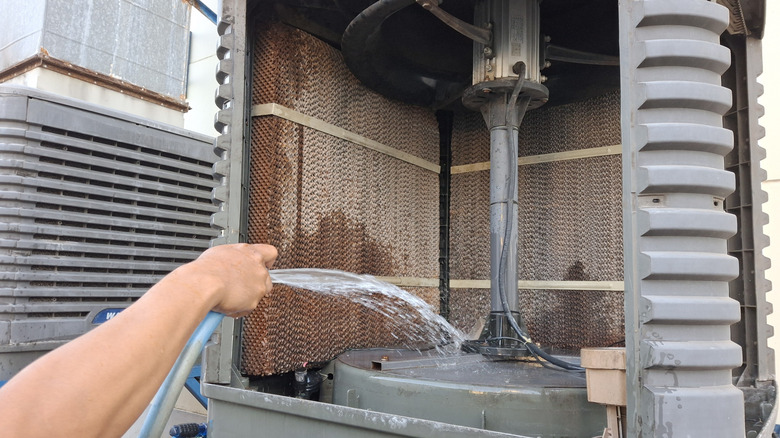
An evaporative or swamp cooler does just what its name states. It's quite different from an air conditioner, even though it's categorized with other air-cooling equipment. A standard air conditioner might use refrigerant, a chemical coolant, to cool down the air it pulls into your home. In contrast, evaporative coolers use water, and you'll need an easily accessible supply when installing one.
Evaporative coolers use evaporation to cool the air they circulate through your home, and water is a key player. These coolers draw warm air inside, pass it over a wet pad to cool it down, then pump it into your home through a window or other opening (sometimes the ceiling). Since evaporative coolers rely on warm air that is quickly cooled, they can increase humidity inside your home.
One way to lessen the humidity is to choose a two-stage evaporative cooler. In these systems, the air is pre-cooled before hitting the water stage. Since cooler air can't carry as much water, that means less humidity inside your house. The exact amount of humidity will vary based on the size of the unit and your home. Like other air conditioners, swamp coolers come in a variety of sizes, but they are rated by cubic feet per minute (CFM). To calculate the CFM rating that is best for your home, Grainger recommends multiplying the square footage of your space by the ceiling height, then dividing by two.
Window or wall AC
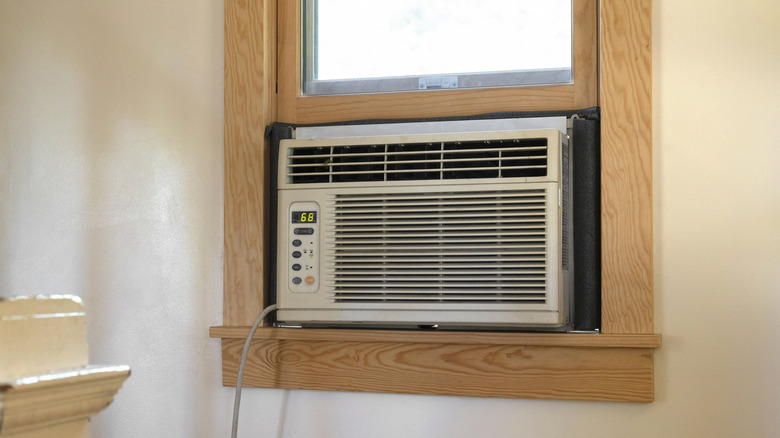
When you're in the middle of a heatwave and need to stay cool, a window AC unit might save the day. These units pop right into your open window. A window AC expels heat from the back while pushing cool air into your home through the front.
A window AC unit is meant to be installed in a window, of course. Since windows can vary greatly in height and width, window ACs typically come with a frame sort of element to fill gaps. Once you place the unit and position it correctly, you plug it in and go. A window AC can be a bit loud because all of its components are right there in your window. Still, it's possible to find a quieter window AC that will cool you off without being a nuisance.
One important note about window AC units is that some people do install them in non-windows. While we don't recommend cutting a hole in the wall of your home to install a window unit, people have done it. However, there is a different type of air conditioner that might look similar to a window AC, but is actually meant for wall mounting (in a hole, not a window). Wall ACs generally have a separate unit for your wall and a compressor that's installed a bit further away from your living space.
Portable AC
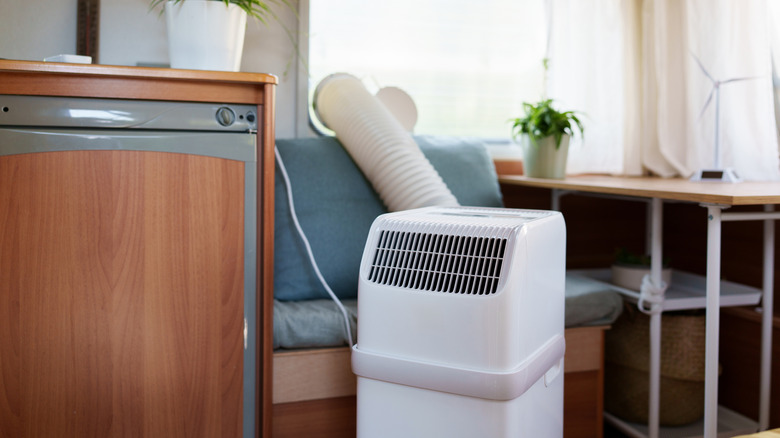
Portable air conditioners, like other types of ACs, fill a gap in the cooling market. What if you can't place a unit in a window or wall, or on top of or outside your home? In that case, a portable AC could make the difference between a comfortable summer and an unbearable one. I've worked in a building where the window was far too high off the ground for a window AC to be installed safely. Since the landlord didn't want to make modifications to cool the space, we used a portable AC to get by.
Like any type of air conditioner, there are downsides to portable ACs, many of which I've personally experienced. Since the portable units don't have a way to vent their exhaust, you can expect them to feel warm and produce heat, which may cancel out some of the cooling you'd otherwise achieve.
The aesthetics are also not ideal, because the unit has to sit on the floor in the room. Not only that, but the portable air conditioners I've used also have a venting pipe that must be secured in a window. That requires weatherproofing on the window, plus some shuffling when seasons change so we don't freeze in the winter. Of course, in spaces where you have no other option, a portable AC is a lifesaver, and it could be the right fit for your home, too.
Central air conditioning
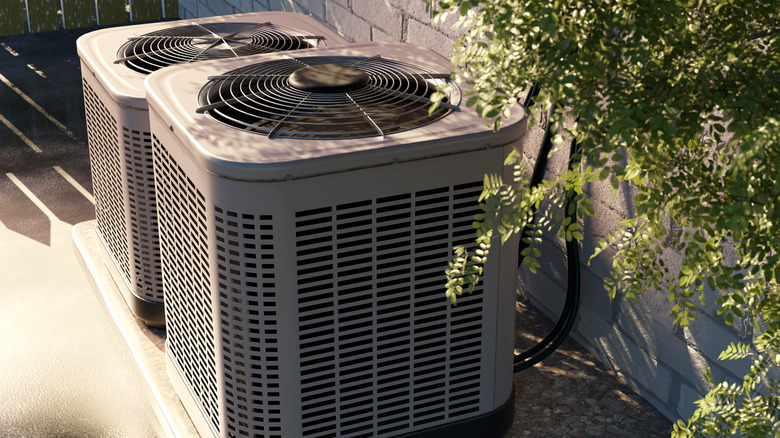
Central heat and air conditioning may be common in some places, but there's a lot to know about installation and maintenance. Plus, there are multiple types of central air conditioning systems. For example, you could have a standalone air conditioning system, or you can have a dual HVAC unit with a furnace for heat. On the flip side, you can also have a heating system with no AC built in, something to investigate if you're moving to a new place or buying a home.
Central air conditioning might be the most convenient way to cool your home, since you can set a temperature and forget about it. However, it can be expensive, particularly if you have a large home, and you're essentially cooling the entire house indiscriminately.
There's also maintenance to consider. Energy Star points out that for the best performance, both cost-wise and comfort-wise, HVAC systems need regular tune-ups, air filter changes, and duct maintenance and cleaning. If you already have an HVAC system, it may be worth an inspection to determine whether your system is as efficient as it can be. Clean filters and ducts and sufficient insulation can make a huge difference for both summer and winter energy bills. Energy Star also recommends Energy Star-rated systems to maximize your savings, so older systems without the label may not be as efficient.
Heat pump
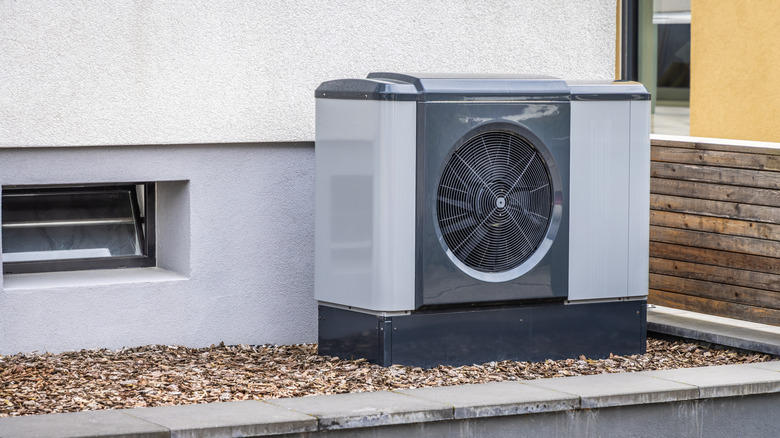
Though its name suggests it's not a cooling unit at all, a heat pump is another option for home AC. Despite the name, a heat pump has both heating and cooling functions. Rather than creating heat, heat pumps are essentially handling the air differently depending on the environmental conditions. In warmer seasons, a heat pump pulls cool air into the home. In cold seasons, the heat pump brings in warm air. A heat pump accomplishes both results by moving air around and utilizing refrigerant gases.
Though the gases in heat pumps can have environmental impacts, the Natural Resources Defense Council points out that heat pumps impact the environment less than "traditional" AC systems. Heat pumps and ACs are very different, with heat pumps doing dual duty in different seasons. An air conditioner that only cools is a different beast, but a heat pump could be a good fit if you're looking for all-year climate control.
A heat pump may be a larger purchase than a store-bought AC you can unbox the same day. However, if you're building a new home or replacing a whole-home HVAC system, it might be worth considering a heat pump. Some U.S. states even have programs to help residents purchase heat pumps and make their homes more energy-efficient.
Geothermal central unit
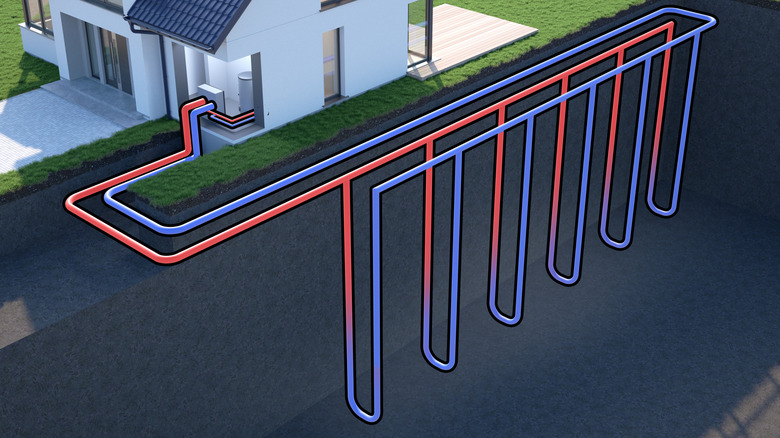
While less common than window AC units and traditional HVAC systems, a geothermal central unit is one innovative way to cool your home. Similar to a heat pump, a geothermal unit moves heat in and out of your home. Unlike a standard heat pump, a geothermal heat pump takes advantage of natural underground temperatures to adjust your home's climate.
The science behind a geothermal heat pump is simple. Underground temperatures are more consistent, while ambient temperatures above the ground fluctuate. A geothermal pump circulates air from underground to adjust the temperature inside. Some geothermal systems even work for warming water. As the U.S. Department of Energy points out, geothermal heat pumps beat out standard heat pumps in a few ways. For one, the systems are quieter, and they also need less maintenance.
Geothermal heat pump air conditioning is an option whether your home is new construction or older. All systems include a heat collector (that's underground), a heat pump, and a subsystem for distributing heat — basically ductwork like a typical HVAC. The only potential drawback highlighted by the U.S. Department of Energy is the fact that a geothermal unit costs more to install than a typical (air-source) heat pump.
Mini split/ductless
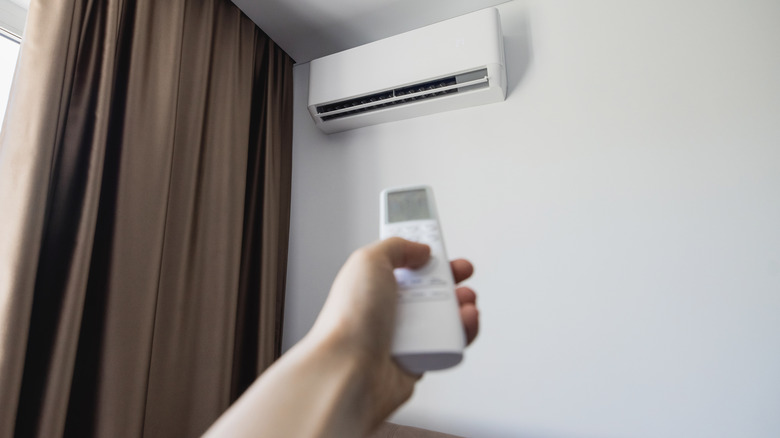
Mini-split units don't require ducts to keep your living area cool, but there is a lot to consider before installing one. Living in a home with no central HVAC, I found that a mini-split was an excellent solution for my family's cooling needs. Installing a mini split might make sense in a living room or other communal space, but it does require cutting a hole in the wall.
You'll always want to follow the manufacturer's directions for installation, but in our case, the hole we needed wasn't as large as I thought. In fact, it was a fairly small-diameter hole given how large the indoor portion of the unit is. Ductless wall ACs do require a separate compressor, and ours is located under our deck. Given that configuration, you'll want to scope out a spot that makes sense both for where the AC will be churning out cool air and where the compressor won't overheat or be blocked in.
While some mini-splits are AC-only, residential units generally have heating capabilities, too. Mine even came with a Wi-Fi app so that I can use my phone as a remote, even when I'm away from home. According to Energy Star, mini-splits can save you a significant amount in energy costs compared to a standard radiator.
Floor mini split
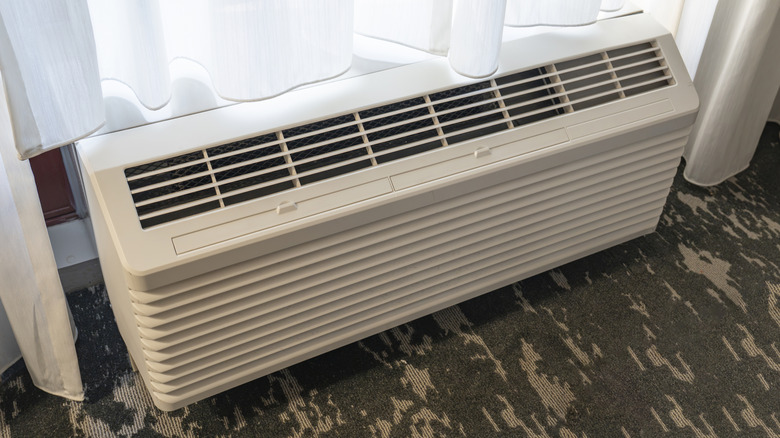
When you think of a mini-split AC, you might picture a rectangular box affixed to the wall near ceiling height. However, another type of mini-split installs closer to the floor. Although these might be less common in homes than other types of air conditioning units, you've probably seen one in a hotel room before.
Like other types of mini splits, portable ACs, and window units, a floor mini split gives you per-room climate control. If you're debating whether a floor or wall unit is the better option between mini-split designs, it could come down to where you want your cool (or warm) air and what the room's design is. For example, a lower-mounted mini split could be a great fit for smaller rooms with lower ceilings or unique shapes.
There's also the fact that if you have a mini split that provides both heat and cooling, having warm air at floor level might make for a cozier winter. These units will have the same elements as a wall mini-split, so you'll need to make space for the compressor outside, while figuring out the best spot to cut a hole for the indoor component.
How to choose: Inverter or non-inverter
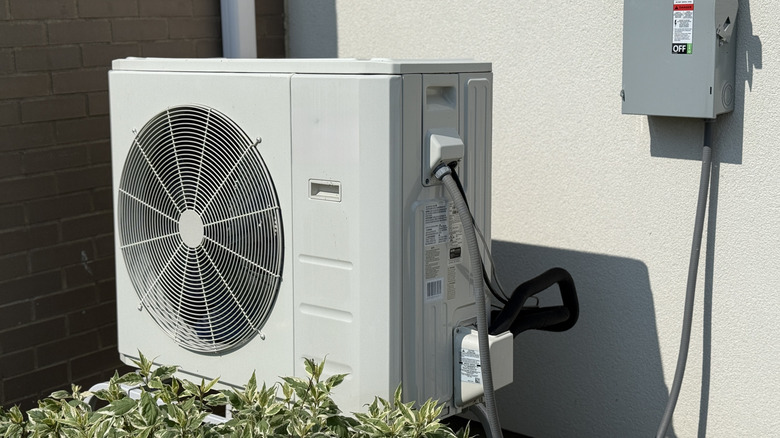
One important consideration when choosing an AC is whether it has an inverter or is a non-inverter unit. All air conditioner units fall into one of these two categories. Inverters work to adjust the AC's compressor speed, so it slows down as your space cools off. The primary perk associated with inverter units is that they are more efficient than non-inverter models. Because the inverter adjusts compressor speed, the AC generally doesn't run at full bore, so it uses less energy.
The question of inverter versus non-inverter air conditioners can come down to factors such as price. While an inverter unit may be less expensive to run, it can cost more in the store. That said, when it comes down to comparisons of ease of use, operating costs, and even noise level, inverter ACs win out easily. Fortunately, many major AC brands offer air conditioners with inverters, and the price difference may be less than you expect.
How to choose: costs

Cost is a significant factor when you purchase any home appliance, but there is more to think about than the sticker price. For one thing, there's the cost of the energy your air conditioner will use. The U.S. Department of Energy estimates that a less efficient room air conditioner, for example, could cost you hundreds of dollars over the life of the appliance.
The type of AC you choose will, of course, impact your costs over time. There's also the fact that using any AC inefficiently can cost you. To that end, it may help to implement some cost-saving best practices with your new unit, regardless of efficiency ratings. For example, following the 20-degree rule, which involves keeping your thermostat within 20 degrees of the outdoor temperature, helps cut down on excessive energy costs. Making sure your home is insulated and all window and door weatherstripping is in good repair will also help reduce cooling costs.
Factoring in repairs and other expenses is also important for the overall picture. When considering a heat pump versus a geothermal heat pump, for example, the latter may cost more up-front. However, over the long term, geothermal heat pumps can be expected to last longer, and they need less maintenance. Figuring out the total cost of your air conditioner — from installation to maintenance and repairs to operating costs — will involve some math, but it will give you a better idea of what to expect over the life of the system.
How to choose: installation requirements
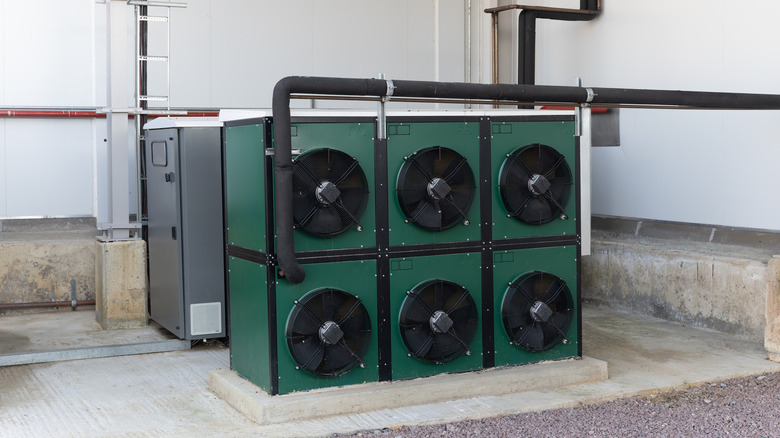
Depending on where you live, you may need to abide by some specific requirements for installing your new AC unit. Even if you live in the middle of nowhere with no neighbors for miles, restrictions may technically apply to what appliances you can swap out or install without permits.
For example, in New York City, any AC unit that exceeds 36,000 BTU requires a permit for installation. In Chicago, Illinois, you're required to get a permit if you're installing a new type of air conditioner, or if your home didn't have one before, among other scenarios. Other installation considerations may involve approval by your homeowner's association, property management company, or landlord, as applicable.
There's also the fact that you may not be able to install a certain type of unit easily (or at all) depending on your home's layout, location, and size. For example, swamp coolers typically require connection to a water source, so a swamp cooler isn't a great option if a hose can't easily reach the installation spot. Similarly, portable ACs need a vent, which may not be possible if you live in an apartment with windows that don't open all the way.
How to choose: home size and setup
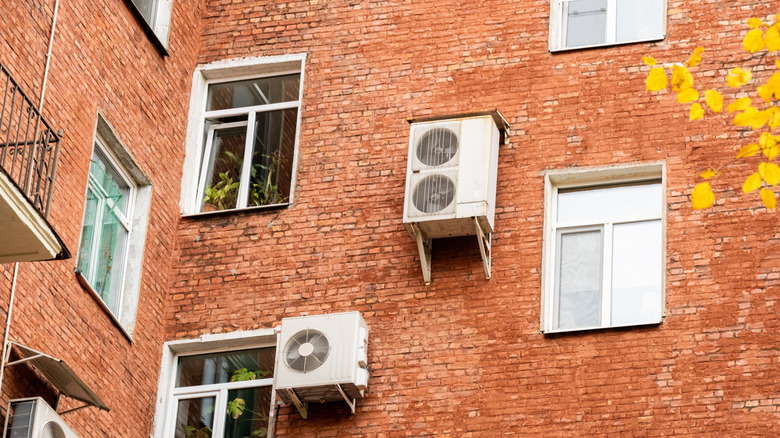
When it's hot out, it's tempting to hit up your local home improvement or retail store for an AC unit you can use within minutes of getting it home. Yet there is a lot to consider in terms of your home's size and setup that might make a simple purchase much more complicated. For example, if you need whole-home cooling, one window AC per room may not be feasible.
There's also the fact that older homes, especially, may need retrofitting to accommodate many AC types. In my experience, it was easier and more efficient (as well as quieter) to install a mini-split versus using window units in my 1980s mountain home. At the time it was built, no one saw a need for AC, so we have no ductwork and no easy access to water for, say, an evaporative cooler.
Your AC servicing needs are a crucial part of the home size and setup equation, too. A system that requires more maintenance, like heat pumps or HVAC units with ductwork, may present more challenges than you want to deal with. The biggest factor may be the work involved in installation, especially if it requires cutting holes in the walls or ceiling, or other preparation that may require a professional.
How to choose: climate factors

One other consideration crucial to your energy savings and comfort level is whether the type of AC you choose is compatible with where you live. For example, if you live in an area with high humidity, a swamp cooler could add to the indoor humidity and make things uncomfortable. Thus, evaporative coolers — particularly single-stage models — are better suited to dry areas.
High humidity can affect how your air conditioner operates, too, because some AC systems work hard at taking moisture out of the air before cooling it. Keeping the indoor humidity between 40% and 50% is ideal, but that doesn't mean every AC system can handle such a demand, depending on your region.
On a similar note, if you live somewhere with super-hot summer (or spring, or year-round) temperatures, your AC might be working overtime regardless. In that case, you'll want to consider energy costs as a significant factor in determining what type of air conditioner is right for your home. A system that is more expensive up-front could be cheaper to run, depending on energy rates and your consumption level, but you won't know until you do the math and try it out.