

5 Downsides Of Portable Air Conditioners
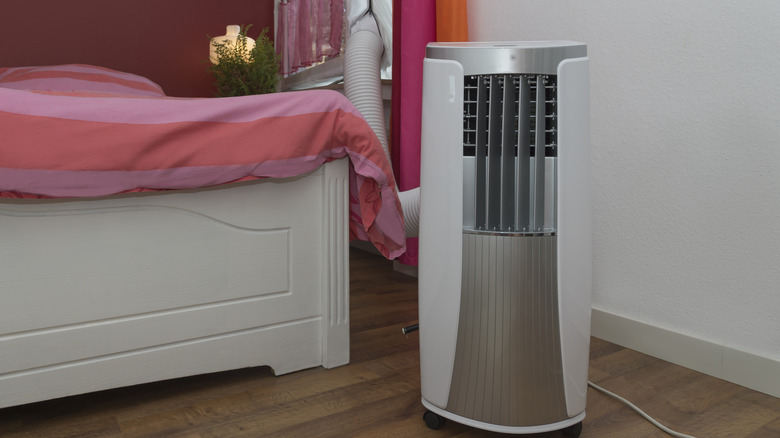
We may receive a commission on purchases made from links.
There is no doubt that the climate is warming. According to the National Oceanic and Atmospheric Administration (NOAA), the year from April 2025 to March 2026 was the warmest ever recorded. This worrying trend has seen more American homes turning to air conditioning to help stay cool in the worst of the summer temperatures. Currently, around 93% of occupied US housing stock has air conditioning installed, a rise of 6% when compared to 2009 figures, and a more substantial increase of 35% when compared to 1993 figures.
While these figures mostly apply to built-in air conditioning, there has also been a substantial rise in the sale of portable air conditioners. The US market for portable air conditioners was $1.97 billion in 2024, and by 2030 this is expected to grow to around $2.49 billion. This is perhaps understandable as temperatures rise, and we struggle to keep cool. After all, these don't need expensive installations; they're portable, and they're versatile. This can make them seem like a good option for rooms, workshops, or other spaces not covered by installed air conditioners, or as a stop-gap when an HVAC system breaks down.
However, they're far from a perfect solution — useful in the right circumstances, certainly — but not without their flaws. From running costs to noise, and from effectiveness to aesthetics, here we discuss five downsides of portable air conditioners.
1. Portable air conditioners cost more to run than other types
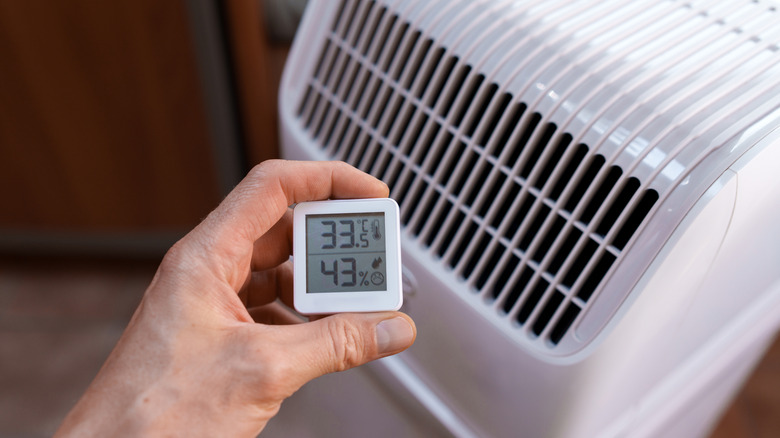
While portable air conditioners can be convenient, they can also be expensive to run. When compared to other forms of air conditioning, these machines are far less efficient. And while manufacturers can always tweak designs to make these as efficient as possible, they do face one hurdle that restricts what can be done — the laws of physics.
Actually, we don't need to turn to complicated physics explanations to understand why; a little common sense will suffice. Naturally, an air conditioner will need to work more to get a warmer room to the right temperature. With a portable air conditioner, the heat generated by the unit is kept inside the same room. In other words, a portable air conditioner uses some energy to offset the heat it's producing. The same scenario also applies to the ventilation hose.
Digging a little deeper into the realm of physics, a phenomenon called "negative pressure" also affects energy efficiency. Again, this happens because the unit draws the air from the actual room being cooled. Because of this, the room being cooled has negative pressure when compared to its surroundings. Nature abhors a vacuum, and this pressure differential means that hot air from surrounding rooms or the outside world rushes in to equalize the pressure.
The result is that portable air conditioners can use around twice as much energy as a modern window air conditioner. Placement can help you get the most out of these units; a portable air conditioner in the wrong spot is one of the most common problems with air conditioners.
2. Cooling efficiency
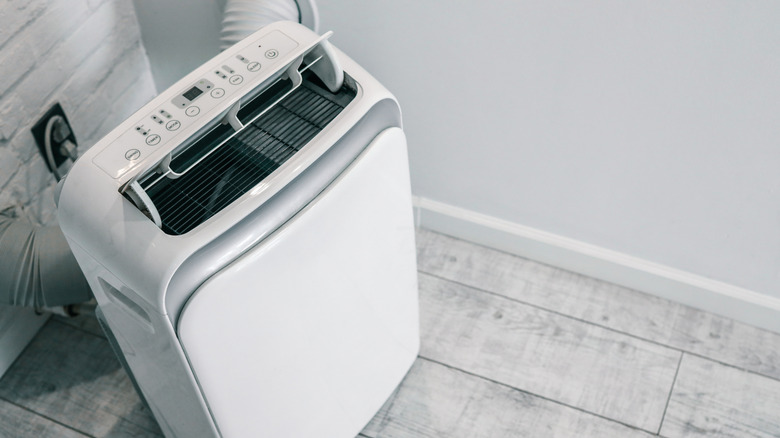
You could almost forgive the higher energy bills if you're kept cool enough to forget that it's baking hot outside. However, that isn't always the case. These will normally work well enough to cool small rooms adequately, but if you want to cool multiple rooms or a large area with one of these, you'll have your work cut out for you.
Of course, not all portable air conditioners are created equal, and higher-rated units will obviously have more success. For instance, a portable air conditioner with a performance rating of 7,000 BTU would only be able to successfully cool a room of about 150 square feet, and a 14,000 BTU-rated unit would be good for rooms up to 450 square feet. However, we also need to look at how these units are rated and how these ratings compare to other types of air conditioners.
Air conditioning cooling capacity is often measured in British Thermal Units (BTUs). Rating standards for window units have been regulated by federal standards for decades; portable air conditioners have only been subject to such regulations since 2025. This means that some portable air conditioners have adjusted product BTU ratings to comply with the new regulations, and there can be models still showing misleading figures.
Finally, the standards aren't applied equally across the board, and portable air conditioners are subject to less demanding test conditions. This means that comparing BTU figures across air conditioner types still doesn't give the full picture. In other words, when comparing a 10,000 BTU portable air conditioner to a similarly rated window unit, you'll get more cooling for your buck with the latter.
3. Portable air conditioners can be noisy

We've already noted that having the cooling equipment inside the room it's trying to cool isn't great for energy efficiency. But it isn't great for your audio experience either. Even when they manage to cool a room adequately, they can be surprisingly loud for day-to-day use. Unlike window or split air conditioning units, which keep most of their mechanical noise outside, portable units house the compressor, fan, and ducting entirely in the room. Fine if you want it to cool an already noisy workshop or garage, not so cool if all you want is a good night's sleep.
That said, all air conditioning units are noisy to one degree or another, and although noise levels vary across brands and individual circumstances, there are some broad benchmark figures we can use. According to International Noise Awareness Day (INAD), air conditioners produce noise in the 50 to 75 dBA range, about the same as a washing machine. INAD also notes that prolonged exposure to noise levels above 70 dBA is enough to damage hearing. The INAD uses the dBA scale to benchmark sound levels, as it is "adjusted" to fit how humans perceive sound.
While these figures apply to air conditioners in general, it's widely accepted that portable air conditioners can be among the noisiest.
4. Drainage
Air conditioners don't just cool a room; they also act as dehumidifiers. Even in cooling mode, the underlying design principles mean all refrigerant-based air conditioners do some level of dehumidification. Of course, all that water has to go somewhere, and many portable air conditioners will need to be regularly drained. This might seem like a minor thing, but it's one more chore to forget to do around the home, and many models incorporate automatic cut-off systems that switch the unit off when too much water has accumulated. This can be far from ideal when you wake up in the middle of the night and find the temperature has soared to 80° Fahrenheit — but probably better than waking up to a flooded room.
While many modern portable air conditioners are designed to be self-evaporating, even these can need regular draining depending on circumstances. For instance, the Domanki 14,000 BTU portable air conditioner selling on Amazon has a smart self-evaporating system. Despite this, it can still need regular draining. In some circumstances, this can be needed once every eight hours.
Ultimately, many of the best portable air conditioners will incorporate features that minimize manual drainage. On a similar topic, it's also important to follow the right cleaning schedule for the filters on your portable air conditioner. To be fair, filter maintenance is not unique to portable air conditioners; filter cleaning is an air conditioning maintenance task that everyone should do regularly, on any type of air conditioning unit.
5. Aesthetics and portability
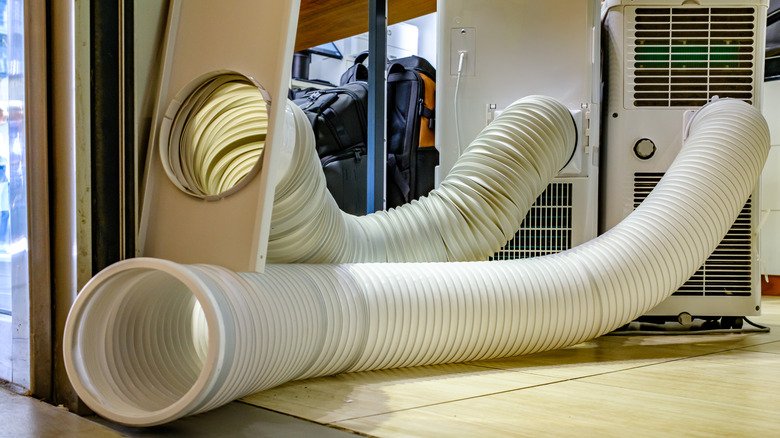
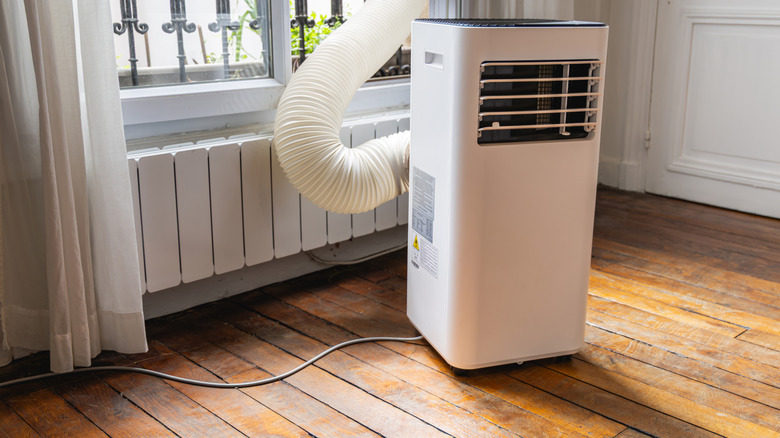
Portable air conditioners are certainly easier to set up than fixed systems, but there's still some unavoidable installation involved. Every portable refrigerant-based air conditioner needs a vent to expel hot air, which means running a large flexible hose from the unit to a window kit or similar outlet. This brings us to the portability factor of these units, which largely depends on how you define portable. Once the hose is attached, the unit is effectively tethered to the window, and moving it to another room means repeating the entire setup process. That's fine if you only want to cool a single space, but far less convenient if you imagined rolling it about with you from the living room to the bedroom each night.
Another downside of that vent is that it makes integrating a portable air conditioner into the subtle ambiance of your room a tricky ask. And, okay, the units themselves aren't huge, but they're heavy, and they still take up valuable floor space. You can't even tuck them away discreetly in a corner, as there is a minimum distance you need to keep between a portable air conditioner and the wall. What this means is that you've got a large domestic appliance prominent in your room, with at least one vent hose meandering towards the window and a power cable snaking behind.
We've now established that there are distinct downsides to portable air conditioners, but in the right circumstances, these can still be an effective way to cool a room without expensive installations.