

Do Portable Air Conditioners Need To Be Drained?
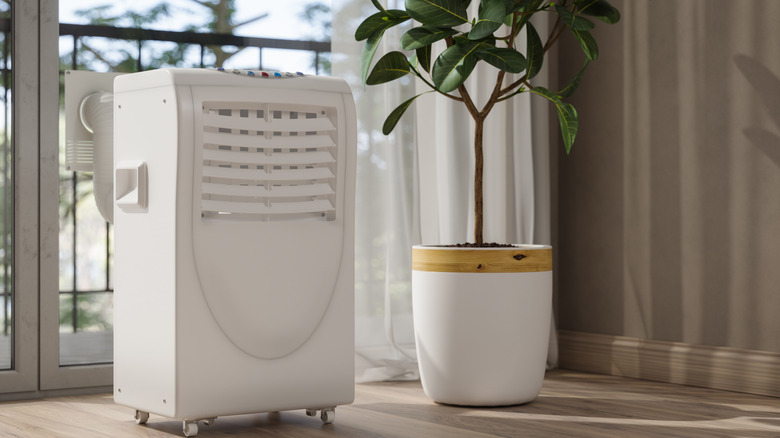
There's no shortage of house-maintaining tasks for homeowners to think about from day to day and season to season. But when the first heat wave of the summer sets in, keeping your home and yourself cool and comfortable no doubt will top the list. For some, that's simply a matter of kicking the HVAC unit over to air conditioning mode, but if your home doesn't have a system in place, a top-rated mobile air conditioning unit can be a functional and affordable fix.
If you think a mobile A/C unit might be a fix for your home, there are many factors to consider before you rush out and buy one, not the least of which is which style and brand best suit the needs of your space. The level of upkeep for the device might also be a factor in your decision making, as mobile A/C units need regular maintenance to function properly. For some units, that might mean occasionally draining the unit of any water that has accumulated inside.
Many newer models are designed with built-in self-evaporating features that expel any excess condensation through the exhaust hose. However, older units instead typically feature a built-in reservoir where the condensation is collected during usage. If you have one of those units, you will need to empty the reservoir with some regularity to avoid any potential performance issues.
Other tips for maintaining a portable air conditioner
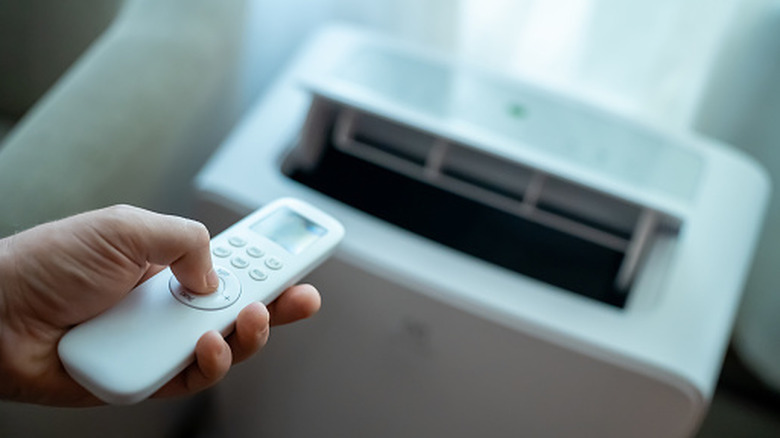
For the record, emptying the reservoir in your portable air conditioning unit "with some regularity" could mean several times per day in particularly humid areas. Failure to do so could trigger an automatic shutdown if the water level gets too high, and if water spills over into the machine, mold, mildew, and foul odors are likely to follow. In some instances, the moisture could even damage the unit's electrical components.
Given the fuss required with such models, it might be wise to invest in a portable A/C unit with a built-in self-evaporator feature. Even then, you'll need to take other measures to ensure the unit runs as intended, like regularly cleaning the device's air filter. Just like with an HVAC unit, that filter is designed to limit the level of dust and airborne debris that makes it through the air vents. If left unchecked, the build-up can also limit the amount of air escaping the unit. That'll invariably cause it to work harder to function, potentially leading to performance issues or even a breakdown.
You should also check the exhaust hose with some regularity to ensure that it is properly set up, is showing no visible kinks, and is free of interior blockages. While you're checking the exhaust hose, you should confirm that the unit is set on a level surface, and is not leaking anywhere. And when summer ends, you'll want to properly store the unit in a dry place to prevent the potential build up of mold and mildew.