

Do All Portable Air Conditioners Require A Vent?
We may receive a commission on purchases made from links.
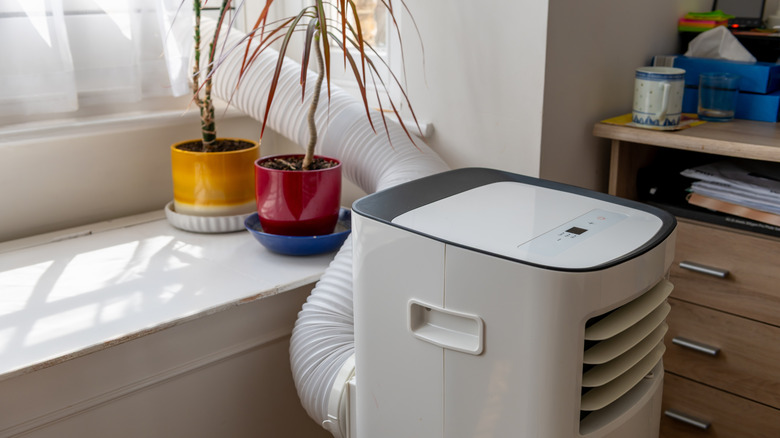
Portable ACs have been gaining in popularity, especially for renters. The reason is in the name; unlike central systems that are spread out across the home, with the air handler inside, and condenser coils on the outside, a portable unit has everything it needs to cool the room within a single compact rectangular tower. Some of the best portable air conditioners in 2026 come with features like dual-hose operation, and automatic moving louvers to disperse cool air in multiple directions. In 2025, of all the options for cooling a room, portable units were just shy of 20% of the total market, according to Consumer Reports.
However, in order to cool properly, refrigerant-based portable air conditioners must vent out of a window because these machines work in part, by removing hot air from the room. If the unit is venting all that heat straight back into the space you're trying to cool, not only would the room get hotter, but moisture from the process of creating chilled air will also blow back into the room, raising humidity levels. You can however run the machine in dehumidifier mode (if available), which doesn't require outside venting, but also doesn't cool, it simply pulls moisture out of the indoor air.
Ventless portable air conditioners
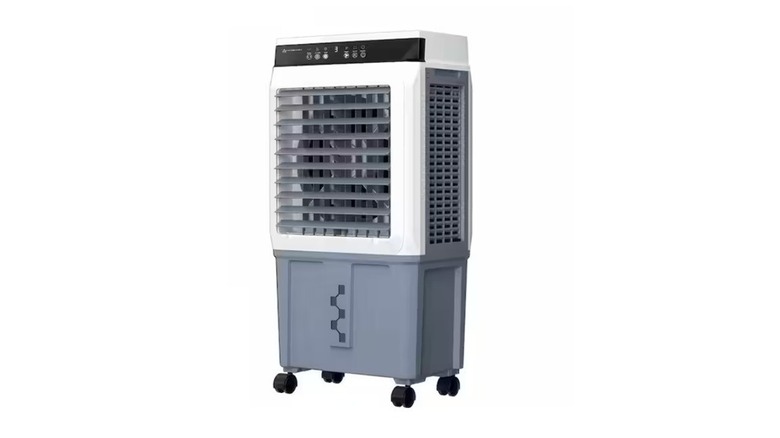
There is another type of cooling unit that doesn't need to vent outside, and confusingly, they can also be referred to as portable air conditioners. While these units can look similar in design (a rectangular tower), they work in a much different way, that makes them only useful in certain climates. More often referred to as an evaporative cooler, ventless units are much simpler in design. They require you to fill a tank at the base of the unit with cold water. Then a fan draws air through pads, sometimes called wicks, which have been saturated with moisture from the water reservoir.
Conversely, refrigerant-based units are more complex but often much more effective. While the vented models are typically more expensive, there are some budget-friendly air conditioners that won't break the bank. A refrigerant-based unit works by grabbing warmer air from the room and passing it over the evaporator coils that contain refrigerant, which draws out the heat. The cooler air is then pushed back into the room, but the unit still needs to deal with the heat that was absorbed. The refrigerant carries the heat as a compressor forces it into the condenser coils, where a fan blows it out of the exhaust vent. This cycle repeats until the desired temperature of the room is achieved.
Refrigerant-based ACs remove humidity

One of the issues with a ventless evaporative cooler, is that it actively adds humidity to the room its operating in. According to testing by the NYTimes.com, commercial swamp coolers bumped up ambient humidity by up to 3% for every 1 degree drop in temperature. According to the U.S. Geological Survey, it's possible for a ventless evaporative cooler to achieve a temperature reduction of up to 20 degrees. However, this is only possible in dry climates with low humidity, leaving out much of the U.S. (the entire eastern half) in terms of cooling viability. Essentially, the higher the temperature and relative humidity levels, the worse a ventless portable unit will function.
Refrigerant-based portable ACs on the other hand, actively remove moisture from the air, lowering humidity levels in the room as they cool. Moisture in the air is expelled out of the vent which is directed outside. While condensation is created during the process of generating colder air, a vented portable air conditioner doesn't dispel it back into the room but captures it into a tank at the base of the unit. Some models, like the Dreo smart air conditioner AC516S don't typically require draining when used to cool a room, as they feature a self-evaporation function. However, other units may require the tank be periodically drained, more often if the unit is working hard, such as during a heat wave.