

What Does BTU Mean On An Air Conditioner?

Shop for an AC in the US, and you'll eventually spot the term BTU stamped somewhere, usually on the unit itself, or if not, then at least on the retail box. BTU stands for British Thermal Unit, and by definition it's pretty humble. One unit of the measure is the energy required to warm a single pound of water by one degree Fahrenheit. That may sound confusing, especially to someone who's never run across the term before. To paint a clearer mental picture, the US Energy Information Administration (EIA) offers an alternative definition: a BTU refers to the amount of heat a wooden match burning all the way down gives off.
But what does burning have to do with something that cools? Well, an AC is basically a heat vacuum, meaning it sucks hot air out. So its capacity is technically measured in BTUs per hour (BTU/hr), which tells you how much heat it can yank out of a room in a single hour. So suppose a unit is stamped 10,000 BTU, then that means it's hauling 10,000 of those match-worths of heat outside every hour – as it feeds you cooler air in return. But of course, a single match is a puny amount of heat, so BTUs always end up landing in the thousands. Ultimately, all you need to know is that more BTUs translate to more cooling.
But why's it called British, and is there an American version?
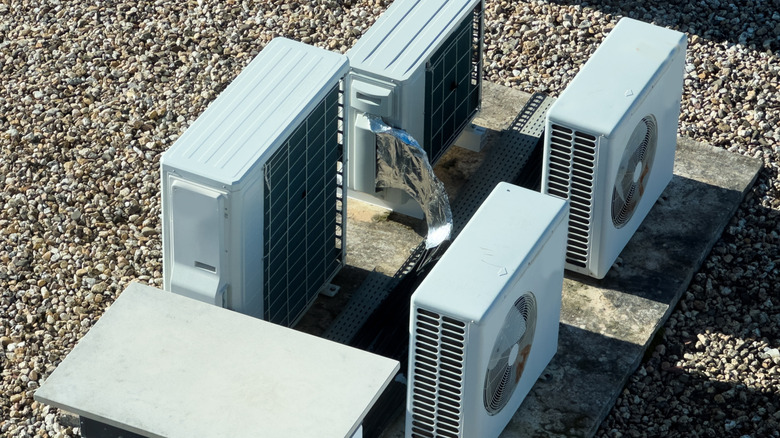
The naming has some irony behind it. The term actually originated in British engineering way back in the 1800s. From there, it caught on more widely as the British Empire spread, eventually sprawling far enough that it felt only natural to stamp the country's name on the unit. That said, today, the BTU is mostly limited to the United States, as most of the planet has moved on from it. Heat is typically measured in joules under the metric system. Of course, you will still see BTU printed alongside other units, but that's just courtesy.
Speaking of those other units, the more widely used ones for gauging the power and capacity of ACs in particular are tonnage and kilowatts, both of which are stamped by all of the best AC brands right on the units or the boxes. A ton is 12,000 BTUs, while a kilowatt of cooling translates to roughly 3,400 BTUs. So if you're wondering whether there's an American version of the British Thermal Unit, it's the BTU itself.
More BTUs isn't automatically better

More is usually better, but that doesn't hold for ACs when it comes to BTUs. Suppose you fit a comically large AC in a room that'd fare just fine with half the amount of BTUs, then you'd run into several issues. The main one is the AC blasting a room cold in a hurry, then clicking off before it pulls the humidity out. The result would be a space that somehow feels cold and clammy at the same time. Go too small, and you flip the problem. The unit just runs and runs, never quite reaching your target. It also ends up chewing through electricity, while at the same time wearing itself out a lot sooner too. That is why plenty of people rely on rules like the 20-degree rule for air conditioners to stave off early burnout. A standard rule of thumb to decide the right BTUs for your space is to multiply the square footage of your room by 20 BTUs.