

8 Things To Know Before Buying A Mazda CX-50 (Used Or New)
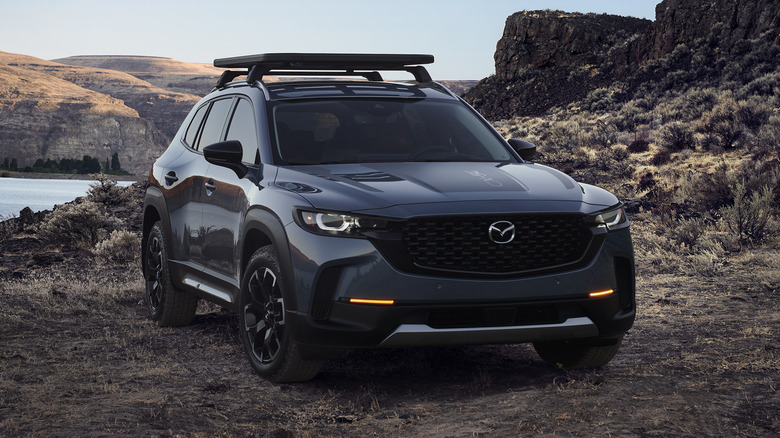
There are very few segments of the new car market that are as competitive as the compact SUV segment. That's great news for buyers and less reassuring news for manufacturers: Buyers can afford to be choosy, while manufacturers need to work especially hard to stand out from the crowd. One of Mazda's offerings in the segment is the CX-50, which is available in a wide range of trims.
Just like other affordable Mazdas such as the Mazda3 sedan and hatchback, the CX-50 can be optioned to prioritize either budget, premium features, or a balance of both. That makes it a competitive choice for a range of new car buyers, although it isn't without its drawbacks. It's also an appealing option for used car buyers who are looking for an alternative to market-leading models like the Toyota RAV-4 and Honda CR-V. If you've been considering a CX-50, be that a new or used example, there are a few things that are worth knowing before you make a decision.
The 2026 CX-50 starts from $31,495
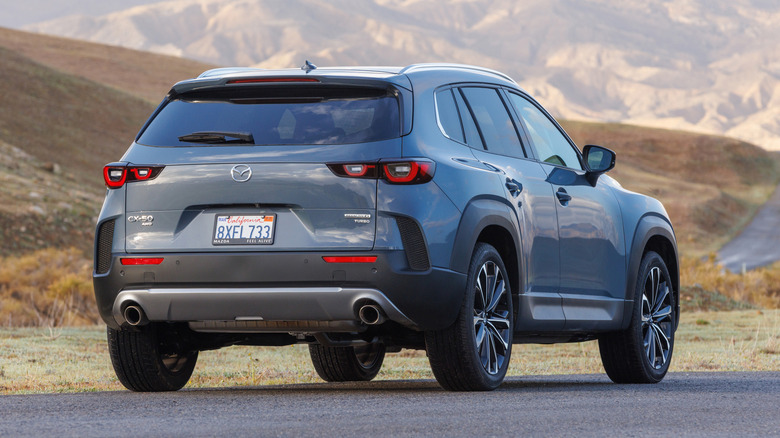
To stay competitive against such a packed field of rivals, any good compact SUV needs to be affordably priced. Mazda knows this, and so for the 2026 model year, it offers the base CX-50 from $29,990, plus a $1,595 destination fee (which rises to $1,640 in Alaska only). This base trim, called 2.5 S Select, receives a 2.5-liter four-cylinder engine, wireless Apple CarPlay as standard, and Mazda's i-ACTIV all-wheel drive system.
The next trim in the 2026 CX-50 range is the 2.5 S Preferred, which adds extras like front and rear parking sensors and a power liftgate. It starts from $32,400, excluding fees. From there, the 2.5 S Meridian Edition and 2.5 S Premium add extra niceties while keeping the same powertrain.
To get a CX-50 with the optional 2.5-liter turbocharged engine, buyers will need to opt for either the 2.5 Turbo trim, the 2.5 Turbo Meridian Edition, or the range-topping 2.5 Turbo Premium Plus. The cheapest of those trims starts from $37,900 excluding fees, while the range-topper will cost at least $42,900.
Buyers who opt for the turbocharged engine are rewarded with a notable boost in both horsepower and torque. The base engine produces 187 horsepower but the turbo-four option produces 256, as well as offering 135 lb-ft of extra torque. As well as making top trim examples of the car faster off the line, it also increases their towing capacity to 3,500 lbs.
There are only minor updates for the 2026 model year
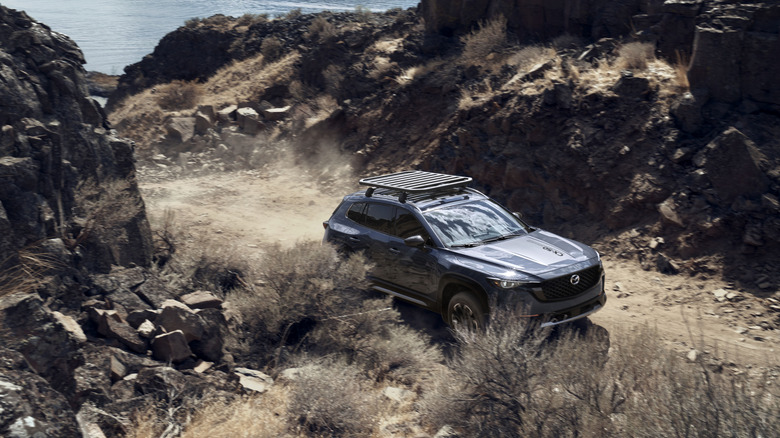
The latest CX-50's performance figures and engine options remain unchanged from the previous model year, but Mazda has made a few tweaks for 2026. The new Meridian Edition trims are one of the biggest changes, and they're designed to add an extra dash of all-terrain capability to the SUV. These trims feature roof rails and faux leather-trimmed seats, as well as beefier all-terrain tires that sit on 18-inch rims.
Also new for 2026 is an optional all-white interior, although Mazda, perhaps wisely given the potential for muddy boots, doesn't allow buyers of the off-road oriented Meridian Edition trims to spec it. Instead, it's reserved for higher trims such as the 2.5 S Premium and 2.5 Turbo. Other than some minor cosmetic changes, the model remains otherwise unchanged from 2025.
Although the 2026 model year has seen relatively few tweaks made, 2025 saw a major change with the addition of the CX-50 Hybrid. This fuel-sipping version of the car starts from $34,750 (excluding fees) for 2026, and offers a combined output of 219 horsepower and 176 lb-ft of torque.
The CX-50 is generally well liked by owners
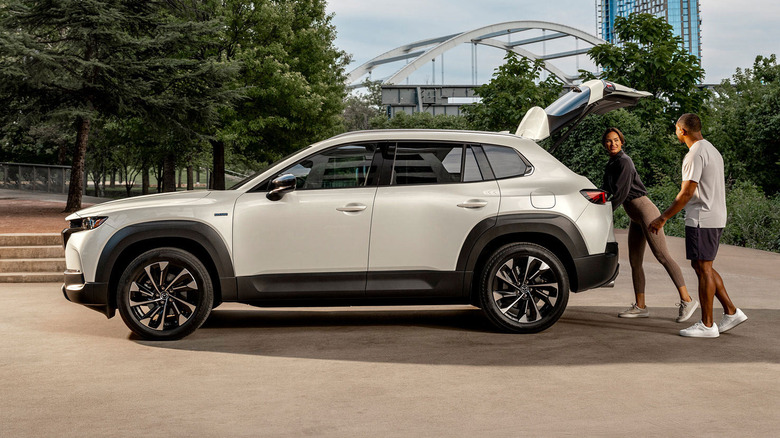
Spec sheets and model year changes are a great way to compare a car to its rivals on paper, but they don't tell the whole story. Any good car also needs to be well-liked by its owners, and the CX-50 generally receives positive feedback in that regard. Owner feedback collected by J.D. Power saw the car score particularly well for the dealership experience, while its driving experience and reliability earned competitive — albeit not class-leading — scores. Meanwhile, Consumer Reports concludes from its survey data that the CX-50 should have average reliability compared to other new cars.
It might be well liked overall, but there's still some room for improvement. In J.D. Power's survey, the CX-50 lagged behind many of its bestselling rivals, with the Honda CR-V, Hyundai Tucson, and Kia Sportage all earning higher scores overall for the 2026 model year. Notably, the CX-50 also received a much lower score for reliability and a slightly lower score for driving experience compared to Mazda's other compact SUV, the CX-5. We dive deeper into the differences between the two models below.
We thought the CX-50 Hybrid had areas for improvement
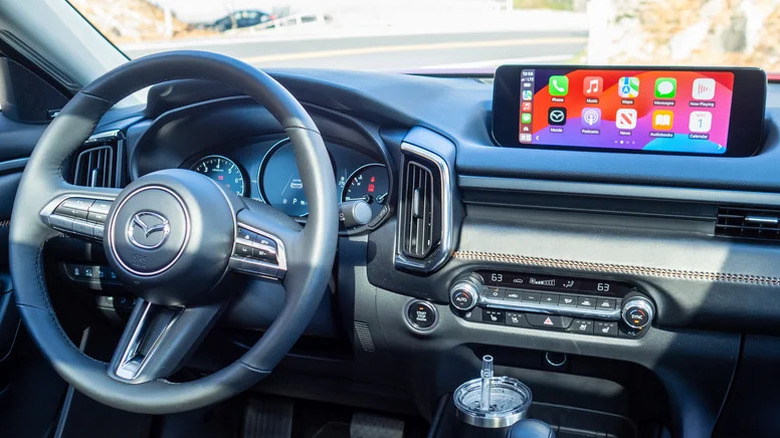
We've spent time behind the wheel of both the hybrid and non-hybrid versions of the CX-50, and came away with mixed feelings about both. Testing the hybrid CX-50 shortly after its launch, our reviewer thought that it felt worth the wait overall.
The car was quicker off the line than the non-hybrid CX-50 thanks to its trio of electric motors, although it felt less eager at higher speeds. Its standard tech was mostly competitive with what else was available on the market, but its central touchscreen proved to be especially finicky to use. As you'd expect, the hybrid was also much more efficient than the non-hybrid SUV, although our reviewer couldn't quite match Mazda's claimed efficiency figures.
Testing the current generation non-hybrid CX-50 around a year earlier, we made a few of the same complaints. The infotainment system remains the same across both variants, and it's equally tricky to use in both. We also struggled to match Mazda's claimed efficiency in the non-hybrid car, although in fairness, much of our driving was on urban roads.
It isn't without its faults then, but overall, the CX-50 still left a positive impression after Mazda came back to collect the keys. The fit and finish on our high-trim test vehicle was impressive, and the car's handling remained consistently good regardless of its powertrain.
Estimates differ on how well the CX-50 will hold its value
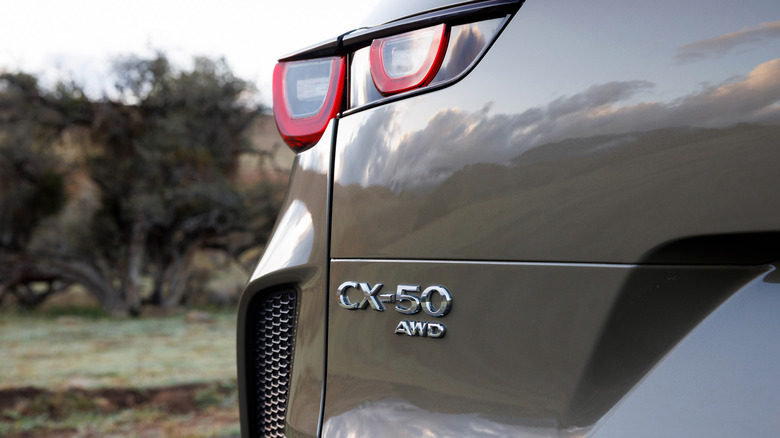
Many small SUVs hold their value well over time, and there are several factors at play helping to keep those values high. Not only are plenty of small SUVs affordably priced when new, they're also consistently popular among used buyers, which helps ensure demand matches supply when they're traded in. The best contenders in the class also generally have strong reputations for reliability.
In that context, you might expect the CX-50 to hold its value well. In truth, current estimates paint a less clear picture. According to CarEdge, a new CX-50 will lose just 37 percent of its value after five years on the road, making it a strong performer in its class. However, KBB estimates the car will lose about 52 percent of its value over the same time frame, putting it behind the best in the segment.
The exact percentage of your investment that you can expect to receive upon trade-in can also differ based on your car's condition and mileage. Overall though, it still seems likely that rival SUVs from Honda and Toyota are more likely to hold their value than the Mazda. This isn't great news for new car buyers, but it works to the advantage of used car buyers trying to score a bargain.
Comparing the average used values of a three-year old CX-50 with its rivals, the cost savings are clear. According to KBB, a base-spec 2023 CX-50 has a fair purchase price of $20,100 at the time of writing. Meanwhile, a base-spec RAV4 from the same model year will set buyers back over $6,000 more, and a base CR-V is over $5,000 pricier than the Mazda.
The Mazda's fuel efficiency lags behind its rivals
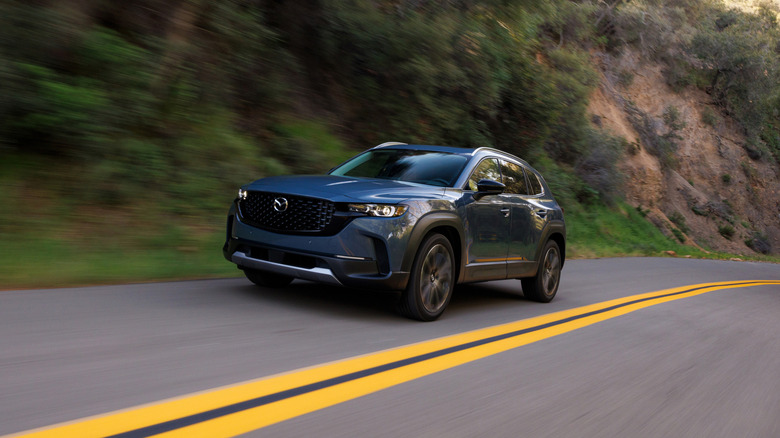
High gas prices mean that a car's fuel efficiency can make an increasingly big difference to its overall running costs, and the CX-50 won't win any prizes here. The hybrid CX-50 achieves far better fuel economy than its non-hybrid counterparts, but it still trails some of its competitors.
Buyers of the hybrid Mazda can expect to see 38 mpg combined according to the EPA, while the non-hybrid base engine hits 26 mpg combined and the optional turbocharged engine averages 25 mpg. It's worth keeping in mind that those are the official numbers, but in our real-world testing, both the hybrid and non-hybrid versions of the car proved to be less economical than their EPA figures suggest.
Even drivers who do manage to match the EPA figures will still be paying more at the gas pump than drivers of other similarly-sized SUVs. The most frugal version of the 2026 Honda CR-V Hybrid hits an officially-claimed 40 mpg combined, while the Toyota RAV4 Hybrid should return 43 mpg. Both of those SUVs are front-wheel drive rather than all-wheel drive, but even an all-wheel drive hybrid RAV4 is still several mpg more efficient than a hybrid CX-50.
Mazda also offers the similarly sized CX-5
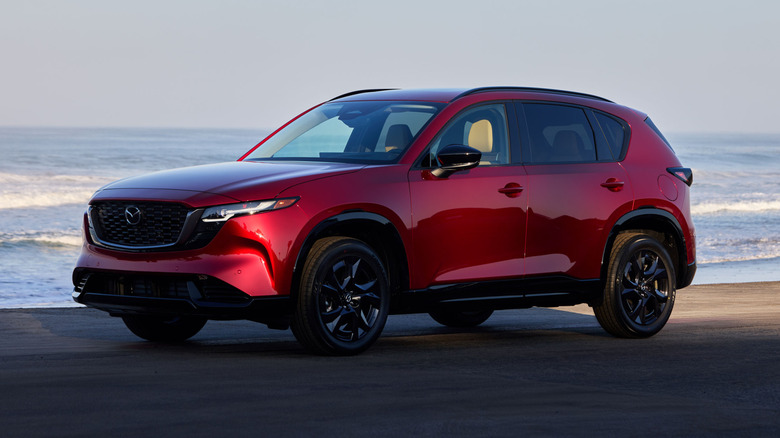
Alongside all of its competition from other manufacturers, the CX-50 also faces competition from within Mazda's own dealership. The CX-5 is another compact Mazda SUV, and for the 2026 model year, it starts at an identical price to the CX-50. The base engine of the two SUVs is also identical, although unlike the CX-50, the CX-5 is not available with the more powerful turbocharged engine, nor can it be had in electrified form.
Aside from the varying powertrain options, Mazda explains that the main difference between the two small SUVs is their intended use. The CX-5 is designed to spend its entire life on the asphalt, while the CX-50 is more versatile, and will be just as happy to tackle a dirt road. The CX-5 is a little taller and a little shorter than the CX-50, and it also has slightly more cargo capacity. In aesthetic terms, the CX-50 also looks the more rugged of the pair, with cladding on the arches to emphasize its greater all-terrain capability.
The CX-50 has a huge amount of competition
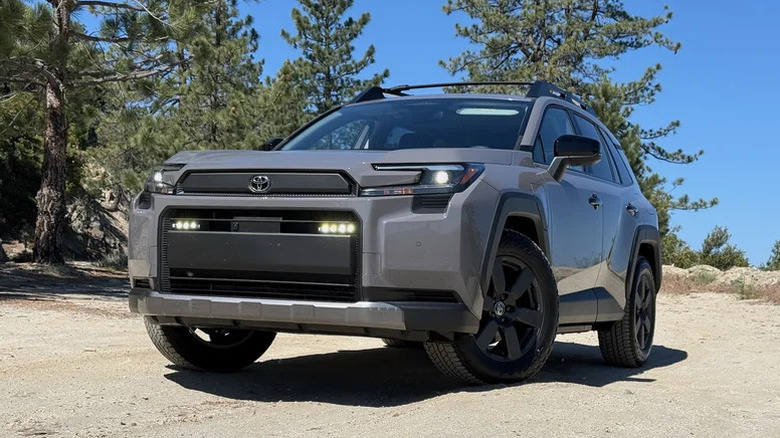
We've already mentioned some of the CX-50's main competitors, but it's worth going over a few of them in more detail. Aside from Mazda's own CX-5, the CX-50 competes against several rivals from other Japanese brands, with the Toyota RAV4 being one of the best-known alternatives.
The latest generation of the RAV4 is more efficient in hybrid form than the CX-50, and it's also available as a plug-in hybrid with around 50 miles of all-electric range. The Toyota's looks won't be for everyone, and it doesn't have the same focus on handling as the Mazda, but it's certainly no accident that the RAV4 remains one of the most popular new cars in the country.
Another popular choice is the Honda CR-V, which in hybrid form is both similarly powerful and similarly priced. On paper, it's also more efficient, although it's worth adding that our reviewer struggled to match the EPA's economy ratings during our time with the car. Likewise, the Hyundai Tucson Hybrid's EPA figures also proved to be optimistic, although we found plenty of other things to like about it.
Anyone who plans to frequently venture beyond paved roads might also want to consider the Ford Bronco Sport, since its Sasquatch trim is capable of tackling tougher terrains than its small size and reasonable price tag would suggest. The CX-50 certainly isn't short on competitors then, but it still manages to be an appealing option in its class, even if there are some areas where it falls short.