

Toyota's 2026 RAV4 Plug-In Hybrid Gets Great MPG, But There's A Better Reason To Buy
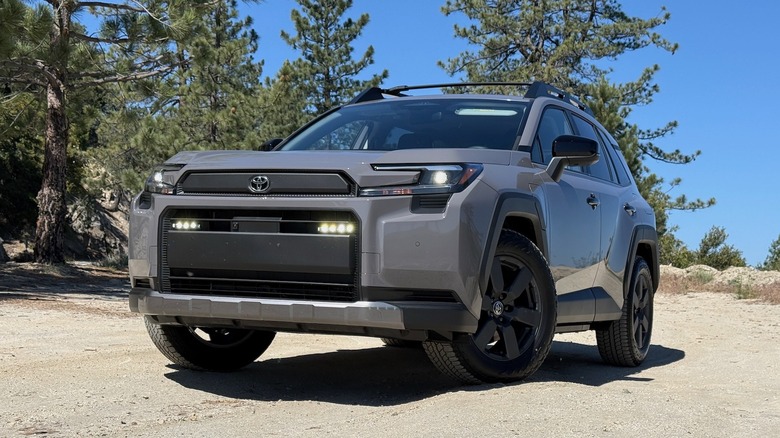
There's a common misconception floating around about plug-in hybrids: that they're only useful if you've got a very specific lifestyle. Plug-ins are typically more expensive than their standard-hybrid counterparts upfront, so some shoppers think that you need to have an EV-friendly commute, live in an EV-friendly city, or want an EV most of the time to justify that extra cost. Vehicles like the new 2026 RAV4 Plug-in Hybrid challenge all those notions, though.
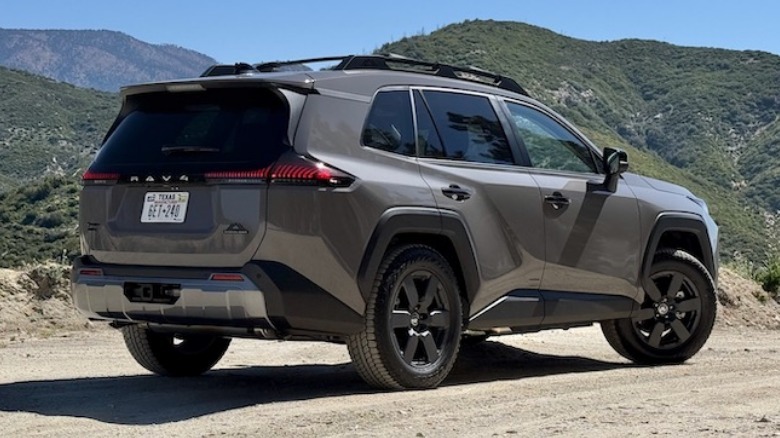
The Toyota RAV4 is one of America's most popular vehicles. It's also completely redesigned for 2026 with a lot of new details, including a fully overhauled exterior and an interior with all of Toyota's latest tech. And in its Plug-in trims, it offers the usability and zero-range-anxiety owner experience of a regular hybrid, paired perfectly with the added benefit of fully-electric operation whenever you decide to charge up.
 Travis Langness/SlashGear
Toyota loaned me a RAV4 Plug-in Hybrid for a week, giving me a chance to run it on EV power and gasoline, live with it as a daily commuter, and take it on a few local adventures. And at the end of that experience, I was convinced that this is the sort of vehicle you can use, no matter what your lifestyle. In fact, it might be one you change things around for — it's that good.
Pricing is where the decisions start
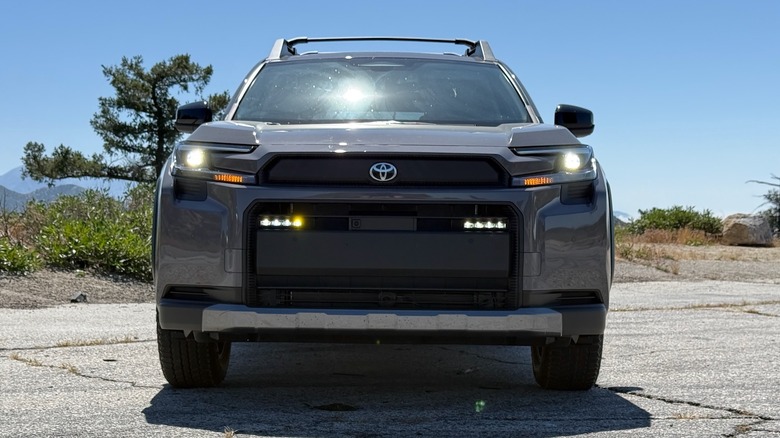
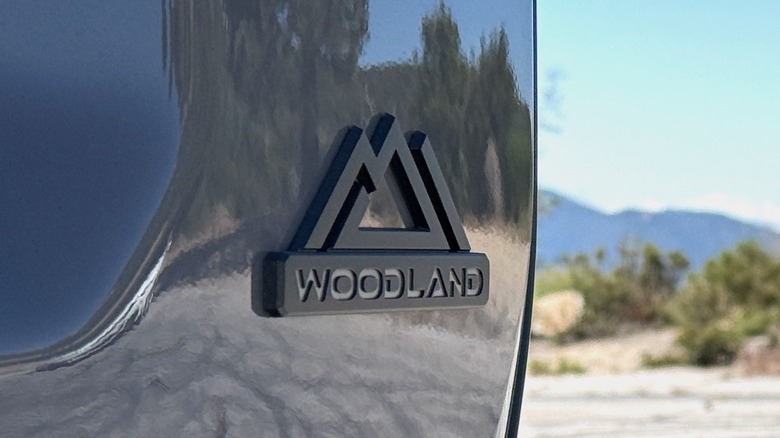
Before we dive too far into the details on the RAV and how it drives, let's put the price on Front Street. The Plug-in RAV4 Woodland I drove, with a few options, had a sticker price of $48,050. That's near the top of the range, though, and across the various trim levels, the RAV4's pricing covers a pretty wide spread. The base model starts at $33,550 (including a $1,450 destination fee), while the sportiest versions have a hefty starting price of $49,950. There are a lot of choices that fall in between those two book-ends, though.
Every single RAV4 is a hybrid, now, with the plug-in being the upgrade as it relates to power and the available electric range. The standard non-plug-in version, though, spans the aforementioned starting price of $33,550 and the topped-out Limited model at $44,750. Meanwhile, the RAV4 Plug-in starts at $42,950 and works its way up to that $49,950 mark.
 Travis Langness/SlashGear
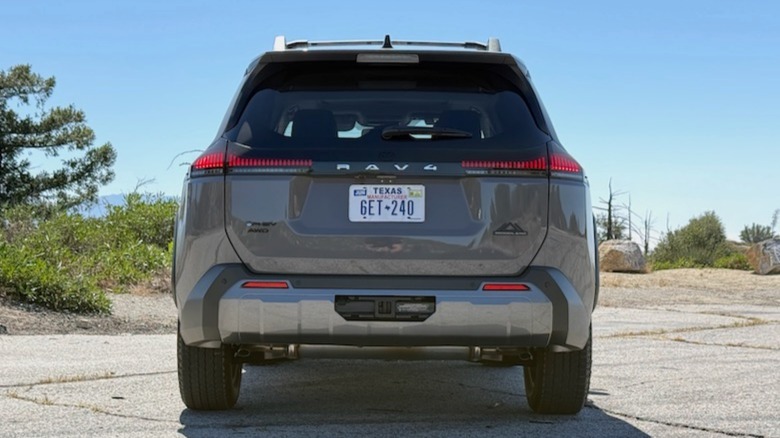
Where the two powertrain choices cross over (they're both offered in the same trim levels in a few places), there's a price premium for the Plug-in of $5,400 to $5,900. That's definitely a significant delta, especially if you aren't using the RAV4's electric capability most of the time, but you're not just getting a bigger battery and a charging port. The Plug-in version is significantly more powerful, and as a result, much more entertaining to drive.
A big change in output
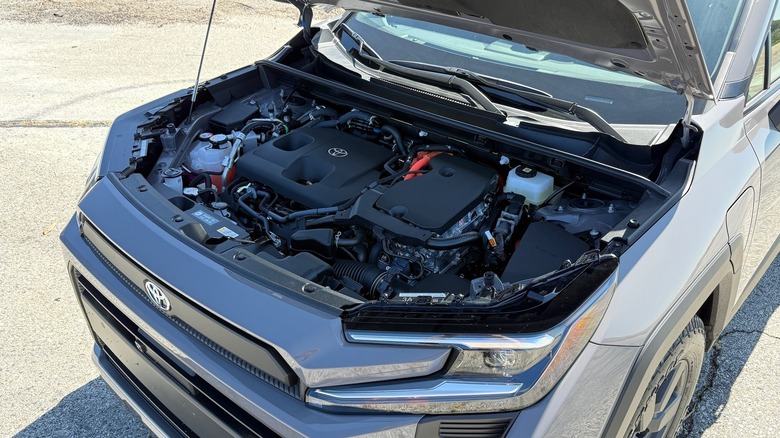
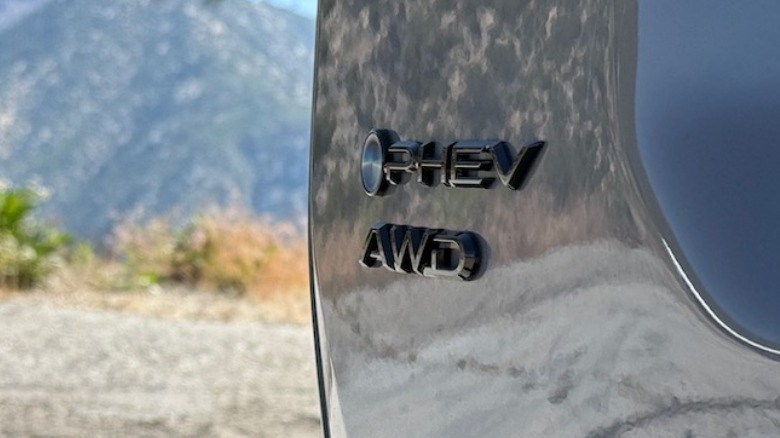
Powering the RAV4 is a 2.5-liter four-cylinder engine, which is paired with either a standard hybrid system or a plug-in hybrid system. With those two different systems, there are different power ratings, and the difference in output is considerable. The regular hybrid models have either 226 or 236 horsepower (front-wheel-drive and all-wheel-drive models, respectively), which is generally enough power, but the RAV4 Plug-in adds nearly 100 ponies to the party, with an output of 324 hp. This is one of the Plug-in's stand-out features, and almost worth the cost difference on its own.
Think of the RAV4 outside of its practical-SUV box — perhaps in compact hatchback terms. A Toyota Corolla, for instance, has a price gap between standard and high-horsepower GR models of over $10,000. That price gap represents a similar horsepower increase to what the Plug-in RAV4 offers over its standard variant. And putting out hot-hatch levels of horsepower makes the RAV4 Plug-in feel downright spicy.
 Travis Langness/SlashGear
With the RAV4 Plug-in, a big dose of right-foot input propels it forward with nearly the sort of instant torque that's usually available from pumped-up EVs. Getting away from a light or merging on a short highway on-ramp, the Plug-in's power is especially useful, but it's equally entertaining when you're driving the RAV4 on a winding road. More than just a swift city SUV, the Plug-in is pretty entertaining to drive on back roads. On uphill grades, and moving between corners, there's plenty of mid-range punch from the RAV4's internal combustion powerplant, though top-end speed leaves a little bit to be desired.
Living with it as an EV
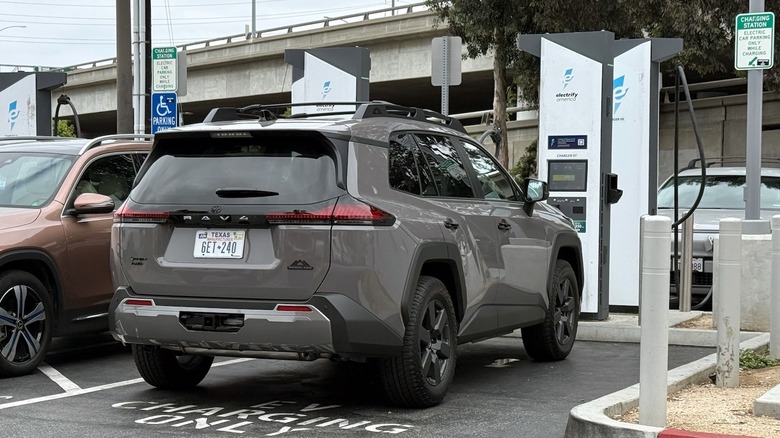
Punchy power might not be your top concern if you're shopping for an efficient hybrid, but don't worry, the RAV4 has efficiency covered, too. The standard model ranges from an EPA-estimated 38 mpg combined to 43 mpg combined, depending on the trim level. The Plug-in has nearly the same efficiency, with estimates from Toyota of 37 to 40 mpg combined. The specific Woodland trim I was driving is on the low end of that scale at 38 mpg combined, but as a PHEV, it shines in the electricity department. Depending on the trim level, the RAV4 Plug-in offers an estimated all-electric range between 48 and 52 miles. That's more than enough range to cover the average commute in just about every city in America.
Driving the Woodland, I went 40 miles on electricity alone, cruising on the highway at or above 70 mph. I didn't quite meet Toyota's claimed range of 48 miles, but at highway speeds that's not surprising. In the city, with a light foot, getting 50 miles of range out of the RAV4 should be no problem. What's more important are the distances that sort of range will take you. The average daily commute for Americans is around 30 minutes these days; even at highway speeds, that won't exceed this RAV4's capabilities.
 Travis Langness/SlashGear
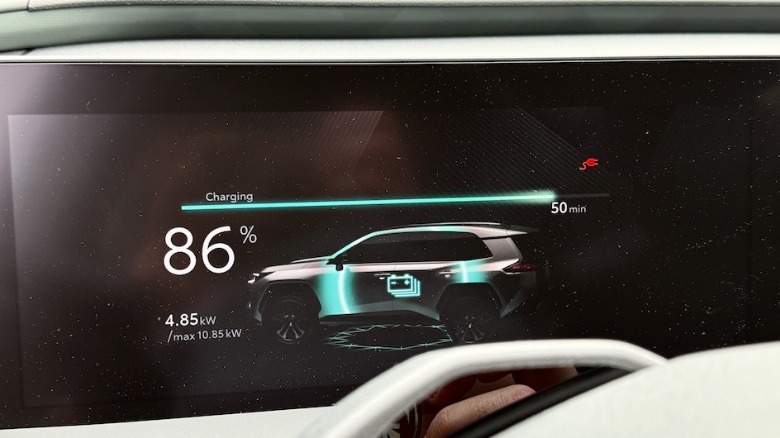
If you've got an inexpensive source of charging like solar panels at home, or even an office job that subsidizes a bit of electricity, it's a no-brainer to upgrade to the Plug-in hybrid. Even if you're charging at home on a basic Level 2 charger, electricity rates for 40 to 50 miles of EV charge are well below the cost of a single gallon of gas these days. The small difference in efficiency will likely pay for itself in a hurry if you're able to use the Plug-in's electric power on a regular basis.
Switching over to gas
When I'd driven the RAV4 far enough to switch over to internal combustion power, it then relied on gasoline alone — just like the regular hybrid. Even though plug-in hybrids have been around for quite some time, I feel like this is a part of the ownership experience that I still have to explain to friends and family when I'm driving one.
If you never plug yours in, the RAV4 Plug-in will still operate like any other gas-powered vehicle. Just fill it up and go — which I did. I went another 100 miles on the highway after the electricity ran out, then through the mountains, with no concern for efficiency or range anxiety, and I was barely able to use an eighth of the RAV4's 14.5 gallons of fuel.
 Travis Langness/SlashGear
Want to go on long-distance road trips without stopping? The 551 miles of range the EPA estimates you'll get out of a single tank and charge with the Woodland, or the over 600 miles you can get from other trim levels, will take you on just about any long-distance road trip you can think of without the need to stop for fuel.
Upgrades underneath, but is it off-road ready?
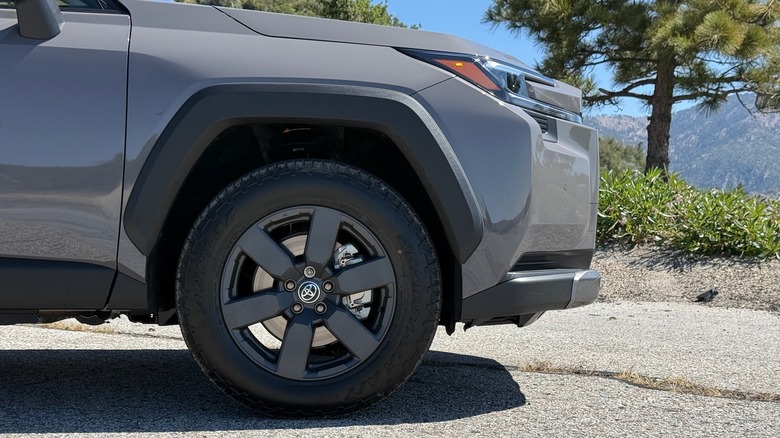
More than just a surface redesign or engine upgrades, the new RAV4 has also had some changes to its underpinnings. Toyota changed the suspension mounting points and re-tuned the suspension, in pursuit of a better ride quality and comfort. Over the beat-up sections of Los Angeles' oldest freeways, that work seems to have paid off. The ride is relatively smooth, with the suspension and the tires soaking up most road imperfections.
 Travis Langness/SlashGear
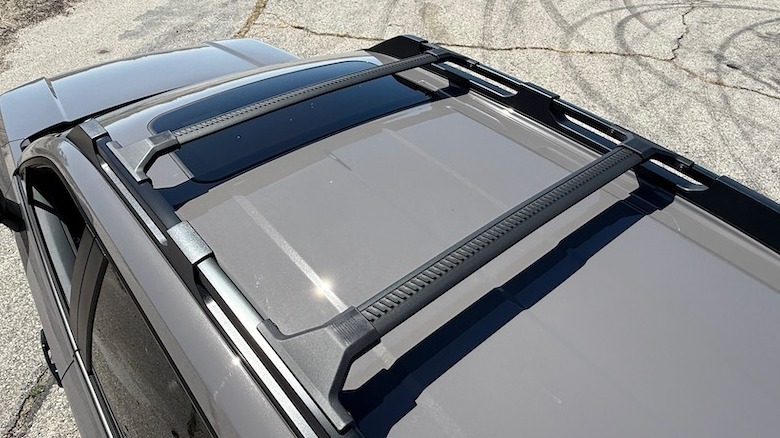
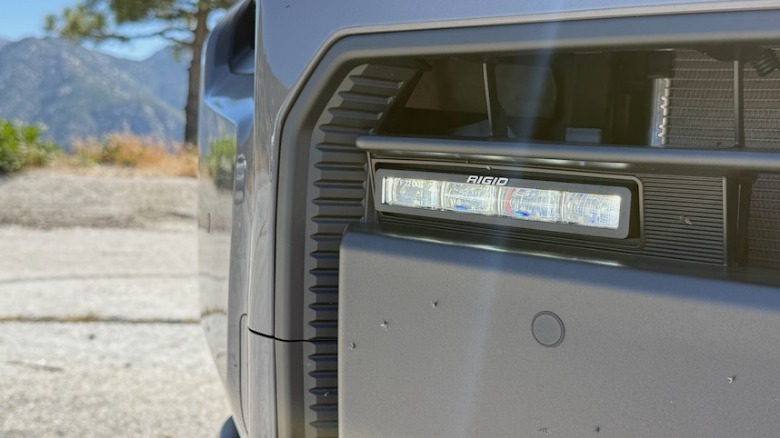
The Woodland trim, with 8.5 inches of ground clearance — the most of any RAV4 model — and all-terrain tires, feels right at home on a rutted dirt road. All-wheel drive is standard on the Woodland, as are some add-ons like a tow hitch and roof rails, which fills a rugged-looking niche for some buyers. It's no body-on-frame 4Runner, but not everyone wants a body-on-frame off-roader that can tackle the world's most legendary off-road trails, and the Woodland can take care of marginally-outdoorsy folks just fine while also conquering any rugged urban landscape.
Built for the long haul
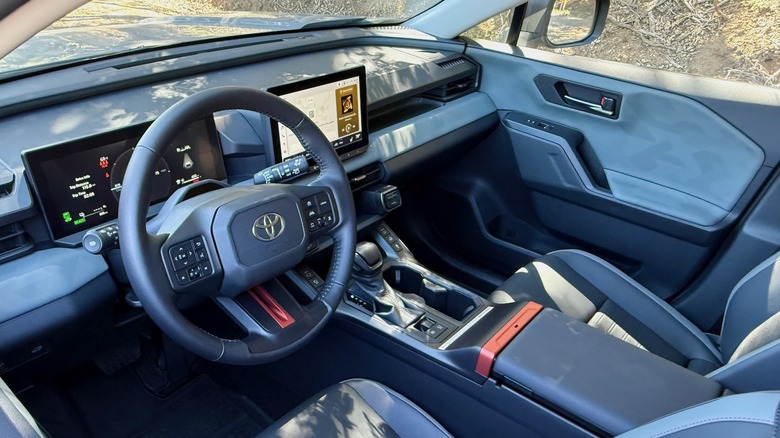
Toyota seems to know its audience pretty well, and after a week of generally thrashing the RAV4 it appears that they've built this one's interior to last. The cabin is well crafted, with solid, durable surfaces in every nook and cranny. It doesn't feel especially premium, but for such a utilitarian vehicle, especially one with a bit of an outdoorsy nature, that's to be expected.
 Travis Langness/SlashGear
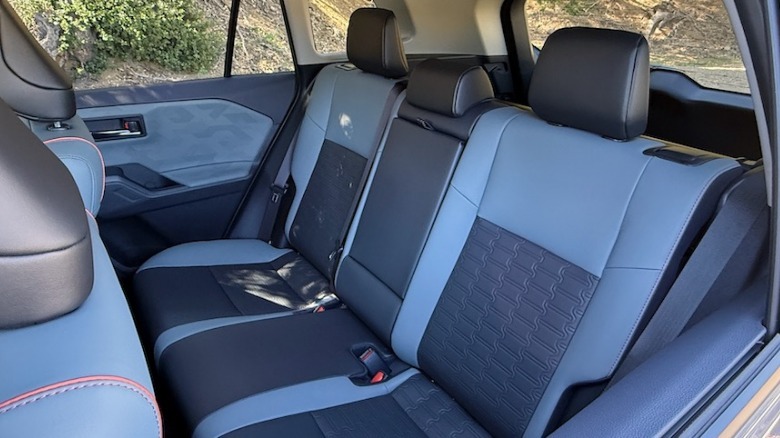
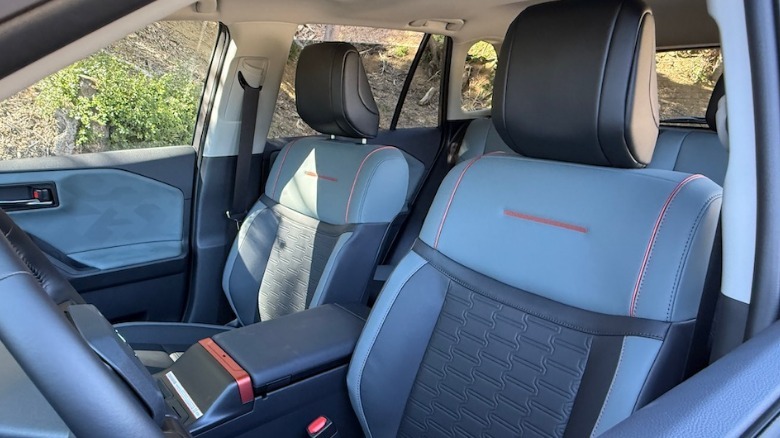
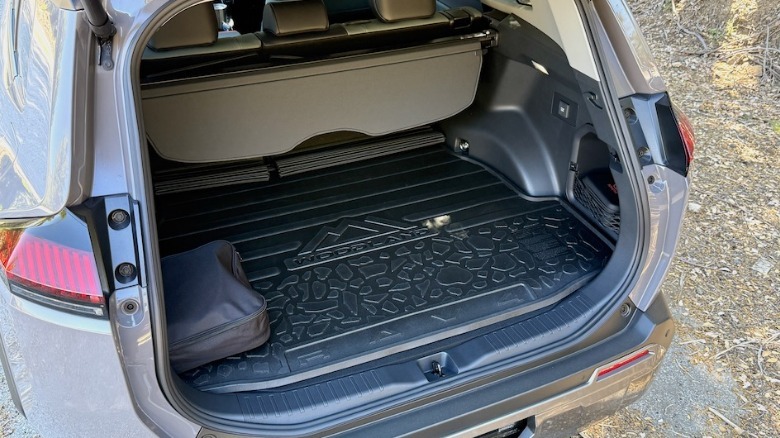
Climb into the driver's seat with muddy boots on, throw your dusty gear in the back after every hiking trip, slide into the seats a few thousand times, spill a few fast-food bags here or there, and the RAV4 will seemingly take it all in stride. It feels appropriately tough, especially with the Woodland's upgraded floor mats. There are also plenty of small cubbies and storage spaces for items like water bottles and smartphones.
 Travis Langness/SlashGear
While it isn't quite hushed or serene, the RAV4 definitely has a peaceful interior. The road and wind noise are particularly pronounced at highway speeds when the RAV4 is in EV mode, but it's not offensive. The seats are well shaped, firmly padded, and another part of the package that is seemingly meant to be durable and long-lasting.
Growing pains with the new tech
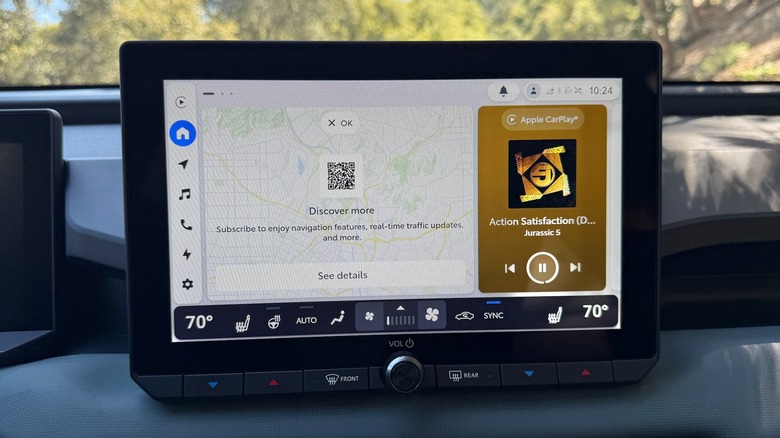
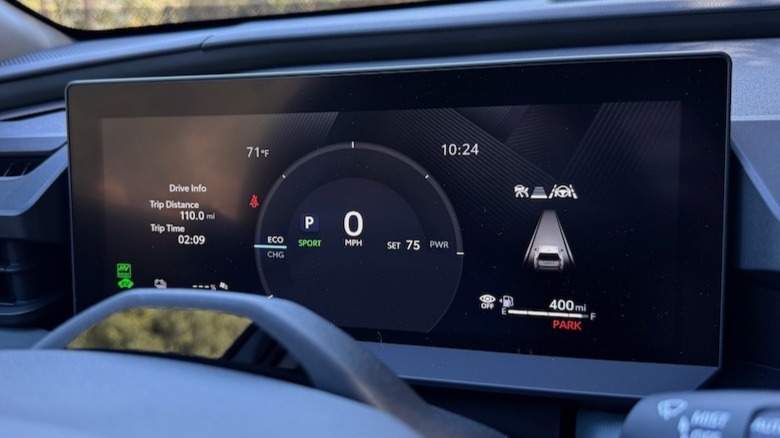
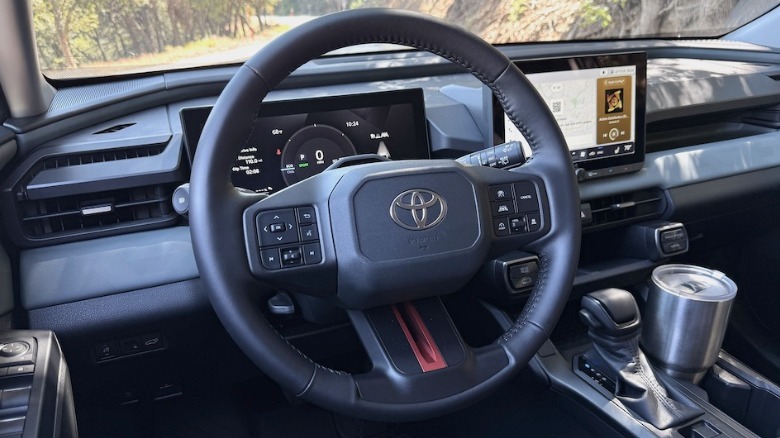
On top of being seemingly durable, the RAV4's interior is well laid out. There's a good balance of buttons and touchscreen commands, and the only confusing design choice I could see was the decision to split up the drive mode buttons into two different locations. The new 12.3-inch driver display is crisp, clear, and easy to see, as is the 10.5-inch center touchscreen. Hooking up Apple CarPlay and connecting every time I got in the RAV4 was seamless and the 360-degree camera is excellent. Things were much less impressive, though, when it came to some of the other driver aids.
 Travis Langness/SlashGear
Adaptive cruise control kept an overly conservative distance from the vehicles in front of me, so it wasn't useful in any of LA's high-traffic scenarios. Features like the heated seats and the heated steering wheel are controlled via touchscreen in the RAV4, which isn't entirely uncommon these days, but it isn't a useful or intuitive location for those controls either.
 Travis Langness/SlashGear
The driver monitor was the RAV4's worst high-tech offender, though, beeping alerts at me nearly every time I drove the SUV, warning that it couldn't see my eyes, even if I only briefly rested a hand on top of the steering wheel. Eventually, I turned a few of the driver aids off just to get a bit of peace.
2026 Toyota RAV4 Plug-in Hybrid verdict
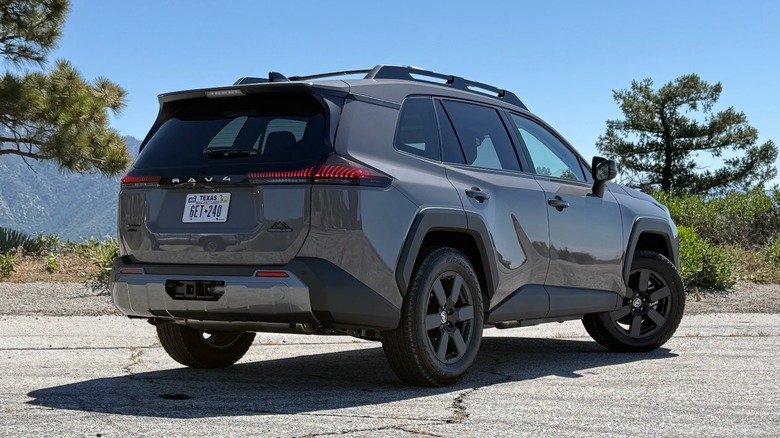
There's very little sense in me trying to convince you to buy, or not to buy, a Toyota RAV4. It's well-equipped, available in all sorts of trim levels, and durable from the outset. It's one of the best-selling vehicles in the United States just about every year, sometimes beating out the Big Three auto manufacturers (Ford/Ram/Chevy) and their full-size trucks in terms of quarterly sales. What's probably more useful information, after I spent a week testing and driving the all-new RAV4, is whether or not you should buy the standard RAV4 Hybrid, or the more-expensive Plug-in model.
The ability to commute on pure electricity is a major benefit in a world with such high (and volatile) gas prices. Even if you don't have charging at home, the Plug-in makes sense: I live in an apartment with no real charging option, and the Plug-in would still be my choice. Finding charging stations is relatively easy in most major cities, and they're pretty frequent on major highways.
 Travis Langness/SlashGear
With the added power from the Plug-in powertrain, I'm of the opinion that the cost of upgrading the RAV4 is worth the money. Offering 324 hp, the Plug-in has an entirely different personality than its standard hybrid sibling — one that immediately elevates it above appliance-SUV levels. It's certainly more entertaining than the perfectly fine Nissan Rogue, and the real-world fuel economy performance puts it above the Honda CR-V hybrid.