

6 Reasons Why You Should Probably Replace Your Refrigerator

No appliance lasts forever. The average lifespan of a refrigerator is 12 years, but some can fail much sooner and others can last up to 20 years. When yours inevitably starts showing its age or components start refusing to function, you have to weigh your options. Is it worth it to try and repair this issue (or hire someone for the repair) or is it smarter to buy a new fridge?
For most people, deciding whether or not to salvage their existing fridge is largely dependent on cost. If it's a minor repair that's going to cost a few hundred bucks, a small issue you can fix yourself for only $50, or even better, a problem that's covered under your fridge's warranty, it makes better financial sense to repair your current fridge. However, if you're looking at spending an amount close or equal to the price of a new fridge, it's probably better spend your money on a new model with a fresh warranty. We've gathered up some of the most common signs its time to replace your refrigerator rather than save it, but keep in mind, the cost of repair can vary greatly based on your specific fridge model.
Inconsistent cooling or food spoiling faster than normal

One of the biggest signs a refrigerator is nearing the end of its life is when it won't keep its contents inside as cool as it used to. This troublesome problem doesn't always indicate a fatal issue with your fridge, but it can. Sometimes, a minor issue can go unnoticed for months or years until it becomes a major problem that's more costly to repair than it would be to fully replace the appliance. For example, a refrigerator that isn't level may not cool efficiently; this problem is easy to remedy, but it can cause long-term issues by simply forcing the cooling system to work harder than it needs to.
A fridge that's struggling to keep things cool could be a sign of a sealed system failure or a faulty compressor. If either of these issues is the reason for your fridge's inconsistent cooling, it's generally financially smarter to replace the whole thing rather than repair the existing unit, especially if it's an older fridge model. And if you're not the type to notice or remember your fridge's typical internal temperature, you can keep an eye out for inconsistent cooling issues by monitoring how quickly your food spoils.
Your fridge is constantly overstuffed

Imagine you bought your current refrigerator years ago, when your household consisted of just you and your partner. Now, years later, your family has grown and you have a couple of kids that require more berries, drinks, and refrigerated snacks, and you feel like you're constantly packing your fridge to the brim, shoving and balancing items as best you can.
If your refrigerator could be described as "overstuffed," you probably need to replace it with a larger model to better accommodate the needs of your new household. Overstuffing a fridge can block important sensors and air vents and inhibit air circulation, which can cause your food to potentially spoil faster if it's not properly cooled or run up your energy bill since your fridge will have to work harder to maintain its recommended internal temperature. Furthermore, the harder your fridge has to work, the greater the risk of overworking the motor or compressor inside, which can be more costly to repair than replacing your entire fridge, depending on how old your appliance is.
Rattling, clanking, or other unappealing noises
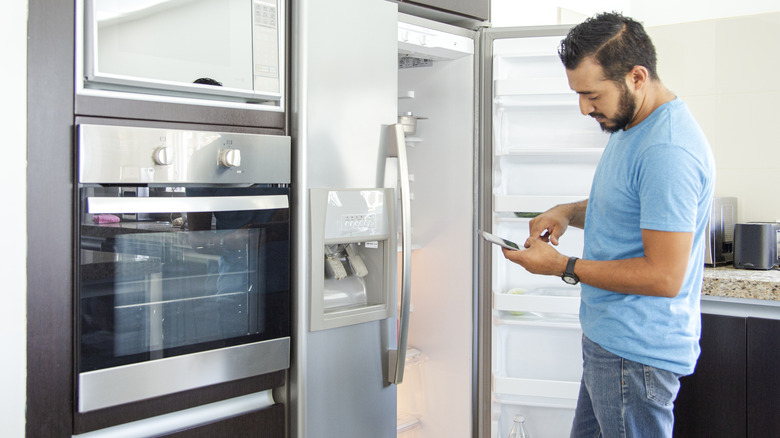
It's cause for concern any time your refrigerator starts making odd noises. Of course, some noise is normal for a fridge, like a low, consistent hum that tells you it's on and actively working. During hot summer months, it can even be normal to hear the fridge running slightly louder, because it's expending more energy to keep its contents cool and fresh. However, if your refrigerator is rattling, squealing, clanking, grinding, or producing any other unappealing sounds, it could be signaling the end of its useful life in your home.
Because there are quite a few troubling sounds a fridge can make, it's impossible to know whether your fridge's terrible racket stems from a cheap, easily fixable issue or a larger, more complex problem that'll cost you an arm and a leg until you have a professional evaluate it. An apparently common noise-making issue for fridges can be an evaporator fan malfunction, which is a cheap fix but can also be a recurring issue that could cost you a lot more in the long run, potentially even the price of a new fridge. Or, a noisy refrigerator could be the result of loose parts (a cheap and easy fix), a bad compressor (a costly repair that could be pricier than a new fridge), or a slew of other issues in between.
Excessive condensation in the fridge or frost in the freezer
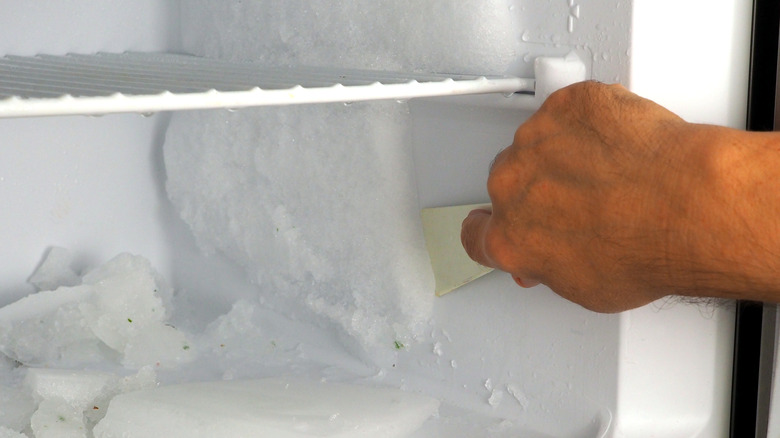
Some amount of condensation in the fridge and frost in the freezer is normal. It's also normal to see greater amounts of condensation in more humid environments or warmer months of the year. And for mini fridges especially, excessive frost is one of the most common issues you can run into. But for larger fridges, it's worrisome to see extreme buildup of frost in the freezer or condensation in the fridge outside of the seasonal or environmental changes mentioned above.
Depending on the specific cause of your fridge's condensation or frost issues, it can be costly to repair, ranging from affordable fixes like clearing the drain line yourself, cleaning the fridge's condenser coils, or replacing a gasket to major repairs that need to be done by a professional, like a full sealed-system repair for $800 to $1,200. And if your fridge needs a major repair, it might be more worth it to invest your money in a new fridge instead of trying to salvage the old model.
Parts of a clean fridge's exterior are too hot to touch
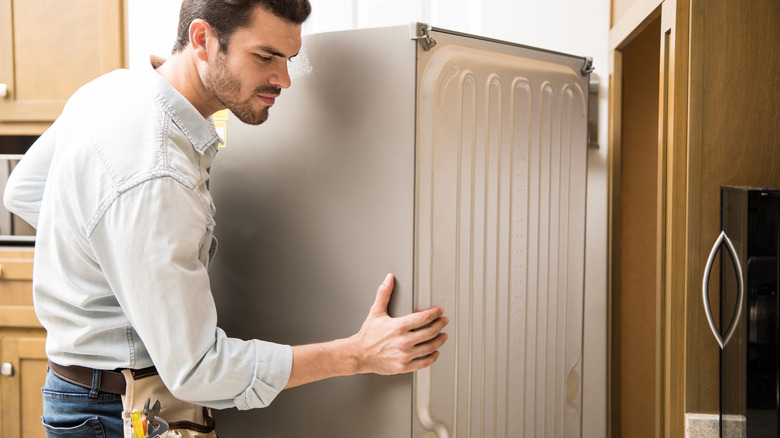
It's normal for any fridge, old or new, to be warm to the touch in multiple spots. According to support documentation from major refrigerator brand LG, a fridge can be warm near where the compressor is working to cool the inside, between doors where a heating wire is often installed to prevent condensation, or at the back of the appliance where generated heat tends to escape. Slight warmth around any of these spots is normal, but if an area is too hot to hold your hand on, that's a worrying sign that could lead to a fridge replacement.
If you know it's been a while since you've cleaned your fridge, it's always smart to check the vents and filters first for buildup of dust and dirt before ditching your old fridge for a new one. But if you regularly maintain and clean your fridge, its overheating issue could be due to an overloaded or malfunctioning compressor. The exact cost of replacing a bad compressor will depend on your specific fridge model, but in most cases, your money is better spent investing in a new model rather than salvaging your old appliance.
Your fridge is 10 years or older (and it's acting up)

Just because your refrigerator is 10 years or older, that doesn't automatically mean it's going to start giving you issues. With a reliable fridge model and proper maintenance, your fridge could last well past 10 years. However, if after 10 years (or longer), it's making odd sounds, having trouble keeping contents cool, or otherwise causing you grief, it could end up costing you more to repair than replace.
According to survey data from Consumer Reports, it's generally a better deal for consumers to fix their fridges when they're less than 10 years old. Of course, that's quite a broad statement, and it doesn't apply to every fridge type. For example, Consumer Reports points out that repairing a $1,200 French-door refrigerator that's nine years old is probably smarter than replacing it, but when you're looking at a $400 top-freezer model or a similarly budget-friendly side-by-side fridge, a full replacement is likely more worth it than repair. The 10-year mark is simply a good guideline for when repairing your fridge can be pricier than replacing it.
Common issues that don't usually require replacing your whole fridge

Thankfully, not everything that goes wrong with your fridge is met with an immediate recommendation to trash it and buy a new one. Modern appliances do appear to break down faster than their predecessors, but this is largely due to having more complex inner workings that bring consumers more features. After all, newer smart fridges connect to Wi-Fi and come with built-in displays that let you look at the weather, play music, and more.
One of the most common problems with GE refrigerators (and Samsung refrigerators) is the ice maker not working. That's certainly an annoying problem, but it doesn't render the entire freezer unusable, even if it remains unfixed for months. Similarly, Whirlpool refrigerators commonly have issues with the water dispenser. If this is your only source of filtered water, it can be majorly disruptive to your routine, but it's a less involved, more affordable issue to repair, and you can still use your fridge until it's fixed. Other common issues that don't immediately indicate your fridge needs replacing include bad internal lights, doors not closing properly, and water leaking in or around the unit.