

How To Clean Refrigerator Condenser Coils (And How Often You Should)
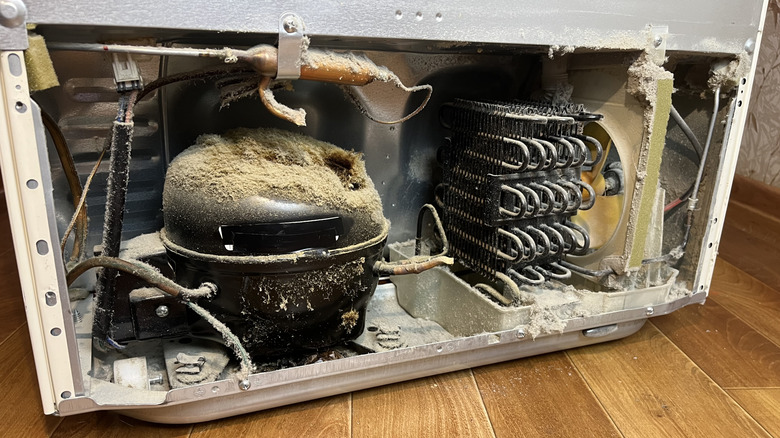
Refrigerators generally aren't appliances that need to be replaced regularly. A high-quality fridge can have quite a long lifespan, and the best way to maximize that is to take care of it properly. The basics, such as cleaning the interior, being mindful of the temperature dial, and not leaving the door open for long periods, are pretty obvious, but there's more that you can do. One essential maintenance step is cleaning the condenser coils — the elements responsible for dispensing heat pulled from the fridge — regularly, usually once or twice a year. Those with particularly dusty homes, or who own pets, may even want to clean them more frequently.
Fortunately, cleaning condenser coils is a reasonably easy task. Once you've located the coils, unplug the unit and move it so you can reach them. From here, use a screwdriver to remove any coverings. This will give you full access to the coils, and you can use a vacuum to suck away all the accumulated dust and debris. A hand brush can also be handy to loosen any stuck-on debris. Once the coils are as clean as you can get them, put the covers back on, plug the fridge back in, and slide it back into place.
As you can see, there's really not a lot to cleaning your fridge's condenser coils. That's all the more reason to keep up with it, especially since failing to do so could lead to big problems.
The importance of condenser coil cleaning
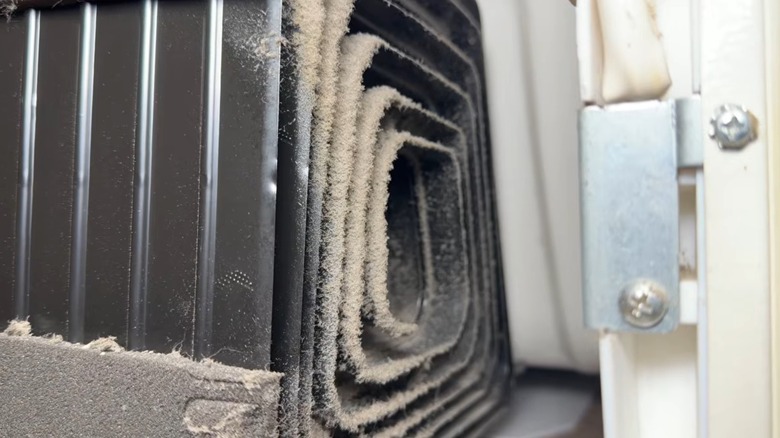
No matter which of the major refrigerator brands you go with, or the state of your home, there are several good reasons to keep your fridge's condenser coils clean. Condenser coils are essential for drawing heat from the fridge, keeping the inside nice and cool. Excess debris makes the coils less effective at their job, meaning the condenser has to work harder to draw the warm air out. This may shorten the condenser's lifespan, leading to costly repairs sooner.
Dirty condenser coils can also lead to higher energy bills over time. Less-efficient cooling means the fridge has to work harder to reach the desired temperature, increasing energy use. This could be particularly noticeable in the summer months, as higher temperatures will already have your fridge working overtime to stay cool. There's no need to risk failure by forcing a fridge to work harder than it already is during periods of high heat.
A fridge's condenser coils are often out of sight — and out of mind. But being aware of the coils' importance and cleaning them consistently is crucial to keeping a fridge operating at its best for as long as possible.