

12 Advancements In Battery Tech That Could Define The Next Decade
While everyone's eyes are on the AI race, there's another race that's almost as fierce and competitive: the race for new battery technology. We'd hazard a guess most are aware by now that the lithium-ion batteries in most modern devices — from smartphones to EVs — leave a lot to be desired. We're in need of more energy-dense batteries that don't lose their potency after a few years and also don't randomly decide to become fireworks. In the race for a lithium-ion replacement, scientists and companies have pioneered an assortment of alternatives. Some could become common knowledge, depending on how the cards fall.
Look, any time you read the news about a new battery technology, it's a different tech from the last, and yet it seems eons away from mass production. Meanwhile, some recent battery innovations are on the market, but they haven't yet completely replaced lithium-ion. So let's take a bird's-eye view of some of the most exciting battery technologies — new battery chemistries, evolving manufacturing processes, and recent innovations — that, if they stick the landing, could be what makes the years from 2030 onward a golden age for rechargeable devices.
Solid-state batteries
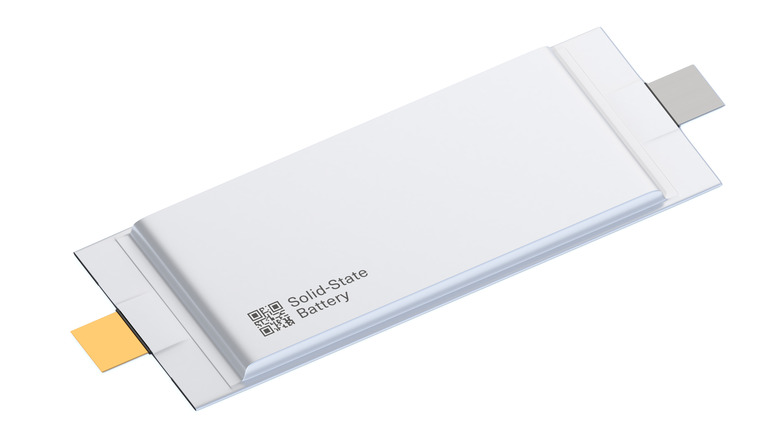
Even if you only scan headlines, you've doubtless heard of solid-state batteries. To many, they're the tech industry's holy grail. Solid-state batteries (called SSBs in the industry) trade liquid electrolytes for solid ones and offer a laundry list of potential advantages: next-level energy density, faster charging, greater longevity, and — the big one — the fact that they're more resistant to thermal runaway and therefore shouldn't turn into a sparking ball of fire at random. It's also a technology that's been right around the corner for years now ... and still isn't here.
The issue, based on current research, seems to be a couple of as-yet insurmountable challenges. First, SSBs tend to form little dendrites in their solid electrolytes, which can permanently damage the battery and cause short circuits. Further, SSBs are quite expensive to manufacture. Time after time, someone comes out suggesting these issues have been solved, but it remains to be seen who will crack the code on the solid-state battery and open the floodgates.
Perhaps 2026 or 2027 is the year. We're already seeing China's Changan target a Q3 2026 rollout of its solid-state-equipped EVs; battery companies Factorial and Stellantis have recently started real-world testing of SSBs in road vehicles; and at CES 2026, we saw a whole bunch of solid-state-powered devices. Needless to say, when SSBs are really, truly here, it will be front-page headline news, and your next phone will probably be rocking one.
Silicon-carbon
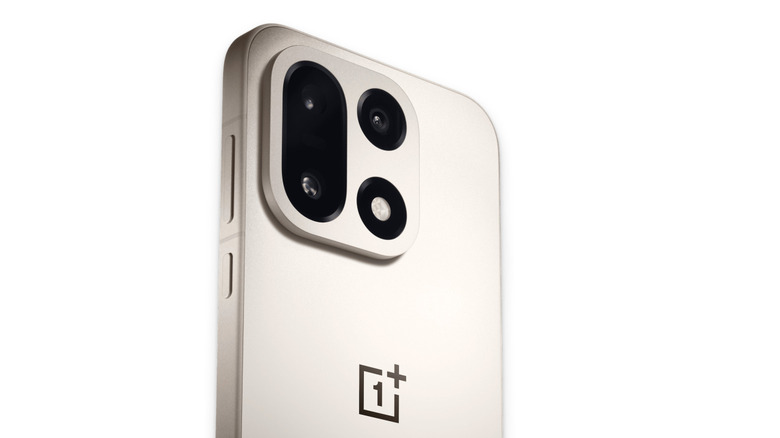
Silicon-carbon batteries are lithium-ion batteries with a twist: They use a silicon anode in place of a graphite one. They're best described as a trade-off, since they offer a huge uplift in battery capacity at the cost of longevity. Basically, imagine a lithium-ion battery that gives you two-day battery life but has to be replaced a lot sooner and costs more. Silicon-carbon batteries are already basically the norm in many Chinese-made smartphones, which is why you've probably seen battery comparison tests where all the brands you can't buy in the U.S. are crushing their U.S.-based competition.
So why are major manufacturers like Apple and Google not using them? It basically comes down to the tech being too new. Unlike lithium-ion batteries, which have been widespread for decades and for which we've gotten a good feel for the risk involved with using them, silicon-carbon batteries are effectively babies in terms of battery tech; U.S. smartphone manufacturers want to see how well they'll mature before betting the house and suffering recalls and lawsuits.
Then why are we including silicon-carbon batteries on this list? Because they still have a part to play. Despite the reticence among U.S. manufacturers to deploy them, Chinese brands are iterating on the tech to make them safer and longer-lasting. Perhaps their shortcomings can be mitigated to the point where they become a very nice little stepping stone between lithium-ion and solid-state batteries (or other battery technologies) to come.
Beta-voltaics

The whole schtick of a nuclear reactor is taking a relatively small amount of fuel and powering our homes and businesses with it for an absurdly long amount of time. So what if we could put that technology into batteries that last as long as 50 years? The answer is we already have, and it's called a beta-voltaic, or nuclear battery. Don't be alarmed: It's not a little chunk of enriched uranium in a consumer device that would be taken around in public. The key is in the name; beta-voltaic batteries capture beta particles emitted by radioactive isotopes via a semiconductor, converting this into electric current.
The benefits of beta-voltaic batteries are numerous. For one, they can be incredibly small despite lasting a stupidly long amount of time. The devices that use them would effectively never need a battery swap; they could be safely used in extreme temperatures; despite the scary "nuclear" moniker, they'd be perfectly safe for use by humans and wouldn't devastate the environment. As proof of this, pacemakers once used them.
As for downsides, they produce a very tiny amount of electricity. You will likely never see a beta-voltaic battery in a smartphone or handheld PC. However, for situations where a relatively low-powered device would be better off without frequent battery replacements, they could be a game changer. Recently, they even made their way into some SpaceX satellites.
AI battery management
AI is a polemic topic to say the least. Some people think it's the future of everything, and others, just a passing hype with few meaningful applications. If you fall on the latter end of that spectrum, then AI may offer a meaningful improvement in battery life. Already, we've seen this on smartphones. Android phones have Adaptive Battery mode, which intelligently optimizes your battery based on your usage; iPhones have Adaptive Power mode. Various forms of intelligent battery preservation have started to get more prominent on PCs. That's only the beginning.
Where this is really going to shine, though, is with EVs. The BMS (battery management system) in an EV could begin to incorporate AI to better calculate a vehicle's true charge state and battery health. Aside from prolonging a battery's charge and lifespan, it could help optimize battery chemistry and prevent thermal runaway — something we desperately need now before lithium-ion batteries are fully phased out, since extinguishing a burning EV is like putting out the fires of hell. Already, some major EV makers like Tesla have implemented a BMS aided by AI. However, we'd wager that this technology has a long way to go before it reaches its full potential and will lead to some of the best battery life we've ever seen.
New recycling techniques
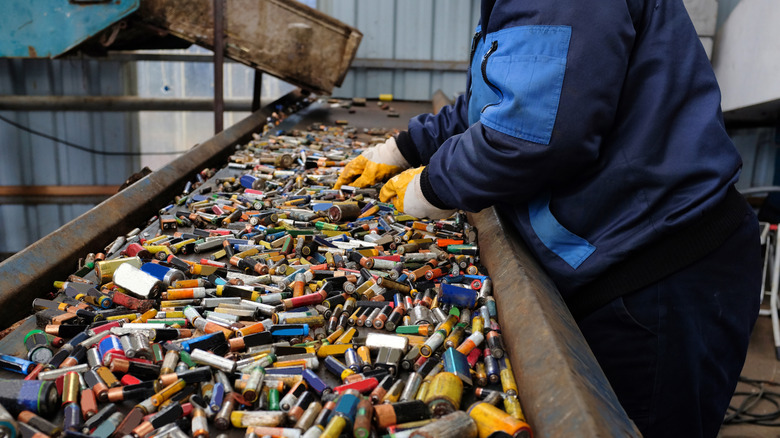
Lithium, the core component of lithium-based batteries like lithium-ion, is a "critical" mineral to our world, which basically means it's heavily susceptible to supply line disruption. Just as faraway wars can cause your gas prices to increase, political and logistical hurdles can affect lithium. Only a small number of places mine and export the overwhelming majority of it. Add to this the fact that lithium is bad for the environment (during extraction and when disposed of), and it behooves us to reuse as much as we possibly can.
Luckily, the technology is there. Techniques like hydrometallurgy could possibly recover 93% of lithium and 99% of cobalt from batteries. What stands in the way of this is the fact that the recycling process is quite challenging, especially when these batteries were basically designed without future recycling and recovery in mind. Researchers are hard at work figuring out how to make this process easier, more efficient, scalable, and economically viable so that we can reuse the many lithium-based batteries out there — at least until solid-state batteries become widespread and economical enough to replace them.
Dry electrodes
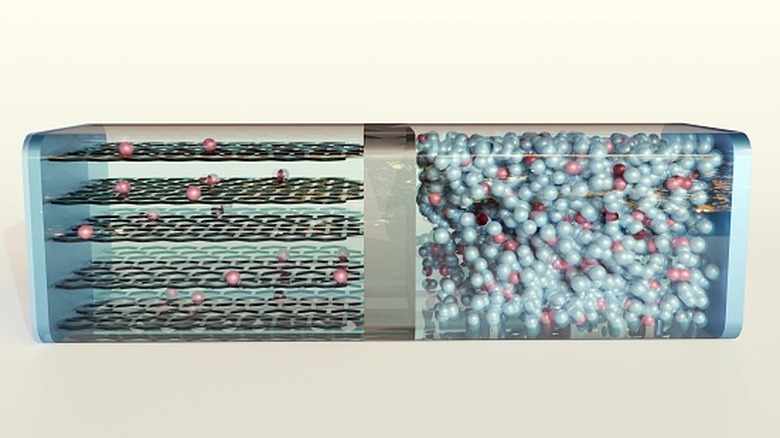
To talk about lithium-based batteries and exclusively discuss the lithium cells inside would be a mistake. A lithium-ion battery is the sum of its parts, including vital components requiring their own critical minerals and manufacturing processes, like the cathode and anode. Making a battery's individual components more effectively would naturally improve the situation for batteries, generally, particularly for solid-state batteries.
The biggest cost in manufacturing them tends to be the electrodes. A new process could manufacture them "dry," producing them more cheaply, efficiently, and with less damage to the environment to boot. They may also increase the battery's energy density and temperature tolerance.
If the purported benefits of dry electrodes are to be believed, they're practically all advantage and no disadvantage. That gap could be closed even further when electrodes are made of materials other than toxic forever chemicals. Graphite is one possibility. We're only just seeing dry electrodes reach the market, such as Tesla's use of them in its 4680 battery.
Glass batteries
The late John B. Goodenough was a legend among legends, thanks to his pioneering work on lithium-ion batteries. It's possible that he may quadruple his legendary status again, posthumously, if the glass battery concept that he put into motion before his passing bears fruit. This is a solid-state battery that uses a doped glass electrolyte instead of a conventional liquid electrolyte. Just as with all solid-state batteries, the promise is a battery that has superior energy density, fast charging, and minimal fire risk — in addition to being made cheaply from an abundant material.
Unfortunately, we do have to put a big caveat here: The glass battery has drawn significant criticism and has not been proven to work outside the lab. The glass battery as described by its creators would seemingly violate the laws of physics. Some have likened it to cold fusion. Just for the record though, back when the lithium-ion battery was in its infancy, people laughed at it; that may be the case here.
What's also concerning is that there's been little public news about the battery concept over the last six years. The team behind the battery has filed several patents and appears to be collaborating with Hydro-Québec to commercialize the battery. We can only hope that the project hasn't quietly been shuttered after the critics' concerns turned out to be true. If a working prototype is demonstrated in the coming years, though, this could revolutionize the industry.
Sodium-ion
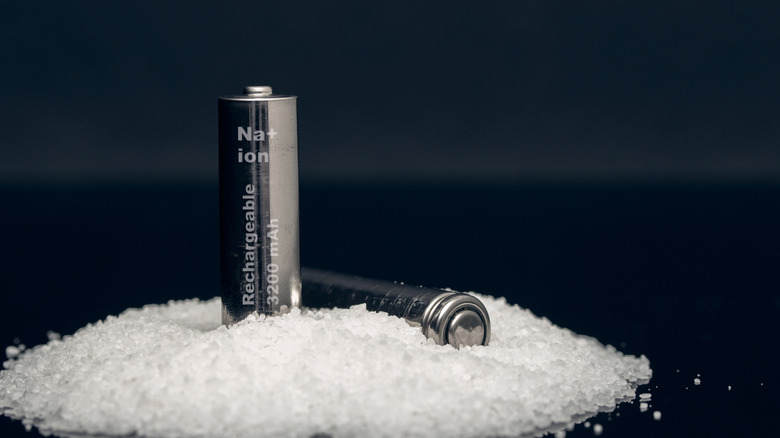
A recurring theme is that while we overcome the hurdles of solid-state batteries, there are alternatives to lithium-ion batteries that may bridge the gap pending better technological advancements. One of them is the sodium-ion battery. Since sodium is so freely available — the salt on your table is a type of sodium — it could be the perfect lithium replacement.
To be clear, the sodium-ion battery has been on the market for a while, but making it more widespread is harder than it seems. One of those challenges is the currently inferior energy density. Some recent studies suggest that this may be about to change. Sodium-ion also experiences greater expansion and has a reduced life cycle. On the plus side, it costs less to make, suffers less from lithium's Achilles heel, thermal runaway, and works better at low temperatures.
It seems like the primary advantage of sodium-ion batteries is that they're less prone to supply chain disruption. All the research we've seen doesn't paint sodium-ion as a lithium-ion killer. Just a preferable alternative to tide us over until solid-state batteries hit their stride.
Lithium-sulfur
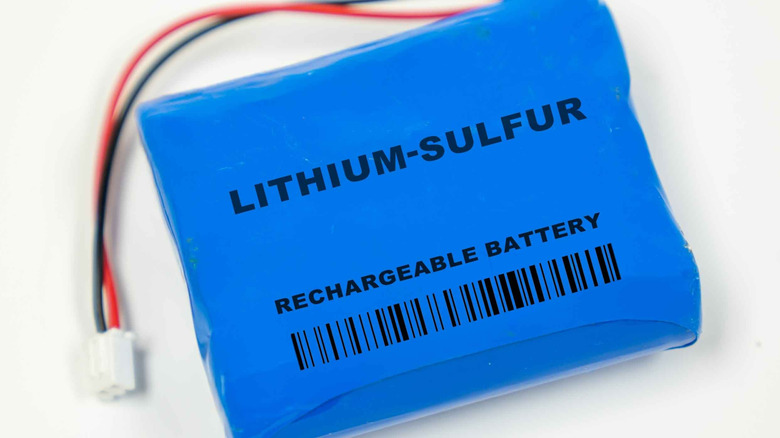
Lithium-sulfur batteries are yet another contender for the throne of the ideal battery. In this case, the main selling point is some pretty impressive energy density achieved via a sulfur cathode. In theory, a lithium-sulfur battery could hit 2,600 Wh/kg versus lithium-ion's 250 Wh/kg, according to a 2025 study, though even the more conservative 700 Wh/kg estimate is an impressive-enough leap.
Add to the fact that sulfur is not a critical mineral that the battery would present less harm to the environment and manufacturing costs would be low, and it becomes even more attractive. There are other benefits too, like the fact that sulfur is more lightweight and that a lithium-sulfur battery could charge a lot faster. As for downsides, lithium-ion batteries would beat it when it comes to cycle lifespans. So, perhaps we could have consumer electronics and EVs that massively increase runtime without making batteries larger.
A recent revolution in lithium-sulfur batteries may make this the winner in the current race for better batteries. Since lithium-sulfur batteries don't have to stick to the same squared shape we're used to with lithium-ion batteries, they could enable manufacturers to get more creative with the form factor of their devices. Of course, this is all just theoretical until mass-produced batteries hit the market. We'll have to wait and see. In any case, lithium-sulfur is yet another avenue we can take to reach a better battery future.
Lithium-air
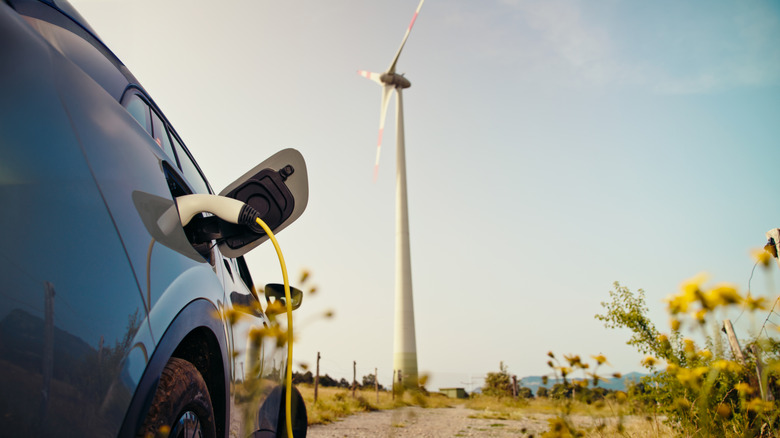
If you thought the energy density of lithium-sulfur was soaring above the clouds, then get ready for lithium-air batteries. Though the name might lead one to think that this is a battery filled with air, the secret is that it's an open-air battery relying on lithium oxidation. In theory, we're looking at 10 times the energy density of a comparable lithium-ion cell, and these batteries should weigh significantly less — making the name quite fitting. Some studies have suggested it's so energy dense that it's basically equivalent to gasoline. One of the biggest issues with EVs is the range anxiety people get while driving them; therefore, an EV that can go toe to toe with an ICE vehicle would change the game.
It's been a long, hard road to make lithium-air a reality. Getting it to work at room temperature alone was a chore. Now it appears the battery might make its debut en masse on the Chinese EV market. We'll have to wait and see, as this is not the first time a battery technology has been promised and failed to deliver on the predicted timeline.
Iron-air
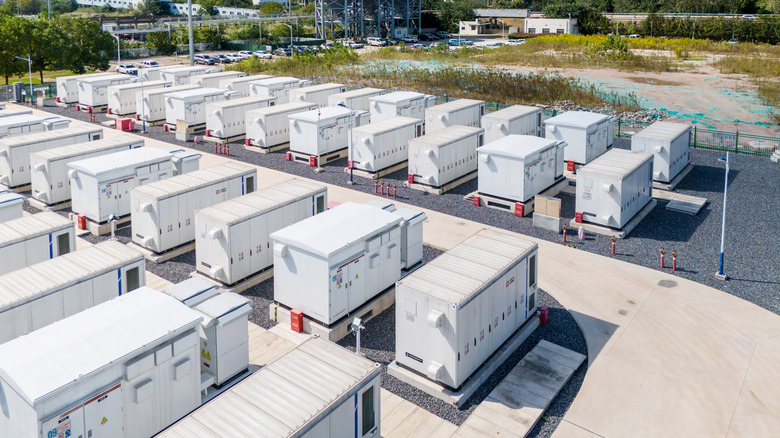
We've talked mostly about batteries that would improve consumer electronics and EVs, but another area where battery storage is critical is grid energy storage. In an almost sci-fi fashion, iron-air batteries use iron's natural oxidation (i.e., rusting) to release electricity, then reverse the process when charging to make unblemished metal once more. It almost seems like alchemy, imagining metal rusting and de-rusting, but it could be the future of grid storage. Mind, it's not the most efficient chemical battery process, but thermal runaway almost vanishes as an issue, and iron-air batteries could theoretically remain in operation for years and years and years before needing replacement.
In theory, iron-air would make for cheaper long-term storage (iron is not a scarce metal), particularly the sort that captures excess energy from a renewable source, like a wind turbine. Though, to be clear, this is not going to be a battery you'll see in the next iPhone. It's the sort of battery that would keep your local energy grid stable and reliable, whether you realized it or not.
Unlike some of the concepts on this list, iron-air is not just wishful thinking for our energy future. Iron-air battery storage exists and works. The Netherlands already incorporated some into its energy grid in 2025. California is following suit, building up stores of rusting iron-air batteries to aid its renewable energy generation.
Structural batteries
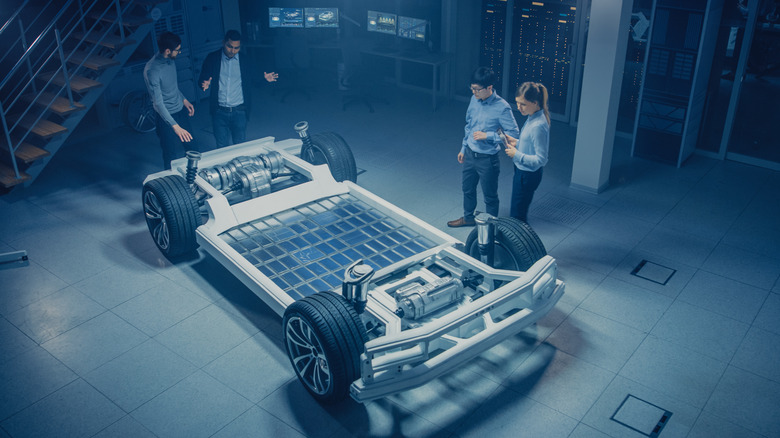
When you imagine a battery, you imagine the squarish one in an iPhone, or the cluster of cells in an EV. Now imagine a battery that is a load-bearing part of that device. That's the goal of a structural battery composite, known in the industry as an SBC or massless battery. Previously, they had some major limitations, like low energy density, but recent studies using carbon fiber suggest the potential for dense, multi-layered SBCs that could support the everyday stresses that an EV experiences. It's been the dream of Chalmers University of Technology to make these composite batteries a reality for everything from EVs to planes, to ships, to consumer electronics — basically anything that benefits from reducing its weight by incorporating a battery.
We've already seen something like this with Tesla's so-called structural battery pack, a battery that was one and the same with the chassis of the vehicle. Some drones have been tested with structural battery components. Progress has already been made using structural batteries for low-power devices in lab settings. However, this still seems very much like a lab concept that's still a ways away from mass production.
Naturally, the idea of a structural battery composite raises a few questions. First, how would you go about replacing a structural battery at the end of its lifespan? It also makes us wonder what risks there might be if, say, an EV with a structural battery gets into a crash. Having said that, the idea of reducing weight by making structural components also provide power is a clever one, and we're curious to see how scientists and companies will take this concept forward.