

11 Things You Probably Didn't Know About Solid-State Batteries
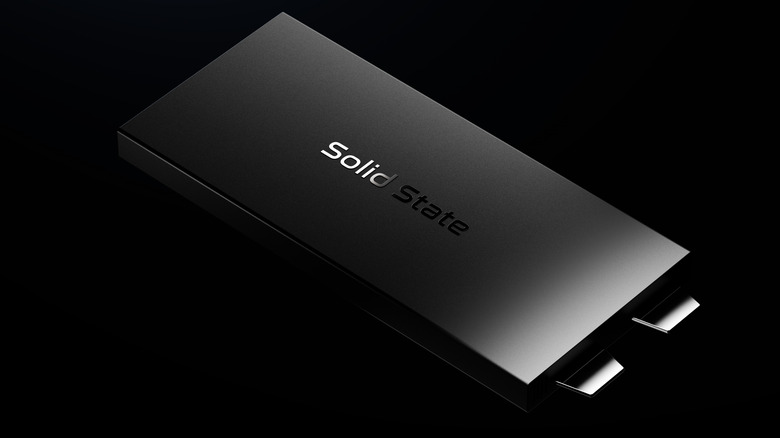
For a while now, lithium-ion batteries have been the go-to method for powering rechargeable electronic devices of all sizes, from phones to electric cars. And for a while now, most people are well aware of the disadvantages inherent to them. That phone you buy today is going to need to be charged a lot more often a couple of years down the road, and all the while, its battery is a miniature bomb waiting for a little too much heat or a little rupture in its casing to become a frightening fire hazard. We seem to have hit a ceiling. For the most part, lithium-ion batteries can only improve their battery chemistries and drive down manufacturing costs, but alas, the tech has largely peaked. Now the holy grail is the so-called solid-state battery, the white whale of battery technology you've no doubt seen in the news.
To oversimplify things a bit, there is only one major difference between a lithium-ion and a solid-state battery: The latter has a solid electrolyte rather than a liquid. But thanks to that alteration in battery chemistry, solid-state batteries could effect a massive change once they become widespread. Remember, solid-state batteries are not yet a mass-produced consumer product (which means everything we say here comes with a huge asterisk attached), but keeping that in mind, here are some things you might not have known about them.
They're more energy-dense
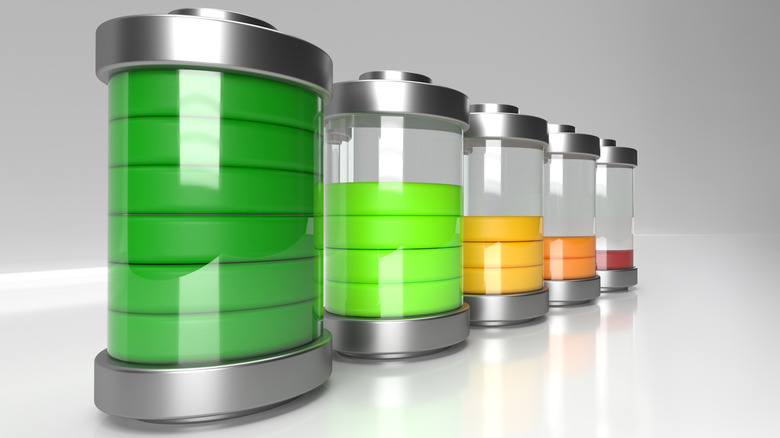
One of the biggest selling points for the solid-state battery, hands down, is its energy density, i.e., how much energy you can get out of it compared to another battery of the same size and mass. Lithium-ion batteries have more or less already reached their energy density maximums. As a stopgap, there have been some advancements like silicon-carbon batteries, but those come with their own significant disadvantages, like poor longevity. We've run out of road when it comes to energy density in our current battery technologies.
A solid-state battery could, on the other hand, be as much as 10 times the energy density of a liquid-electrolyte battery. An absolutely enormous leap, even if we only achieve a fraction of that increase. Imagine having a smartphone that, rather than barely lasting a day, doesn't need to be charged for almost an entire week. It's easy to imagine other areas — like handheld gaming PCs — where more battery life would change the game.
Of course, having smartphones, earbuds, and laptops that need to be charged less often is great, but the real winner when it comes to energy density is EVs. Range anxiety is very real and contributes to the rate of adoption of electric vehicles. Now, we may soon see Chinese EVs getting up to 900 miles of range versus Tesla's roughly 400 in 2026. Better still would be the windfall for renewable energy storage systems. If renewables can capture and store more energy, everyone wins. Long story short, solid-state batteries could pack a lot more juice into the same form factor.
They may have more charge cycles
Another major weakness that lithium-ion batteries have is their gradually degrading longevity. Every time you charge one, its overall capacity decreases by a tiny amount, which is why you'll often hear it cited that lithium-ion batteries (particularly in consumer electronics) only get about 500 cycles, and up to 5,000 in electric vehicles (via Battery University). That's why your phone needs a battery replacement after a few years of regular use, and why lithium-ion devices have to be babied a lot to make them last as long as possible. Although we can recycle a large portion of that material, it would be a lot better for the environment (and user convenience) if the batteries just lasted longer — and that's another promise solid-state batteries may provide.
It's hard to find one specific estimate for how many more cycles solid states would have, and that number will likely vary between small electronics and EVs. But imagine a phone that not only lasts you a week, but can be charged up to 6,000 times. In EVs, that benefit is even more pronounced. You could charge one 5,000 times and still have 90% battery capacity (via ZME Science). Anything that was powered by a solid-state battery, therefore, would easily last years beyond a similar product with a current lithium-ion battery. We'd be a lot less miffed about products that don't have removable batteries, and we'd be doing a favor to the planet by reducing our e-waste output.
They could charge faster
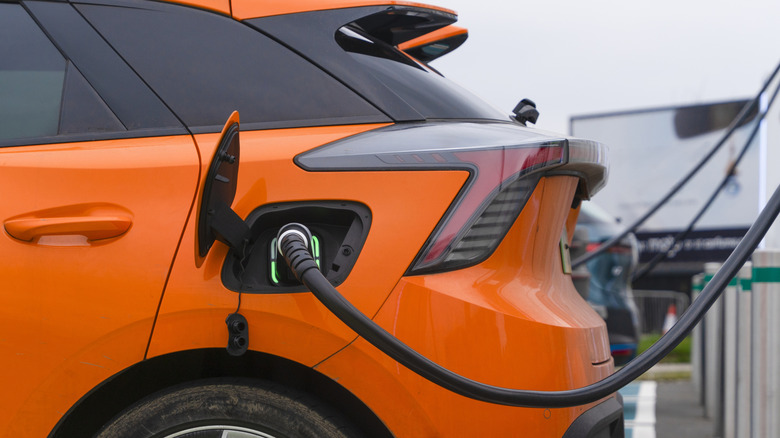
To be fair to lithium-ion batteries, some of them charge impressively fast. Remember being wowed by the GT Neo 5 by Realme back in 2023? It boasted a full charge in just 10 minutes. Some lithium-ion EV batteries have even made the same claim. That might only be the tip of the iceberg for batteries. See, solid-state batteries aren't just content with eating the lunch of their predecessors when it comes to packing more wattage into the same volume and letting you recharge them many more times, they could also simply charge faster.
How much faster? Some estimates suggest you could charge your entire electric vehicle's battery in a paltry two minutes. More generous estimates put it at ten. Others suggest a smartphone could be topped up in under 10 minutes. Although these flashy estimates are all over the map, the point is simple: Solid-states could reshape our perception of what "fast" charging means.
We want to be abundantly clear that, so far, these are unverified promises made by parties that may be exaggerating things for their own benefit. But if they're even somewhat true, the benefits in saved time could be massive. Perhaps someday you could get a full day's charge for your phone during your ten-minute work break, or top up your EV faster than someone filling up their ICE vehicle at the pump.
They could be made of salt or glass
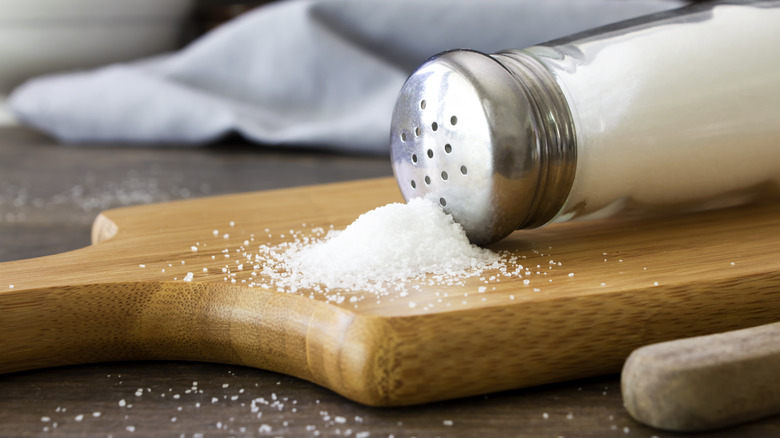
The core of a lithium-ion battery — lithium — is a very problematic material to make the basis of the world's most critical battery technology. Mining it is intensive, which does incredible damage to the environment, and all the while it's not cheap. Even with the promise that we could recycle used batteries and get back up to 90% of the lithium, it's a critical mineral, and we'd be better served by something more plentiful and less environmentally damaging. Solid-state batteries may provide all the benefits we've mentioned and be made out of some of the most common elements found on Earth.
Some solid-state batteries could be powered by a sodium-based electrolyte, according to a 2025 report by Science Daily. Sodium is cheap — your table salt is sodium chloride — which could go a long way toward bringing down the cost of battery production, and likely the sticker price for consumers. Plus, it's one of the most abundant elements on Earth. It's hard to imagine the human race ever running into a sodium shortage.
We may also see some solid-state batteries using glass. Similar to sodium, glass is made of common materials rather than critical minerals that we have to extract intensively from the Earth. The glass idea comes courtesy of John Goodenough, a hero in the history of rechargeable lithium-ion batteries.
They could ameliorate the battery fire problem
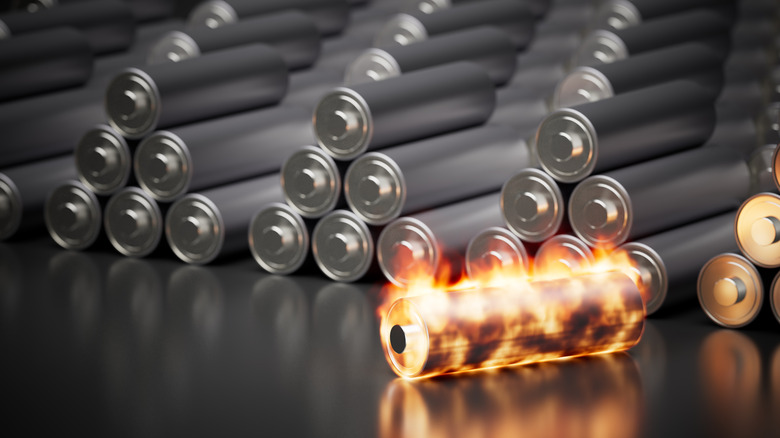
It's no secret that lithium-ion batteries can catch fire. Whether in electronics or EVs, it is always a possibility, no matter how well you treat them. To make matters worse, these batteries burn intensely, which is why airlines continue to tighten the regulatory screws on them and firefighters dread getting a call for a burning EV. This isn't helped by the fact that lithium-ion batteries, by their very nature, generate a fair bit of heat when charging. Even when they're just sitting there, cool and untouched, there's a small but real risk they could burn your house down. Solid-state batteries may once more save the day here.
For starters, lithium is flammable, and the electrolytes in solid-state batteries are not. It's hard to burn when your components don't burn easily. Solid-state batteries will generate heat, make no mistake, but the way they manage it is much more stable. They may also not be prone to the thermal runaway that is the bane of all lithium-ion batteries.
We want to really drive the point home again that everything we're talking about is theoretical. Some studies have called into doubt the supposed thermal stability of solid-state batteries. One study published in ScienceDirect suggests that solid-state batteries could get even hotter than their predecessors and set surrounding materials on fire, even if they themselves don't burn. On the whole, though, the evidence points strongly toward solid-state batteries making EV fires less devastating, and even little things — like vapes catching fire in people's pockets — a rarity.
They were discovered in 1831

Everywhere you read about solid-state batteries, they're teased as an almost sci-fi technology, giving the impression that they're a recent discovery. That's not the case at all. Nearly 200 years ago, solid electrolytes had already been discovered. Michael Faraday — the same scientist that Faraday cages are named after — was experimenting with electrochemistry in the 19th century. Beginning in 1831, he worked with both technologies that we now know — liquid-state and solid-state electrolytes — over a period of a few years (via NCBI).
Bear in mind, he wasn't inventing the batteries, just the electrolyte mechanics underpinning them. Electrochemical battery cells (the basis of our modern batteries) had already existed prior to Faraday thanks to Alessandro Volta introducing them to the scientific world in 1800. Of course, the science of solid-state batteries might've been known, but they weren't ready for duty. It wasn't until the late 1960s that major breakthroughs revealed the potential for solid-states — and as you can see, even 60 years later we have yet to realize the potential of a technology built on materials first identified in the early 19th century.
They're already powering pacemakers and hearing aids

Given everything we've said so far, perhaps we've misled you, the reader, into thinking solid-state batteries are an in-development technology with no real-world uses. Prepare to be surprised. Solid-state batteries have been the battery of choice for pacemakers as far back as 1972. Since these devices obviously need to last a long, long time and therefore hold as much power in as small a package as possible (pacemakers are not easily replaced, to say the least), it makes sense.
Some hearing aids also use solid-state batteries. This is a relatively recent development, but a promising one nonetheless. Naturally, there's promise here for other small devices (think Bluetooth earbuds and smartwatches) that consume relatively minimal amounts of power and yet tend to require annoyingly frequent charges. Manufacturing solid-state batteries, it seems, is easier when they're made for these smaller, low-voltage applications.
This is another area where a massive technological innovation is direly needed. Bluetooth earbuds like the AirPods Pro seem to be stuck around that 6-8 hour battery mark. Even a doubling of that number would make the limitations of Bluetooth a lot easier to bear.
They may be unaffected by cold
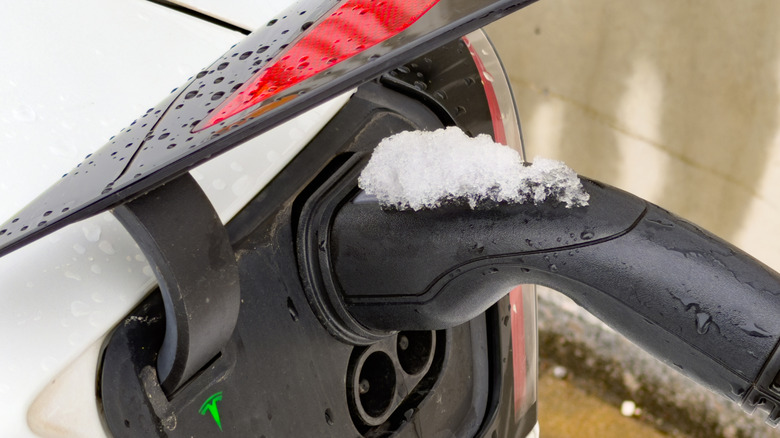
Lithium-ion batteries are the Goldilocks of the tech world, in that they hate temperature extremes. Heat, as we've already discussed, causes thermal runaway, but cold causes them to perform much worse and may even make them more prone to battery fires, ironically. One of the biggest criticisms of EVs has long been their shrunken range in cold weather. Not everyone lives in balmy Southern California. Yet as if they weren't content with slam dunks in energy density, charge cycles, and battery thermal stability, solid-state batteries may also shrug off the cold like it's nothing.
Part of the reason why cold affects liquid-state batteries so much is because it thickens and slows down the lithium electrolyte, which in turn slows the chemical process. With a solid electrolyte, that's no longer an issue — though this doesn't mean solid-state batteries are impervious to cold. In this study, researchers claim that using a special homogeneous non-crystalline solid would allow for a solid state that operates in extreme cold conditions down to -60 degrees Celsius (-76 Fahrenheit). Another study claims to bring that down to -73 degrees Celsius (-99.4 Fahrenheit). We'd like to emphasize the obvious that very few people live in temperatures that low. If solid-state batteries can achieve that threshold, then the argument that an EV isn't a good car in the frigid, snowy northern states loses weight.
Beyond EVs, battery storage solutions (i.e., those used to supply the grid) that experience cold temperatures might also benefit similarly. And even for the average consumer, this could be a huge plus. No longer will that pair of earbuds you left in your freezing car go dead.
The guy who pioneered lithium-ion batteries worked on solid-state batteries

In the history of lithium-ion batteries, there's perhaps no one as famous as John B. Goodenough. He didn't invent rechargeable lithium batteries, but without him, we may not have unlocked the chemistry that made them the battery of choice. He earned a Nobel Prize for his efforts and was a legend in other fields (you can thank him for RAM, too), though that's not where his story ended. The man continued his research on batteries at the University of Texas almost up until his passing in 2023 at 100 years old. As the joke goes, lithium-ion batteries weren't "good enough" for him, and so he helped develop the glass-based solid-state battery.
We don't want to tarnish the man's legacy, though we'd be remiss not to admit that there is considerable debate around whether his glass-based battery would work. Some contend that the way it functions would break the laws of physics. The only thing we can do is wait until his team — still working on the glass-based battery — produces a prototype that can be externally tested. Regardless, Goodenough deserves nothing but praise for tirelessly attacking the world's energy storage problem into his twilight years when most people would be enjoying retirement.
They require immense pressure to manufacture (for now)
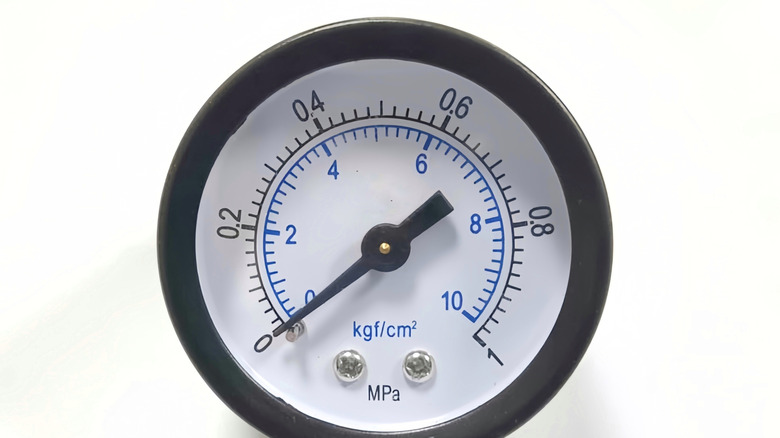
We've sung the praises of solid-state batteries. So now it's time to take a step back and point out their weaknesses. After all, solid-state batteries as a technology work — we've demonstrated as much — yet there are things preventing them from becoming commonplace now, and that could put a damper on their future preponderance. One major stumbling block that scientists are still trying to remove is the fact that solid-state batteries cannot be made at low pressure. This contributes — at least in part — to their current high-cost, low-yield manufacturing process. Remember, one of the huge benefits of lithium-ion batteries is that they are incredibly cheap to make, so cheap that prices sometimes still drop when their material costs rise.
Basically, during the manufacturing process, solid-state batteries are subjected to intense pressure (hundreds of megapascals worth) to build them. For reference, 1 megapascal (MPa) is equivalent to almost 10 atmospheres of pressure. Solid-state batteries also need to remain at high pressure during operation. Having said that, scientists are already hard at work developing low-pressure materials and manufacturing processes. It's now simply a waiting game to see which process turns out to be the most effective for scaling up to produce billions of batteries.
Cost is the main barrier to mass adoption

High-pressure manufacturing requirements are only part of the reason you don't yet have a smartphone or EV with a solid-state battery. The main barrier, hands down, is simply cost. Believe it or not, you can already buy solid-state battery-powered devices that aren't pacemakers and hearing aids. Take, for example, the BMX SolidSafe 5000mAh power bank, which starts at the low, low price of $79.99. Even then, it's not 100% solid-state; it uses a semi-solid-state construction that is focused more on reduced flammability than the other benefits we've seen from solid-state batteries. You can see where we're going with this.
Recent studies put the price tag per kilowatt-hour ($/kWh) on solid-state batteries at over $100. Compare that to the lithium-ion batteries we already use, which cost about $74 (per cell) in 2025 and for some chemistries only $52. Again, that price is probably only going down since lithium-ion has been on a steady downward trend since 2013. Also consider that there is an entire industry built around making such large quantities of batteries, whereas solid-state batteries are seemingly mostly prototypes built in small quantities for R&D. It's not a simple matter of making a cheap solid-state battery, either; it's ramping up global production — factories, supply chains, etc. — to build the literal billions of them that our devices and cars require.
It's for this reason you can't get an EV with a solid-state battery, even if the headlines keep teasing EVs with a very high amount of range. The technology is there. The hard part is polishing the rough edges and figuring out the right approach to make it widespread and profitable.