

5 Of The Most Fun Drivers' Cars That Don't Cost A Fortune, Ranked
It's all too easy to get caught up in the horsepower wars, and assume the average driver has been priced out of four-wheeled fun. Once the preserve of supercars, now the arms race of More Power Better has spread to everyday vehicles, while average selling prices lurch higher. Reset your expectations — or right-size them, I'd argue — though, and you can find plenty of charm for considerably less than the $50,000 or so that Americans are currently spending on a new car.
Look beyond the horsepower-heavy world of "true" sports cars, and there's a host of grin provoking options still out there. Maybe they're not all the first choice for a race day at the track, but they certainly can be for squeezing entertainment out of public roads (while still getting a manufacturer warranty).
 Chris Davies/SlashGear
A word on methodology: This isn't intended to be a definitive, all-encompassing list, only one based around some of the cars I've personally tested over the past few months. There aren't any EVs, either, since while models like the Hyundai Ioniq 5 N have demonstrated all-electric drivetrains can be genuinely quick, they're also typically priced well outside this self-imposed ceiling. I've looked at at-new pricing; those eager for fun on a budget should definitely be trawling the used listings, too.
2026 Volkswagen Jetta GLI Autobahn
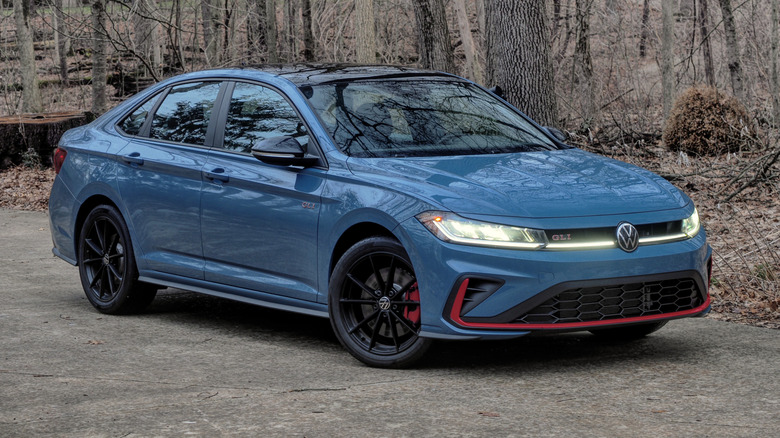
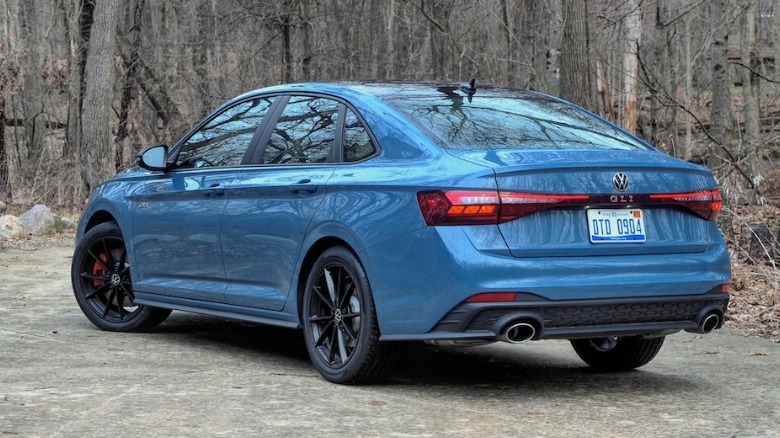
VW's sedan options have shrunk considerably in the U.S. in recent years, leaving just two cars — and indeed two variants on the same car — to choose between. The Jetta (from $23,995 plus $1,275 destination) may be the cheapest, but it's the Jetta GLI (from $35,020 plus destination) that's the more interesting. It pairs VW Group's familiar 2.0-liter turbo-four with a choice of 6-speed manual or 7-speed DSG transmissions.
 Chris Davies/SlashGear
Here, the 228 horsepower and 258 lb-ft of torque go to the front wheels via a limited-slip differential. Would I have preferred the stick shift to the DSG in the GLI that VW supplied for review? Certainly, but the automatic is a snappy thing when pressed. It, and the standard adaptive chassis control, also give the Jetta a useful duality: as comfortable as any compact economy sedan can be expected to be, for day to day use, and then adding a degree of firmness on appropriate roads.
 Chris Davies/SlashGear
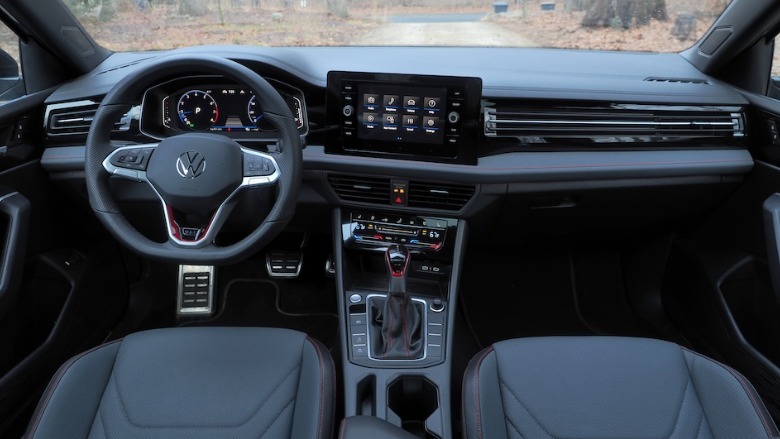
There's something generally old-school about how the Jetta GLI feels. The cabin is traditional VW — dark and sober, the red and silver accents doing little to lift that — and the tech restrained. No huge displays here, nor gimmicks in general. Honestly, though, that contributes to its charm: the GLI isn't going to set your hair alight, but it's a capable all-rounder that doesn't sacrifice a little fun just because you're on a very strict budget.
2026 Acura Integra A-Spec
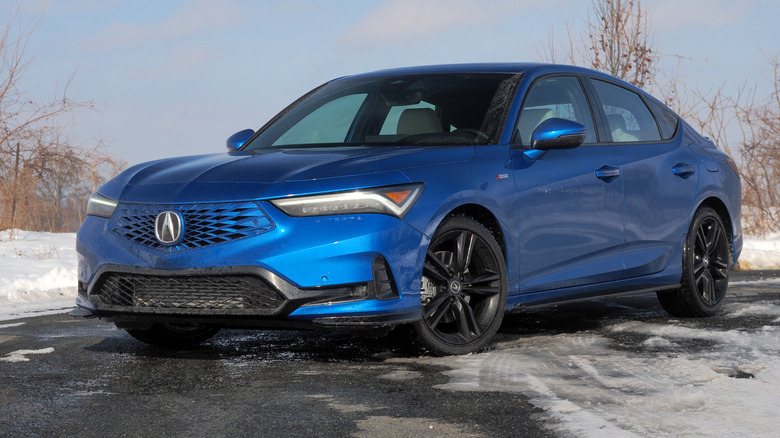
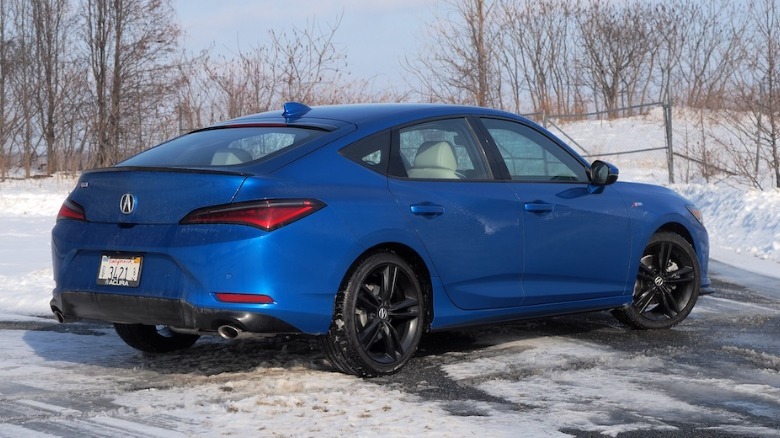
Budget fun does demand some sacrifice. Would the Integra Type S, with its 320 horsepower, be a lot more entertaining than Acura's regular Integra? Certainly, but the Type S also starts at $54k before fees; the regular compact sports sedan kicks off at $33,400 (plus $1,295 destination) and, while you "only" get 200 horses and 192 lb-ft of torque, its punchy little 1.5-liter turbo-four is begging to be wrung out.
 Chris Davies/SlashGear
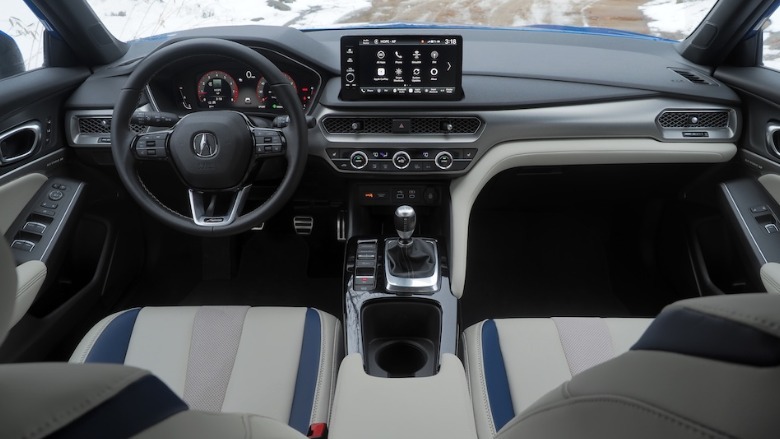
Outside of the Type S, Acura only offers its (excellent) six-speed manual on the Integra A-Spec with Technology Package (from $39,200 before destination). Yes, that's almost $6k more than the base car — which has a serviceable but not quite charming CVT — but still $15k under the Type S, plus you get plenty of creature comforts and gadgets. I'd say it's worth it, on balance: the stick-shift is pleasingly snicky, the clutch beautifully weighted, and on regular roads the A-Spec falls into that "enough but not too much power" bracket where you get to play with all the grunt you paid for.
 Chris Davies/SlashGear
The same holds true for the Integra's Civic Si sibling, and if the only important part for you is that engine/transmission pairing then the Honda's sub-$33k all-in price is definitely appealing. I think the Acura looks much better outside, though, and its cabin and features are definitely a step above, helping justify the premium. Either way, though, smiles are guaranteed.
2026 Volkswagen Golf GTI
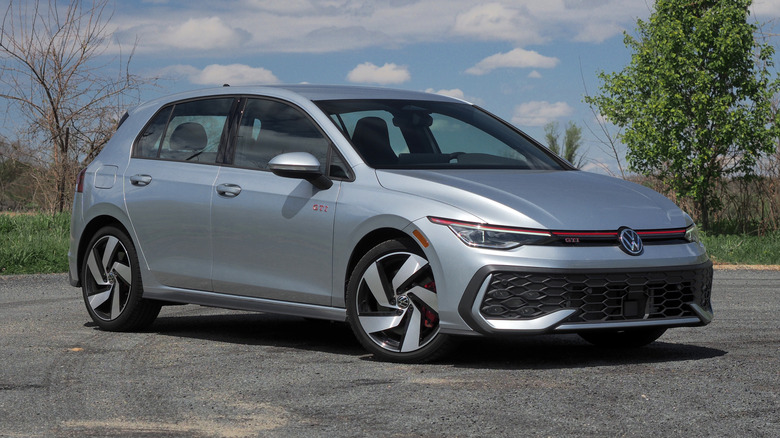
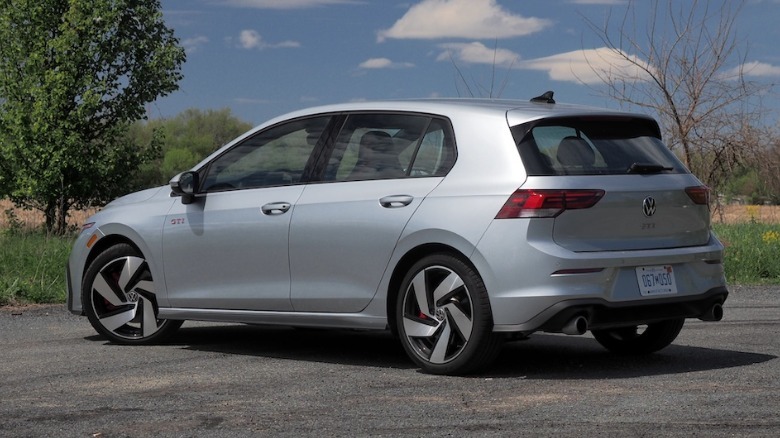
With five decades behind the badge, you can't accuse the Golf GTI of lacking heritage. Volkswagen's legendary hot hatch has been the benchmark for attainable performance over the years: accessible power while still usable as a daily-driver. Priced from $34,590 (plus $1,275 destination) it's still mighty affordable, though the 2026 model year did bring some other compromises.
 Chris Davies/SlashGear
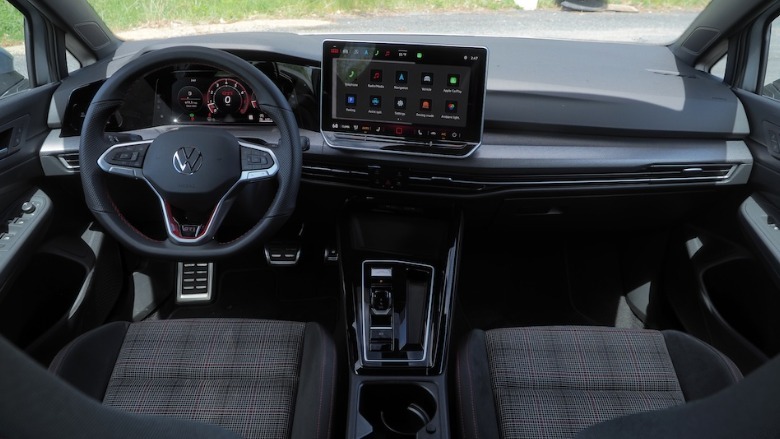
Purists howled, but there's now no manual option for the standard 2.0-liter turbo-four, only a 7-speed DSG automatic. Unlike the Jetta GLI's version of the engine, here the drivetrain is tuned for 241 hp and 273 lb-ft. Compared to the considerably more expensive all-wheel drive Golf R (from $49,455 plus destination) the GTI sticks with front-wheel drive.
 Chris Davies/SlashGear
For better or worse, the result is a more grown-up version of an icon. Even in 'Sport' mode, the GTI displays a restrained sort of enthusiasm: there's so much grip and poise, you take pleasure in its Germanic tractability rather than edge-of-the-seat giddiness. It's smooth and hushed enough to be the epitome of a daily driver, even if that isolation does end up holding raw-edged fun at arm's length. Still, as all-rounders go, VW's capable hatchback remains the consummate jack of all trades.
2026 Toyota GR Corolla
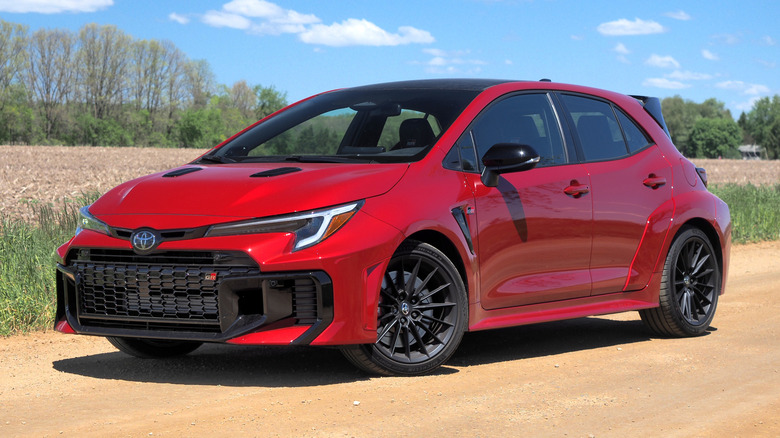
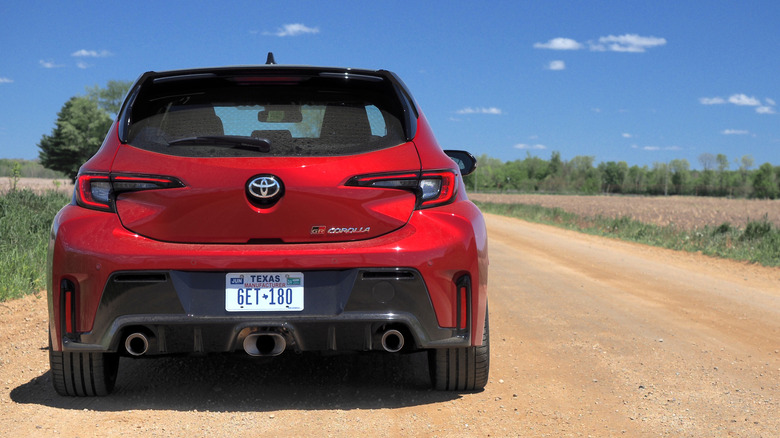
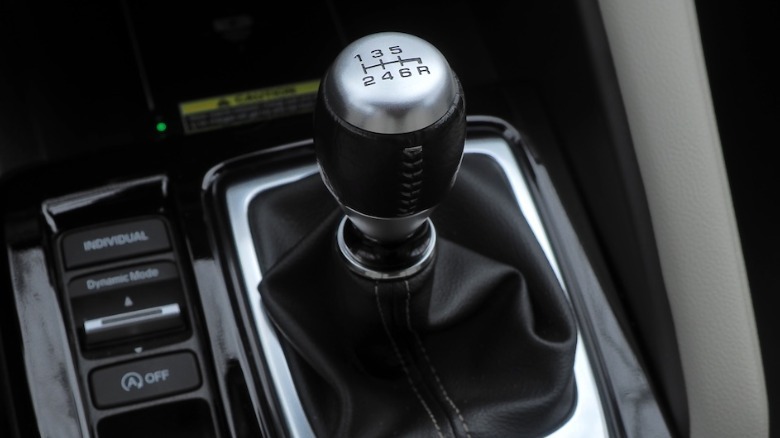
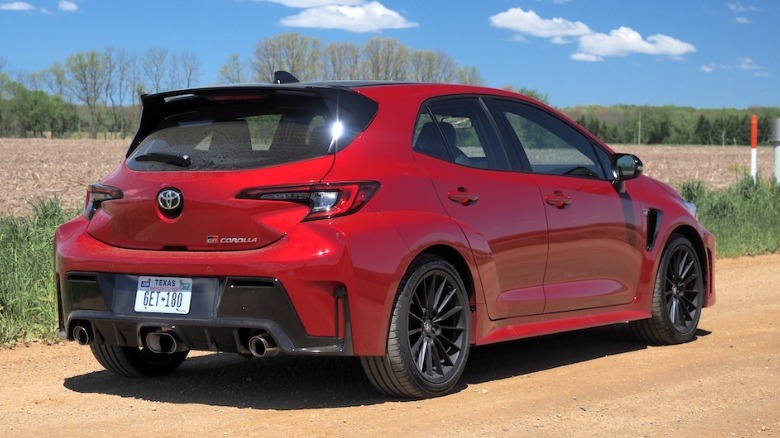
At times, throwing the GR Corolla around another corner with a fairly unhinged grin on my face, I found myself marveling that Toyota – Toyota! – of all companies should make such a car. The dinky little hatchback is a shopping list of oddities: a mere three-cylinder engine that somehow musters 300 horsepower; a fantastic six-speed short-throw transmission; and all-wheel drive with adjustable torque distribution. All wrapped up in a borderline-ridiculous design with triple-tailpipes and swollen wheel arches.
 Chris Davies/SlashGear
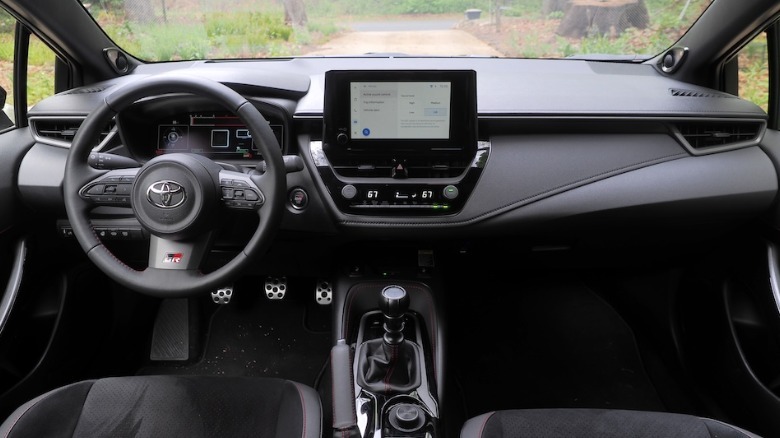
I could probably brabble for hours over whether the manual in the Toyota is as good as Mazda's in the Miata, or Honda/Acura's. All have a charming tactility to them: not too heavy, not too light. The GR Corolla's peak torque doesn't land until 3,000 rpm, encouraging you to hold on to lower gears and hear the silly 1.6-liter turbo-three yell. It's properly quick and properly grippy, and if you find a suitable sweep of asphalt then dialing in a little tail-happiness with the dedicated knob in the center console is both straightforward and controllable.
 Chris Davies/SlashGear
It'd be easy to say that, if the Golf GTI is for grownups, then the GR Corolla must be the midlife crisis version of a hot hatch. Only that ignores the usefulness of its AWD in the winter, and the practicality of a hatchback, and the bevy of standard safety tech you still get because this is, after all, a Toyota (they'll even sell you an automatic version, now, but you really want the stick). Priced from $40,520 (plus $1,295 destination) it's the most expensive of this quintet, but you're getting some serious engineering for your money.
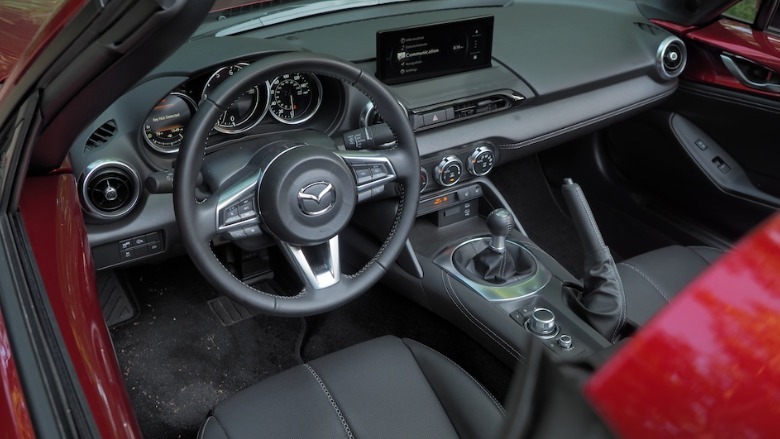
2026 Mazda MX-5 Miata RF
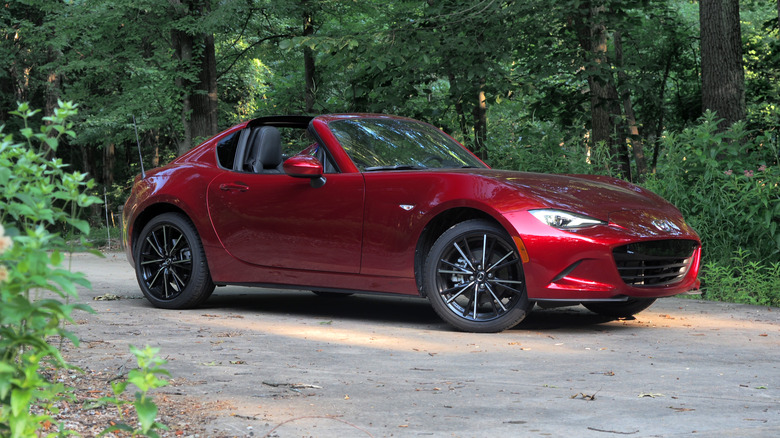
"Miata is always the answer" may be a cliche, but that doesn't mean it's not true. Mazda's tiny two-seater feels like an anomaly in this modern age of vast SUVs and even-vaster trucks, and driving it involves the occasional moment of discomfort when looking out the side window to see nothing but the outsized wheel of a fellow road-user. My advice? Cough up the $595 Mazda asks for the still-eye-catching Soul Red paint, and hope that helps you stand out.
 Chris Davies/SlashGear
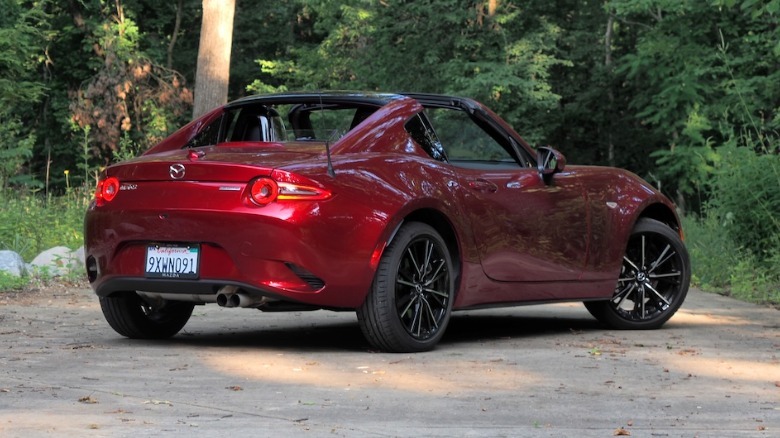
MX-5 ownership starts at the achingly affordable $30,430 (plus $1,235 destination) for the Sport soft top, but this handsome MX-5 RF Grand Touring — with a convertible hard top that's really more like a targa — is from $38,450 (a $2,720 premium over the equivalent-spec soft top). Either way you get a 2.0-liter inline-four with a choice of 6-speed manual or 6-speed automatic, pushing 181 horsepower and 151 lb-ft of torque to the rear wheels.
With even the heaviest manual Miata still under 2,500 pounds, power numbers which would otherwise seem small are far more acceptable. In fact I'd argue it's Mazda's restraint which makes the MX-5 so beguiling: without excesses of torque to count on, rowing through the near-perfect transmission is mandatory to make the most of the little car's poise and grip. The result is a degree of involvement foreign from most modern performance cars.
 Chris Davies/SlashGear
Does that come with an annoying infotainment system, minuscule cargo space, and generally scant practicality? It sure does, but I don't care. A week with an ND Miata is enough to get me staring at Mazda's configurator, wondering why I don't have one in the garage. I'm morbidly fascinated (and concerned) about what will happen with the fifth-generation NE car. Look, Mazda, don't screw this up...