

5 LG Products You May Not Realize Exist
We may receive a commission on purchases made from links.
LG may be a respected player in the tech world, but it wasn't always easy. The Korean company that currently specializes in the television and home appliance market didn't even keep its smartphone business going into the 2020s. However, LG took quite a detour to become the tech giant it is today, getting its start in the chemical industry and expanding into radios in the 1960s.
Now, the brand has a finger in every pie, which is why it also makes a lot ofweird products, just like its fellow tech giant Samsung. Unlike Samsung, however, LG's unexpected products still play to the company's strongsuit — consumer electronics and home appliances. You won't find an amusement park or modern military equipment in LG's lineup.
What you will find on this list is a bunch of products that seem more like publicity stunts than actual products, some that are a bit too expensive to recommend without some caveats, and a few that are just straight up confusing, like a television on wheels.
The OLED T, a transparent 4K smart TV
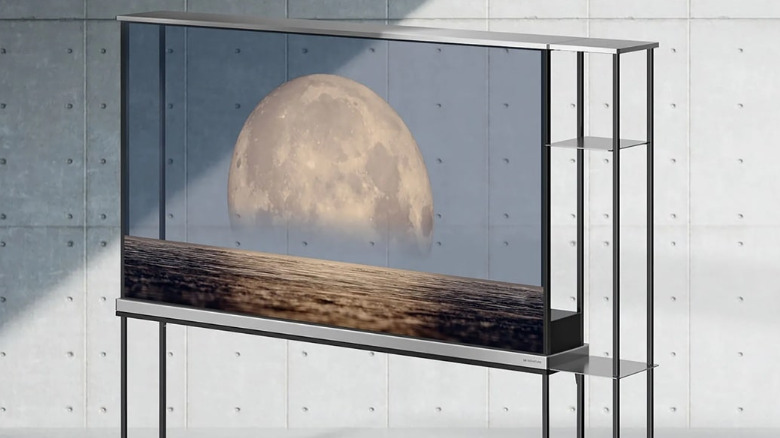
Let's be honest, you probably heard about LG's big transparent TV. If you didn't, then you haven't read our 2024 coverage of CES. What you may also not have realized is that this obvious publicity stunt was ultimately put on sale on LG's website, and you can now buy it for a cool $59,999.99. LG's big transparent TV, which is actually called Signature OLED T, is just as big as any 77-inch TV, but weighs twice as much, and is 10 times more expensive than one of the best 77-inch TVs on the market.
Is the transparency effect worth $60,000? That's up to you. On the off-chance that you're in the position to consider buying this weird gadget, we suggest you be wary of the "it's good if you can afford it" attitude that is quite common when it comes to obviously overpriced tech with no clear use case.
Sure, it would make for a neat conversation piece, but so would a Samsung Frame or a Hisense Canvas TV. The OLED T might just look good inside an incredibly expensive home with no place for a TV except in front of a window with a great view. The transparency effect is only as good as the surface behind it, after all.
StanbyME and StanbyME 2 Rollable Smart Touch Screen
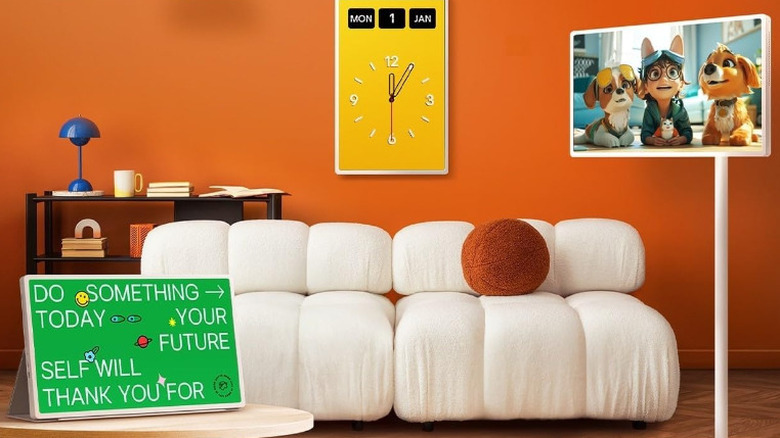
Another LG CES special, the StanbyME dazzled crowds of tech journalists and enthusiasts in 2025 (including our own), but failed to meet the expectations of most reviewers once the novelty faded. Ultimately, the first StanbyME was an expensive screen on wheels with no voice assistant, no webcam, and a resolution and picture quality that were just fine.
But, unlike other weird LG gadgets, the idea had legs, and it had a pretty good stand, too. The brand's next move was to keep the wheels, the arm, and its pivoting and rotating functions, switch the screen for a 1440p version that reviewers liked a bit more, and then letting you detach the monitor from its weird moving pole stand. This last steps seems to be what rotated public opinion on the StanbyME 2.
What seemed to be a neat gadget doomed by a faulty execution was given new life by its second implementation. As it turns out, all that LG was missing was making the weird TV double as a weird tablet, like one of those 2-in-1 flipping laptops.
LG Sound Suite Wireless Home Audio System
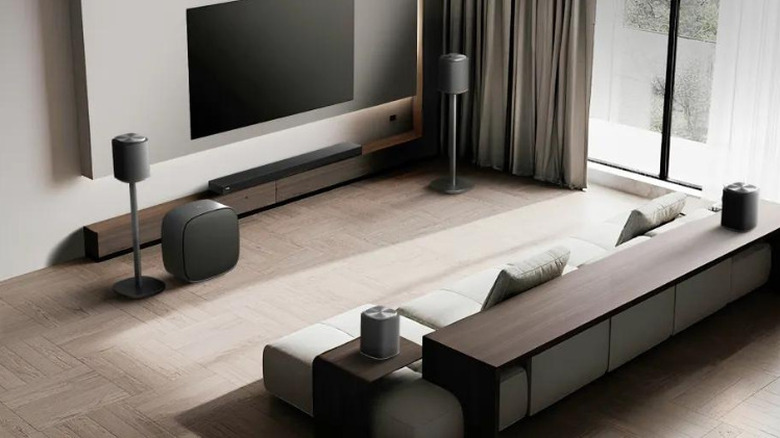
The LG Sound Suite is a complete audio system for any living room, at least according to the company itself. It may not be an audiophile's favorite, but it doesn't rely on an ideal listening position and strong soundproofing, while also being relatively affordable. What makes the system a surprise in LG's lineup, however, are its special features.
Firstly, it's compatible with Dolby Atmos, the surround sound tech. There's also the fact that the soundbar and speakers are supposed to automatically adapt to the space, allowing for what LG is calling "flexible speaker placement" in a freely expandable system. According to reviews, this feature works as intended, though you need to run the auto-calibration every time you add or move a speaker.
Meanwhile, a proprietary system called Sound Follow is supposed to let you adjust the speakers' sweetspot in the room based on your current location, something that normally requires readjusting the speakers themselves. Sadly, it's hard to say how well Sound Follow really works, as all the professional reviews of LG's audio system we could find either don't mention it, or they say it didn't work as expected. Considering how expensive this product can be — the most expensive full system comes in at $2,600 — you really want to make sure you're getting your money's worth. Still, opinions on this audio system are generally positive, if not enthusiastic.
UltraFine evo 6K Monitor
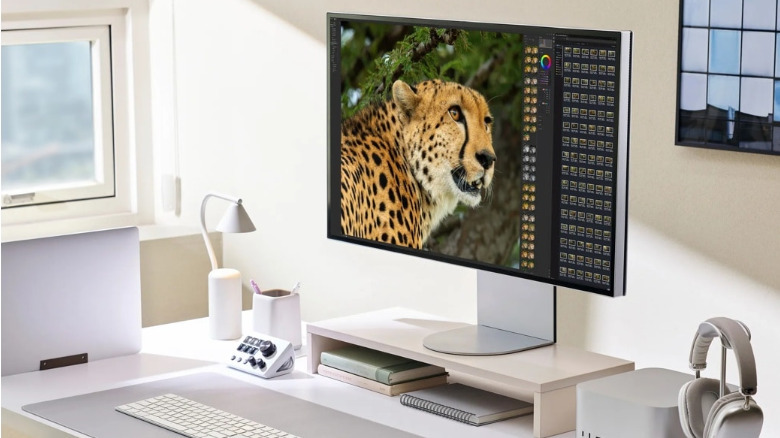
8K TVs may not be that worth it anymore, but 6K is alive and well in LG's monitor lineup, even if it's a little niche. LG sells exactly one 6K PC monitor, the 32 Inch UltraFine evo 6K Nano IPS Monitor with Thunderbolt 5, which is extremely well-liked, with 4.6 stars, but only has nine reviews on LG's website. That doesn't tell us anything about the quality of this monitor, but it's one sure way to know that you probably haven't heard of this LG product.
There are two problems with 8K TVs. Firstly, while the increased resolution could be useful on very large screens, no one sits a foot from their 85-inch TV to look for the missing details, making the shortcoming of 4K hard to notice. The second, more important detail is that, to most, a TV is primarily a way to watch content that is almost never 8K. Even most video games don't run at 8K natively, assuming you even have a machine capable of supporting this resolution.
Reaping the benefits of 6K on a PC is a lot easier. LG's UltraFine is 32 inches, which doesn't sound like a lot, but imagine sitting at a arm's length from an average bedroom TV. You'd be able to see a lot of imperfections in the picture, and that's why most ultrawide monitors are 4K, and why some go a step further. LG's UltraFine is a regular 16:9, but it's massive, at 28.3 x 16.3 inches. Plus, a PC isn't just for movies and games. The operating system and lots of software scales with the monitor's resolution, and professionals like visual artists and editors will have a lot of incredibly high-resolution content supplied by their work.
49-inch 32:9 UltraWide Monitors
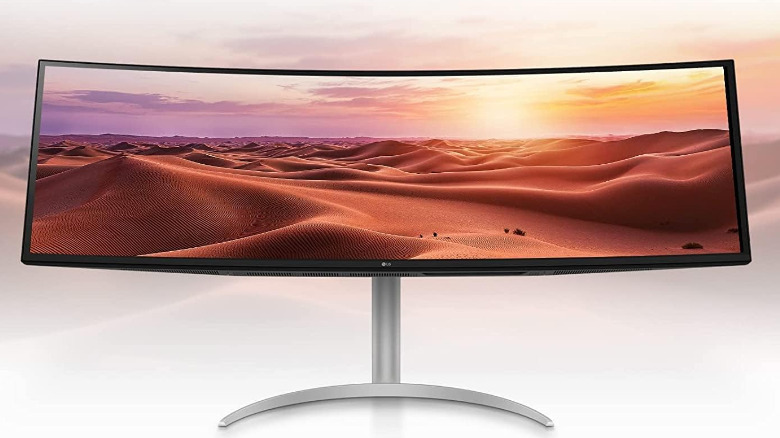
You've probably seen an ultrawide monitor before, and you probably saw a curved TV at some point. But did you expect LG, the brand that Consumer Reports once called the most reliable maker of kitchen appliances, to make a curved monitor so wide, it's literally the size of two large computer screens sitting side by side? To be fair, the company doesn't exactly make a monitor like that; it makes four of them, or five if you include the one with a slightly different aspect ratio.
LG has a healthy collection of 32:9 PC monitors, the standard widescreen resolution with the width stretched to cover the space of a whole second monitor. If you like your dual monitor setup, is there any reason to upgrade to an ultrawide? That's a question only you can answer. But if you want to upgrade, and you can find one of LG's big, big monitors on a discount, they can be a great deal.
Reviews for the 49WQ95C-W, LG's only 49-inch 32:9 screen with 144 Hz and Nano IPS technology, are very positive, even if there aren't a lot of them. They generally recommend you wait for a discount to bring the price down from $1,500 to $1,000. LG's other monitors in this category all cost around the same, $1,200 and above, but they don't have a high refresh rate and Nano IPS panels, so you're best sticking with the 49WQ95C-W. Some don't even have G-sync and Freesync, which is a real letdown for such expensive monitors.