

14 Cars You Should Drive At Least Once In Your Lifetime
Driving, testing, and evaluating cars is a pretty rad job. I've been doing it for over a decade, and aside from going to space at 24,500 mph, I'd be hard-pressed to think of a job that would be more fun. And doing the work of evaluating cars means I've been behind the wheel of some pretty amazing stuff over the years, including many bucket-list vehicles.
These are some of the most unique and formative cars I've driven, some of which have shaped the automotive industry as we know it. With the advent of privately owned rental cars, there are many opportunities to rent vehicles for just a day or two, so even the old and discontinued models on this list can be experienced out on the road.
Jeep Wrangler
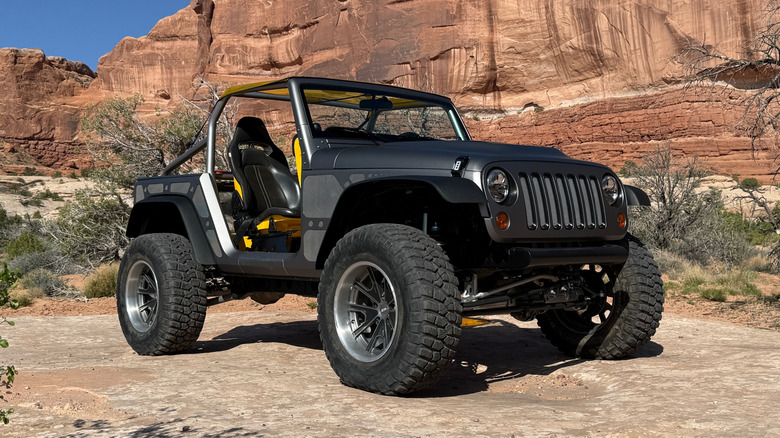
The Wrangler has a history of sacrificing comfort for capability, with a loud top, poor fuel economy, and bad steering. There's even a common problem amongst Wranglers called Death Wobble, a result of mechanical failure that causes uncontrollable shaking of the front wheels. They aren't quiet, particularly comfortable, or meant for upscale road trips, but that's not what they're supposed to be. Jeep Wranglers are designed, built, and bought by people who have off-road dominance in mind.
Exploring the depths of wilderness, going over massive rocks, and fording rivers of various depths can all be done in a Jeep Wrangler. From the factory, Wrangler's most capable trim levels, like the Rubicon, are named after America's toughest trails, and they're rated to complete them. If you've ever wanted to see what a remote mountain top looks like, and if there's a trail of some sort to get there, you can likely get there in a Jeep, and you can do it with no doors, no top, and in some cases, a folded-down windshield.
Chevrolet Corvette
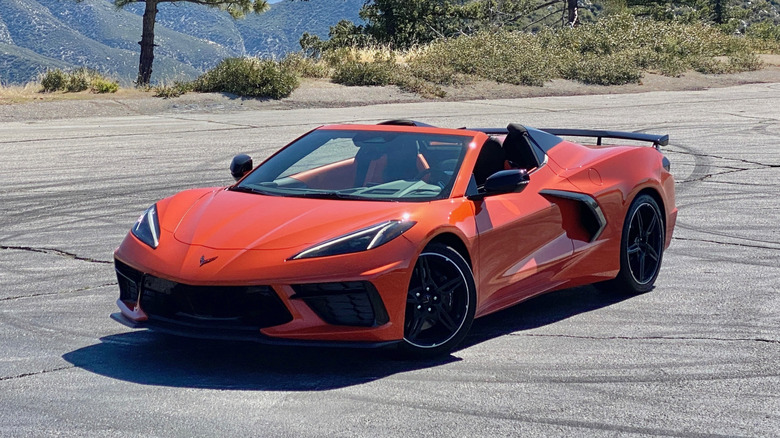
With eight generations of Corvette available, there's a lot of American sports-car history to choose from, but if you want a truly exotic-on-a-budget experience, the C7 and C8 generations are probably your best bet. I've driven Corvettes dating back to the late 1950s, and they all have their appeal, but the C7 and C8 Corvettes are the best high-performance driving experience you'll get from the bunch.
In particular, the C7 Corvette, the last model to come with a front-engine layout, was powerful, practical, and affordable by sports car standards. The big 6.2-liter V8 under the hood pumped out 455 horsepower and 460 lb-ft of torque — enough to light up the rear tires whenever the inclination hits you.
The Z06 is a favorite of mine from the C7 generation, pushing out 650 hp and 650 lb-ft of torque, providing a growling supercharged-V8 soundtrack that'll wake the neighbors for miles around. The latest Corvette generation, the C8, does an excellent impersonation of an exotic European sports car. Even if you think the mid-engine layout is an affront to Corvette history, it's still a must-drive.
Acura NSX
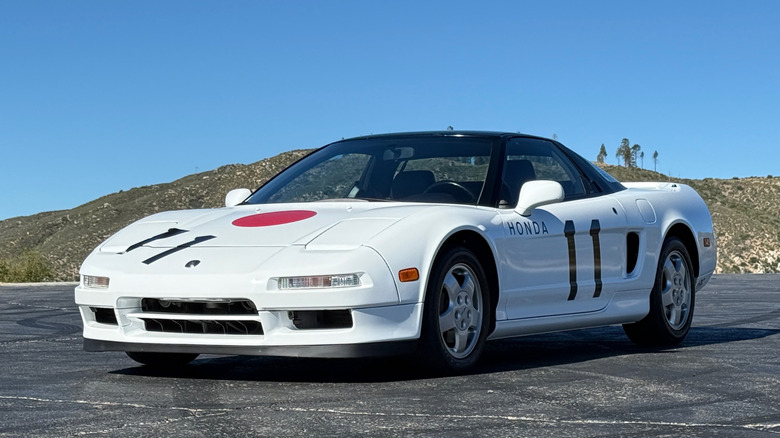
My first drive in an Acura NSX was blasting around California's Sonoma Raceway. Behind the wheel of the swan-song NSX Type S, I felt like I was meeting a sports legend on their final championship run. I'd never driven the original NSX, but its hybrid successor hardly disappointed.
Fast forward a few years, and I was finally able to drive the first-generation NSX on my home turf, in the mountains of Southern California, with the windows down, and the high-revving VTEC soundtrack of the mid-engine icon singing in my ears. Like many children of the 90s, I was thoroughly obsessed with the Acura NSX, and the experience of finally driving one lived up to all my expectations. It felt extremely balanced, perfectly powered for its size, and just as thrilling as many modern-day sports cars with double the power. Any NSX will thrill you, but if you get a chance to drive one of the first-gen models, don't pass it up.
Mazda Miata
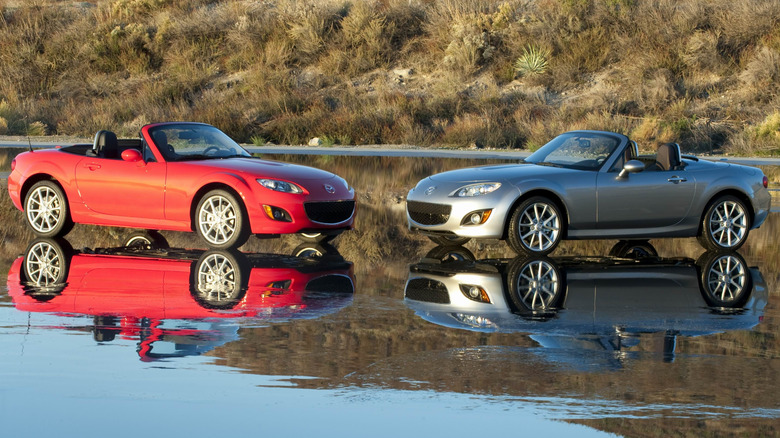
One of the most ubiquitous answers to any question about cars is the Mazda Miata. Want something fun? Miata. Want something that can be modified or repaired easily? Miata. Want a track car for the weekend that won't break the bank? Miata. The Mazda Miata (also known by its government name, the MX-5) is a two-door convertible that everyone should drive at some point in their lives. Whether it's for a top-down road trip along the coast or a short getaway in your local mountain town, there's something simple and pure about driving a Miata.
The designers of the Miata are constantly working out ways to reduce the vehicle's weight (referred to as the Gram Strategy), even as safety and tech equipment are added over the years, so the purity of the sporty experience isn't ruined by a heavy car. That means it can have a small engine and still get around corners and up mountain roads at a brisk pace (the latest Miata only has 181 hp from its naturally-aspirated four-cylinder engine). The Miata shows us what's possible if an auto manufacturer commits to providing affordable, fun transportation, year after year.
Porsche 911
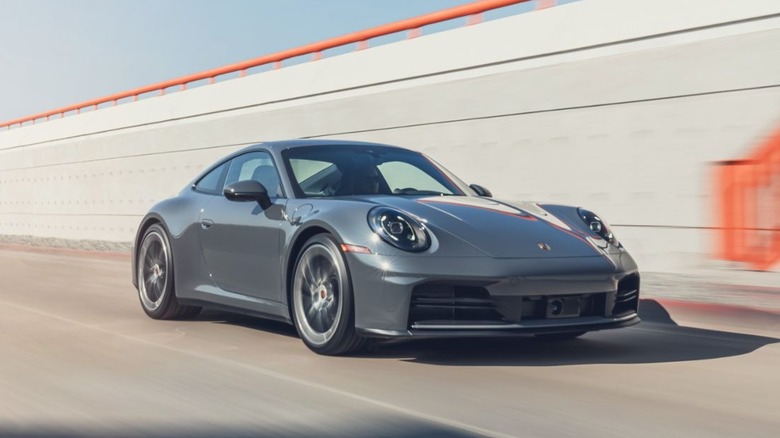
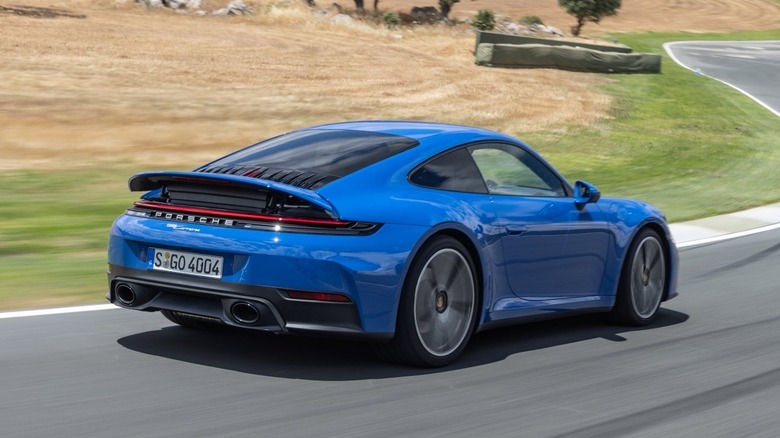
If the Mazda Miata is a basic, no-frills solution to the sports car question, the Porsche 911 is somewhere on the other end of the spectrum, providing luxury, speed, and all the extras you could ask for, but its purity as a sports car remains intact. From the standard $135,000 Carrera, all the way up to the $235,000 GT3, there's a new 911 for every high-performance experience, but used models will cost you a bit less and provide similar driving excellence.
Some Porsche enthusiasts prefer the early air-cooled models, while other 911 loyalists will direct you towards more modern versions like the 997, 992, and 991. Porsche's commitment to the rear-engine design makes the 911 unique among sports cars (a decision they say is based on physics), but it's still an incredibly rewarding car to drive, no matter which generation you go with. Basically, every sports car in the world uses the Porsche 911's performance and driving characteristics as a yardstick by which to measure itself — it's one of the best in its class, and it has been for decades.
Nissan GT-R
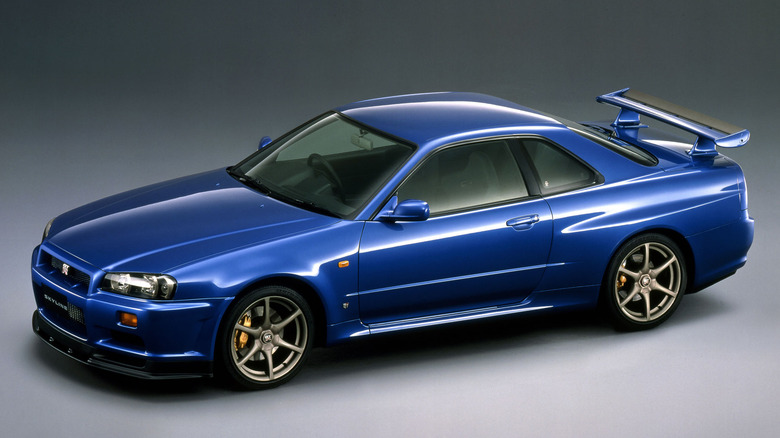
Unfortunately, the only Nissan GT-R I've had the chance to drive was the R35 generation — the only GT-R made for the United States. Don't get me wrong, the R35 was amazing to drive, and if it's the only one you get a chance to drive, do it. The twin-turbo V6 under the hood put out 473 hp back in 2008, sent to the ground via all-wheel drive. That number would eventually go up to an astonishing 600 hp before the R35 was discontinued. But that doesn't make my desire to drive its predecessors, an R32, R33, or especially an R34, any less substantial.
The Nissan GT-R, especially during those three generations, changed the car world on multiple occasions. When the Skyline was introduced in the 1950s, it wasn't a Nissan yet, and it made little impact on the industry. Things really got going in 1989 when the RB26DETT-powered R32 Skyline GT-R launched — the version that birthed the GT-R's "Godzilla" nickname. Through upgrades and revisions, eventually the R34 was born. The R34 is probably the most iconic Skyline, built from 1998 to 2002. It was in every video game, on the cover of every magazine, and featured in countless movies. It's known as one of the best-driving tuner cars of all time, and it's high up on my bucket list of cars to drive in my lifetime.
Mercedes-Benz SLS AMG
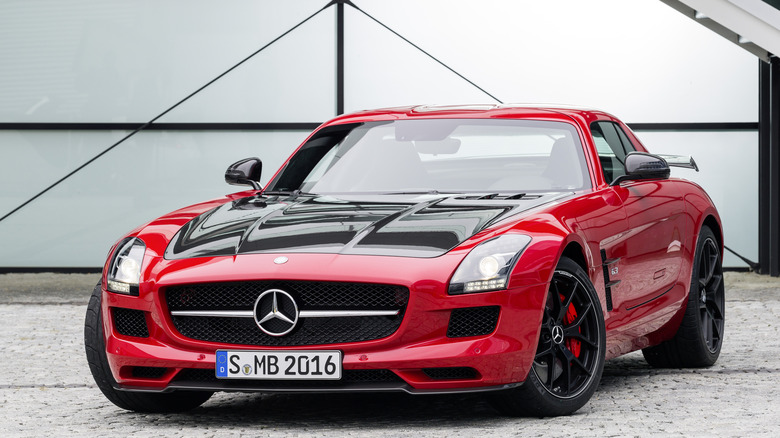
In its day, the V8 that powered the Mercedes-Benz SLS AMG was one of the most powerful naturally aspirated engines that money could buy. The massive 6.2-liter V8 produced 563 hp and 479 lb-ft. That was enough to rocket it from zero to 60 mph in just 3.5 seconds — a properly swift time back in 2010, and one that still holds up today. The SLS AMG Black Series bumped the power up to 622 hp and hit 60 mph in just 3.2 seconds.
No matter which version of the SLS AMG you drive, the V8's guttural exhaust note defines the car — few V8s sound as good as the M159 engine. From the driver's seat, the SLS's hood feels a mile long, which gives it a stately yet intimidating demeanor. And with gullwing doors that harken back to the original 300SL, the SLS AMG feels connected to history in a way few modern vehicles do. Drive the SLS AMG if you get the chance, and make sure you've got a long straight to do it on.
Cadillac CT5-V Blackwing
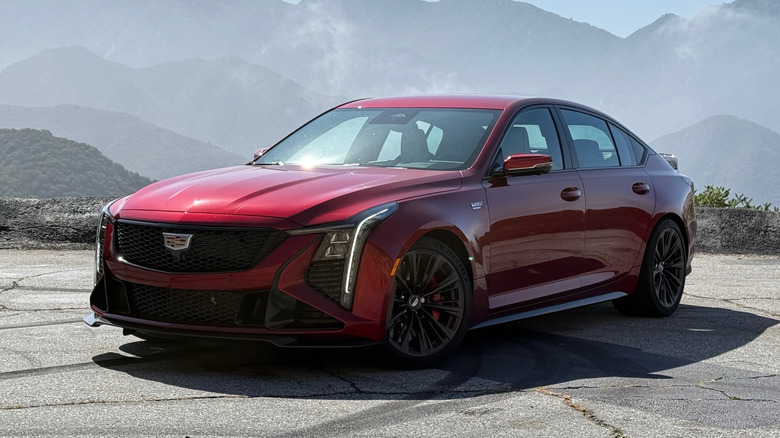
I've driven several Cadillac Vs. Dating back to the 2004 debut of the first CTS-V, the V vehicles in Cadillac's lineup have been the brand's high-performance models. They have much more power than their standard counterparts, and they're quite often properly rowdy. From the CTS-V to the Escalade V, right up to the tire-smoking CT5-V Blackwing, all the V vehicles have given me the same impression: This is rad. I can't believe they shoved an engine this big in here, and it comes with a manual.
The CT5-V Blackwing is the pinnacle of the V lineup these days. Like several Corvette models, the CT5-V Blackwing uses a 6.2-liter V8 under the hood, and the V8 is then thoroughly invigorated by a supercharger, combining for 668 hp and 659 lb-ft of torque. All that fire-breathing American grunt is sent to the rear wheels via an available six-speed manual transmission. Few experiences are as exciting as driving a CT5-V Blackwing, but when you want to take it easy, the Caddy can do that, too. It's comfortable and civilized enough for daily living, and there's enough space to take your friends wherever they'd like to go, however quickly they'd like to get there.
Ford Mustang Shelby GT500
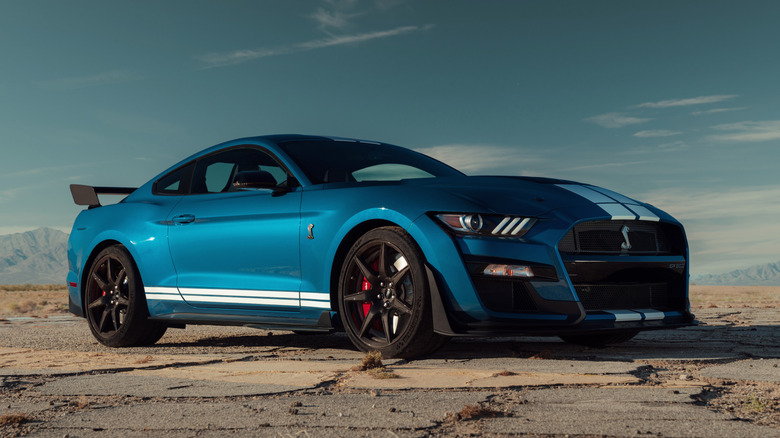
The latest Ford Mustang Dark Horse is a riot. The V8 has a thirst for premium fuel that I've seldom experienced elsewhere without forced induction, but that doesn't stop it from being a blast to drive. It has incredible balance, excellent grip, and I'd happily drive one on a daily basis even with rising fuel costs. But if I had to pick a top-tier Mustang, one I'd recommend to a friend for the most thrilling Ford-V8-powered-ride of their life? I'd go with the GT500, specifically from around 2020 to 2022.
The 2020 Mustang Shelby GT500, like several of the other choices on this list, used a supercharged V8. This powertrain configuration is a favorite of mine, and the supercharged V8 powering the Shelby is particularly enjoyable. Specifically, the supercharged 5.2-liter V8 under the hood of the GT500 produced 760 hp, sent to the rear wheels with an ultra-quick-shifting 7-speed dual-clutch automatic transmission. You don't get to row your own gears, but in something this fast, shifting might be a distraction. The GT500 makes some of the best noises in the car world, and the MagneRide suspension achieves preposterously good handling alongside an impressively smooth ride.
Lexus high-performance coupe - LC500 or LF-A
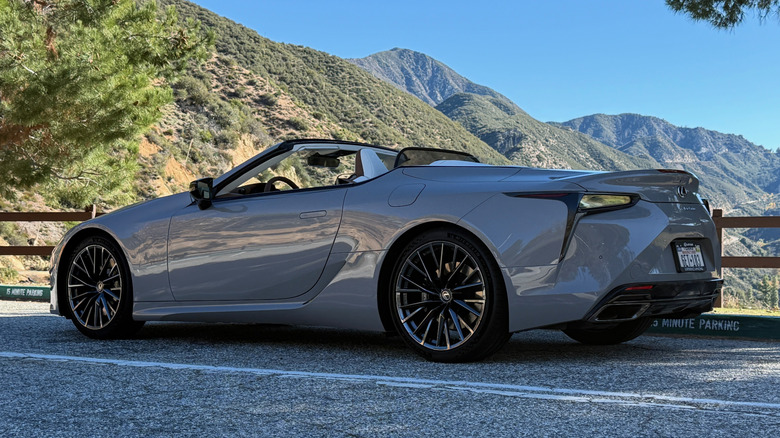
I've never had the privilege of driving a Lexus LFA, but it's certainly on my automotive bucket list. The screaming V10 provides a symphony that few other road-legal cars can match, and the styling is impeccable. I've read all sorts of stories about LFA, but the closest I've gotten to piloting the epic, short-lived Lexus supercar is driving the LC500.
It doesn't have a screaming V10, but the LC500 does come with a raucous, naturally-aspirated V8 that has an impressive character all its own. The 5.0-liter V8 under the hood of the LC500 produces 471 hp and 398 lb-ft, revving all the way up to its 7,300 rpm redline. Even with a robust powertrain, the LC500 is stately, elegant, and built with attention to detail, none of which stops it from having sharp driving dynamics, too. Since Lexus only made 500 LFAs, and they were pretty tough to purchase even when they were new, the LC500 is your next best bet. And if you want performance in a plush package that'll have you crossing continents in style, the LC500 is hard to beat.
Something with a Hellcat powerplant
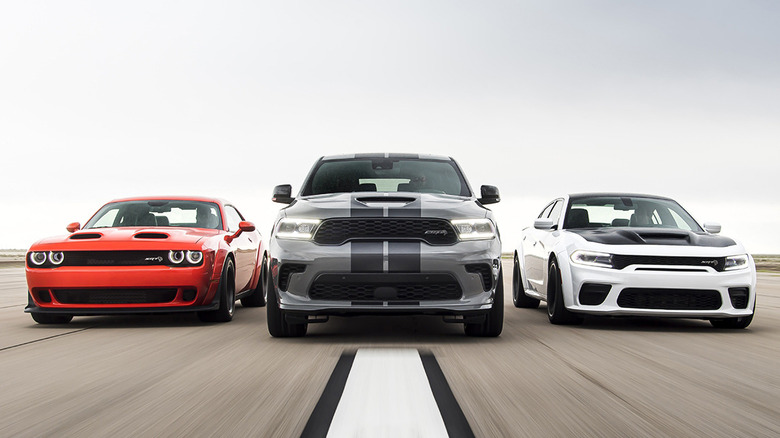
If it came from the factory with a Hellcat powerplant, I've driven it. The original Charger and Challenger Hellcats, Ram TRX, Jeep Grand Cherokee Trackhawk, and even the Dodge Durango Hellcat — I've been behind the wheel of all of them, and the big supercharged V8 that powers Hellcat vehicles never failed to put a smile on my face. Fuel economy with any of those vehicles is absolutely abysmal (a theme for forced-induction V8 powerplants), but the earth-shaking, tire-shredding power is a thing of beauty. Driving something with a Hellcat engine is worth it for the supercharger whine alone.
The Hellcat engine is a supercharged 6.2-liter V8 that Dodge, Ram, and Jeep stuffed under the hoods of their vehicles for a few years to glorious success. It put out over 700 horsepower in most applications, but in the Challenger SRT Demon 170, E10 fuel and some special upgrades meant it put out 1,025 hp late in its life. Whatever model it is, if you get the chance to drive something with a Hellcat engine, set aside some extra budget for tires.
An exotic Italian sports car, preferably a Lamborghini or a Ferrari
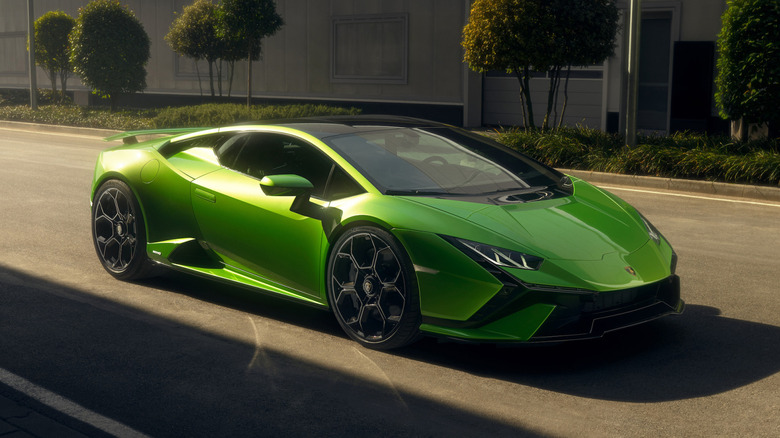
I'm sure there's a Ferrari or Lamborghini expert out there who will steer you away from the worst ones in history. I'd rather direct you towards a few of my favorites. At the top of my list are the Ferrari 458 Italia and the Lamborghini Huracán. I've spent time in both, and I enjoyed every moment. They've both got serious road presence, but the Huracán in particular was a favorite of mine based on how approachable it felt, even with its preposterous levels of power and speed.
In larger V12-powered Lamborghinis like the Murciélago, I've always felt like I was driving something too wide for even America's big roads. The high-revving-V8-powered Ferrari 458 and the V-10-powered Lamborghini Huracán, however, measure 178.2 and 179.8 inches long from nose to tail, respectively, which makes both of them smaller than a modern mid-engine Corvette, but they're both still impressively fast, unmistakably Italian, and every bit a super sports coupe in their own ways.
A pre-1970 American muscle car
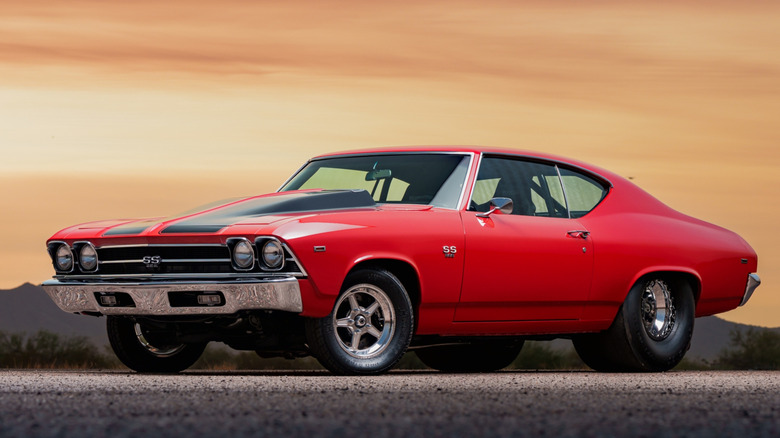
In many ways, pre-1970 American muscle cars are very similar. Whether you go with something from Ford, Pontiac, Plymouth, Chevy, Chrysler, or Dodge, you're getting similar commitments to the idea that V8 power and straight-line speed were the chief concerns for buyers. So this is a bit of a Choose-Your-Own-Adventure kind of recommendation. Whatever pre-70s muscle car you choose, you'll likely arrive at your destination, smelling like gasoline, grabbing the attention of everyone around you.
If I were forced into specifics here, I'd recommend something from Chevrolet like the Camaro, Chevelle, or Nova — all of which had iconic looks in the late 1960s, and even into the 1970s, they were still pretty respectable. Though Mopar and Ford options like the Challenger and Mustang would likely be just as evocative and special to drive. The fuel crisis of the early 1970s made it tough for American companies to keep producing the gas-guzzling straight-line speed demons.
Something pre-war
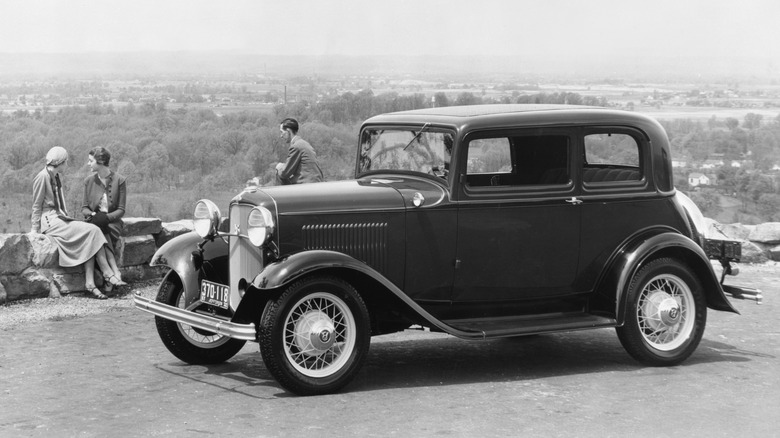
At this point in the list, you might be shouting about your favorite car being missed. Maybe you love 1960s Volkswagen Beetles, or you're a super-fan of BMW M3s. And I get it — there are lots of great cars, but I can only put my favorites on a list like this, and that's how we've arrived here, at the last car you should drive in your lifetime: something built pre-war. When something is referred to as a pre-war car, the war in question is World War II. And while I know that it isn't a very specific time, nor is it a specific car at all, I think it's an important inclusion on the list.
There are several decades of cars from the early 1900s that remain roadworthy, including icons like the early 1930s Fords, which still dominate classic car shows across the country. Many have been modified over the years, with big, powerful engines and thoroughly updated components, but driving something closer to the original form is better. It'll have miserably low levels of power, long braking distances, and absolutely zero safety features, all of which will give you a great perspective on just how far cars have come in the last 100 years.