

11 Manual Cars Under $5,000 That Are Perfect For Learning To Drive A Stick
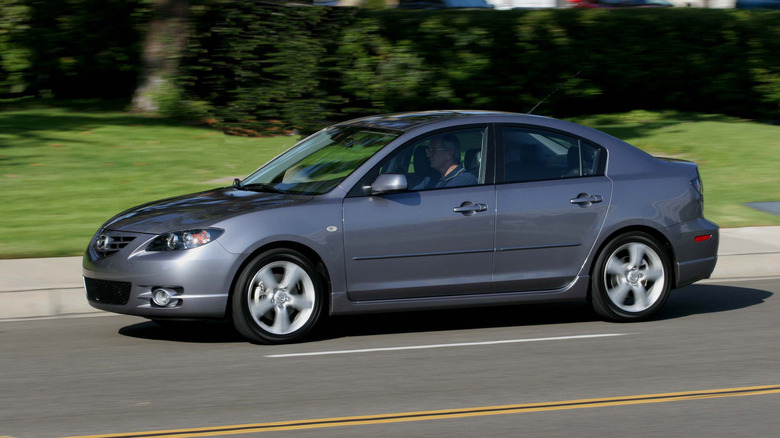
Only a tiny fraction of new cars in the U.S. are sold with a manual transmission, so there's no need to learn to drive stick in 2026. Rather, it's something you do because you want to. Learning to drive a manual means you can drive the widest variety of cars and trucks, you have maximum control over the car, and most importantly, you get the fun of shifting gears yourself. When you're first starting out, the chances are that you'll be on a tighter budget, and so the sports and performance cars that make up the bulk of new manual transmission cars will be far out of reach.
Luckily, there are still plenty of older manual cars out there that will be fun to learn in but will also be cheap to buy and run. If you're looking to buy your first manual car and don't have much to spend, we think these 11 sub-$5,000 cars are all worth checking out.
Ford Fiesta
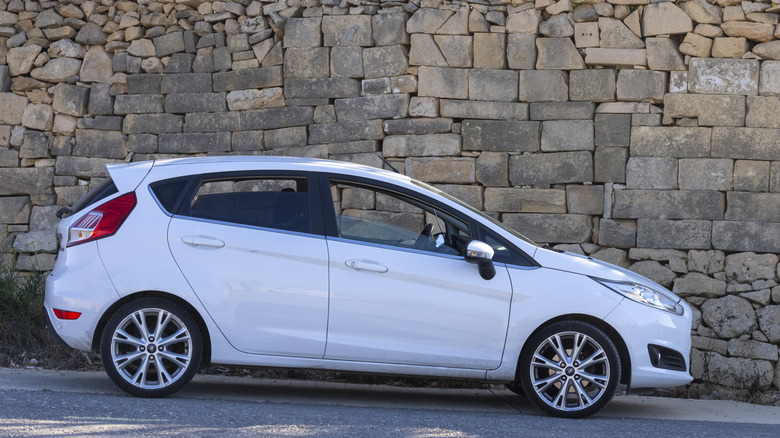
Back in the mid-'70s, Ford developed the first generation of the Fiesta hatchback primarily to appeal to European tastes. To succeed in its target market, it needed to be small, economical, and nimble. It proved to be all of those things and quickly became a popular model among European buyers, particularly in the U.K. Ford briefly imported the first-generation Fiesta to the U.S. in the late '70s, but the modern Fiesta first arrived for the 2011 model year.
The brand launched a new generation of the car for the 2014 model year, introducing the zippy Fiesta ST alongside the base-model cars. In top-spec ST guise, the Fiesta offered nearly 200 horsepower, while base models made a more modest 123 horsepower. The model was discontinued after 2019.
A budget of $5,000 should be enough to buy a base-model manual Fiesta with life left in it, but finding an ST within budget might be more of a challenge. The car's manual transmission is easy to come to grips with, and although the base spec is far from fast, it can still be surprisingly fun to drive. It was originally designed for narrow, twisting European back roads, yet it's still relatively comfortable and practical despite its compact proportions.
Volkswagen Golf
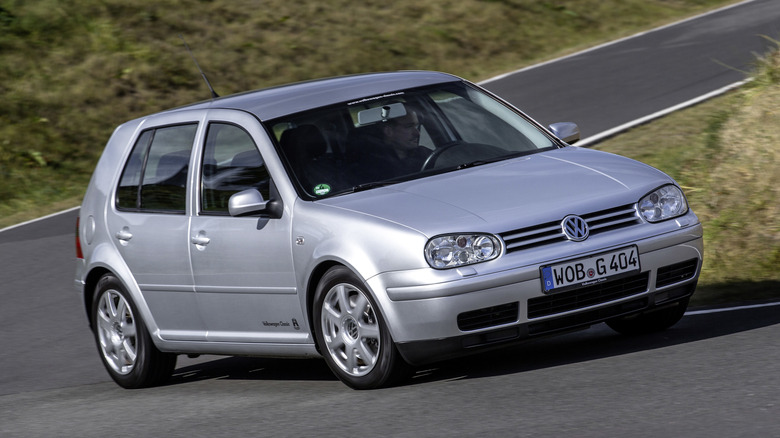
The Volkswagen Golf is an affordable, easy-to-drive hatchback. Middling to high-mileage models can be had for under $5,000. Much like the Fiesta, a high-performance variant was available, but finding a Golf GTI within budget might not be easy. The Golf shares plenty of internals with other small Volkswagens, including its manual transmission. Beginners should find that the transmission is reasonably forgiving and easy to use, although, like all the cars here, the exact condition of the gearbox will depend on the previous owners' maintenance and driving style.
VWs in general have a patchy reputation for reliability in America, and there are plenty of common problems that certain Volkswagen models suffer from. It's worth researching any common issues with the Golf model year you're looking for, then learning how to spot signs of trouble before you buy. That said, with the correct maintenance, the Golf isn't as unreliable as some people would have you believe. In Europe, where the Golf has been a bestseller for many years, it isn't uncommon to see reports of owners racking up mileage of 300,000 miles or more.
Mazda 3
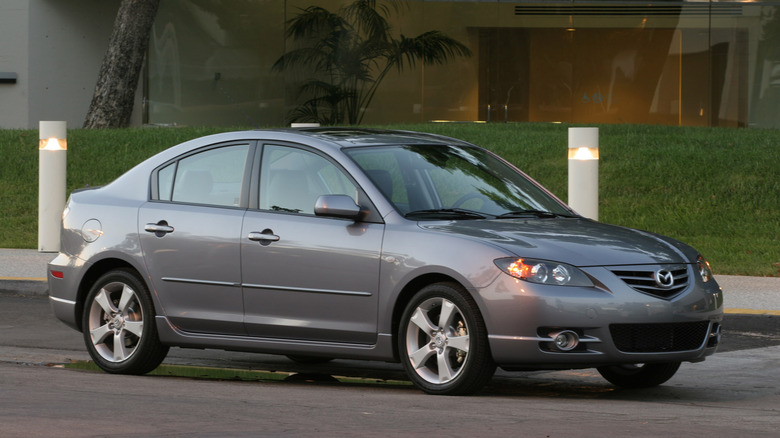
Anyone who doesn't want to take a chance on a European car could consider the Golf's similarly affordable Japanese rival, the Mazda 3. Stick-shift examples aren't difficult to find, and, assuming they have been properly maintained, they're a relatively safe bet for reliability. Many examples available for less than $5,000 will be mid-to-late '00s model years, though some earlier '10s models can also be found within budget.
The first generation of Mazda's modest hatchback arrived in 2004, and a second generation was launched for the 2010 model year. A third generation debuted in 2014. From the start, the 3 proved to be a driver-focused economy car, with sharper steering and better handling than most other cars at its price point. At launch, Mazda offered the car with either a four-speed automatic or a five-speed manual, while the second generation came with either a five-speed automatic or a six-speed manual transmission.
Honda Civic
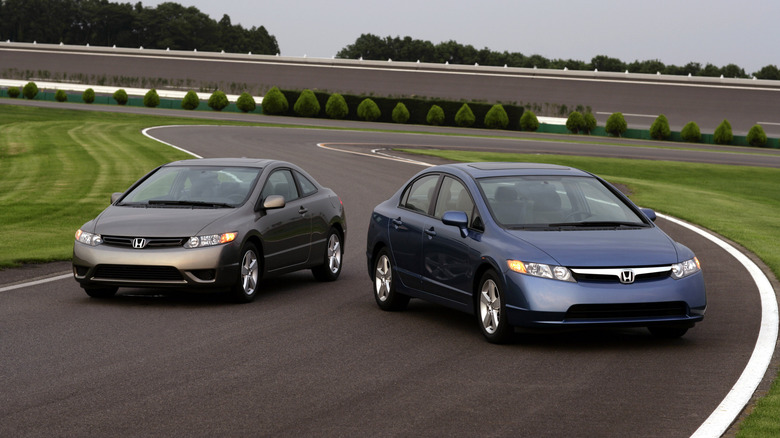
Buying a Civic might not be the most original choice, but there's a reason why Honda sold so many of them. The model's long-standing popularity among American buyers makes it one of the easiest models to find in manual guise for under $5,000, and if you're lucky, you might even be able to snag a high-mileage example of the sportier Si variant.
Every generation of the Civic offered a slightly different combination of engines and transmissions, but the same hard-earned reputation for durability is shared across all of them. If reliability is a key factor in your purchase, it's worth being wary of examples that have been modified by previous owners, particularly if the engine has been modified.
Additional power might sound appealing on paper, but poorly installed mods can place extra strain on other drivetrain components, potentially causing them to wear out faster. Learning to drive a stick shift with an unmodified car will likely be easier and reduce the risk of unexpected repair bills. Plus, you can always add personal touches later.
BMW 3-Series
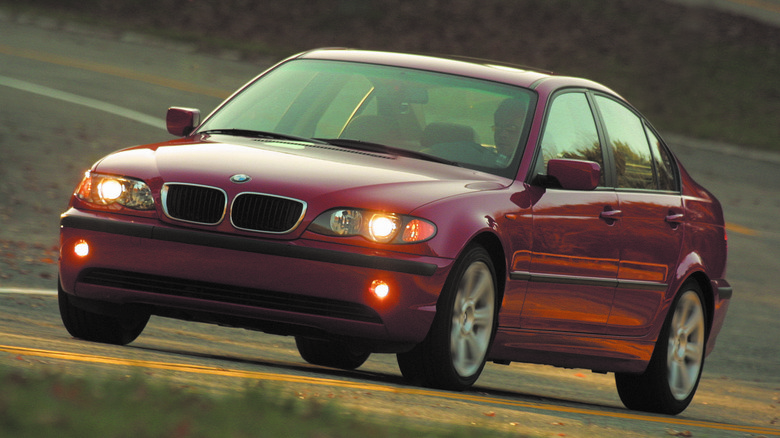
Most drivers wanting to learn to drive stick on a tighter budget will want their car to be cheap to run and as reliable as possible. However, anyone looking to make less financially sensible choices could always consider an old BMW. Various ages and body styles of the manual 3-Series can be found for less than $5,000, although you'll want to make sure you have some budget left over to fix the car when it inevitably breaks.
Even the humblest variants of BMW's rear-wheel-drive cars can be fun to drive, with sportier handling than most similarly sized cars and comfortable interiors well-suited to longer road trips. Sure, you won't feel like you're behind the wheel of "The Ultimate Driving Machine," but an old 3-Series is still a great way to learn how to drive stick if you're aiming to graduate to newer, more powerful models in the future.
While cheap, old BMWs are very unlikely to come with a full service history, it's worth the effort to find an example with the best service history you can get. Even then, you can get unlucky. I spent six years daily driving an aging stick-shift BMW with plenty of reliability issues, but I still liked it enough to buy a newer — and, thankfully, more reliable — 3-Series when the time came to upgrade.
Mazda Miata
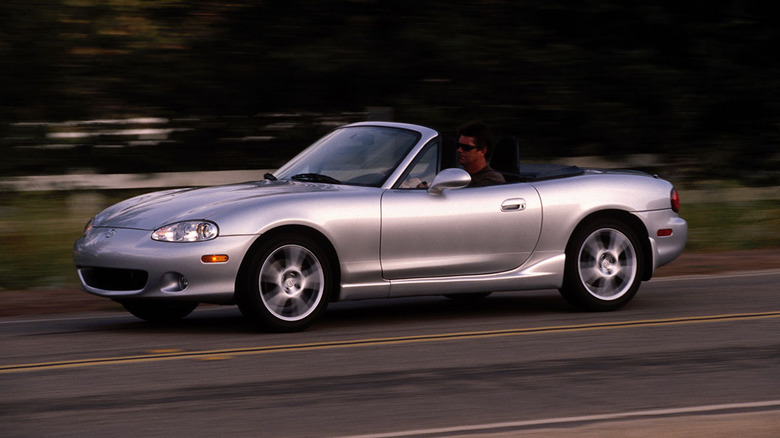
If practicality is low on your list of requirements for a stick-shift car, then there isn't much to dislike about the Mazda Miata. SlashGear editor Chris Davies called the 2025 Miata "an unexpectedly good place to learn to drive a manual in," albeit with the caveat that "it'd probably ruin you for most other cars." Older generations have always stuck closely to the same formula that makes the latest Miata so appealing, and the cheapest manual examples can just about be found for $5,000 or less.
The limited number of driveable sub-$5k examples on the market means that you might end up waiting a while to find one, but it could be worth the wait. The oldest NA examples can command a premium thanks to their retro looks, while the NB generation can often be found the cheapest. If you can find an NC-generation Miata, it offers a bit more legroom, so taller drivers shouldn't find the pedals quite as cramped as they would in an NA or NB-generation car.
Subaru Forester
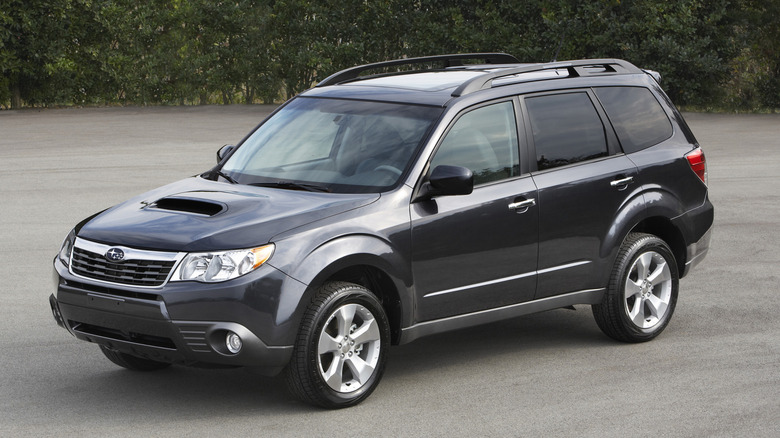
Buying a front-wheel drive hatchback or two-door sports car makes sense for drivers in warmer parts of the country, but drivers in areas with severe winter weather might want something better suited to the conditions. If all-wheel drive is a must, the Subaru Forester shouldn't be overlooked. Examples of various ages can be found within the budget, including examples from the 2010s. Mid-'00s models have a great reputation for overall reliability, so higher-mileage examples should still be dependable if they've been looked after properly.
A run-of-the-mill Forester isn't going to be the most exciting car to drive — in fact, we even named the SH generation Forester as one of the most boring Subarus on the market. That won't matter all that much to buyers whose top priority is all-weather practicality, and it doesn't make the Forester any less of a solid choice to learn to drive a manual in either. Unlike most of the other cheap cars here, the Forester won't falter at the sight of a muddy trail, but it's still a sensible option even if you never plan to leave the asphalt.
Toyota Corolla
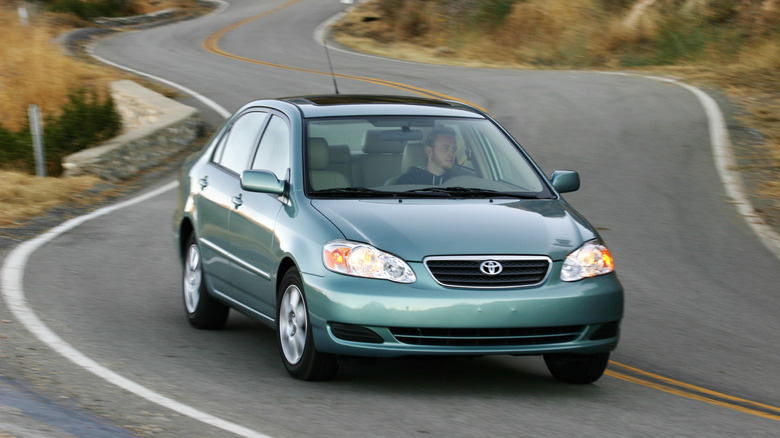
Alongside Subaru's SUV, another sensible Japanese option is the Toyota Corolla. Most cheap examples will feature an automatic transmission, but there are still a few sub-$5k Corollas out there with a stick. The Corolla's longevity is well known both within and outside car enthusiast circles, and many people can name a friend or family member who owns or has owned one. Toyota has sold over 50 million examples of the car since it launched in the '60s, and that popularity has kept the supply of used examples plentiful while keeping replacement parts cheap.
Many of the cheapest manual Corollas on the market are ninth-generation models, which were sold between 2003 and 2008. By the time it reached the end of its production run, the ninth-generation Corolla's primary appeal was its reliability record, rather than its features or handling, both of which trailed the best in class. That reliability makes it a good choice for learners on a budget who need to cover higher mileage, even if drivers looking for maximum enjoyment will want to look elsewhere.
Ford Focus
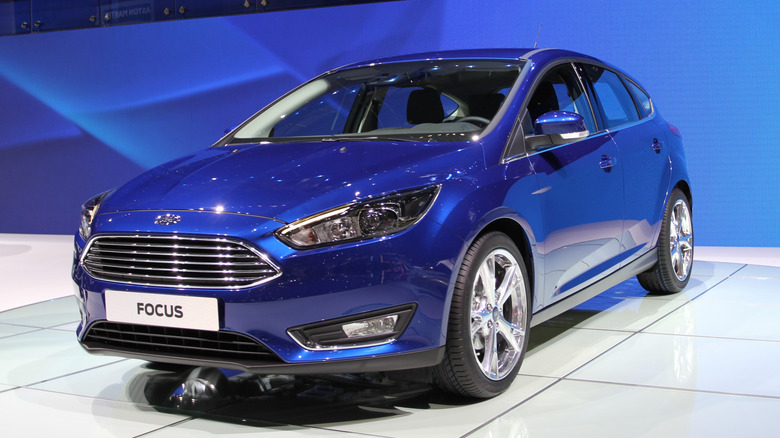
Like so many other small, affordable cars, the Ford Focus was discontinued because it didn't fit into the brand's plans to prioritize larger, higher-margin SUVs. Ford sold the Focus in America between 2004 and 2018, with later models offering handling improvements and more efficient engines. Sales peaked in 2012, when 269,000 examples left dealerships, but then steadily declined over the following years. In 2018, its last full year of sales, Ford sold 113,000 examples of the car.
Surviving stick-shift examples can be readily found for under $5,000, with multiple generations of the car available within budget. Many of those examples will have racked up high miles, but following a good high-mileage maintenance schedule will help extend the life of the right car. Don't worry if you see negative headlines about the Focus's transmission during your search: The automatic transmission of the 2012 through 2016 model years has an awful reputation, but the manual transmission doesn't carry the same problems.
Honda Accord
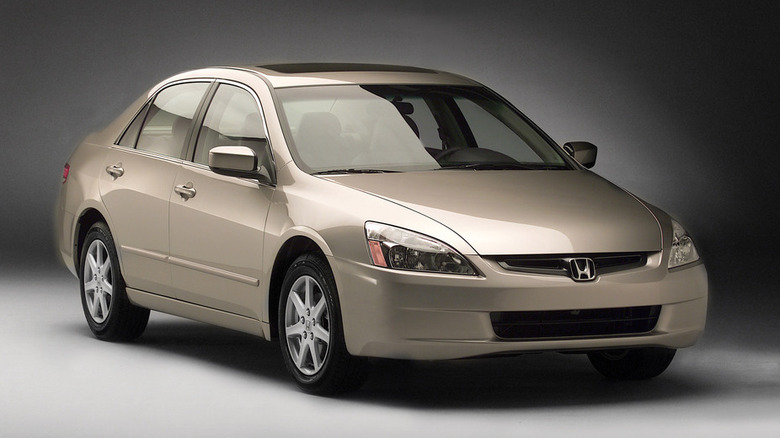
In the same vein as the Toyota Corolla, a Honda Accord won't win over keen drivers, but it will get you where you need to go without complaints. Also like the Corolla, the Accord has developed a reputation for lasting a very long time, with examples regularly pushing north of 200,000 miles without needing major repairs. That makes it a good option for budget-conscious learners who want to minimize the chance of unexpected repair bills.
Many of the manual Accords available for less than $5,000 will have either passed that milestone or be getting close. That's no bad thing — in fact, if you see an Accord for sale for under $5,000 with less than 100,000 miles on the clock, it might actually be a red flag. It's worth checking for any signs of odometer tampering if there aren't any obvious reasons for it to be that cheap. Checking that the condition of the interior is consistent with its claimed mileage is a quick and easy option, but a CarFax report is the best way to go.
Mini Cooper
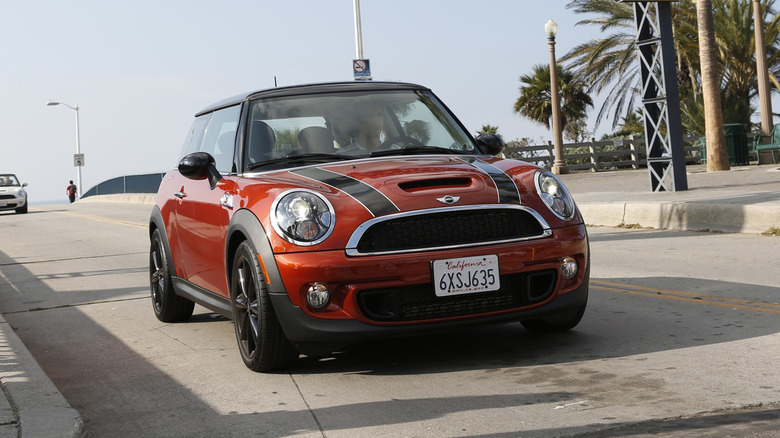
Drivers who like their cars to have plenty of personality might find the Mini Cooper to be a fun alternative to the usual crowd of affordable cars. Cheap examples shouldn't be difficult to find, although owners will need to factor maintenance costs into the ownership equation. The Mini is likely to cost significantly more than rivals like the Mazda 3 in maintenance and repairs, and some owner reports say that the clutch can wear prematurely in manual versions.
Learning to drive stick with a worn clutch will make the whole process unnecessarily difficult, so anyone looking to buy a higher-mileage example of the car should bring along someone experienced in driving manual cars to thoroughly test the car before buying it. Assuming everything is in good working order, the Mini's compact proportions and sporty handling make it a fun, retro-tinged way to learn to drive a stick shift.
How each affordable manual car was selected
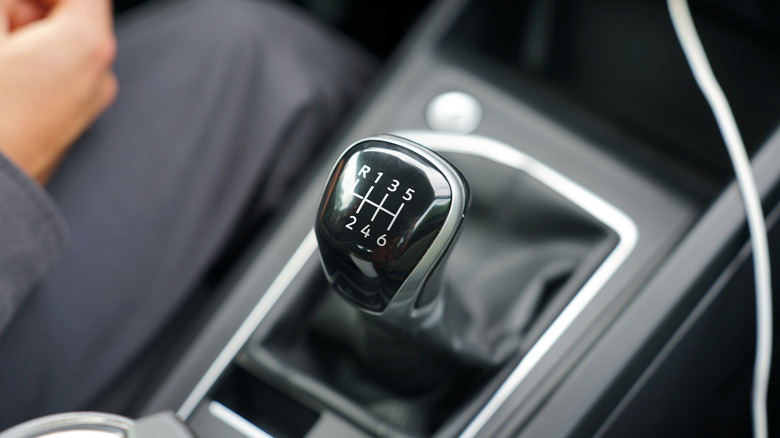
Drivers might want to learn to drive stick for a variety of reasons, and so when whittling down the selection of sub-$5,000 cars, a key aim for this list was to include as broad a range of models as possible. Some of these picks are aimed at drivers who prioritize driving fun, others offer a more balanced mix of enjoyability and practicality, and a few were picked primarily on their reputations for reliability and practicality.
To select models that are well suited for learners, I drew on my own experience of first learning to drive and subsequently passing my driving test in a stick-shift car, as well as my experience of driving or owning many of the cars included here. Where relevant, I also consulted SlashGear's catalog of car reviews as well as select reviews from other trusted publications. Examples of each listed car can be bought for less than $5,000 on Autotrader or iSeeCars at the time of writing.