

15 Of The Coolest 2026 Car Models Not Sold In The US
Homologating cars for sale in the U.S. is both costly and complex, and so some carmakers choose to skip the American market altogether. Some manufacturers might not have the funds to go through the homologation process in the first place, and even those that do might decide that it's not worth the hassle if the model in question isn't likely to sell in large enough numbers to justify the investment.
Complicating things further is the fact that China has now surpassed North America as the world's largest car market. According to IEA data, North American buyers accounted for 23% of global new car sales in 2024, while Chinese buyers accounted for 30% of the market. Inevitably, this has seen some carmakers shift their priorities away from the U.S.
As a result, a tantalizing selection of cars remains out of reach for Americans in 2026. We've picked out a selection of some of the coolest forbidden fruit, from rowdy hot hatchbacks to smooth and sophisticated luxury cars.
Cupra Formentor VZ5
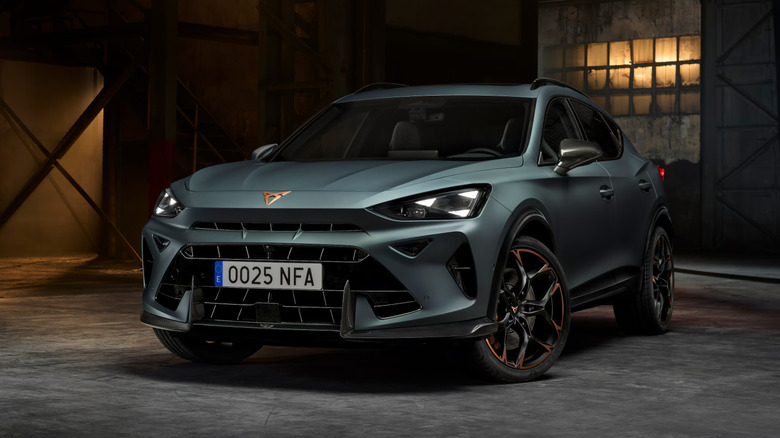
Spanish performance brand Cupra was spun off from VW Group's SEAT brand in 2018, having previously served as SEAT's performance division. In less than a decade, Cupra's lineup has grown to include a broad mix of electric, hybrid, and gas-powered cars. One of the coolest of the current crop is the Formentor, which in top-spec VZ5 guise packs roughly 390 horsepower and can sprint from 0-62 mph in 4.2 seconds. That power is delivered courtesy of the 2.5-liter five-cylinder engine that previously featured in the Audi RS3.
The VZ5 is a limited-edition car, with a maximum of 4,000 examples set to be produced globally. However, the "regular" Formentor VZ still packs plenty of punch, with around 330 horsepower on tap. Its engine is mated to a seven-speed DSG transmission, while its Akrapovič exhaust ensures that it sounds as good as it looks.
Cupra is one of several VW Group brands that isn't sold in the U.S., alongside the likes of Peugeot, Citroën, and Lancia. Unlike those brands, it may eventually make its way stateside, since Cupra has announced a partnership with Penske Automotive Group to open U.S. dealerships by 2030.
Renault 5
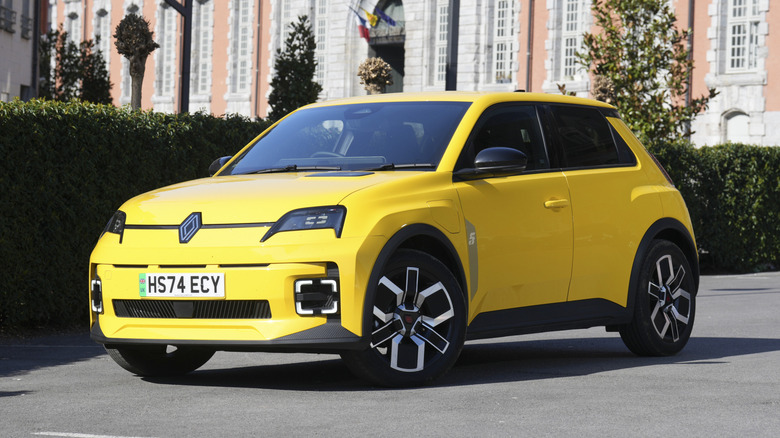
Many automakers looking for ways to inject an element of heritage into their latest EVs have chosen to revive old, famous nameplates from decades past. Some of these reboots have been received better than others; cars like the GMC Hummer EV have found a niche audience, but the electric Dodge Charger sold so poorly that it became one of the worst-selling cars of 2024. Arguably one of the best retro reboots is the Renault 5, a funky electric hatchback that does an excellent job of channeling the looks of its predecessor while still being a thoroughly modern EV.
It has already garnered plenty of attention in Europe and was crowned the U.K.'s Car of the Year in 2026. It's cheap too — in its home market of France, the 5 starts from just €19,250 after incentives, equivalent to roughly $22,800. The base-spec version has a range of 194 miles, making it best suited to city commuters, while the top-spec variant has a 255-mile range.
Wells Vertige
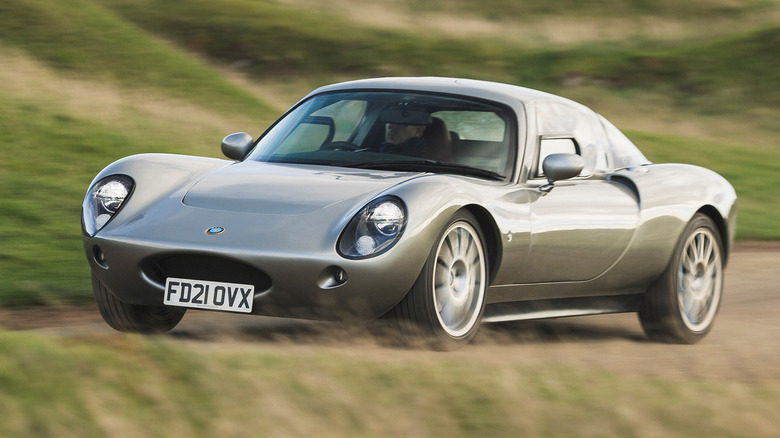
Major automakers might be focusing their efforts on SUVs and electrification, but there are still plenty of small companies building small, lightweight sports cars for buyers in the know. One such carmaker is Wells, which is based in the English county of Warwickshire. It currently offers the mid-engine Vertige coupe, which weighs just 1,874 lbs in its lightest form. It's available with a choice of powertrains, with the base option churning out just over 200 horsepower and an upgraded option making around 250 horsepower.
The Vertige follows a similar recipe to classic models from the likes of Caterham and Lotus, keeping weight to a minimum and forgoing complex electronic driver aids wherever possible. Yet, it's still designed with modern conveniences like a heated windshield and an infotainment touchscreen with Apple CarPlay and Android Auto. The car first entered production in 2023, and founder Robin Wells told Autocar that the company planned to produce 12 cars in 2026 and 24 cars in 2027. With demand for the initial run of cars remaining strong in the UK, it's very unlikely that Americans will get to try out the Vertige for themselves anytime soon.
BMW M135 xDrive
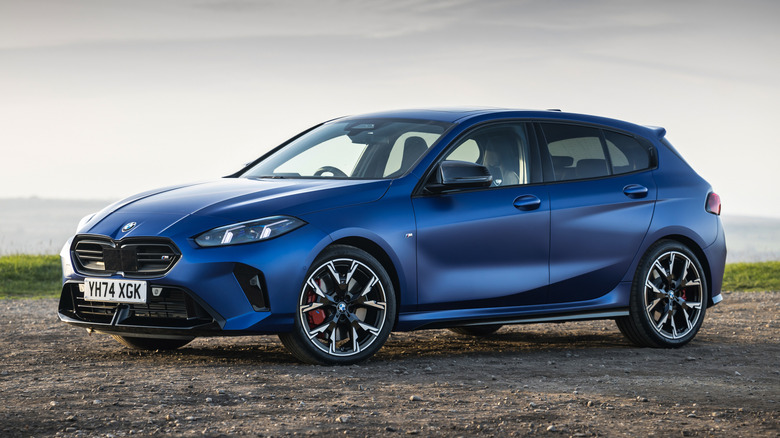
BMW offers the X1 and 2-Series Gran Coupe as its entry-level models in America, but the 1-Series hatchback is missing from its lineup. As a result, the M135 xDrive remains forbidden fruit, although the closely related M235 xDrive Gran Coupe is available. Both the M-badged 1-Series and its 2-Series Gran Coupe sibling share the same 2.0-liter TwinPower Turbo four-cylinder engine, with the M135 xDrive producing 300 horsepower in Euro-market specifications.
America's hot hatchback market remains small, with cars like the VW Golf R offering an appealing mix of everyday practicality and driving thrills, and the Toyota GR Corolla being a more thoroughbred hot hatch. Premium hot hatches like the M135 xDrive, Mercedes-AMG A35, and Audi S3 Sportback are notably absent from American dealerships, although the S3 is available as a 2026 model in sedan form. Unfortunately, BMW has not announced any plans to bring the latest 1-Series to America, so its baby M-car will remain out of reach for now.
Alpine A110
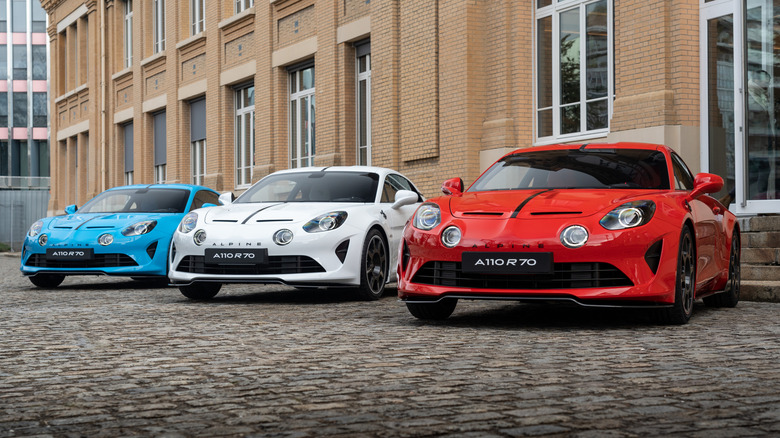
Since its launch at the 2017 Geneva Motor Show, the Alpine A110 has garnered a reputation as one of the best lightweight sports cars on the market. Legendary car designer Gordon Murray uses one as his daily driver, while Top Gear's James May bought one to sit alongside his Ferrari 458 Speciale. Despite the hype, the current generation of the A110 never made it to U.S. shores. Alpine is a small brand, and the A110 would have needed to undergo prohibitively expensive changes to homologate it before the company could even consider building an American dealer network to sell the car.
The good news for sports car fans is that the next-generation A110 has a better chance of making it to America. Reports have claimed that Alpine is putting the car through U.S. crash tests, and Alpine CEO Philippe Krief has confirmed that the company is considering a U.S. launch. No timeframe has been revealed yet, and uncertainty remains over whether a next-gen, American-market A110 would feature an electric, hybrid, or ICE powertrain. The current car is powered by a 1.8-liter four-cylinder engine that makes around 250 horsepower.
Yangwang U9
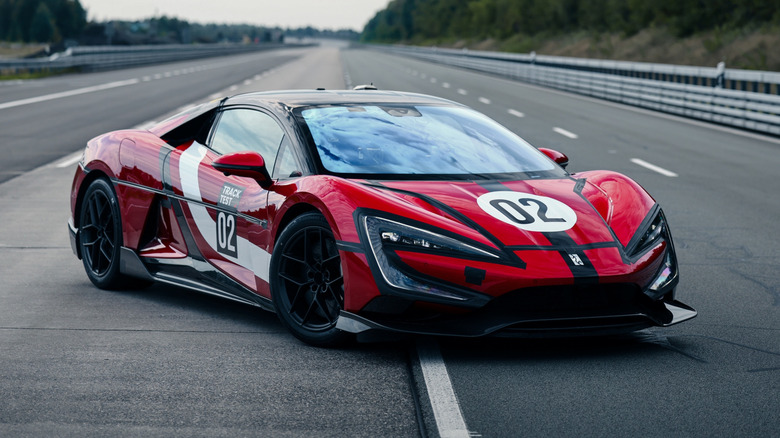
America is one of very few major global automotive markets where Chinese cars have not gained a foothold. In other markets, they have become increasingly popular, particularly in the U.K., where the Chinese-made Jaecoo 7 topped U.K. sales charts in March 2026. While the Jaecoo is an affordably priced family SUV, Chinese carmakers have also been busy churning out everything from tiny electric city cars to record-smashing supercars.
The Yangwang U9 is arguably the most impressive Chinese supercar to date, becoming the fastest EV around the Nürburgring Nordschleife in August 2025 and setting a speed record of 308.4 mph later in the year. That makes it the fastest production car in the world, eclipsing the Bugatti Chiron Super Sport 300+.
Enthusiasts probably won't recognize the Yangwang brand, but they'll have heard of its parent company, BYD. The rapidly growing automaker has risen from a little-known local player to a global giant in less than a decade, and its battery technology now rivals Tesla. The U9 is a statement of intent, proving that BYD is more than simply a maker of electric econoboxes, although geopolitical tensions mean there's very little chance it will be offered in America for the foreseeable future.
DS No. 8
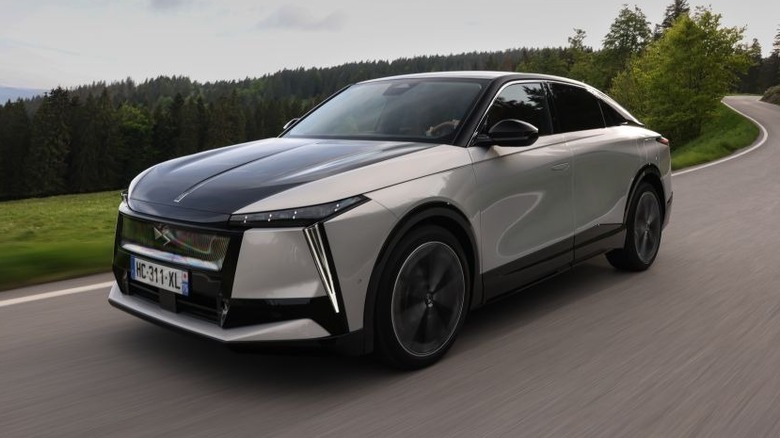
During its relatively short life as a standalone brand, DS has struggled to make an impact in a saturated European luxury car market. Its CEO, Xavier Peugeot, told Auto Express in 2025 that the brand is profitable, even though it only sold around 21,000 cars globally. To try and win over enough buyers to justify its continued place in the Stellantis brand roster, the French carmaker recently launched the No. 8. It's a luxurious flagship EV with a range of 466 miles and unique styling that sets it apart from anything else on the road.
Plenty of expensive EVs boast supercar-rivaling 0-60 times, minimalist interiors, and fake exhaust sounds, but the No. 8 does things a bit differently. DS fits the car with features like a neck warmer, which can channel warm air to the driver's neck on chilly mornings, and a night vision camera that can recognize both people and animals.
Inside, the cabin is upholstered with olive leaf-tanned Nappa leather and aluminum accents that hide a bespoke audio system. EVs are naturally quiet and smooth, and the No. 8 is designed to take advantage of that in a way that some of its rivals don't. As cool as it is to see a uniquely French take on the typical luxury EV formula, convincing buyers to take a punt on such an obscure brand is still proving tricky in Europe, so an American launch is out of the question.
Toyota GR Yaris
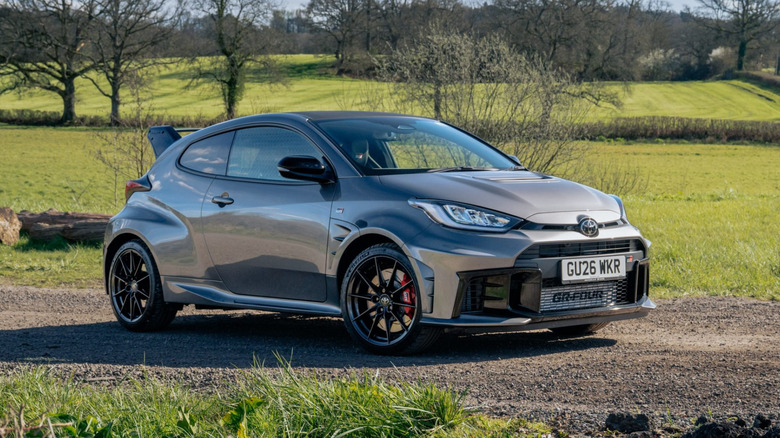
Back in 2023, we laid out all the reasons we wanted the Toyota GR Yaris to be sold in the States. Things haven't changed since then: the Yaris is still a hardcore homologation special, with a smaller footprint and faster acceleration than the GR Corolla. Toyota also still sells the GR Yaris in Japan, although it's currently unavailable in some European markets due to exceptional demand.
At the heart of the GR Yaris sits a 1.6-liter three-cylinder engine that's paired with a specially designed eight-speed automatic transmission and four-wheel drive. A Torsen limited-slip differential is standard, while a carbon-fiber roof is optional. Its 280 horsepower output might not seem like much by modern standards, but thanks to the car's light weight, it's still suitably rapid.
Toyota gave the car a mild update in 2026 but hasn't announced any plans to launch it in America, so it's fair to assume that it isn't coming, period. In part, this might be due to the car's continued popularity in Europe and Japan — Toyota already can't churn out examples fast enough, so it has no capacity to introduce the car to any new markets.
Noble M500
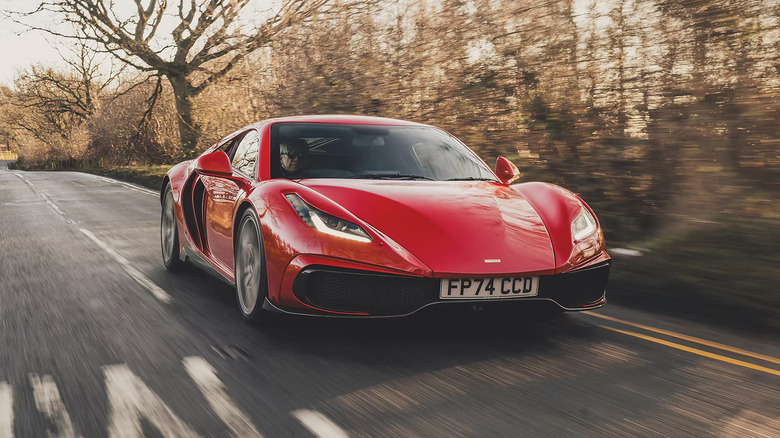
A surprising number of European supercars have been designed with American engines, with one of the most recent being the Noble M500. Noble is a small British manufacturer that previously made the M600 supercar, with the M500 appearing in development prototype form in 2022. The two models share a significant amount of components, but the newer car features a 3.5-liter Ford EcoBoost V6 engine. Noble extracts just over 500 horsepower from it and sends all that power to the rear wheels.
It's an old-school machine compared to most other modern supercars, complete with a six-speed manual transmission. As such, it will require more skill to drive than many rivals from major brands, but for the M500's intended audience, that's a key part of the appeal. Interested buyers in the U.K. can contact Noble to spec their own M500, but the brand does not sell cars in America.
Polestar 5
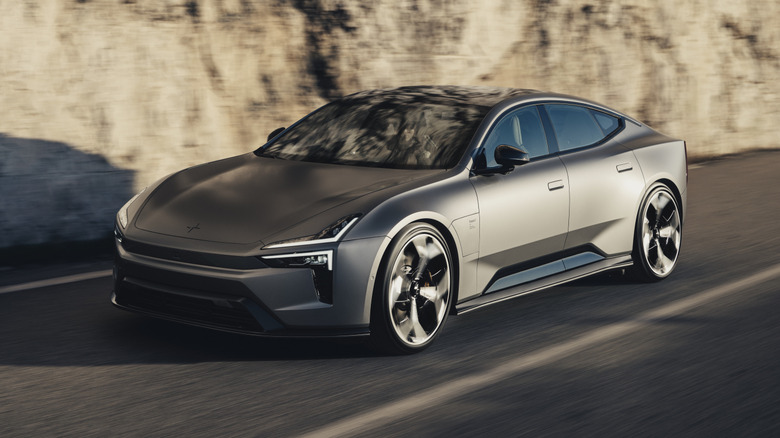
EV brand Polestar has not had an easy start, with Trump-era tariffs forcing the Chinese-built Polestar 2 out of the automaker's lineup and the U.S.-built Polestar 3 arriving with more bugs than a Midwestern lake in the summer. If that wasn't enough, a cash crunch threatened Polestar's survival in 2025, but a fresh injection of investment in early 2026 has helped bolster its balance sheet. The brand is currently starting to roll out its Porsche Taycan-rivaling 5, which boasts roughly 870 horsepower and has the ability to hit 60 mph from a standstill in just 3.1 seconds.
Impressive acceleration figures are nothing new in the world of performance EVs, but the 5's sharp handling and sleek design, both inside and out, make it stand out from the crowd. Its basic shape hasn't changed that much since the car first debuted at the Goodwood Festival of Speed in 2022, and it bears plenty of resemblance to the 3 and 4. In Europe, the 5 is set to arrive in dealerships imminently, but its U.S. launch has been complicated by the fact that it's built in China and therefore subject to tariffs. At the time of writing, Polestar has yet to confirm exactly when the 5 might arrive stateside.
Audi RS5 Avant
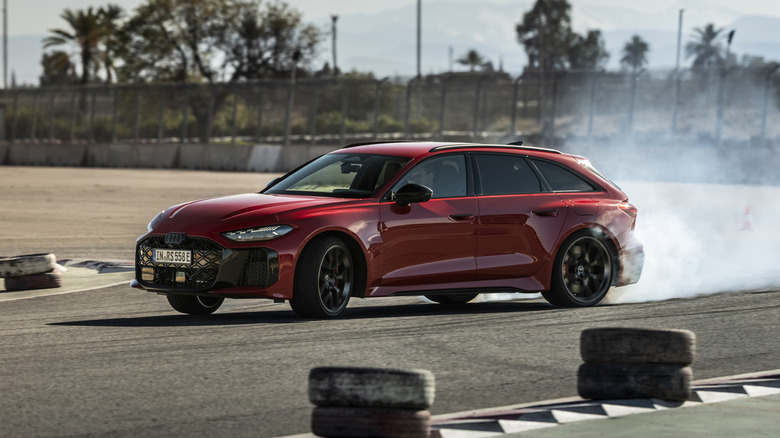
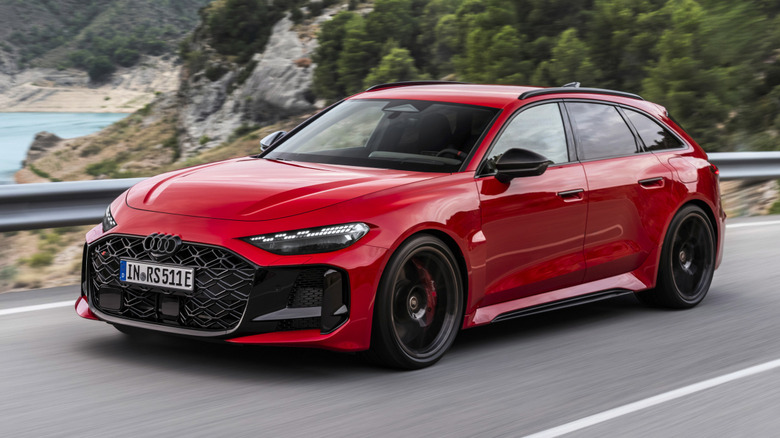
Audi's confusing renaming strategy has seen the A4 discontinued and replaced with the A5, and as a result, the RS4 Avant has now become the RS5 Avant. It fills the same niche in Audi's performance lineup as before, being the smaller, slightly less expensive sibling of the RS6 Avant. Buyers in Germany can currently pick from both cars, although Audi is discontinuing the gas-powered RS6 Avant after 2026. U.S. buyers can order the RS6 Avant but not the RS5 Avant.
Much like its bigger sibling, the new RS5 Avant is an appealing driver's car in a market that increasingly favors cookie-cutter SUVs. Like many performance cars, it now features an electrified powertrain, with its 2.9-liter V6 engine being assisted by an electric motor. The car makes around 630 horsepower in total and completes the sprint from 0-60 mph in 3.6 seconds.
It's great to see that Audi hasn't given up on fast wagons, even if America is only getting one of the two models. The German manufacturer is set to launch the hatchback RS5 in summer 2026, but the RS5 Avant will remain absent from American dealerships.
Toyota Century Sedan
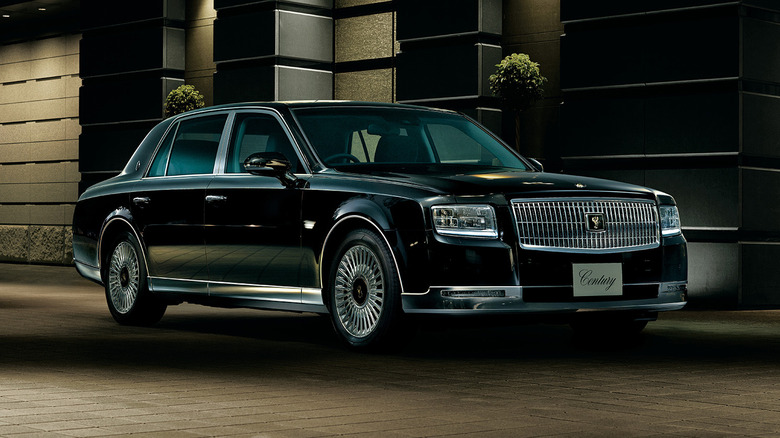
It might no longer have a V12 engine under the hood, but the Toyota Century still represents the pinnacle of Japanese luxury. The car that remains on sale in Japan today looks remarkably similar to the Century that debuted back in 1967, but that's no accident. Toyota has always kept the Century more understated than its luxury competition, rarely updating it and never messing with its core appeal. In fact, in over six decades of production, it has only been through three different generations, with the latest generation launched in 2018.
The car is built by hand at Toyota's Higashi-Fuji Plant with meticulous attention to detail. Even its paint is special, with seven different coats applied to create the final finish. Owners of the car are not expected to drive it — they'll have a chauffeur for that — but Toyota says they will be able to check their appearance in its mirror-like paint as they enter and exit. Clearly, the Century is targeted at a very specific type of buyer, and Toyota doesn't think there are enough of them in the U.S. to justify bringing the latest generation over to the States.
Lancia Ypsilon HF
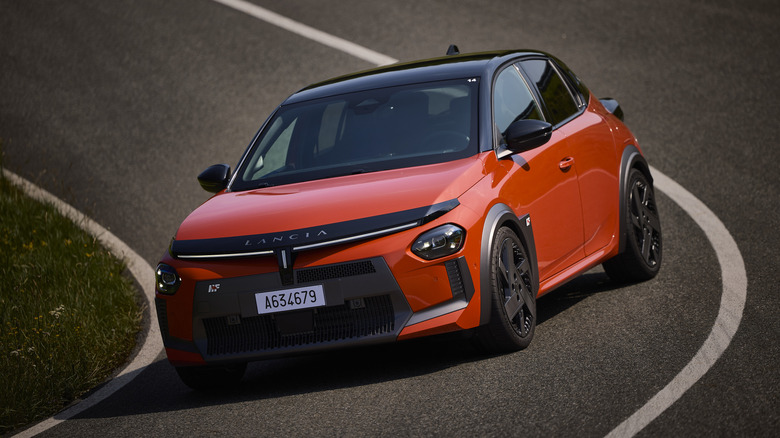
The last time Lancia sold new cars in the U.S. was in 1982. It exited the market after falling demand meant that it wasn't profitable for parent company Fiat to continue importing the brand, and over the following decades, its fortunes further declined. By the start of the 2020s, its lineup was reduced to a single model, and it was only sold in its home market of Italy. After Stellantis was formed in 2021, Lancia was given some much-needed investment and the brand was relaunched in various other countries in Europe, but sales have remained sluggish.
Despite that, the Ypsilon HF is arguably cooler than its sales figures would suggest. The HF is the top-spec variant of the Ypsilon and packs around 280 horsepower, which is plenty for its size. 0-62 mph arrives in 5.6 seconds, and it'll keep accelerating up to a top speed of 112 mph. Superminis aren't well suited to wide-open American roads, and the slow sales of the current Fiat 500e prove that personality can't make up for practicality in the U.S. Still, Lancia's zippy little car would surely be cool for city commutes, even if European buyers seemingly aren't convinced yet.
Suzuki Jimny
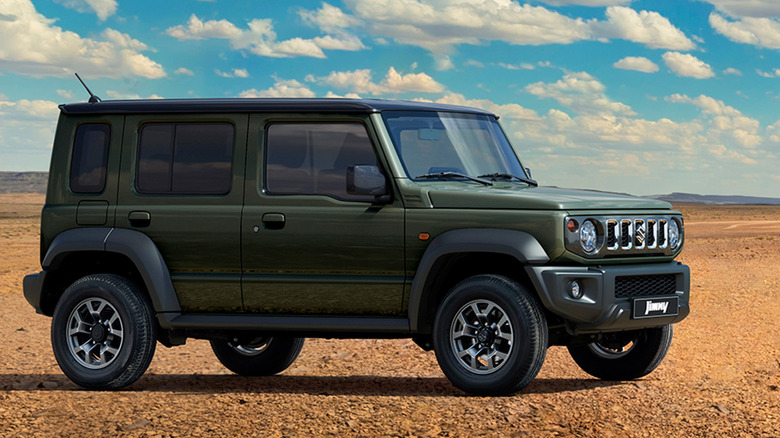
In Europe, Suzuki discontinued its popular Jimny off-roader in 2025 in the wake of tightening emissions regulations. In Japan, it's still alive and well in 2026 and is available both in kei form and in a larger, five-door form. Suzuki's small SUV has been in production in various forms for decades, and older versions of the Jimny-based Samurai have become cult-classic off-roaders in the U.S. The best examples can sell for $25,000 or more, which is more than the base price of a new five-door Jimny in Japan.
The modern Jimny has been an unexpected sales success for Suzuki, with the company having to temporarily halt orders in Japan in early 2025 due to unexpected levels of demand. According to the Japan Times, Suzuki expected to sell around 1,200 examples of the five-door Jimny per month but received 50,000 orders for the car in just its first four days on sale. Much like the Toyota GR Yaris, the huge demand for the car in its home market means that Suzuki won't be looking to launch it in new markets anytime soon.
Mercedes-AMG A45 S
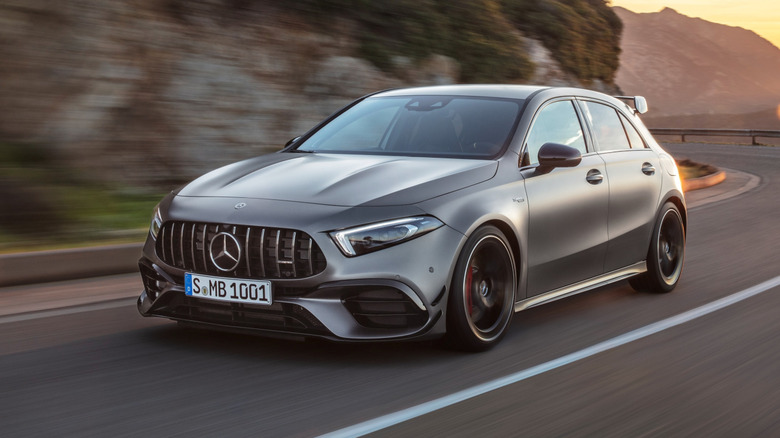
A 2.0-liter four-cylinder engine in a range-topping sports sedan was always going to be a tough sell, even if Mercedes-AMG tried to make it work with the C63 S E Performance. We thought the C63's on-paper stats were impressive but were left wanting after testing it out. Its hybrid powertrain felt unnecessarily complicated, and its four-cylinder exhaust note didn't live up to expectations.
AMG's cleverly engineered four-cylinder is a more natural fit for the A45 S hatchback, and unlike the C63, there's no hybrid to complicate things either. Its output of 421 horsepower isn't a patch on the C63, but it's still more than most people will ever be able to use on public roads. Unlike the critically panned C63, the A45 S is consistently well liked by our colleagues across the pond, and it looks every bit as angry as a good hot hatch should be. Sadly, Mercedes hasn't brought it to the U.S., and it's unlikely to do so in the future either.