

7 Facts You Didn't Know About Harbor Freight
Long-time readers of SlashGear already know that we're fans of Harbor Freight. Between the excellent deals and decent quality tools, we've written dozens of articles about the budget-oriented hardware store specifically, and dozens more that mention the its tools as viable alternatives to more expensive competitors. As such, a lot of information about Harbor Freight is already pretty well known, like the massive umbrella of tool companies that Harbor Freight owns and some basic stuff about the company's history.
With all of that said, trivia nights are still a thing people enjoy, and fun facts are a nice distraction from the grind that is daily life. The retailer has been around for around half a century, and no company can exist that long without having some interesting developments throughout its history that you may not casually know. So, if you're sitting down for your lunch or bathroom break and you're up for some light reading about Harbor Freight and its history, then you've come to the right spot. The company has as many fun facts as it does retail locations (1,600 as of this writing), and we picked out about half a dozen.
Harbor Freight started as a mail-order business
Nearly everyone knows Harbor Freight as a retail store with actual, physical shops, but that is not how the brand started. The company was founded by Eric Smidt and his father, Allan Smidt, in 1977 as a mail-order business. The plan was pretty simple: The pair would buy surplus or overstock tools as they were arrived via ship in California and then sell them directly to consumers at a steep discount versus what they'd pay for the same tool in-store. Since the pair bought tools basically right off of the boat, the name Harbor Freight — more specifically, Harbor Freight Salvage — harkens to where the two originally did business.
There's little left from the old mail order days, but if you surf Reddit long enough, you can find some old flyers from those mail order days. Those flyers showed all sorts of random tools and oddities that the pair would purchase and then sell to the consumer at a discount. The business started in North Hollywood, eventually moving to its current headquarters location in Calabasas.
The mail order part of the business would be the main driver of revenue for those earlier years of the company's history until the first retail location opened. After that, the company began transitioning more to an in-store model. Then, in 1997 it opened its first website, further expanding its reach.
Harbor Freight opened its first store in 1980
A few short years into the business was all it took for Harbor Freight to open their first retail location. Despite being located in California, the first store was actually in Lexington, Kentucky. This is likely because Lexington is a historically good test market. Around this time, Harbor Freight was still doing its mail order gig but was also selling products directly from retail stores, and that allowed the brand to start opening more and more brick-and-mortar locations as time went on. That original store still exists to this day.
Growth was slow at first but really kicked up later on. The business has since transitioned to a retail giant, opening its 500th location in 2013, a little over 30 years after the first store opened. It would take the company just six years to repeat the feat, opening its 1,000th store in 2019, which in a nice full-circle moment was also located in Kentucky. Harbor Freight continued to accelerate their brick-and-mortar locations with another 500 stores (totaling 1,500) by 2024. As of this writing, Harbor Freight says it has 1,600 locations where over 75 million people have shopped.
The brand kept up with its mail order catalogs for decades before putting an end to them around 2020. These days, the company is borne by its retail locations and its website, where all of its new products and deals are posted. Little is publicly posted about those early physical retail spaces, but most of them are still in operation.
Harbor Freight sells products from 78 brands
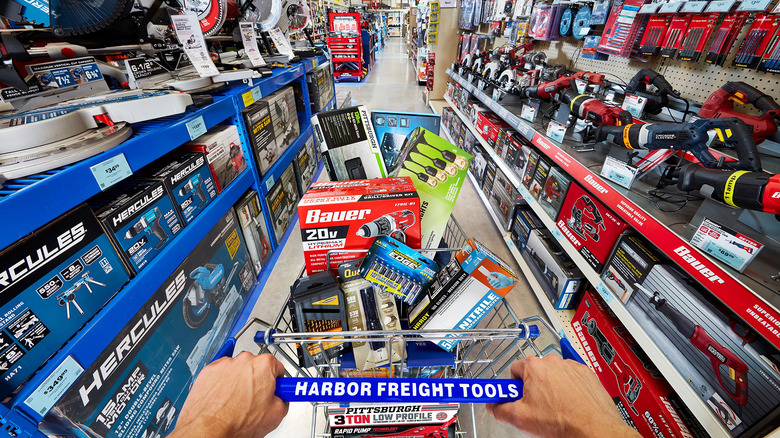
The number of brands sold at Harbor Freight change yearly. If you look around online, you can find people who have counted them out, with some getting up into the 90s and others going well over 100. Harbor Freight has a whole webpage dedicated to the brands you can buy there; according to the company, there are currently 78 brands with products at Harbor Freight. Those include mainstays like Bauer, Icon, Pittsburgh, U.S. General, and others along with lesser-known companies like FastenPro (staple and nail guns) and Olsen (acetylene torches and oxygen welding kits).
A sizable percentage of these brands are owned by Harbor Freight. You've probably heard of these before, but Icon, Pittsburgh, Hercules, Bauer, Haul-Master, Union Safe, and many others are owned and operated by the retailer. According to the company, they work with factories to make their tools and then sell those tools under various brands. For example, Icon is Harbor Freight's high-end tools, while Pittsburgh sells much of the same stuff but at a lower price point. Hercules and Bauer both do power tools, while U.S. General specializes in storage solutions. In short, each brand has its specialty, and there are a lot of specialties out there.
Since the brands at Harbor Freight expand and contract all the time, that 78 figure will likely change in the near future. If you want to keep up, Harbor Freight's website lists all of the brands it carries.
They did sell mainstream brands at one point
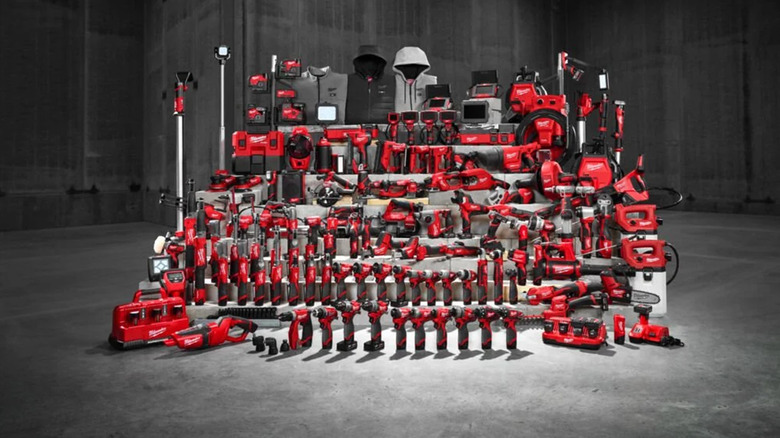
Harbor Freight is best known for its in-house brands as we just discussed. You'll never find a product there from mainstream manufacturers like Milwaukee, Craftsman, or any others. At least, you won't anymo; back in the company's early days, Harbor Freight actually did sell products from those big-name brands. There isn't a ton of verifiable information on this, but once again, if you take to Google, you can find ancient flyers from the old days that featured mainstream brands right alongside no-name brands and smaller brands.
Based on the examples we could find, Milwaukee, Black & Decker, and Stanley products all made their way through Harbor Freight's product catalogs at one point or another. The catalogs also boasted products from companies like Dremel and Coleman. Since Harbor Freight bought overstock, the selection was never particularly large, but you could occasionally find a 50-foot Stanley tape measure or a Milwaukee reciprocating saw as they made their way through the retailer's inventory. Unfortunately, we're unsure when the practice ceased, as that information isn't widely available.
Some brands are still sold at the retailer today, although they aren't the big names like Stanley or Black & Decker. Chicago Electric was in those old flyers and Harbor Freight not only still sells products from them, but now Harbor Freight actually owns the company, as it does with countless others (Central Pneumatic is another example of a venerable tool manufacturer that the retailer owns).
Harbor Freight hosts a metric ton of sales
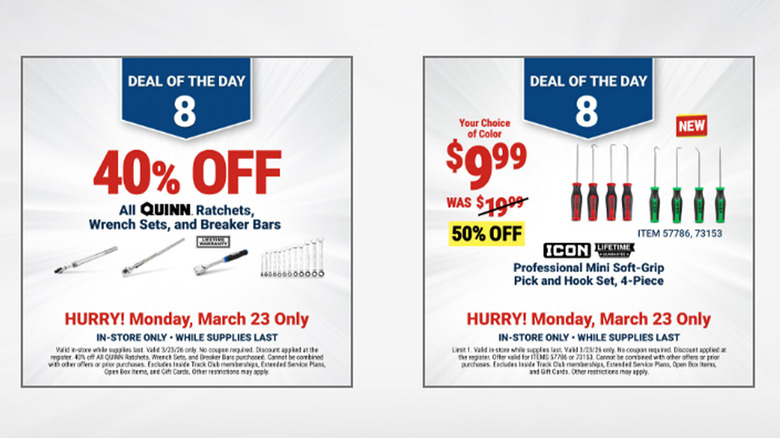
It is a fair assessment to say that Harbor Freight has some sort of sales event happening virtually every day of the year. The company is known for hosting all sorts of sales, including bundle deals, parking lot sales, special events, coupon deals, and the Inside Track Club, which grants you access to even more sales events. Then you have unlisted specials like the legendary 25% off coupon that has no restrictions, holiday sales events, seasonal sales events, and liquidation sales. Harbor Freight is throwing no less than four sales at the time of this writing and that's not counting open box discounts.
Harbor Freight has always been big on deals, and the company's early flyers were essentially sales on big-name tools that the company bought as overstock and sold at a discount. However, it is still surprising to see just how many sales Harbor Freight throws in a year, as that number is easily in the dozens. There are also ever-present promotions like a 0% financing for 36 months with the retailer's in-house credit card, which also nets you 10% off your first purchase after you sign up.
So if Harbor Freight doesn't have anything you want on sale, you can simply check back in a couple of weeks — there will almost certainly be another sale to take advantage of to get yourself a few dollars off.
Harbor Freight offers lifetime warranties on all hand tools
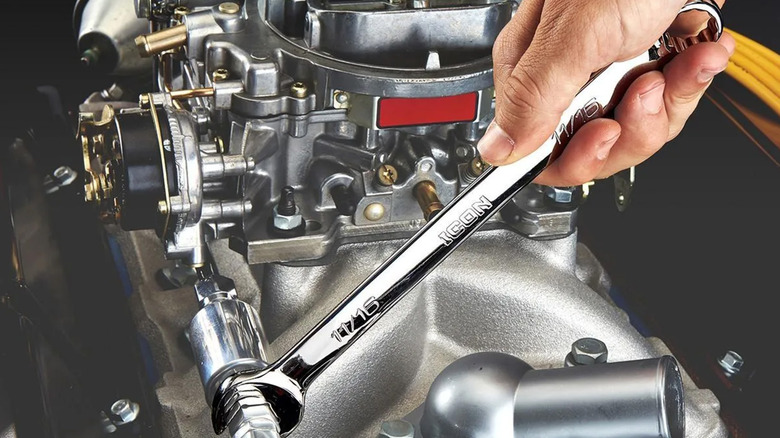
Between the sales and the discounts, Harbor Freight is largely known as a good spot to buy budget tools. Those products do measure up with more expensive competitors pretty well in most cases, and for far less money. The good news is that paying less doesn't necessarily mean you get less. Harbor Freight offers a lifetime warranty on all of its hand tools, regardless of brand. We surfed through dozens of product listings to verify this, and the warranty information section of each one is the same: They all have lifetime warranties.
The warranty guarantees that tools will "be free from defects in material and workmanship for the life of the product." There are some limitations that apply, but in most cases, if the tool fails to work as expected, Harbor Freight will replace it with the same tool or a close substitute and send you back on your way. Customers who have done a lifetime warranty exchange largely praise Harbor Freight's process for swapping out tools. In most cases, you bring in the tool, show that it's broken, and they tell you to go get another one off the shelf and take it home.
The limitations are few and far between but are there. For instance, one customer was turned down because the tools aren't made for industrial use. Harbor Freight can also say no if the company suspects the break was due to abuse and not normal use or if a customer returns items too frequently.
Harbor Freight sells over 7,500 different items
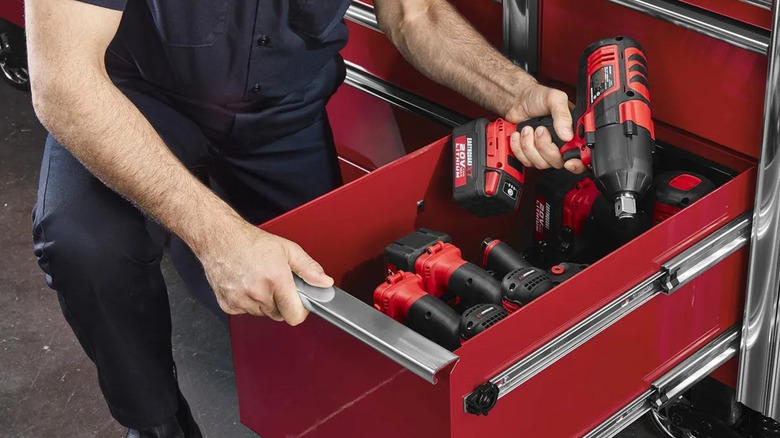
One of the biggest strengths of shopping at Harbor Freight is its massive catalog of items. Per the company's website, they sell roughly 7,500 items as of this writing, and that number likely fluctuates year to year as new items come out and old ones retire. Much of the inventory is stuff you already know, like hand tools, power tools, storage solutions, and various other knickknacks. Some of them can get quite expensive as well, like a 29-gallon, oil-lube belt drive air compressor that retails for $750.
Once you get beyond the first wave of stuff there, the unusual products start to come out. There are cowbells, sextants, gold-plated ratchets, remote controlled electrical outlets for things like Christmas lights, and fun items like this Robotime puzzle set that lets you assemble small pieces of wood into toys. It would take weeks or even months to drill down into Harbor Freight's inventory to find these oddball gems. The above puzzle set was situated under the Toys section listed under Home & Security, so you really never know where you'll find a weird product in Harbor Freight's lineup.
It's part of the fun of shopping at the retailer. You might be browsing around and come across some really weird or odd thing, but It's a little bit expected with a company with such a huge product portfolio. If you need a front-wheel drive specific bearing remover and installer kit or other some niche tool, it doesn't hurt to check Harbor Freight.