

5 Things You Should Never Put In The Trash When Cleaning Out Your Garage
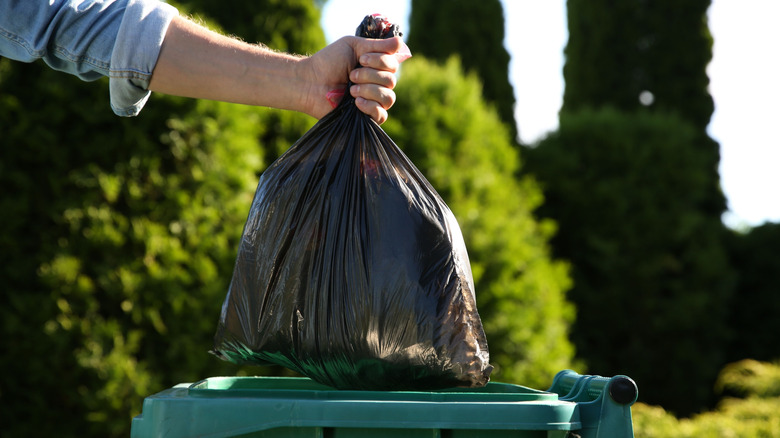
The time has come: Your garage is a mess. You need to find some things to throw out and maybe try a few life hacks to make the most of your storage space. Old boxes, cans of dried-up paint, rusted screws — the lion's share of it can probably go straight to the curb or be dumped at your local landfill. But not every item should never go in the trash can, often because it's illegal, and even if it wasn't, highly dangerous to do so.
As much as we might wish, the trash can is not a magic device that can take any waste disappear into the void. Some items require special handling. Otherwise, they can present hazards to waste disposal staff and facilities or even poison your local community. Fortunately, it usually only takes a couple minutes at most to find out what can be thrown away normally or should be disposed of in a very specific way. To get you started, here's why you shouldn't throw away these five items in your regular trash.
Lithium-ion batteries
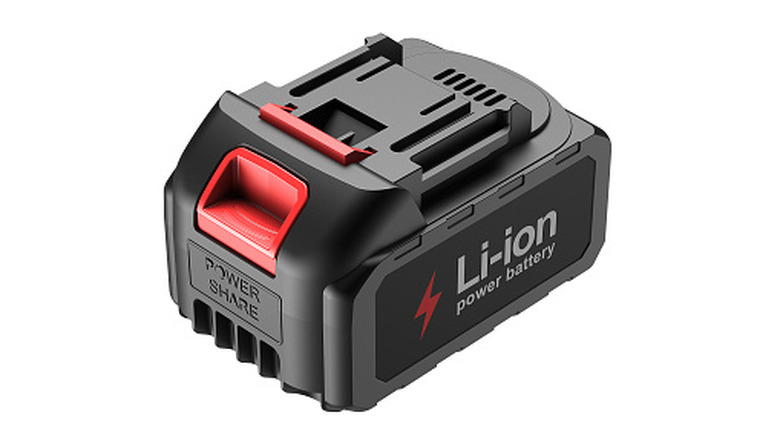
Unless you go for a corded version, it's highly likely your power tool will be powered by lithium-ion batteries; they're in practically every rechargeable electronic device on the market today. They're energy-dense and convenient because you can charge them many hundreds of times, but they do have some glaring shortcomings. Firstly, lithium-ion batteries easily catch fire and burn so fiercely that putting an electric car fire out is a nightmare. Second, they are chock-full of toxic chemicals that can poison the environment and people. Finally, they contain rare precious minerals that can mostly be recycled and reused.
So never throw lithium-ion batteries away, ever. For any reason. Those aren't our words; that comes directly from the U.S. Environmental Protection Agency (EPA). Even if the battery is completely discharged or incapable of holding a charge for very long, it still presents an environmental threat and would be a waste of perfectly good materials. Luckily, you only have to find a local recycling center to dispose of any batteries you have. Use Earth911's search tool and you'd be surprised how many are in your local area.
Even if we're talking about old AA's and AAA's, canning them with all the rest isn't a good idea; the EPA still recommends proper disposal for household batteries, and in fact doesn't recommend disposing of any battery type in normal waste. Some states have flat out banned throwing away batteries that you might be tempted to slip in your regular bins. So we've got a risk of fire, environmental contamination, waste of reusable material, and a legal threat. Just take the time to recycle them properly and be glad you did.
Old oil and gasoline

Many of us have containers of motor oil and gasoline lying around the garage. Maybe it's an old plastic jug with a small amount at the bottom; you might think there's no harm in chucking it, but mortar oil is incredibly toxic for the environment — especially if it's been used. And we're not using the word "incredibly" lightly; the EPA says that a single oil change's worth could contaminate millions of gallons of water. Luckily, recycling old oil is pretty easy and straightforward, usually involving taking it to your local auto parts store. When gathering up old oil for disposal, avoid mixing the used oil with any other liquids, as this complicates the disposal process.
The same goes for old gasoline. You might be able to get away with mixing it in small amounts with new gasoline in fuel-injected engines like those found in cars. Otherwise, you should dispose of it in the proper locations in a certified container. Please, whatever you do, do not simply dump it anywhere, as it can seep into groundwater and cause life-altering consequences for those affected.
As a general rule, any chemical in your garage very likely needs its own special disposal. That goes for things you might not think need it, like old antifreeze. When in doubt, Google it to know how and where to dispose of it.
CFLs and fluorescent bulbs
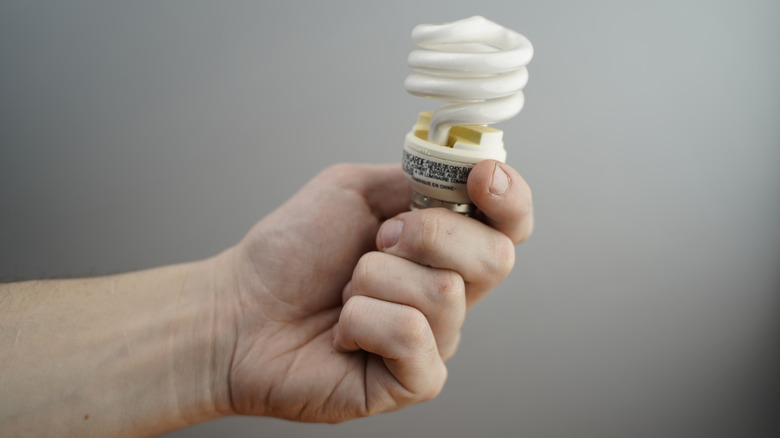
CFLs (compact fluorescent lightbulbs) are often a great choice for lighting because they've got all the benefits of a traditional fluorescent, including being more energy efficient and lasting longer. As such, it may seem like they're so environmentally friendly you can discard them alongside plastic packaging and eggshells as you might with other lightbulbs. Sadly, that's not the case.
CFLs contain trace amounts of mercury according to the EPA, which gets released when they're broken — and that can most certainly happen if you throw one of these fragile bulbs into the trash. Mercury is well known for being highly toxic for humankind and the environment. Don't underestimate the mercury just because it's a small amount; the EPA recommends immediately having everyone leave the room if a CFL breaks before beginning the cleanup process, just to give you an idea of how serious things can get from one bulb.
Since CFLs are just smaller fluorescent lights, these same things go for full-sized fluorescent bulbs. These products are almost entirely recyclable as well, so if nothing else, it's wasteful to throw them away normally. Some bulbs you can throw away anywhere you like with no issue, like incandescent and halogen bulbs. However, just like CFLs, LEDs should be properly disposed of instead of being thrown into your normal trash; they're highly recyclable and should be taken to a local disposal center.
Smoke alarms
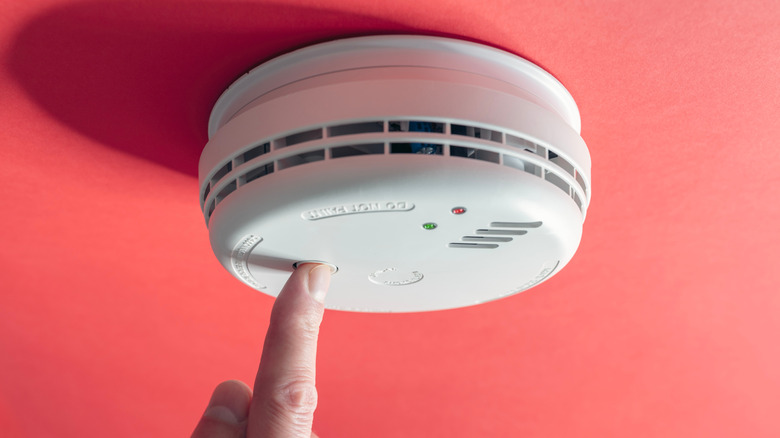
The way some smoke alarms work is by using a chunk of radioactive material (Americium-241) that can identify particulate matter in the air when it interrupts the flow of electric current. It's cool technology, but nonetheless it's still technically radioactive. It's a far cry from Chernobyl-levels of radiation — it's actually totally safe for you to interact with — but it's understandably not something you can throw in everyday trash cans. If you have an old smoke alarm that you need to get rid of, please dispose of it correctly.
Your best course of action is to give the smoke alarm back to the company you bought it from, if they accept them. They will handle the disposal process for you, though they may have requirements on how (and if) you can ship it back for them, such as removing its batteries first. However, it is safe to send smoke alarms to a landfill that doesn't incinerate the trash.
Bear in mind that this does not apply to photoelectric smoke alarms, as those should be recycled to reclaim the electronics they use. Check the label on the back: If it mentions radioactive material, then it's not a photoelectric smoke alarm. Also keep in mind that this likely applies to your carbon monoxide alarm too — they typically use electronic systems and don't rely on Americium-241.
Old electronics
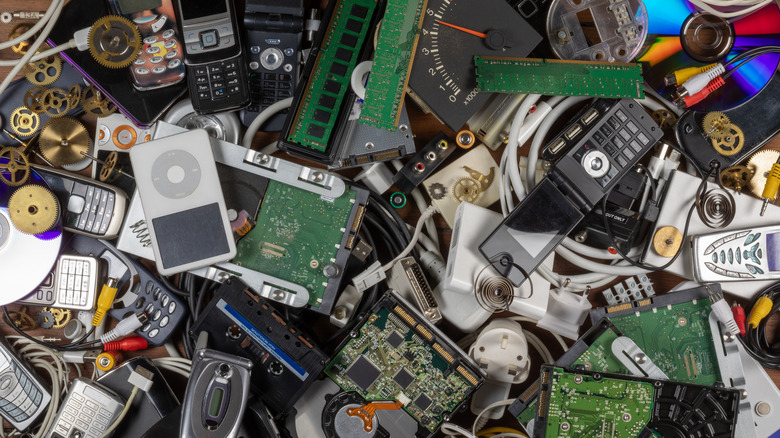
It's probably safe to assume that some people might dump old electronic devices and accessories in the trash without much of a second thought. In reality, you should never do this. For one thing, the World Health Organization (WHO) says we're already neck-deep in an electronic waste crisis. E-waste is often worse than all the rest because it contains harmful materials that can wreak havoc on the environment — the fun stuff, like lead and arsenic. Then consider that e-waste contains a lot of recyclable components, some of it including critical materials that are hard to come by or are in short supply like rare earth metals.
Try to repurpose that old tech if you can. You'd be shocked how even an old computer that's over a decade behind current tech trends is still fully usable with a fresh Linux install, for example. Even if it's not going to be a daily driver, an old laptop can work as a streaming device for the rest of the house. There could be all sorts of old electronic devices in the garage, but the point is, many of them can be given a new life rather than going to the shredder.
And if you can't reuse that old tech, learn how to recycle electronics correctly. There might even be something in it for you; some places pay those who give them the right kind to e-waste. Depending on what the electronic device is, there may be options to trade it in for something of higher value. Companies like Amazon, Best Buy, and Apple offer trade-in programs that could help fund an upgrade device.