

5 Honda Engines Drivers Say You Should Steer Clear Of

Honda makes great cars. The brand routinely ranks in the top half of all automakers on reliability lists, with its most reliable models consistently outperforming much of the competition. The brand's long-running engine lines have played a big role in building that reputation. Mainstays like the K-series four-cylinders and the J35 V6 have been around for 20 years or longer, with only minor changes made for the sake of emissions targets and modernization.
My last two cars have been Hondas — a 2019 Honda Accord, which came with the very pleasant K20C4 engine, and a 2026 Honda Ridgeline powered by a J35Y6 — which means I've driven two of Honda's best and most reliable engines. However, like all companies in the world across any category, Honda isn't flawless, and occasionally, the company has been known to make one bummer of an engine for one reason or another. Sometimes it's due to reliability concerns, and sometimes the engine is just the least inspiring thing you could imagine.
Honda does better than most in this category, so the list below is exceedingly short. In fact, only two of the engines on the list are even here due to reliability issues, while the other three are typically avoided due to lackluster performance or just generally boring character. So, without burying the lede too far, here are the engines that people will likely recommend that you avoid if you're buying a new or used Honda.
Honda R20
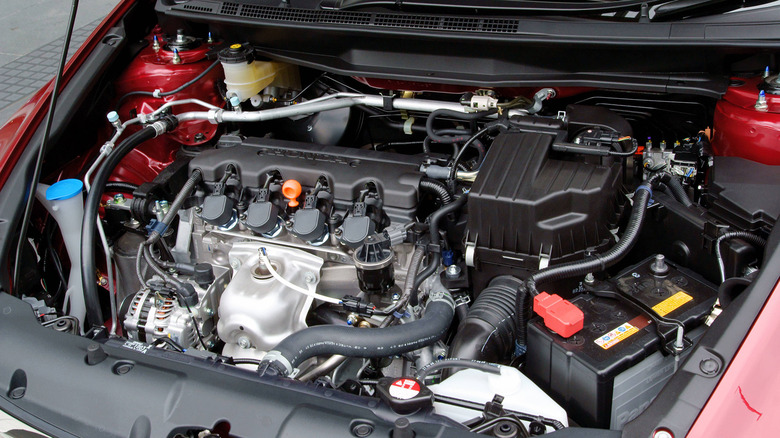
Built for a number of years in the 2000s and 2010s, the R20 engine line is known as one of Honda and Acura's most reliable engines and powered several vehicles over the years. They include the fifth-generation CR-V, early 2010s versions of the Acura ILX, and several model years of the Honda Accord and Honda Civic. With such a wide list of popular models and the reputation for being reliable, you'd think that there would be few complaints about this engine, and you'd be right. Most people like this engine just fine. However, some Honda and Acura owners aren't entirely thrilled with it, for an entirely different reason.
The reason is that the engine is very slow, and known for occasionally getting very middling fuel economy as its age and mileage increase. Its lackluster performance made it great for casual daily driving, but Honda is pretty well known for making cars that are fun to drive, and the R20 engines simply weren't that unless you got it in the smallest Honda models like the Civic, and even then, it was passable.
If you were to ask Honda fans if the R20 is a good engine, they'd probably tell you that it's virtually indestructible but also has the power of a go-kart. In other words, it'll last forever, but you won't really have any fun driving it, and Honda has other reliable options that are more fun.
Honda D17 engines
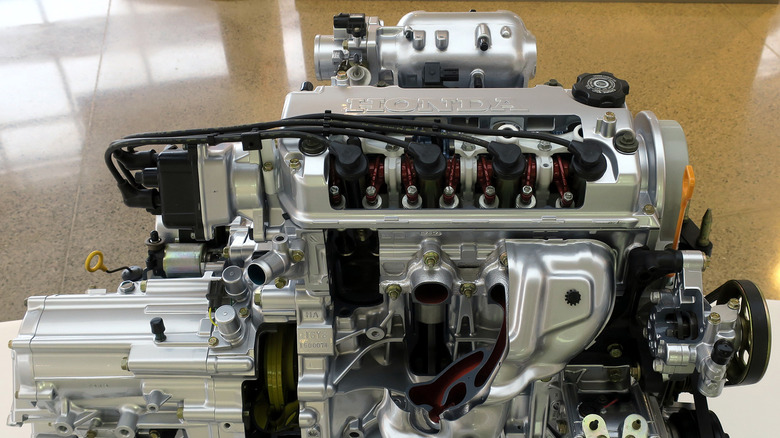
Honda started making its D-series engines in 1984, continuing all the way until the R-series took over in the early 2000s. These engines were heavily featured in Honda Civic models of the 1980s and 1990s, which has led to them remaining very popular with car modders. Not every version of the engine was popular, however.
The biggest reason has little to do with reliability and everything to do with performance. These old engines were built for fuel economy, not for fun, so they're quite slow. This isn't too big of a deal, since many engines back in the 1990s were. However, you could usually get some good horsepower with some modifications. Not so with the D17 engine — even with modifications, you couldn't make it do much more than what came stock. Some modders even recommend letting the engine blow and then replacing it with something else instead.
For an engine this old, the only real problem being its inability to be modified into a street racer is pretty good overall. It's just that the other D-series engines don't seem to be quite as difficult to modify as the D17, though, and so that makes the D17 arguably the least liked engine in the family.
Honda Earth Dreams 1.5-liter Turbo-Four
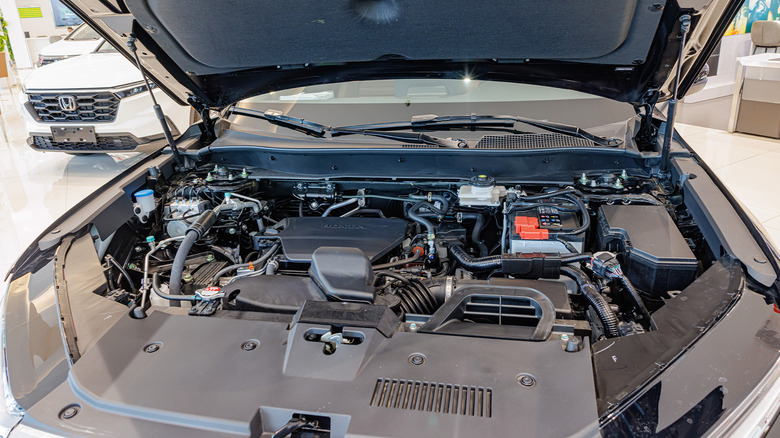
Of all the engines on this list, the Earth Dreams 1.5-liter turbo-four might be the most problematic. It's used in a host of Honda's most popular vehicles, including the CR-V and Accord, as well as the less popular Civic Si. The engine also has the misfortune of being around for quite a while, so you can find 1.5-liter turbos in CR-Vs dating back many years. In day-to-day driving, it has some pep in its step and offers good fuel economy. The problem is with reliability.
It's pretty well-known that the 1.5-liter turbos have some problems, and Honda owners are well aware of them. The engine blows head gaskets and does so with enough frequency that Honda has been sued for it in the past. In general, the problem lies with oil dilution. When you don't let a turbo charged engine warm up properly, unburnt fuel can seep into the oil, causing the two to mix. Longer trips allow the engine to get up to temperature and burn away the fuel in the oil. Frequent short trips where the engine doesn't heat up all the way makes the problem worse.
This is a common problem in many turbo engines, but Honda's 1.5-liter turbo seems to have it worse than some other engines do, and as a result, it's probably the engine you'll see the most complaints about from Honda owners. Take your CR-V or Accord for longer drives sometimes to let it burn off the fuel in the oil, and make sure to get more frequent oil changes, and you should be fine.
Honda Earth Dreams 3.5-liter V6
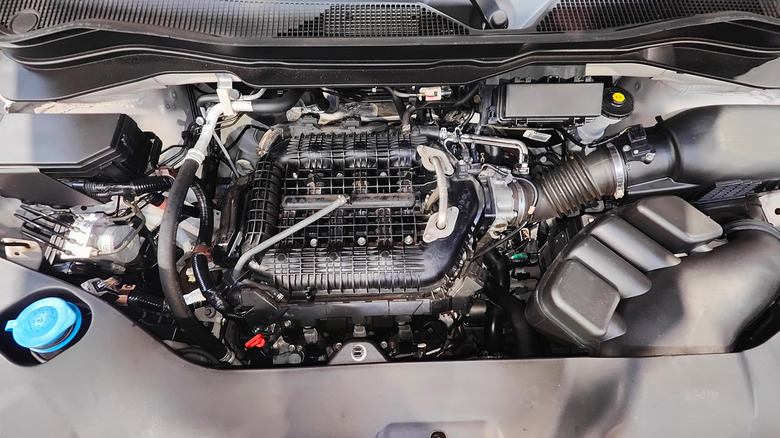
The Honda J35 engine has been around in several variations for over two decades, so it's kind of expected that the occasional issue would pop up from time to time. Honda uses this V6 in vehicles like the Ridgeline, Pilot, Passport, and Odyssey. It was also once featured in a Saturn Vue. My Ridgeline has this engine, and it's a pretty smooth operator overall. Older versions of this engine have virtually no problems, and there are stories of J35-powered Honda Accords hitting 300,000 miles. The problems seem to have started cropping up with later versions of the engine.
The first thing you'll see Honda fans complain about is the cylinder deactivation. This seems to have been largely fixed in newer models, but it caused enough of a reliability concern in the first few generations that owners used a cylinder deactivation deactivator so that it properly used all six cylinders. It also wasn't just reliability concerns. Owners with the J35 engine have reported the engine mount breaking, which causes the engine to rattle the entire vehicle when a few of the cylinders are deactivated. So, while the engine is still generally reliable, these things can be annoying to deal with.
Honda also had a defect in the J35 from the 2016 through 2020 model years that impacted 1.4 million vehicles, including the Ridgeline, Pilot, Odyssey, Acura TLX, and Acura MDX. The defect could cause premature rod bearing failures, but a recall took care of that.
Honda 2.0-liter DOHC i-VTEC
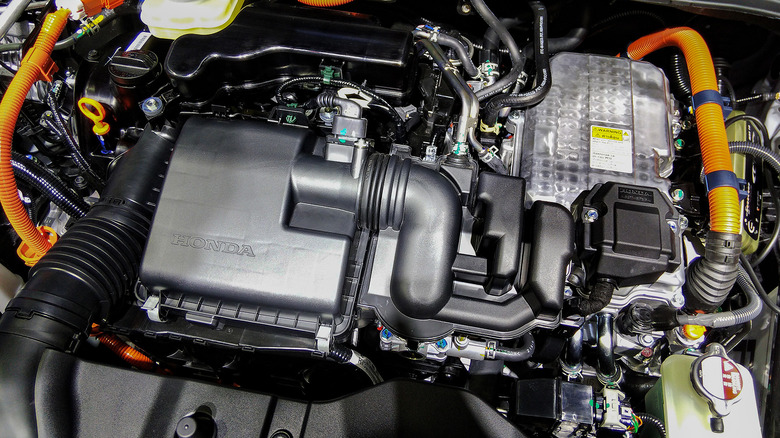
The Honda 2.0-liter DOHC i-VTEC is the spiritual successor to the D-series and R-series engines, and it is an engine that Honda still uses to this day in the latest Honda Civic and Honda HR-V. Like its spiritual predecessors, the 2.0-liter DOHC is a reliability monster, and shows that Honda still has the chops to make an engine that can stand the test of time. Indeed, most of the problems that owners have with these cars have nothing to do with the engine. Once again, the problem isn't with reliability, it's with performance.
The Honda HR-V has it worse off than the Civic, likely because it's a crossover and weighs more. Professional reviewers have noted the leisurely pace at which the HR-V does basically anything, and the Civic, while lighter, leans more on its handling than its speed for its driver engagement. Those who want more peppy performance are often recommended the hybrid model of the Civic, and probably the HR-V too if it had one.
There are plenty of owners who love their HR-Vs, but there are others who will make sure to put up a disclaimer before recommending the car that it is not one of Honda's more fun-to-drive vehicles. However, of all the engines on this list, the 2.0-liter DOHC easily gets the least amount of hate on social media. It's just one of those things where you should try it before you buy it.