

6 Cool Gadgets That Will Make You Feel Like You're In The Future

I remember as a kid watching movies where people would have powerful, paper-thin computers or iris scanners for unlocking doors, and thinking it was far-future technology I might see on my deathbed if I was lucky. By the mid-2010s, though, tablets and face-unlocked smartphones were affordable and commonplace. Tech moves fast. It seems like movie gadgets are becoming real technology at an increasing clip, so it wouldn't surprise me if some of the things we think are currently out of humanity's grasp will be mainstays in another decade or two. So with that in mind, we want to look at current-gen tech that makes you feel like you've been transported to a sci-fi future.
Keyword here: feel. We want stuff that tickles that sense of sci-fi wonderment, even if ultimately it's not going to change the world or if it's easily within the realm of human engineering. Everything on this list is new-ish tech you can get in the current year, putting it on the "cutting edge" as it were. Importantly, everything on this list is something you can actually buy; we shied away from tech demos or concepts that were ultimately not for consumers, but bear in mind, some of the stuff on this list is very, very pricey.
RayNeo X3 Pro
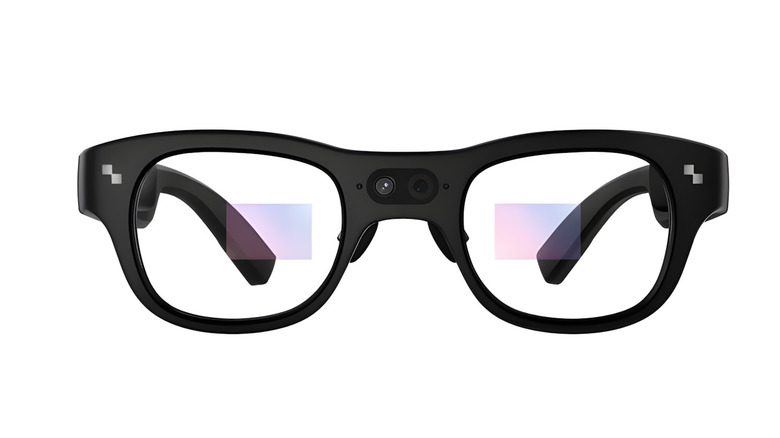
In 2024, we reviewed the RayNeo Air 2S, a promising — but still not quite perfected — set of XR glasses. Meta's new AI glasses kicked up some dust in the tech world in 2025. Now RayNeo is back with the X3 Pro, a beefier version overall. The glasses certainly look a lot more visually inconspicuous, and further pull us closer to the dream of the smart-glass future the tech industry so badly wants. They're not cheap. Prepare to spend $1,299 and your firstborn before you head to checkout. However, they represent a noticeable upgrade in just about every department, with improved waveguides, a new chip, a higher-brightness display, better beamforming mics, and more.
This time around, the X3 claims to have an intuitive 3D spatial interface, a smart assistant, and Google Gemini running in the background as "AI assistance" when needed. The promo video shows a woman tapping the X3's frame and getting object recognition, live translation, and help with a chess game. They're more capable (thanks to hardware and software advantages) than even the Meta Ray-Bans. Do keep in mind, though, that based on all the reviews I've seen, the general vibe I'm getting is that these are still firmly in gimmick territory — not yet the everyday devices the tech industry wants them to be.
AI is, of course, the main focus. AI might be making your PC upgrades painfully expensive, but at least it's giving you futuristic smart glasses you can't afford. Jokes aside, this is interesting tech that offers a window into a future. Maybe someday we'll all have affordable, useful smart glasses instead of them being limited to reviewers and enthusiasts.
C-200 Ultrasonic Chef's Knife
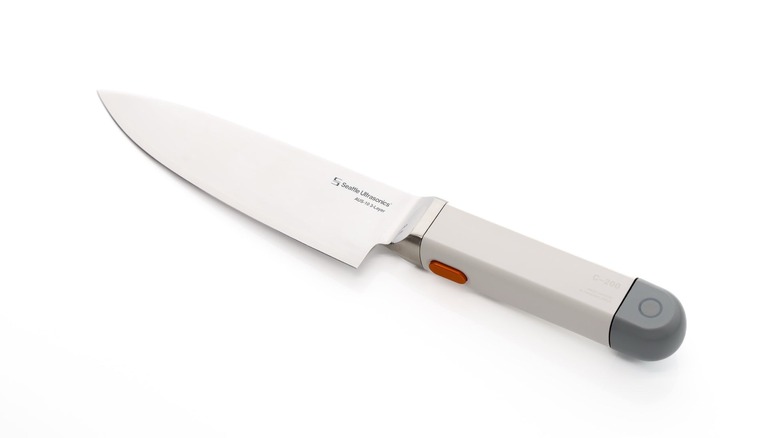
Sci-fi homes often depict technology that we already have, albeit with things floating in the air and holograms. Aside from a robotic chef to whip you up a snack, there's rarely any visible improvement to how we cook. The Seattle Ultrasonics' C-200 Ultrasonic Chef's Knife might change that. At first glance, you probably wouldn't be able to tell it apart from the other knives in your kitchen. It's a bog-standard knife, with the only real distinguishing feature being the orange button on the underside of the handle. Don't let the not-super-sci-fi appearance fool you. This knife uses a 33kHz frequency to cut through ingredients with half as much effort.
Under the hood, it's a lot simpler than it might seem. Piezoelectric crystals powered by a 1,100mAh battery in the handle resonate the blade at 33kHz, and according to Seattle Ultrasonics, you can't even feel or hear it when in use. The demonstration video seems to prove this when the user is able to cut a slice off the top of a grape without holding the grape in place. Very cool. Cool tech aside, we'd imagine this will have real benefits for people who spend any significant amount of time in the kitchen — professional chefs as much as people who just love cooking.
However, we will hold out on any verdict since the knife is not available to the general public yet. Seattle Ultrasonics says you can get yours with the third pre-order batch by April 2026. Also, it's not cheap; this single knife costs $400, and we're curious how long it will last and how much it would cost to replace the battery once it wears out. Nonetheless, it fits the bill for feeling futuristic.
Hypershell Pro X Exoskeleton
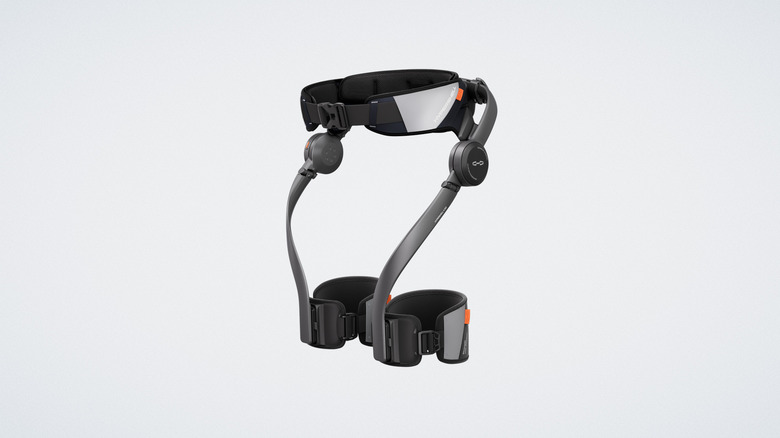
Another trope in sci-fi is exoskeletons, something you often see on futuristic super soldiers that allow them to run, jump, and fight ten times harder and longer. For the consumer, though, they promise real mobility benefits. We took a look at the Hypershell Pro X Exoskeleton. Reviewer Andy Zahn came away quite impressed; if you can get past strangers rubber-necking as you waltz by looking like the Terminator, you can rocket down a trail faster than other hikers for a fraction of the physical exertion. This might be a much-needed silver bullet for those brutal uphill hikes with endless switchbacks.
It's quite impressive that this product not only exists, but that it's very user-friendly and even connects to an app. Battery life is also much better than you might expect. Of course, you probably already guessed the biggest hurdle here: price. Currently, the Hypershell X-Series retails for $1,199 on its official website — though at the time of writing, it's $100 off. Other versions exist above and below that price, but needless to say, the only people buying this will be those who hike enough to justify spending $1,000 on it.
We'd imagine this is a similar situation to smart glasses; only a few enthusiasts willing to slap down so much cash are going to have one now, but as time goes by, these will undoubtedly get cheaper to manufacture, become more reliable and efficient, and thus become increasingly commonplace. Who knows, maybe someday those lines of people summiting Mount Everest will have everyone with weird devices strapped to their hips. If Elon Musk's Neuralink claims are to be believed, something like this could be a boon for the physically disabled, too.
Anthbot Genie
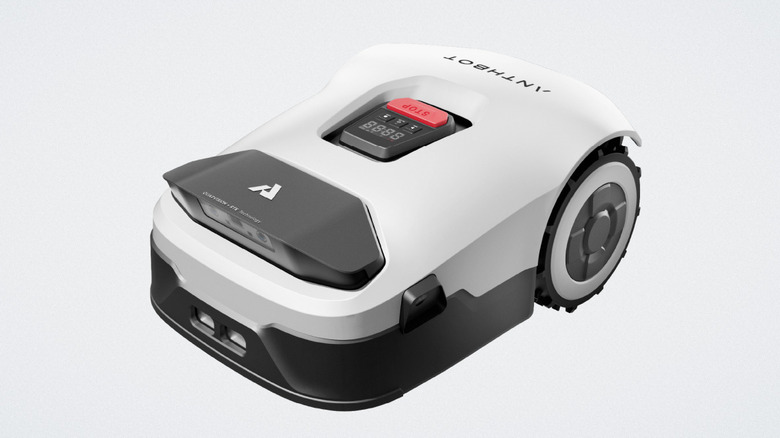
Roombas have been around for long enough that they're no longer impressive; people buy them if they want to do less vacuuming or mopping, not to feel like the Jetsons. A staple of sci-fi we haven't yet seen is a robot out mowing your lawn. Now you can, minus the android. SlashGear's Chris Burns tried out the Anthbot Genie 3000 and finished the review confident that the tech is coming into its own, enough for the average Joe to pick one up. With the help of a reference station and a bit of automatic (or manual) mapping, it'll get most of your yard and leave you with, at most, a few harder-to-reach spots and edge trimming to do yourself.
Robot lawn mowers have been a thing for a while now, but what impresses us about the Anthbot Genie is how many of the kinks this particular model has worked out. It seems to have accounted for all risks endemic to automatic lawn mowers, from identifying obstacles to rain detection that cuts mowing short, and even anti-theft features. It's something you could really trust to get the job done when you're away from home, and not have to helicopter-parent it to make sure it doesn't harm the neighborhood cat.
The Anthbot Genie comes in three variations ranging from $999 to $1,599, with the main difference being how much acreage each model can cover. The two costlier models also have 4G support, bigger batteries, faster charging, and the ability to manage more zones. It's expensive, no doubt, but not so much that it completely prices out someone looking to save precious weekend time. Give us a robot to do the gardening and landscaping, and the days of Saturday yard work may finally be over.
SiFly E-Foil

If you've been to a beachside vacation spot, you've no doubt seen someone out on the water levitating around on what seems like Aladdin's magic flying surfboard. That's an e-foil. It's not anti-gravity, sad to say, but an e-foil makes it seem that way with hydrofoil technology, aka Bernoulli's principle, the same thing giving airplanes lift. Even the U.S. military has tried hydrofoil ships. E-foils use the same principle and sustain an adult human being at around 15 km/h. SiFly's Rider lets you buy one yourself instead of renting it out.
Check out some videos of these things on YouTube and they pretty much sell themselves. Riders go fast, and they're able to take fairly sharp turns without losing balance or throwing themselves off. They're stable, too, and unless you veer too close to shallow water or some underwater obstructions, you're good to go. Everything can be controlled from a handheld remote.
A few caveats before you get excited. Number one, the price is probably going to be a non-starter; this particular model starts at €4,999. Second, it's only rated for someone who weighs 80 kg or less. Third, battery life is only about two hours. This is a very expensive toy that only a few people can ride, and not for very long. We also have concerns about how easy it would be to get repairs on this thing, and what the durability is like overall. But hey, this thing basically lets you walk on water like Jesus.
Roto VR Chair

VR is in a weird place. While you can get some of the best VR headsets for a relatively decent price, there aren't many good games to play and the experience is still pretty gimmicky — speaking from personal experience. The future doesn't bode well for the medium, either. Meta recently gutted its formerly generous VR division. Still, some companies keep trying, finding new ways to increase immersion in VR and make it more than a gimmick. A great example is Disney's impressive 360 treadmill, although that's not something a consumer can buy. The Roto VR Explorer, however, is.
This is basically a desktop chair mounted on a platform that responds to your head movements to spin accordingly. So when you turn your head, the physical world spins around you just as the digital one does. Simple idea, clever execution. We've seen this concept several times before with VR treadmills, but those tend to be pretty complicated (and expensive) setups. The Roto VR Explorer is simpler and (relatively) affordable by comparison, starting at £799 with the basic chair and no accessories; a competitor like the Virtuix Omni One, for example, starts at $3,495. Roto's option also doesn't require you to wear special shoes or strap into an arm. You just sit down and play.
Having played a lot of VR myself, I think this setup won't be ideal for first-person games where you traverse on foot, but it should work well for vehicle-based experiences. Racing games and flight simulators are going to feel amazing on a chair like this. Plus, this effectively removes the risk of bumping into your physical environment since you're stuck in one place. Roto claims it's optimized to work with the Meta Quest headset.