

The 16 Budget-Friendly Garage Staples You Should Always Have On Hand
We may receive a commission on purchases made from links.
Many people look at large furniture or expensive gadgets when furnishing a home. But whether you're moving to a new place or have been living in it for over a decade, there are just some basic things that you should never take for granted. These small, everyday items are handy to always have in stock in your garage, as they can save you in many different situations. That's because, aside from being useful in emergencies, these things will also help keep your household running smoothly when something breaks.
We will include a lot of different items in our list — everything from screws and tapes to oil and batteries. We won't be able to account for every possible event that can happen in your home, but the stuff we recommend will save you from midnight convenience store runs or having to wait in the dark until morning when stores open. All these items are relatively affordable, so you don't have to worry about overstretching your budget just to keep these staples in your garage. I also have all of these in stock in my garage, and I've found them useful in the decade that I've lived in my own home.
AA, AAA, and button batteries
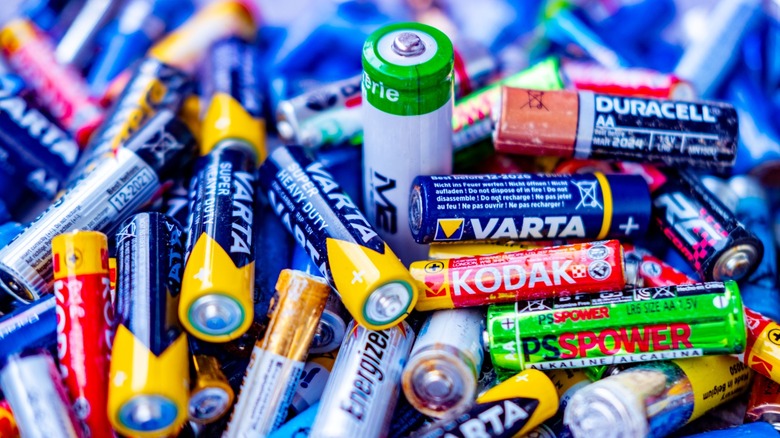
We cannot deny that we have a lot of electronic gadgets in our homes that run on batteries. And while some of these things have started using built-in lithium-ion batteries, many of them still run on common AA, AAA, or even button batteries. These can include items like remote controls for your TV or HVAC system, smart switches and smart door locks, wall clocks, kitchen scales, some wireless mice and keyboards, flashlights, and a whole lot more.
So, if your kitchen scale suddenly runs out of batteries while you're in the middle of preparing a huge feast, you don't have to run out to the nearby convenience store just to buy a pack. You can check out our ranking of the best battery brands if you want to know which ones you should keep in stock in your garage. But if you can spare a few more dollars, you should look at rechargeable AA batteries, which basically pay for themselves. Although they may cost a bit more than disposable batteries, you can use them many times over, potentially saving you more in the long run and reducing waste as well.
Distilled water
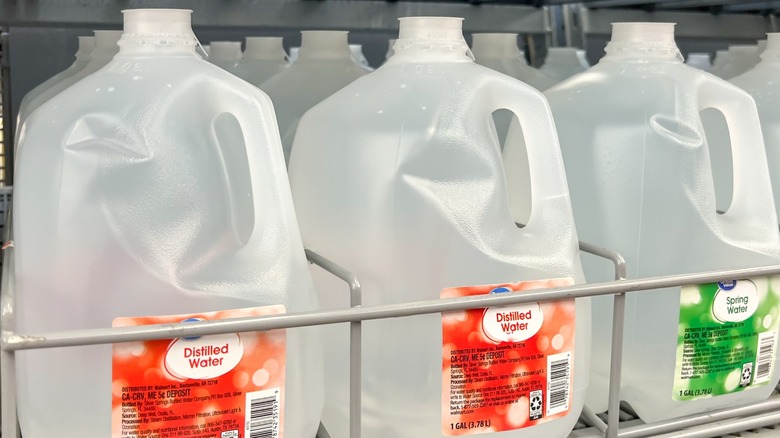
While we've come to expect potable water coming out of our taps, it's still a good idea to have a bottle of distilled water stored at home. This will come in handy in case of emergencies — say, a water main bursts and your entire neighborhood is out of water for a few days. Beyond drinking, distilled water is also great for other uses. Because this type of water does not have minerals, it's useful for steam irons, as it helps prevent scale buildup.
This is also the same reason why you should only use distilled water if you need to top up the coolant in your car in case of an emergency. Using tap or mineral water can cause lime scale to build up within the system, potentially clogging it and making your vehicle's overheating problem worse. Note that you still need to mix coolant or antifreeze with water for long-term cooling, as using just distilled water in your engine can cause corrosion.
Extension cords
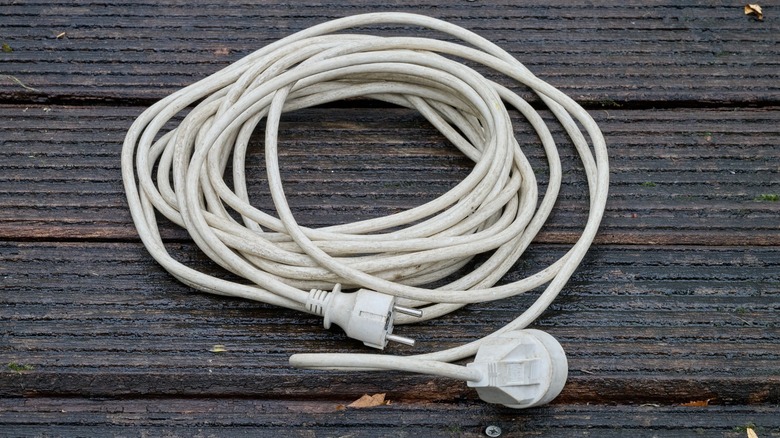
Nearly everything we use at home requires some sort of outlet power — from big appliances like refrigerators and induction cookers to our everyday-carry devices like laptops and smartphones. Because of this, you might have experienced times when you realize that you don't have a nearby outlet to do what you need. That's why it's important to have at least one extension cord stored in your garage, allowing you to get power in nearly every spot in your home.
For example, you might have your nephews and nieces playing in the living room while you need to work on your laptop in the dining room to keep an eye on them. If you don't have an outlet close enough to let you charge your gadgets, you can use an extension cord to deliver power right where you are. Aside from that, the multiple outlets many extension cords have will let you power multiple devices simultaneously. However, you should remember to avoid common extension cord mistakes to reduce the risk of an accident in your house.
Fire extinguishers
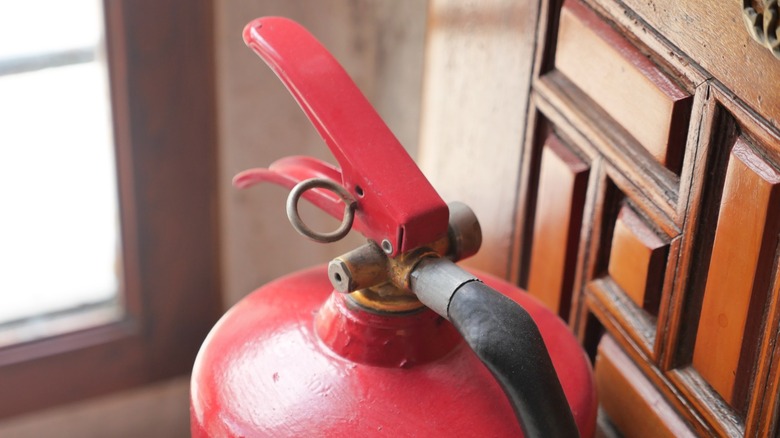
Only a few people expect to face a fire at home, but even if that's the case, it's always wise to have a fire extinguisher handy in your garage. That's because an uncontrolled fire poses a big danger to both life and property, so having an extinguisher available to deal with one can help you save money and prevent burns and injuries.
All-purpose or multi-rated fire extinguishers with the ABC symbol are best for your home, as they can deal with fires fueled by ordinary combustible materials like paper and cloth, liquid fuels such as gasoline or alcohol, and even electrical fires. Some experts recommend keeping one extinguisher per floor so you don't have to run up or down a flight of stairs if you're dealing with a fire in another part of your house. It's also good to keep a larger extinguisher in your garage so that even if you empty the smaller unit you keep indoors, you'd still have a backup to help stop the fire from getting bigger before the fire department arrives.
Garbage bags
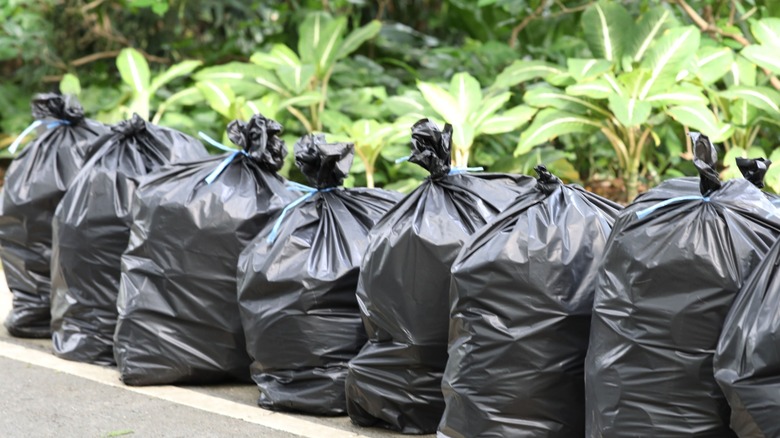
You might think that garbage bags are just useful for storing and moving household refuse, but they go way beyond handling trash. For example, if you're moving and you've run out of boxes, you can put soft, non-breakable items in garbage bags. They're also useful for keeping toys with small parts, like LEGO bricks, organized inside your child's chest. And if you need to do some maintenance inside your home, you can cut up garbage bags and place them over your furniture to stop dust from settling on them.
Since you might need these bags for different purposes, it's good to have various sizes available in your garage. I personally keep small, medium, and large trash bags in my garage, so that I can just grab one that perfectly fits my needs. It might also be wise to get transparent garbage bags so you don't accidentally throw away items that you've put away for long-term storage.
LED bulbs
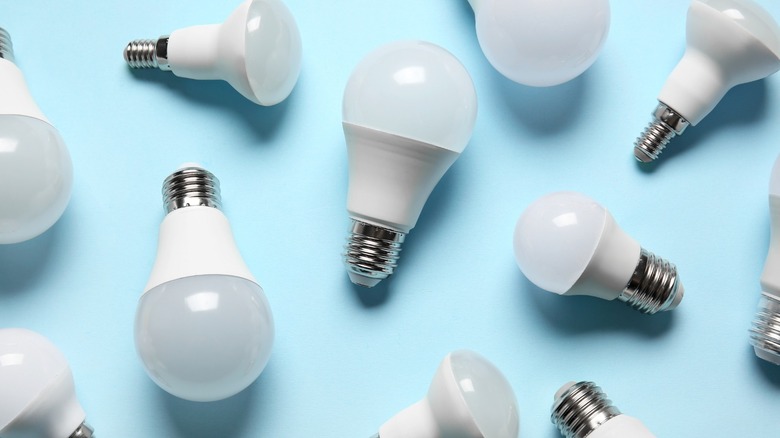
Many people use LED bulbs nowadays to light their homes. They are not just brighter and more energy efficient than incandescent bulbs, but they also last up to 25 times longer. But even if that is the case, you should still keep at least a couple of LED bulbs in your garage as backup. That's because even though they have a long life, you might still encounter a few busted LED lights in your lifetime.
This could be caused by manufacturing defects, harsh conditions, dirty sockets, poor installation, incompatible dimmer switches, or poor power quality. But whatever the case, you don't want to be stuck with a darkened room just because your LED bulb decides to burn out when the nearby hardware store is closed. So, it's wise to have at least one backup bulb for each socket size you have in your house, ensuring you can replace a burnt-out bulb anytime.
Matches or lighters
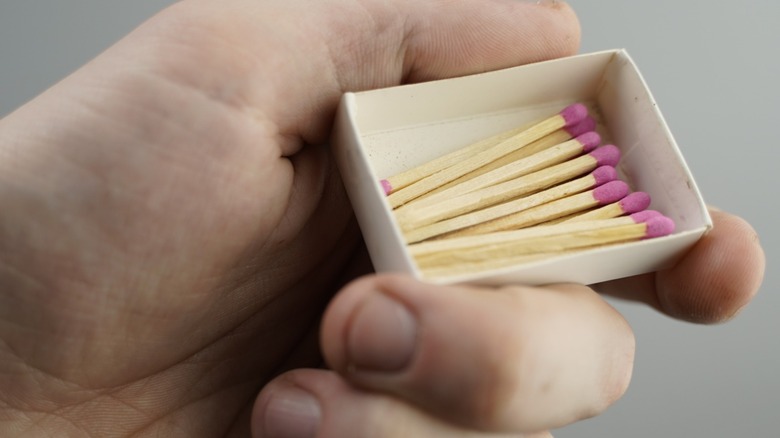
Even though you're not a smoker or don't live with one, it's still good to have matches or a lighter at home. One of the most basic things you'd need this for is to light a candle — whether it's for a birthday party or because your area lost power. This makes them great for providing light and some heat, especially if power lines freeze during a blizzard. They're also crucial for setting up a campfire or if you need to light a gas or kerosene lantern.
Lighters are easy to use, and they're pretty cheap, too, especially if you use them sparingly. But if you don't want to store flammable liquid in your garage, you can instead buy safety matches — these are even far cheaper than lighters and could last even longer. They also tend to be more environmentally friendly, especially since most matches are made from eco-friendly materials like wood and cardboard.
Reusable adhesive putty
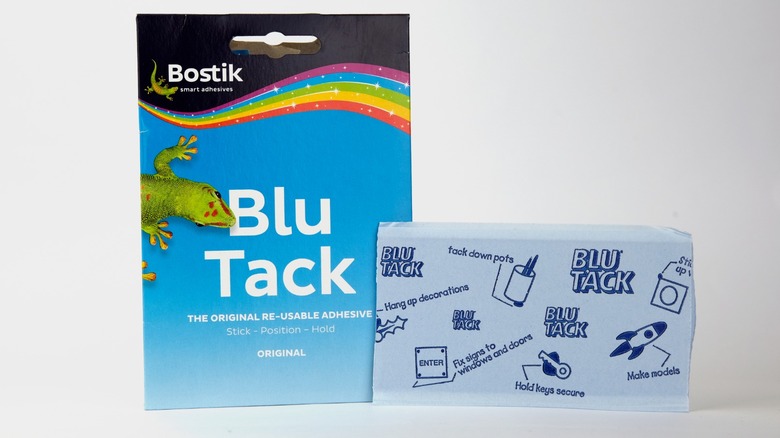
It's nice to put up pictures and drawings on your walls, especially if you have kids, but using tape to stick them will often leave residue marks, while push pins leave holes in the wall. One alternative you can use is reusable adhesive putty, which you might be more familiar with by its brand name — Blu Tack. This clay-like material doesn't feel sticky in your hands, but it's strong enough to hold light objects like photos and posters without leaving anything behind.
While the name suggests that it is colored blue, you can actually get it in various other colors to match the surface you're mounting it on, almost making it invisible. It also lasts for quite a long time: I still have two balls of reusable adhesive putty that I bought from another brand way back in 2015, when I worked as a professional wedding photographer and used them to make wedding rings stand up and secure paper invitations for shoots. I keep them in my drawer in a plastic container, and I still use them occasionally for product shoots when I write reviews.
Reusable cable ties
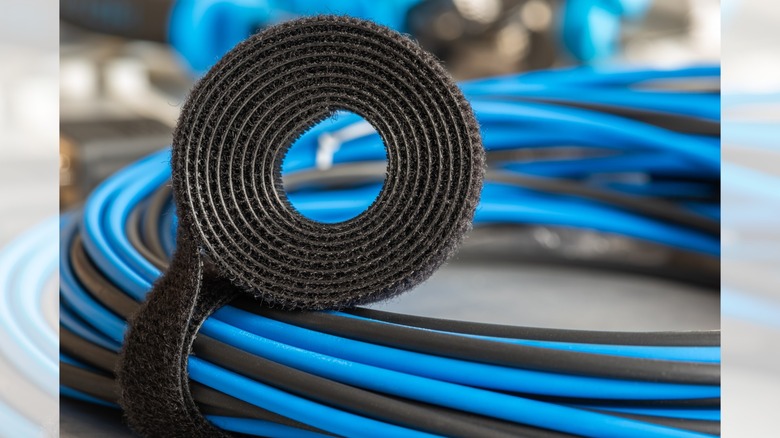
Reusable cable ties are underrated when it comes to organizing wires and cables. You'll often find these included with anything you purchase that has a cable — whether it's an extension cord, a USB-C cable, or even old-school phone chargers. So instead of throwing them away, why not put them in a small plastic bag and store them for later use? This makes them practically free and easy to keep since they don't take up much space.
These items are often made of thin wire coated with plastic or rubber, although you can also buy options made from soft silicone or built with fabric and Velcro. They're useful for tidying up cables — both the ones stored in your drawer and those you keep in your laptop bag. You can also use them to secure wires to table legs so you don't end up with a spaghetti-like mess of charging cables running along the side of your desk.
Rope
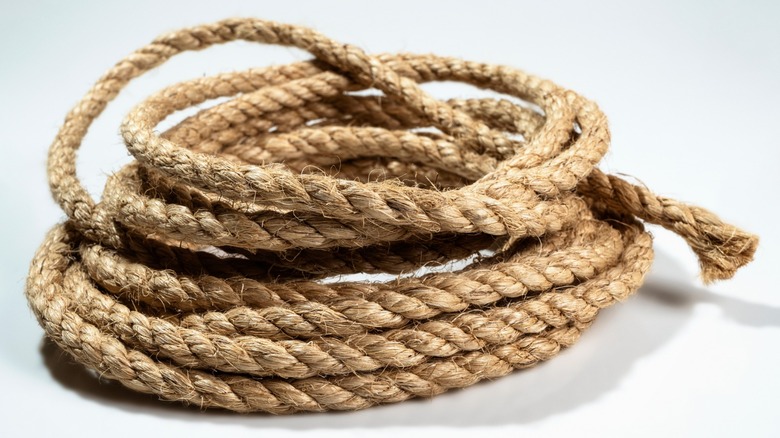
You might not think much of a bundle of rope, but it's endlessly useful in a wide range of situations. It's great for securing large items — like when you're carrying boxes on the back of your truck or on a roof rack. If you're into gardening and DIY, rope is also useful for hanging plants, lights, and other decorations, but you should learn how to tie basic knots to use it safely.
Aside from everyday uses, rope is also helpful in emergencies. For example, you can use it to tie down objects like roofs, water tanks, and garden furniture before a storm to reduce potential damage to your property. You can also use it as a tourniquet to reduce bleeding before paramedics arrive or to secure a temporary sling if someone breaks their arm and you need to stabilize the area before going to the hospital.
Screws and nails
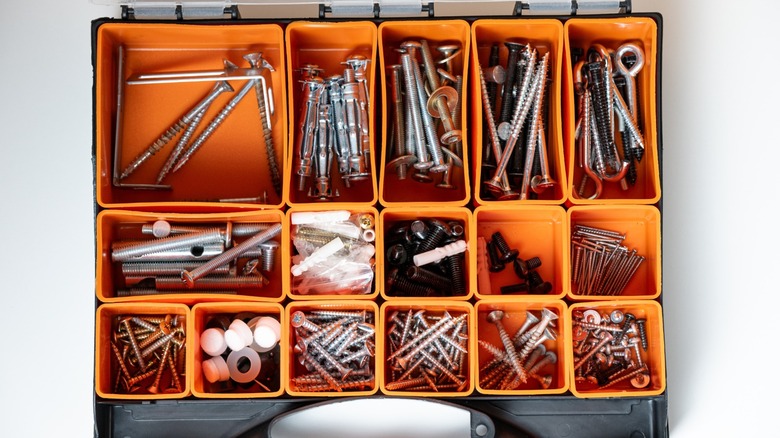
Screws and nails are some of the most basic items you'd find in a handyman's toolbox, but they're also essential to have in your garage even if you're not into DIY. Even though they may seem simple, they're great for fastening things together — whether temporarily or permanently — and for making quick repairs. For example, if you have a loose floorboard at home and you're tired of hearing it squeak when you walk on it, you could replace the nail yourself to stop the annoying sound.
You also don't need to buy a specific set of screws and nails all at once. Instead, many recommend purchasing fasteners as needed, and you'll soon find yourself with a collection you can use for other repairs and projects. Of course, consider investing in good toolbox organizers so you don't lose these small items and can keep them properly organized as well.
Stick-on and screw-on hooks
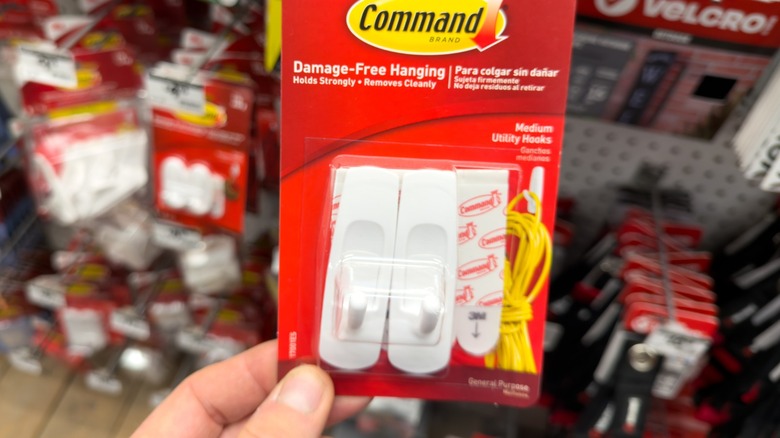
While you can use screws and nails for hanging things, it's better to use dedicated hooks for the job. After all, these are more secure and help prevent the items you hang from accidentally slipping off. We recommend two different types of hooks to keep in your garage — screw-on hooks, which are like ordinary screws but come with a hook instead of a screw head, and stick-on hooks, which you affix to your wall using the included adhesive.
I prefer stick-on hooks from the Command brand, as they're easy to install, relatively secure, and do not leave any residue when removed. They also come in different variants and can hold as much as eight pounds, making them quite versatile for hanging various items around the house. But if I want to hang something heavier, like tools or portable appliances, I stick with screw-on hooks securely attached to a wooden beam.
Spare coolant and oil
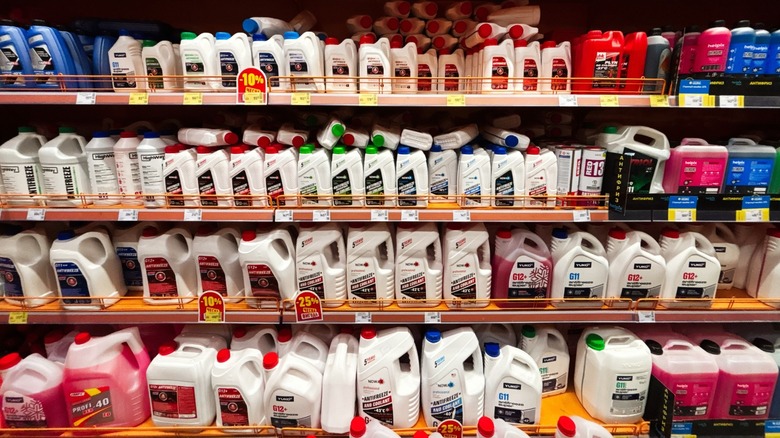
Whether or not you change the oil in your car by yourself, it's good to keep a bottle of spare coolant and oil in your garage. That's because your car likely spends most of its time parked at home, so if you see a pool of coolant or oil underneath it in the morning, you can quickly top it up to replace whatever leaked onto the ground and safely drive your car to a mechanic to get it checked.
You can purchase an extra bottle of oil or coolant to keep in your garage — just ensure you keep it in a cool, dry place that isn't easily reachable by children or animals. This is especially important for coolant or antifreeze, as the ethylene glycol used in it is highly toxic. You also need to ensure that you have the right oil and coolant for your car, particularly if you bought a new one.
Various kinds of adhesive tape
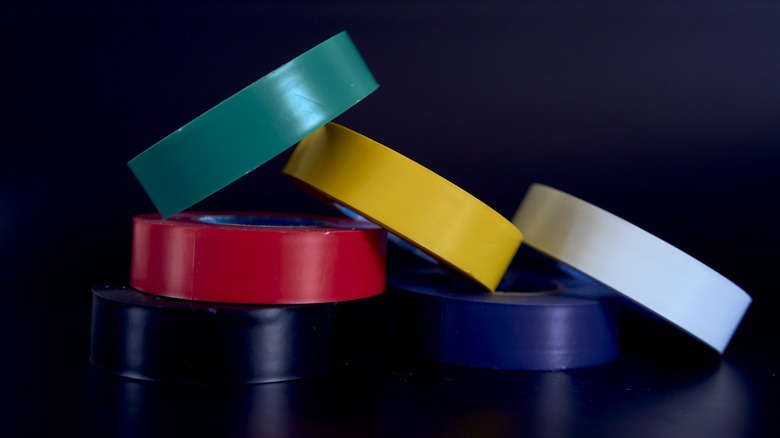
Adhesive tape is useful for various tasks, including repairing items, sealing boxes, using them in electrical work, protecting surfaces when painting, and more. However, you need the correct kind of tape for specific jobs, like painter's tape for protecting surfaces, duct tape for general repairs, packing tape for securing boxes, masking tape for labeling, electrical tape for insulating wires, and plumber's tape for plumbing work.
Keeping every kind of tape in your garage can become expensive and impractical, so it may be better to keep only a few types on hand, depending on your lifestyle. As for me, I keep a roll of packing tape for light repairs, double-sided tape for securing light items to surfaces, electrical tape for minor electrical repairs (like when a dog chews through a wire and only slightly damages it), plumber's tape for replacing a leaky faucet, and duct tape for general repairs. If you're into DIY, consider adding painter's tape and drywall tape, as they're useful for many home projects.
WD-40
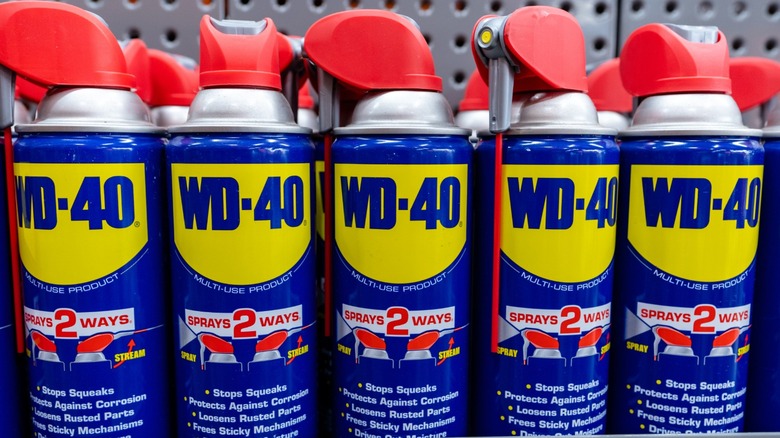
A lubricant like WD-40 is always useful to have around the house, as it can help you get various moving parts like windows and hinges unstuck and prevent them from becoming squeaky. Aside from that, you can also spray it on metal parts as a way to help prevent rust and corrosion before they develop. But beyond the usual mechanical applications you might think of, there are several unexpected ways you can use WD-40 around your home, like removing hardened gum from various surfaces, removing makeup stains, and even restoring old bags.
WD-40 is still a chemical, though, so you need to be careful and not make mistakes when using it. That way, you don't accidentally damage the item you apply it to. But if you really insist on using WD-40 for many different tasks, you should first check out these different WD-40 products that you might not know exist to find the best option for your application.
Zip ties
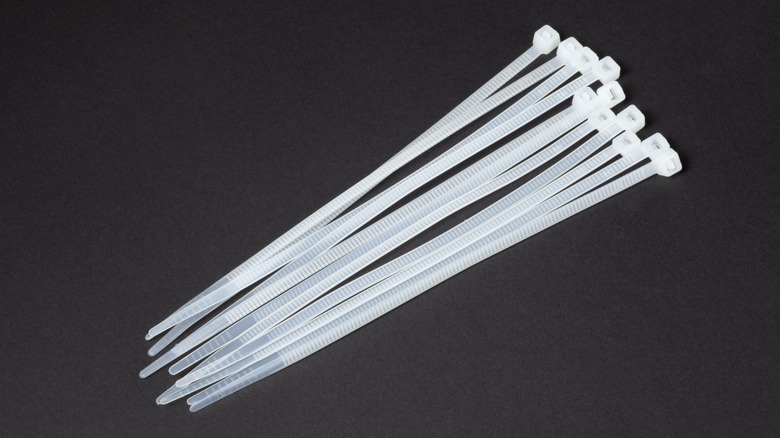
Zip ties are handy plastic strips that you can use to tightly secure cords, cables, and other thin items. What makes them different from reusable cable ties is that they're quick to install — just insert the tail of the zip tie into the head and pull it through, and the notches will lock, securing it in one go. This makes them useful for semi-permanent applications, like when you're installing an extension cord along your office table and want to tie its cable to one of your desk's legs, or when you're putting up string lights on a garden wall.
While you can reuse old zip ties by using a sharp tool to lift the locking tab, it's often a hassle to do so, so many people just end up cutting them instead. As a result, if you're only securing an item temporarily or intend to remove it in the future, you might be better off with a reusable cable tie. But if you need a quick and permanent solution for keeping things where they're supposed to be, then a zip tie is a cheap and easy option.