

7 Tech Trends We Hope Never Come Back

Remember Google Glass? Remember how hilariously it failed? There must be something in the water in Silicon Valley, because it seems like despite that hard lesson, tech companies are always trying again, thinking this time they'll crack the code for making smart glasses more than sci-fi movie fare. Meta's new AI glasses are just the latest attempt. It's a tech trend that refuses to die, no matter how many times consumers buy in only to realize the tech proves less than practical. The smart glasses concept is but one of many. There are other tech trends we hope don't get the same zombie revival treatment.
Few concepts out there are as big of a holy grail as smart glasses, but this is the tech industry we're talking about. Every five seconds there's some new fad that gets a billion-dollar VC injection before dying on the runway. Maybe part of the reason tech trends come back years after they die is because everyone forgot how problematic they were. So instead of revisiting Google Glass, we think these seven tech trends deserve to remain where they are: the dustbin of history.
3D screens
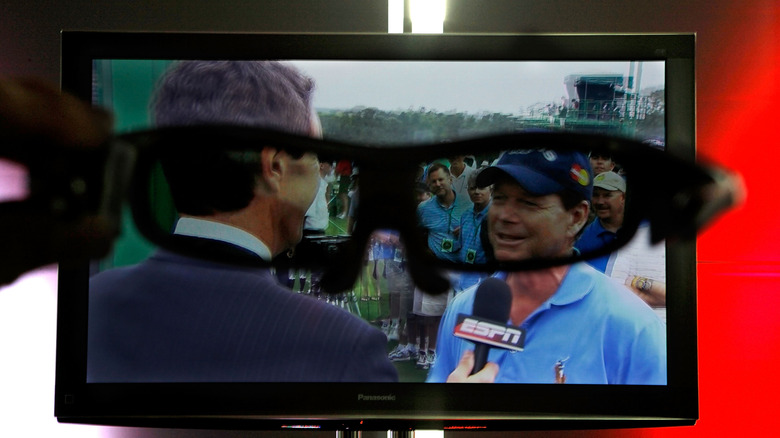
I remember as a kid the excitement of going to a 3D movie, putting on those cheap glasses, waiting for my mind to be blown, having it blown for about half an hour, then feeling like I was watching any other movie — albeit with a worse experience. 3D is arguably a gimmick. Similar to VR, the immersion factor sounds wonderful, but the magic wears off fast, and the annoyance of a face-hugger-like pair of glasses makes you glad to go back to your flat 2D screens — and maybe a little regretful about how much you paid for what was ultimately just a cheap thrill. That didn't stop the tech industry from going beyond the blue-and-red disposable glasses of theater showings into consumer 3D TVs and devices. Alas, the 3D TV was a failure.
Gimmicky-ness was only part of it. 3D's failure had to do with market forces, the high cost of entry, a sparse catalog of true 3D content, and an overall inferior viewing experience. 3D TVs were not the full extent of it. Around this time, we saw flops like the Amazon Fire Phone. The Fire Phone was one of the few glasses-free 3D devices, but ultimately consumers saw an overpriced phone that was cool for all of 10 seconds.
Credit where credit is due, some were able to make 3D profitable. The Nintendo 3DS is the prime example, which sold 75 million units compared to the original DS's 154 million (via Nintendo). But let's be real: That's probably due more to it being one of Nintendo's most successful platforms than to the 3D element itself. I owned one of these way back when, and while the 3D effect was really cool and well implemented, it was like all 3D — gimmicky, and something I could've lived without.
Pop-up selfie cameras

Selfie camera cutouts in your screen have long been part and parcel of having a smartphone. The Samsung Galaxy S25 Ultra has one, as does the iPhone 17 Pro, just as their predecessors did years back when smartphones ditched notches. We're still waiting for major phone manufacturers to iron out the issues with under-display camera technology so we can finally have that true, all-screen display. But for a brief spell, the tech industry toyed with an alternative: What if the camera popped up out of the phone?
We saw this in phones like the OnePlus 7 Pro in 2019. The selfie cam popped out of the phone's top like a gopher out of its hole. The implementation by OnePlus was fast, quiet, and (allegedly) the camera could be opened 300,000 times — perhaps even more than an Instagram influencer could manage in one lifetime. Aside from a screen unblemished by a hole punch, there were privacy benefits; you could know for sure Big Brother wasn't watching if the camera was stowed away.
Alas, there haven't been any pop-up selfie cameras made in recent years. By 2020, tech giants had already abandoned them like last year's Prada. Surprisingly, the space a pop-up mechanism needed inside the phone likely condemned it to a very early grave, not the general concept itself. Smartphone manufacturers similarly reasoned that they had to get rid of the headphone jack because it took up too much space. I have my own reservations. A friend of mine owned the OnePlus 7 Pro, and after only a couple of years, the mechanism started malfunctioning and making grinding noises. Cool idea, but fewer moving parts are always better.
Netbooks
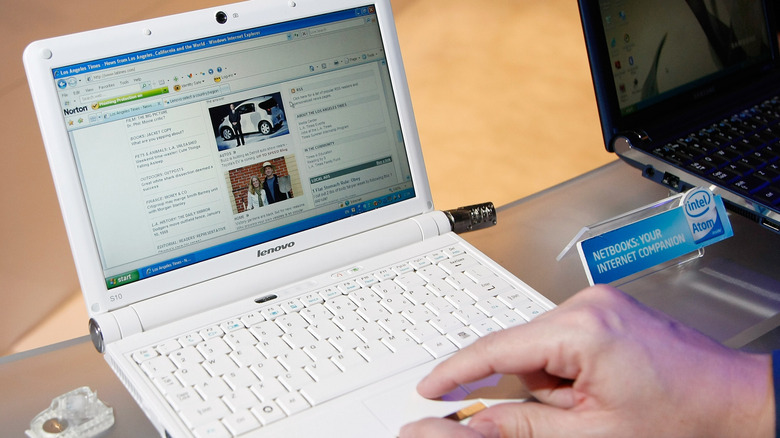
If you don't remember netbooks, you're probably young enough that your knees don't creak. I remember these things fondly from my high school days. Basically, they were uber-tiny, affordable computers. Think a (nearly) full-blown laptop crammed into (at its smallest) a 7-inch screen form factor. Keyboard, touchpad, I/O, the works, in a package that could go almost anywhere. It seemed like every computer nerd's wet dream, so why did it fail?
You can probably guess the first reason: tiny, carpal-tunnel-inducing keyboards and squint-inducing screens. Further, these were oriented toward internet-based tasks — hint hint, "netbook" — so PC manufacturers specced them for ant workflows. Some posit that the smartphone delivered the killing blow to the netbook. Remember, prior to the iPhone and its peers, there was no super-portable, user-friendly, do-almost-everything computing device. Tablets and iPads emerged not long after for anyone who needed more screen real estate to work with. Poor sales finally sealed the deal.
Netbooks still kinda sorta exist, but we call them Chromebooks, and Chromebooks rarely go anywhere near the 7-inch form factor. Windows PCs of that size are rare, often expensive, and niche. The GPD Win Mini is one example, but aside from gaming, only someone with toddler-sized hands would consider it a viable daily driver. Netbooks arguably failed for the same reason tablets still struggle to justify their existence; the iPad is only barely a MacBook alternative, which begs the question of why you should buy one instead of just getting, you know, a MacBook. Nonetheless, for the tinkerers among us, we pour one out in remembrance of the netbook, even though it's probably best it stay a historical footnote.
Curved-edge smartphone displays
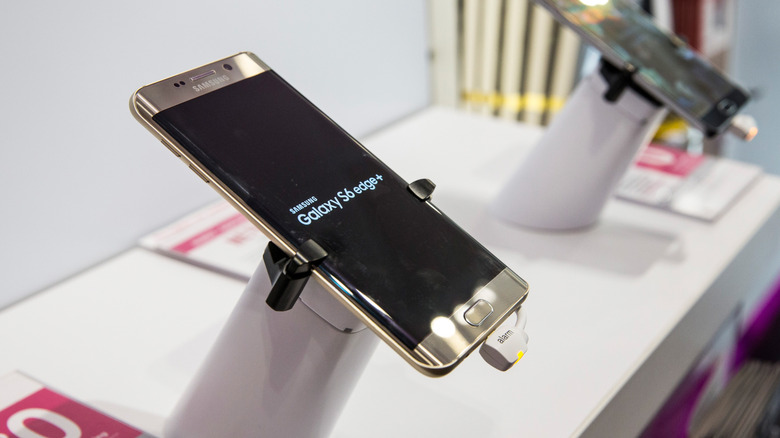
Curved-edge displays were smartphone displays that you only saw on some premium Android devices: screens sporting a 45-degree edge. One example I remember quite well was the Galaxy S6 Edge in 2015, which a friend of mine owned. The trend lasted quite a while, as far as smartphones go; The OnePlus 7 Pro (the phone with the pop-up selfie camera) also had curved edges in 2019. Aside from lending an idiosyncratic appearance, curved screens weren't really making your smartphone much more capable. For example, I remember how they made it easier to adjust some system settings like volume, but ... not much else.
Thankfully, curved-edge displays have more or less gone away, and I can see why. When using my friend's phone, I immediately stumbled upon a raft of issues. For starters, you get a lot more accidental screen touches — which, with today's Android back gesture navigation, would be an utter nightmare. Second, content looks weird on curved screens, and they're magnets for reflections, even when the rest of the display is clearly visible.
Let's be real: This was a status symbol. Kind of like how seeing three cameras on the back of an iPhone tells everyone in a mile radius that you buy overpriced things. But just as carcinization — the tendency for species to evolve into crab-like forms — smartphones seem to have evolved away from gimmicks with limited practical advantage and a long list of disadvantages, like curved-edge displays.
Proprietary charging cables
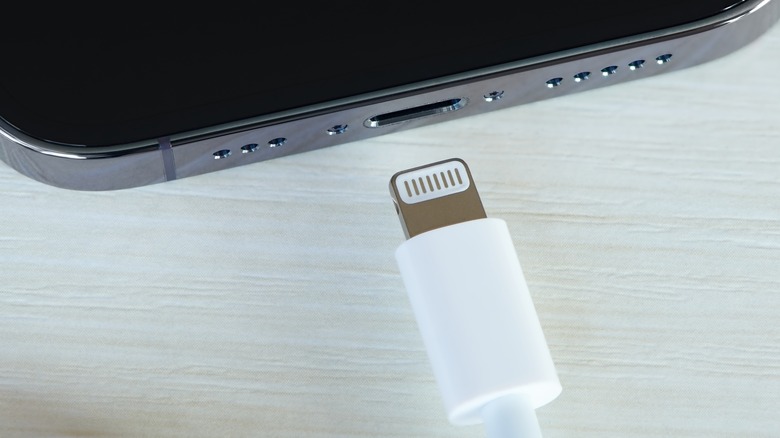
There may soon be USB-C ports on all your devices, allowing you to transfer data and charge everything — even laptops — with one cable. But we shouldn't forget where we came from. Back in the day — as in, not that long ago, the 2000s — most portable devices had their own proprietary charger, primarily mobile phones. If you thought it was annoying having to find a Micro-USB cable when all your friends had Apple Lightning cables, you had it easy. In the aughts, situations could arise where everyone in the room had a phone with a different proprietary charger. Even game consoles, like the Nintendo DS, needed their own special charging brick.
The EU saw a major issue for the consumer and the environment, and unlike most governing bodies, it actually did something about it. The EU proposed a "Harmonisation of a charging capability of common charger for mobile phones" in 2009, suggesting we keep it simple with Micro-USB. Their efforts worked. By 2013, proprietary chargers were becoming increasingly rare in portable devices. Obviously, this didn't stop manufacturers entirely from using their own connectors — Apple is one noteworthy holdout — but the EU eventually made even the company comply with the common charging solution that made USB-C the de facto standard (via European Commission).
It's highly unlikely proprietary charging cables will make a comeback. USB-C is so dominant these days that forcing consumers to buy a special cable would not end well. Still, you never know with the tech industry. Some believe the tech industry removed headphone jacks on smartphones to sell Bluetooth earbuds, so we wouldn't put it past them to try, say, a proprietary wireless charging standard.
Proprietary storage mediums
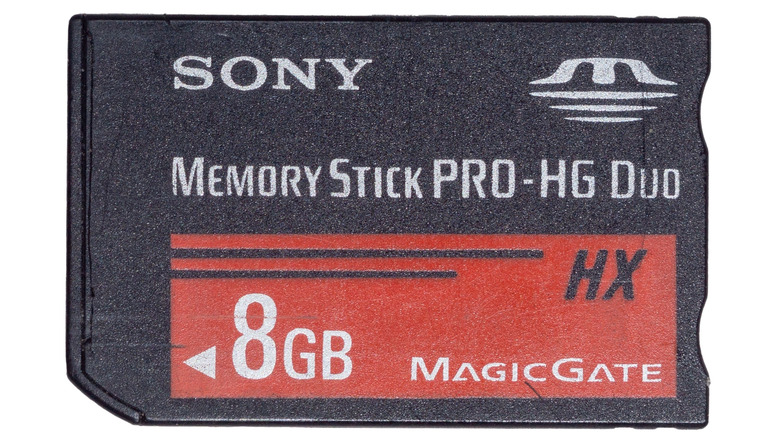
Speaking of proprietary charging cables, the tech industry has an even longer history of trying to make you buy into its own proprietary storage, too — on multiple occasions. Game consoles at various points in history have had proprietary memory cards, like the Nintendo 64. There was Sony's Memory Stick Standard in 1998; other camera brands had memory cards, like the xD-Picture Card and the MultiMediaCard (MMC). One could argue that Betamax and VHS, or HD DVD and Blu-ray, were further examples of differing proprietary storage formats. If you chose a format, you had to stick with it, which meant investing hundreds of dollars into the right hardware; your Betamax player couldn't play VHS, for example.
The PS Vita is a more recent example. The console used special PS Vita cards (similar in appearance to microSDs) that you couldn't use with any other device, and they weren't cheap. Unsurprisingly, this didn't help the handheld's sales, since you couldn't reuse an old microSD card you already owned. An anonymous, self-proclaimed Sony employee did an AMA on the r/vita subreddit in 2020, explaining that going proprietary was to "deter hacks" in response to Sony's 2011 data breach (via Reddit).
Luckily for consumers, proprietary storage formats have largely gone away for good. Small devices can support the standardized microSD format for storage, and larger devices can use standardized SSDs and NVMe drives. Even the Nintendo Switch 2 — Nintendo, a company famous for being as proprietary as legally possible — supports microSD Express.
Hoverboards (and other electric micromobility devices)

Nothing screams the 2010s like the hoverboard. To refresh your memory, these were two-wheeled (sometimes one-wheeled) devices that you stood on and leaned to accelerate and turn. Simple concept, hard to master. They were a seemingly efficient way to transport one person at speed, and I remember seeing these puppies absolutely everywhere. Now? Crickets. Good luck spotting one in public. FEE explains that Razor and Segway were the party poopers, weaponizing their patents to cull any competition even remotely resembling their products from the market. So if you liked 'em, blame corporate America.
However, it's fair to say that hoverboards and their ilk are a tech trend we're better off without for several reasons. First, safety. I personally know a handful of people who nearly seriously injured themselves falling off these things. Anyone who's ridden a hoverboard knows that you need exceptional balance to stay mounted, and that's assuming predictable terrain and no surprises. Users were also pretty reckless based on what I saw at the time. I remember hoverboarders flying down streets at ridiculous speeds, wearing no helmets, and endangering nearby pedestrians — or nearly becoming red smears on car hoods.
Though the numbers are nowhere near the sort you'd get from automobile fatalities, hoverboards have injured thousands of people and killed just over a dozen between 2017 and 2023, compared to other micromobility devices, according to the CPSC. Add in the fact that they're prone to battery fires like e-scooters, and there's not much left in their favor. If they come back, it needs to be a safer, more regulated form that doesn't burn down your house while charging or make walking down the sidewalk a hazard.