

Subaru's More Expensive 2026 Outback Has Divisive Looks, But Its Interior Won Me Over
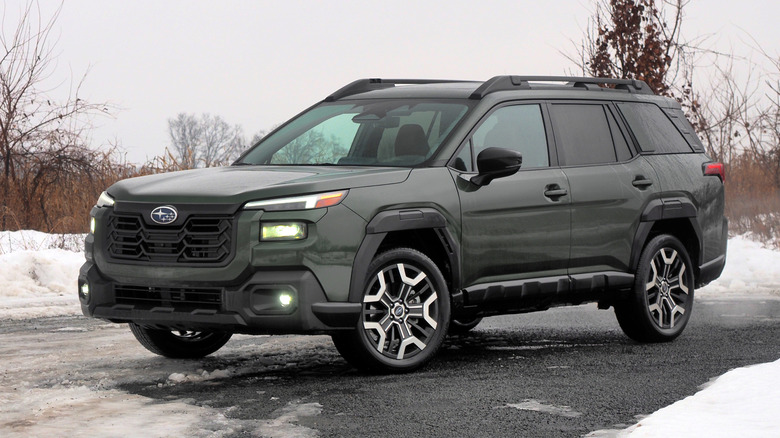
The Subaru Outback had fallen behind. Sure, nobody doubted its four-season steadfastness, nor questioned its appeal to the automaker's faithful audience, but in an age of crossover SUVs the "jacked-up station wagon" aesthetic felt intentionally obtuse. Subaru certainly seemed to agree with that verdict, hence the 2026 Outback getting a blocky glow-up that Minecraft might be proud of.
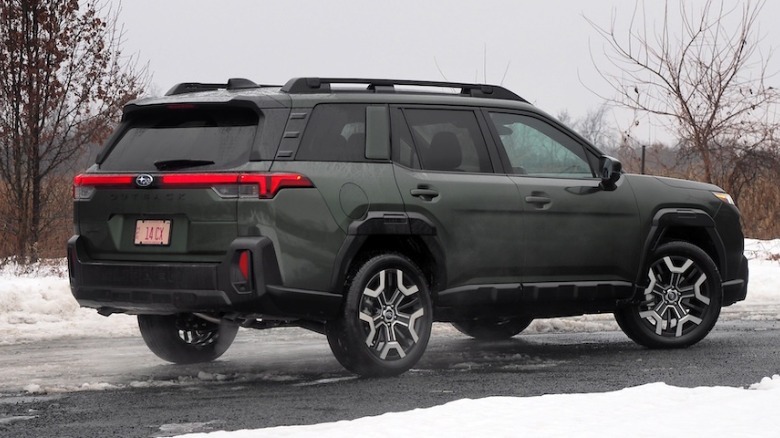
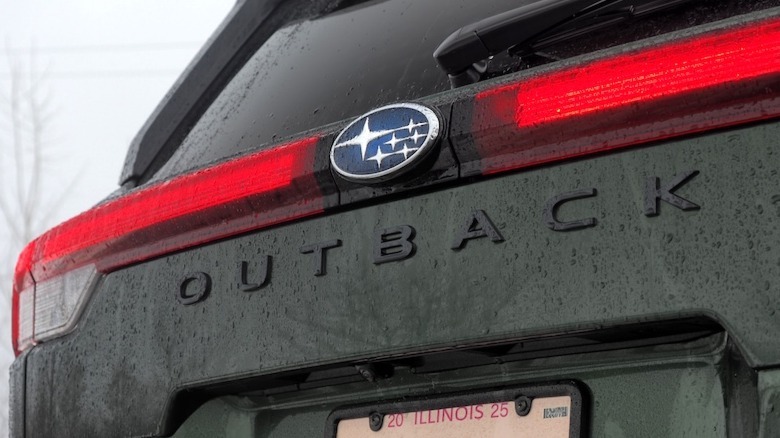
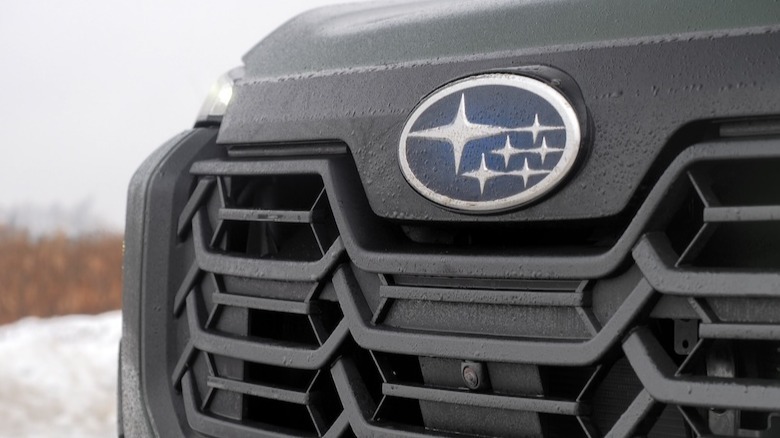
The seventh-generation Outback is taller than before, its sides more upright, its grille blunter. Roof rails remain standard, but someone in Subaru's design studio went wild with cladding: wheel arches, bumpers, and sills are plump with moldings, their surfaces an undulating topography of bumps and protrusions. Even the most placid 2026 Outback looks more over-enthusiastic in its extrusions than trail-centric trims of rivals from Honda, Toyota, and others.
 Chris Davies/SlashGear
Beauty is in the eye of the beholder, but money talks. Gone is the old base trim, meaning the 2026 Outback Premium is the point of entry (from $36,445 including $1,450 destination) with a roughly $2k uptick over the 2025 version of that trim. That's about $5k more than the old, cheapest Outback. A 2026 Outback Limited XT — with a more powerful turbocharged engine — is from $45,815; the off-road-eager Wilderness is $46,445 with the same engine (both including destination). Finally, this top-spec Touring XT is $49,840 all-in, including its $395 Deep Emerald Green Pearl paint.
Adequate power and reliable performance
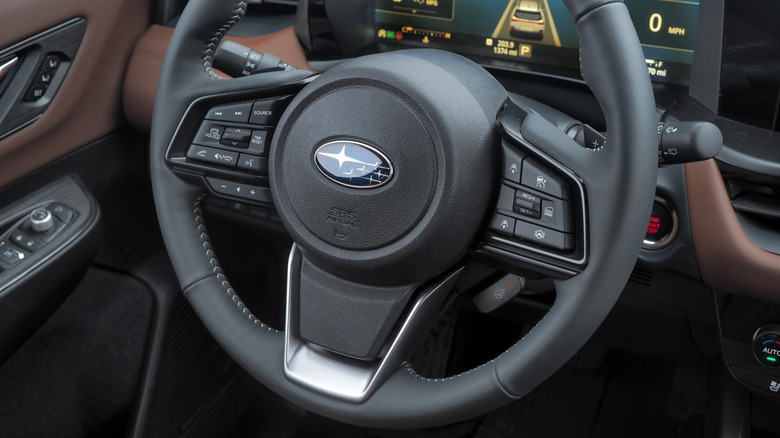
Beneath the broader, flatter hood there's Subaru's BOXER gas engine. It's either 2.5 liters and naturally aspirated, with an underwhelming 180 horsepower and 178 lb-ft of torque, or 2.4 liters and turbocharged in the Wilderness, Limited XT, and Touring XT trims, good for 260 horsepower and 277 lb-ft of torque. Either way, it's combined with standard all-wheel drive and a CVT. The latter has a faux-manual mode, which allows you to click through eight virtual gears with the paddles on the steering wheel.
 Chris Davies/SlashGear
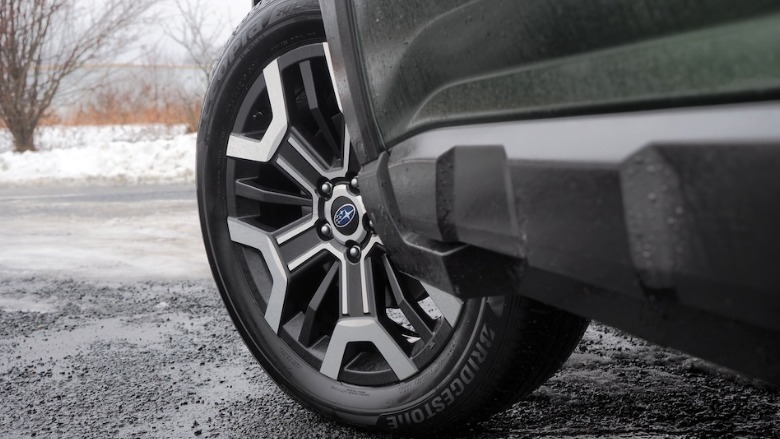
"Perfectly adequate" describes Subaru's turbo-four well. Its arrival coincided with a Midwest winter, with plunging temperatures bringing a healthy amount of snow and ice. Not the sort of weather you particularly want to test 0-60 times in, but the Outback Touring XT — on its 19-inch all-season-wrapped wheels, also standard on the Limited XT; the Premium, Limited, and Touring get 18-inch wheels; the Wilderness gets 17 inches with all-terrain rubber — shrugged off the low-traction surfaces.
 Chris Davies/SlashGear
With a healthy 8.7 inches of ground clearance (or 9.5 inches on the Wilderness) unplowed roads weren't a problem. Even in moments when traction briefly failed, Subaru's AWD neatly funneled power to the right wheel. There's an X-Mode which promises more nuance on low-grip surfaces, and the Wilderness has an even more advanced version intended for trails, but honestly, I never needed it. Nor did I miss the omission of a dedicated 'sport' mode, or the old Outback's louder soundtrack from under the hood.
The best upgrade is inside
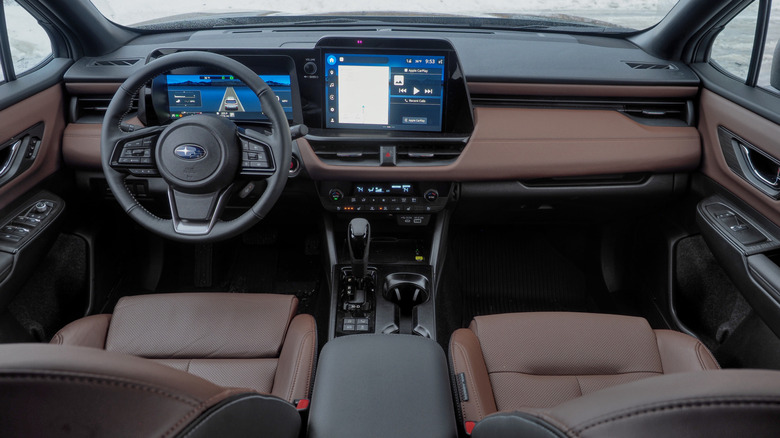
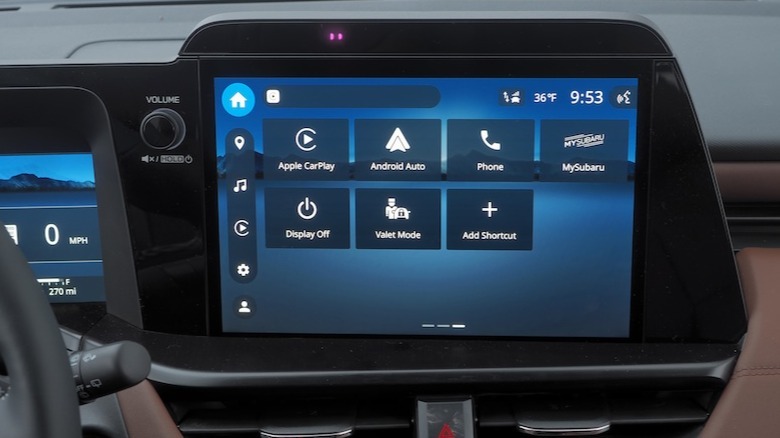
For all the exterior changes, the biggest — and most meaningful — revamp is on the 2026 Outback's dashboard. A new infotainment system addresses arguably the biggest, and most frequent, complaint about Subaru cars in recent years: that its touchscreen, though large, was generally sluggish and confusingly laid-out. Consider me gleeful at the new 12.1-inch panel perched above the Outback's soft-touch dash.
 Chris Davies/SlashGear
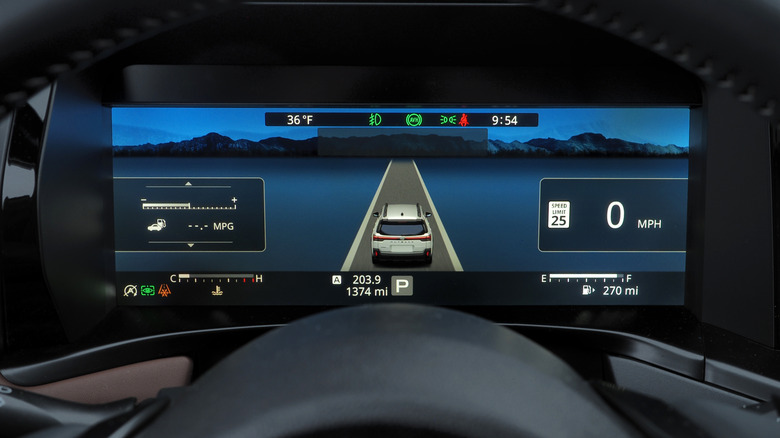
It looks fresher, runs faster, and all but the base trim gets navigation as standard. A 12.3-inch digital cluster display is standard across the board, too, as are wireless Apple CarPlay and Android Auto. All but the base trim get a Harman Kardon audio system.
 Chris Davies/SlashGear
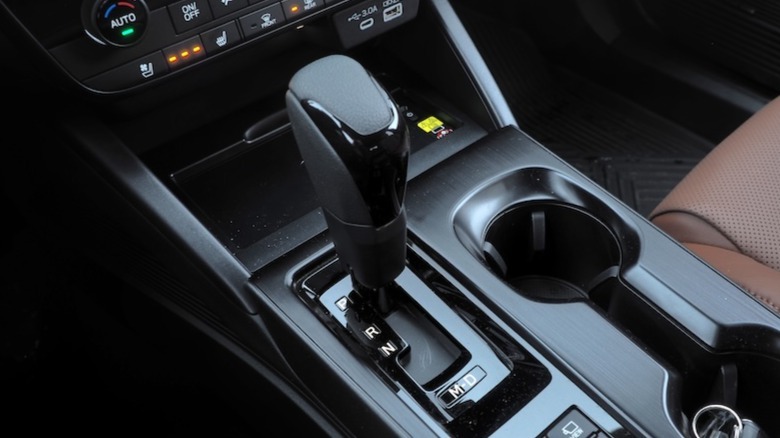
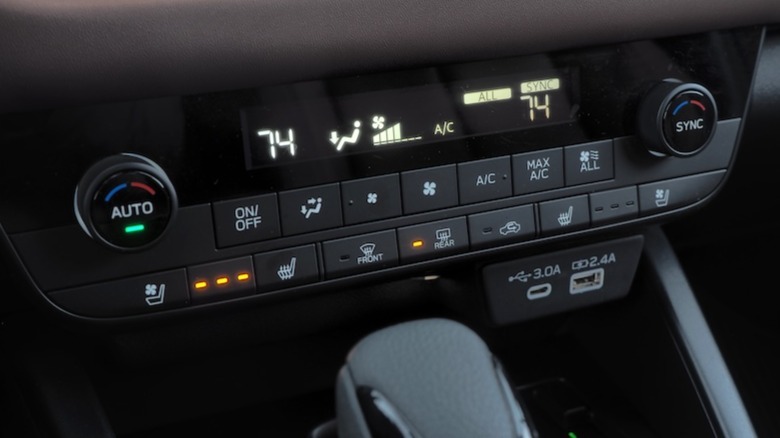
Even with the new touchscreen, Subaru has actually added more physical controls for things like the climate control. They get a dedicated panel — including switchgear for this Touring XT's heated and cooled front seats, which at their most potent can border on almost uncomfortably hot — while the transmission selector remains a chunky lever, not some little electronic toggle.
So many buttons, so much space
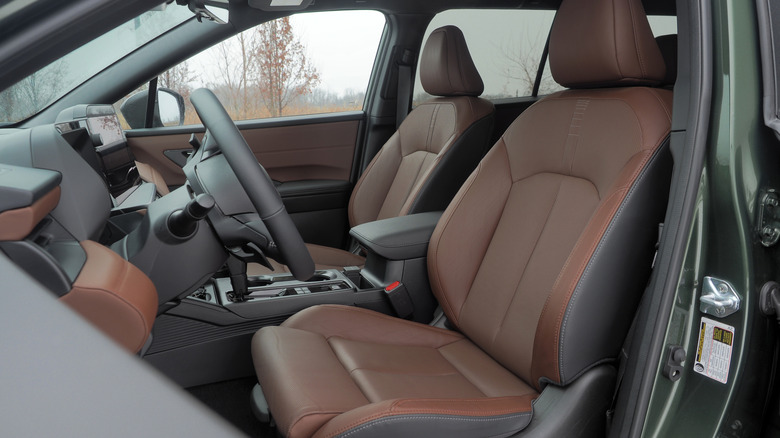
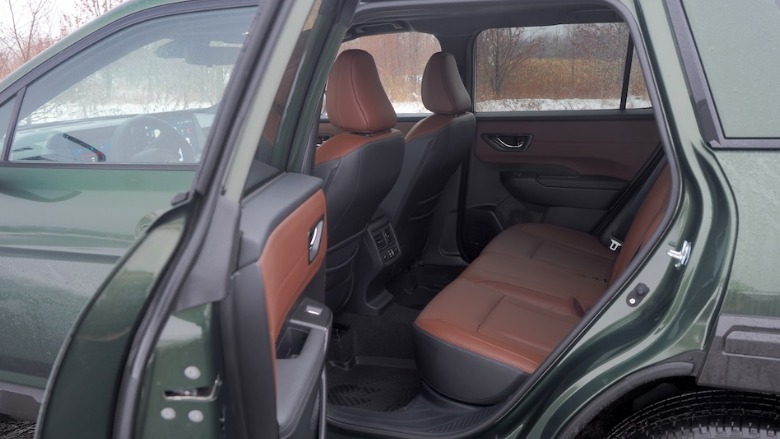
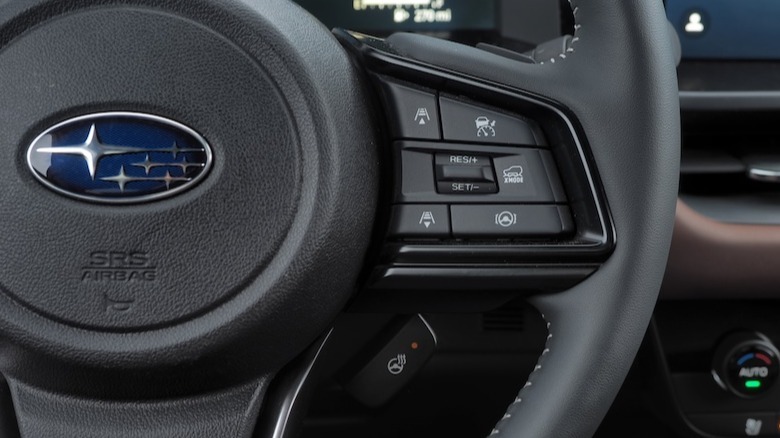
All but the base Premium trim get heated rear outboard seats; a heated steering wheel is standard on most trims, and optional on the Premium. It all feels sturdy, though — even with fancier Nappa leather seats on the upper trims — leans more on workaday than lavish. That includes solid plastics for the steering wheel switchgear and stalks, chunky buttons, and a general theme of function over form. I appreciated the sizable door pockets, even if the wireless charging pad proved a touch too slippy to keep my iPhone in place.
 Chris Davies/SlashGear
Subaru's EyeSight ADAS is standard on all trims, with adaptive cruise control with lane-centering, emergency lane-keep assist and automatic emergency steering, and other features. Blind spot warnings are also standard; Touring, Limited XT, and Touring XT trims get a 360-degree camera as standard, too (it's optional on Wilderness). Select trims get a hands-free highway assist system. Overall, I found EyeSight to be less finicky and needlessly vocal than in previous iterations, though poor weather did throw up the occasional warning that its sensors were obscured.
 Chris Davies/SlashGear
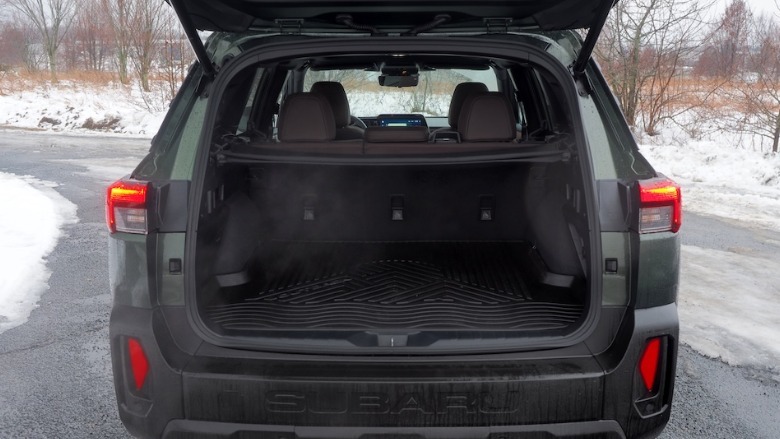
Tug the big, easily grabbed handles to drop the rear seats down, and the 34.6 cu-ft of trunk space expands to 80.5 cu-ft. That's 10 cu-ft more than the maximum a 2026 RAV4 offers, and 4 cu-ft more than a 2026 CR-V. Every Outback trim gets a handy removable cargo-area tray, making cleaning up straightforward; all but one trim gets a storage section under the trunk floor (the Wilderness swaps that for a full-size spare tire).
A hybrid would seal the deal
What might keep you running to the Toyota or Honda dealerships, though, is the absence of an Outback hybrid. While the Crosstrek and Forester are both available with gas-electric powertrains, so far the technology has yet to reach the Outback.
 Chris Davies/SlashGear
As a result, the Subaru is markedly thirstier than its hybrid counterparts. The non-turbo Outback is rated for 25 mpg in the city, 31 mpg on the highway, and 27 mpg combined; the more potent turbo version sees those numbers dip to 21 mpg city, 29 mpg highway, and 24 mpg combined (or 23 mpg combined for the Outback Wilderness). My own, mixed driving of the non-Wilderness turbo model landed at 21 mpg.
 Chris Davies/SlashGear
Meanwhile, a 2026 RAV4 hybrid is rated at 39 mpg combined, and a 2026 CR-V hybrid at 37 mpg combined.
2026 Subaru Outback verdict
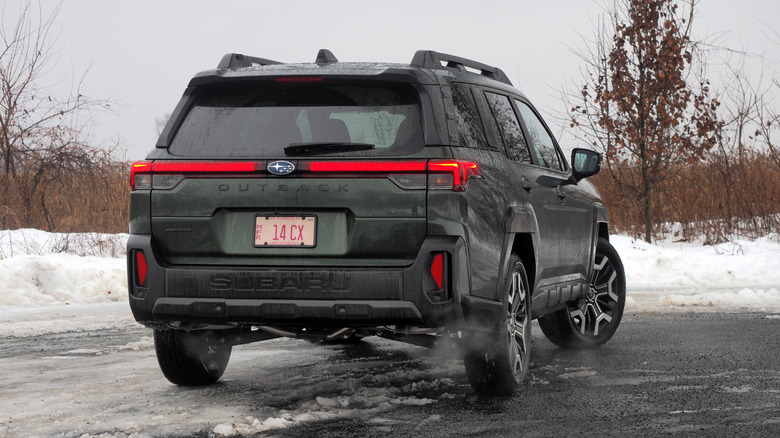
Much as I liked the design language of the old Outback, it's hard to conclude anything other than this new, SUVified version being a timely evolution for the nameplate. While some of the detailing may seem fussy, it remains practical and capacious, not to mention surefooted in inclement conditions. The cabin is sturdy and unafraid of outdoorsy pursuits but gets a thoughtful tech upgrade that fixes old flaws while doubling-down on what worked.
Really, only the absence of electrification rankles, but you have to conclude that Subaru is aware of that. The excellent Crosstrek Hybrid has demonstrated that the automaker's "AWD (almost) everything" strategy plays exceptionally well with a little EV boost. It's hard to imagine Subaru leaving money on the table when it comes to doing the same for the Outback.
 Chris Davies/SlashGear
Until then, the 2026 Outback Limited XT would be my pick: the extra grunt of the turbo engine, and a sensible array of creature-comforts but without the near-$50k price tag of the Touring XT. Argue the looks all you like, but you can't question the new Outback's vastly improved cabin tech and welcome improvements in refinement.