

7 Era-Defining Cars Hardly Anyone Talks About Anymore
Some cars were every bit as popular as the Mustang and Corvette in their day and played just as important a role in shaping the automotive industry. Yet, for one reason or another, their names rarely come up in conversations anymore. These are the cars that came out early, introduced new ideas, and did things that few other automakers were willing to try at the time.
In this list, you'll find an all-electric sports car that proved a battery-powered ride could be exciting, a hot hatch that gave American drivers an early taste of the segment, and a minivan that popularized the modern formula, along with a compact car, a passenger car, a front-wheel-drive car, and a four-wheel-drive car. Each one here changed how people drove, shopped, or thought about what a car could be long before those ideas became normal, coming with features that felt futuristic for their time, making them fierce around their rivals in their generation.
As for why they faded, the reasons differ. Some were low-volume, some lost their brands when companies merged or shut down, and others were outgrown by the segments they created. Whatever the cause, their influence is still on the road today.
Tesla Roadster
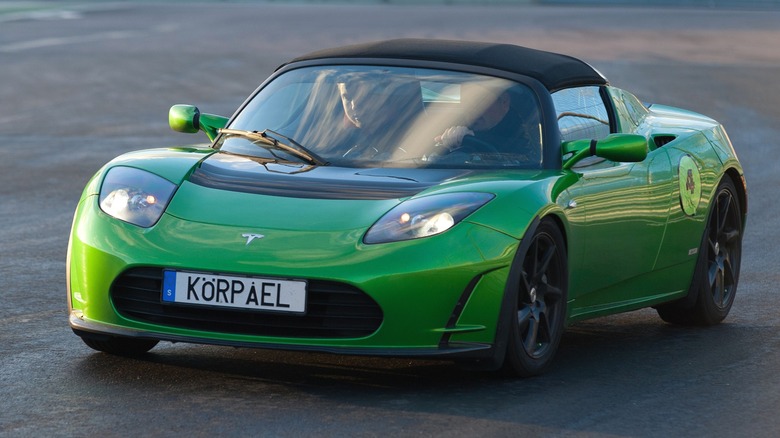
Before the Model S, Model Y, and Cybertruck came along, there was the 2008 Tesla Roadster -– a compact, two-door, battery-powered car so far ahead of its time that nearly everything it did was a genuine breakthrough, and all of this happened was long before Tesla became a household name.
Underneath, the Roadster came as a two-wheel drive on a Lotus Elise platform, which gave it a familiar sports-car foundation, but then it did something almost nobody else was doing and ditched gasoline entirely. In its place at the middle of the car sat a 53 kWh electric drive unit, which was good for about 248 hp with help from roughly 6,800 Li-ion laptop-like battery cells working quietly in the background. Behind the wheel of this two-person sports car, you could go as far as 244 miles and max out at 125 miles per hour at the same time without having to make a stop.
Unfortunately, the roadster's run was short, which is one reason it keeps slipping out of conversations even after rolling out in various trims along with upgrades continuously for four years. However, out of the 2,450 units made, some are still around, and they are going for good second-hand prices, just that the cars that followed quickly took over the story, leaving very little room for it to stay in public memory until one 2008 model changed hands for $250,000 in 2022.
Volkswagen Rabbit GTI
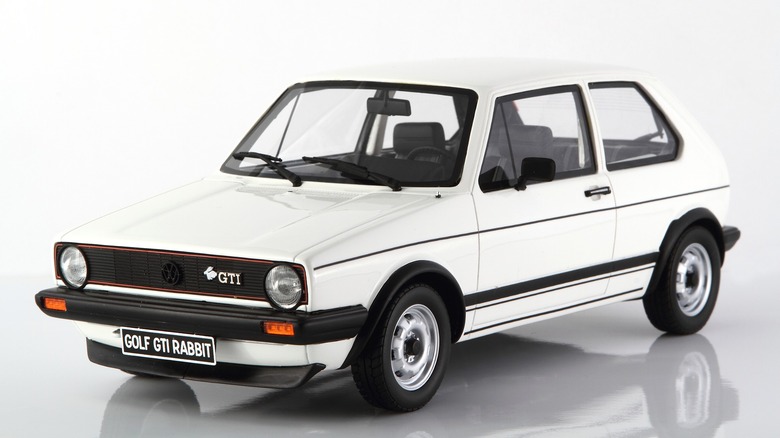
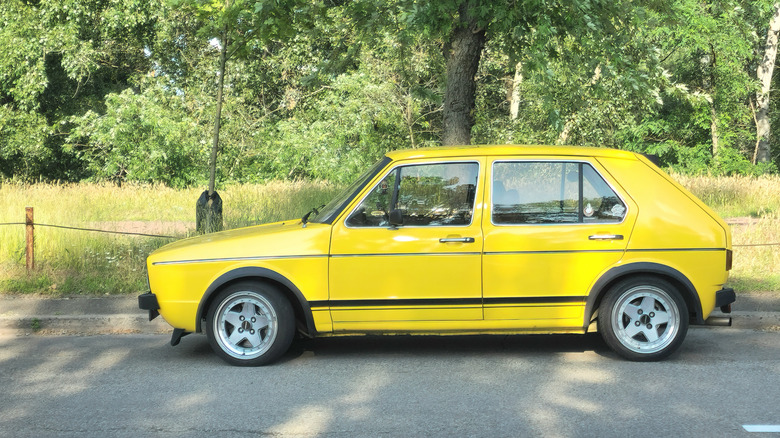
The Volkswagen GTI or Rabbit for the North American market was officially produced at the company's Pennsylvania facility which later rolled out in 1983. When the Rabbit arrived, it was all over television, which is one of the reasons so many Gen X drivers still remember the GTI, especially from their high school days.
Despite its modest size and a curb weight at around 1,800 pounds, the Rabbit GTI had enough performance from its 1.8-liter four-cylinder engine to back up its sporty looks. The engine came with eight valves and fuel injection, sending about 90 horsepower to the front wheels through a five-speed manual, with the engine able to spin up to a 6,500 rpm before hitting its limit and a torque of 105 lb-ft, which was enough to carry it to a top speed of roughly 113 miles per hour in a way few cars of its time could.
By 1984, Volkswagen had pulled both the bunny-themed nameplate and the earliest version of the GTI from market entirely, but the GTI itself carried on through eight generations, which helps explain why the original gets overshadowed. That's a shame, considering it left behind about 461,690 units in two different door styles that are still regarded among the best-looking cars Volkswagen has ever built.
Plymouth Voyager/Dodge Caravan
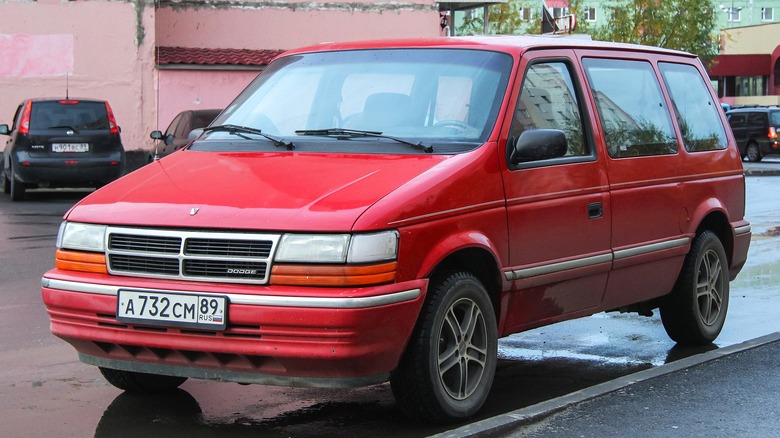
Chrysler did more than add another family car when it launched the Plymouth Voyager and Dodge Caravan for the 1984 model year, back in 1983. What the company actually did was popularize the modern minivan by dropping about 210,000 vans under those two near-identical American nameplates, each built with a front engine, K-Car structure, and room for seven people behind four doors. They were roomy, high-roofed, and still behaved like normal cars through their front wheels, giving families something the old station wagon never quite delivered on.
Mechanically, these vans came with power-assisted brake pads, a 2.2-liter four-engine and an adjustable steering column setup that made daily driving easier, along with a manual five-speed gearbox. Buyers could also step to a four-cylinder with 2.6 liters of displacement, along with cruise control and a three-speed auto gearbox. Out on the open road, the federal fuel-economy rating comes at 27 mpg, but real-world mileage was usually less.
Buyers snapped them up so quickly that by the 1990s, they had become tied to middle-class life across the US. Just like the Rabbit, the Dodge Caravan was a high school memory for plenty of millennials, even though every other automaker had jumped into the segment with its own take by then. Before long, the Voyager name was shut down entirely in 2000, while the Caravan carried on for four more generations.
Ford Probe
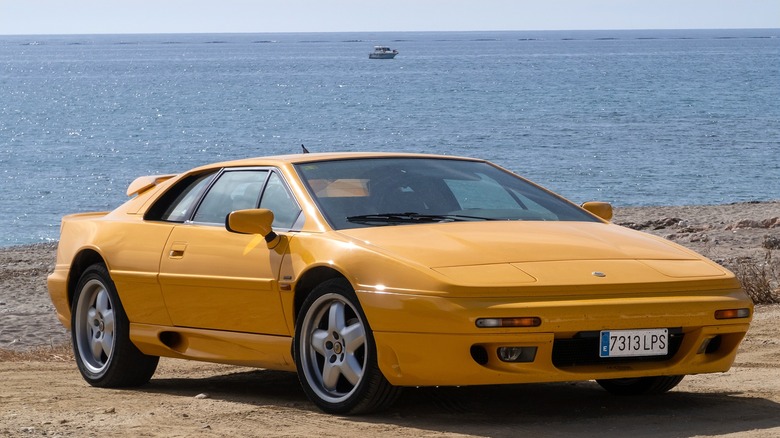
The Ford Probe was supposed to take over the Mustang when the first model eventually rolled out in 1988 as a coupe, but that never happened, even though it came in two different engine types. It looked the part, had that muscular stance you'd expect from a Ford, and was designed in Mazda's factory plant with some of MX-6's parts, which makes sense given Ford's partial stake in the Japanese company. The Probe with the 3.0-liter engine made about 200 hp through its front wheels, and that stepped up to 270 hp when the second generation kicked off with a 3.2-liter V6 and without the Mustang's look in 1993, but that didn't last because of their 1997 exit from the market after selling roughly 310,000 units.
For a look at its sporty side, the 1989 GT model is the best example. This one also came in the 2.2-liter four-cylinder standard engine with a trio of valves for each one backed by a five-speed manual gearbox, along with extra stuff like engine management electronics and the Twin Trapezoidal Link setup from Mazda, and a spare air inlet. At about 2,940 pounds, it could get to a top speed of about 134 mph and still manage 26 mpg on the highway according to the EPA, with just 110 hp. But however, if that wasn't enough, add-ons like turbochargers and other control upgrades could push it to about 145 horsepower and 190 lb-ft of torque.
Nash Rambler
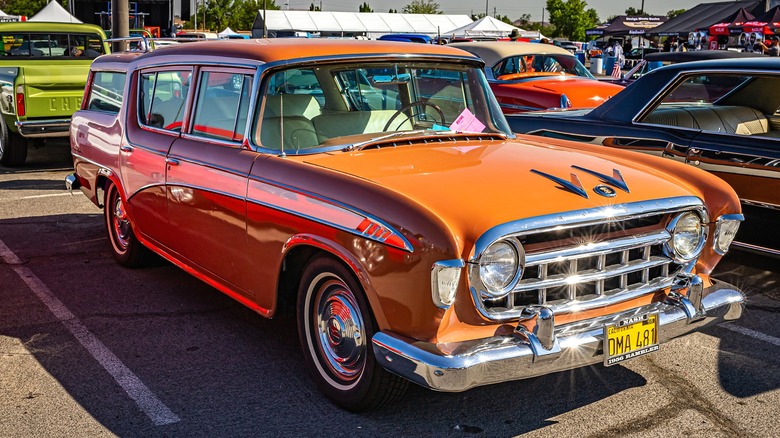
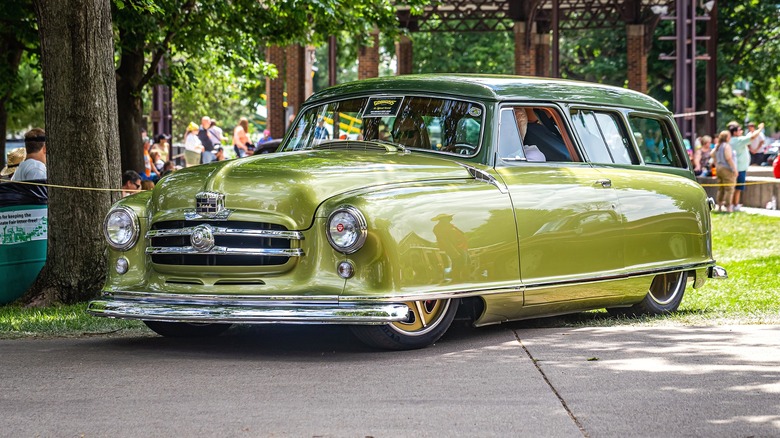
The Nash Rambler only happened because Nash-Kelvinator decided to bring back the Rambler badge, which had been sitting idle since its original run back in 1914. The bet paid off right away. In 1950, the Rambler was the only compact car in the country, and over 11,000 buyers took home one. It was worth about $1,800 back then, and today clean examples go for an estimated $25,800. Nash built it with the common single-piece body and frame, a construction method that was catching on at the time, and that approach let the finished car carry five people despite weighing only about 2,500 pounds.
Power came from a 173-cubic-inch six-cylinder making 82 hp, which sent its output through a three-speed transmission on a wheelbase of 100 inches. As things kept evolving, Nash kept widening the lineup with a growing list of extras in body types: a heater, brakes with power assist, tailored seat trim, an affordable cooling system, a radio, and steering that took the effort out of turning. Those upgrades clearly didn't hurt, because Nash moved upwards of 70,000 Ramblers in 1951 alone, and two years later, roughly 135,000 of them on the road. Sadly, this underappreciated classic faded out of the market in 1955, shortly after the AMC merger.
AMC Eagle
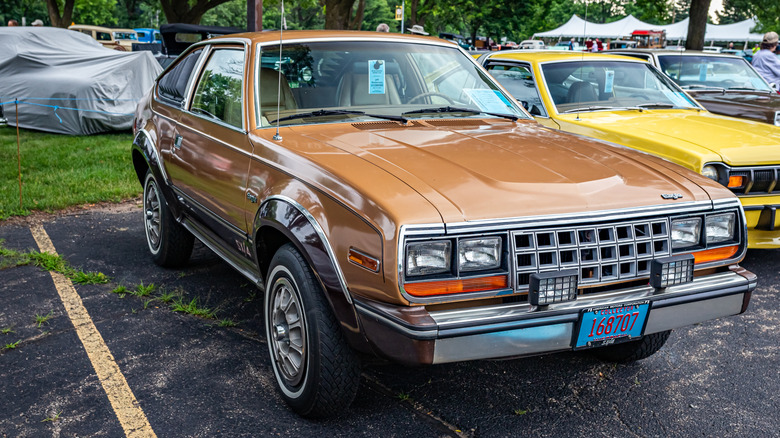
AMC's Eagle first began rolling off the line in 1976, but it didn't reach showrooms until 1980. When it finally did, it was well ahead of its time. Buyers could load it up with comforts like power steering, a pair of remote-adjustable side mirrors, leather upholstery, auxiliary driving lamps, a raised ride height, and electric door locks. Beneath the hood sat a 258-cubic-inch engine with six cylinders, churning out about 110 hp and paired with a three-speed auto gearbox that sent power to all corners.
Back then, buyers could pick from several body styles, with prices running from about $7,549 to $7,718 depending on any of the three trim levels you go for. From there, the family kept growing, with an optional four-cylinder, open-top cars in 1981, and an updated Select Drive 4WD setup in 1985. By 1987, American Motor Corporation had a new owner, and the Eagle was shelved in 1988 after moving only about 2,306 units that year, which brought the total to about 200,000 units.
That ending is one reason why the Eagle drifted out of the conversation, even though buyers had shown plenty of interest, with well over 43,000 units sold in its first two years. Plenty of survivors are still around today, partly because these cars got solid corrosion protection during production, so if you got one tucked away and you're down to sell, expect roughly $20,000 if it is a 1982 model.
Oldsmobile Toronado
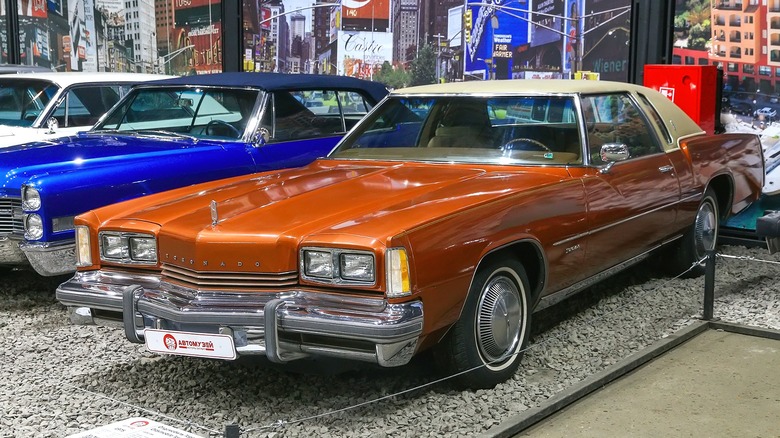
Some cars from the '60s carry a bit of muscle-car attitude and only look cooler as the years pass, and the Oldsmobile Toronado is one of them. Olds drew it up in 1962 and first put it on sale for the 1966 model year as a six-seater coupe sitting atop the E-body architecture. It also arrived with the Unitized Power Package and other features that helped push safety forward at the time, giving it plenty of substance beyond its looks.
Under the hood sat a 7.0L Rocket V8 backed by a self-shifting transmission with three forward gears, delivering its full 385 horsepower to the front axle once the engine reached 4,800 rpm, with exhaust leaving through a dual-pipe setup. That output traveled through the Hy-Vo chain system, which was enough to move a car weighing about 4,500 pounds up to around 135 miles per hour. Stopping all that was another story, since the Toronado rolled out with old-school drum-style brakes, a reminder of how new some of these ideas still were back then. The next update came in by 1967, followed by an output bump to 400 hp by 1970, and when a different generation showed up in 1986, Oldsmobile moved about 15,924 of those cars before retiring the lineup for good in 1992.
Methodology
To build this list, cars had to be standout choices based on their significance during their respective eras and how much of that influence has faded from today's automotive conversations. Each vehicle had to meet two criteria: it must have made a meaningful difference in how people drove, shopped for cars, or thought about what a vehicle could be, while also receiving considerably less attention today than the better-known models that followed.
The initial shortlist was then cross-referenced with current automotive coverage, enthusiast communities, and online forums to gauge how much attention these cars still receive. Recent articles, ongoing discussions, and mentions across these platforms helped to establish which models remain part of the conversation and which have largely slipped under the radar. Those that generated less discussion while still having a significant impact on the industry were considered for the final selection.
To verify each car's history, specifications, and lasting contribution to the industry, all fact checks were thoroughly cross-checked from Automotive publications and valuation platforms like Autoevolution, Hemmings, Hagerty, MotorTrend, Motor Authority, Car and Driver, Classic.com, and Edmunds.