

5 Cars That Will Take Gen Xers Back To Their High School Days
It's funny how sometimes we slip up and think that the 1990s was still only ten years ago, isn't it? Yes, we're getting old, and our sincerest apologies for reminding you of that fact. But while our bodies might age, that doesn't mean the cars of yesteryear have lost their impact. In fact, Generation X grew up in probably one of the most crucial transitional times in automotive history, right off the heel of the worst economic downturns of the 20th century.
The 1973 Oil Crisis brought the United States transportation industry to its knees, forcing it to switch from muscular V8 full-size cars to compact, cheap econoboxes that were lightweight and sipped gas. Car design explored all new directions — discussions about digitization, miniaturization, new safety regulations, fuel economy, and more, creating one of the most iconic eras in automotive history. These were the days where boxy vaporwave aesthetics flowed like wine, where pop-up headlights joined in with rear window louvers and banging stereo systems. Welcome back to the 1980s.
Generation X officially lasted from 1965 to 1980, so we're going smack in the middle of that for this list — 1972. Which means that high school age is around the late-80s, with a 1990 graduating class. Forget what cars were the fastest or most iconic; we all love the Ferrari Testarossa and Lamborghini Countach. But unless a kid had stupid money, you won't ever see one in your old high school parking lot.
Instead of exploring the objectively best cars, we'll instead dive into the Walkman-filled world of the boots-on-the-ground teenager. If you went to high school in this era, you'll immediately recognize these cars, if not have owned one of them, yourself.
The hand-me-down family car: Volvo 240-series
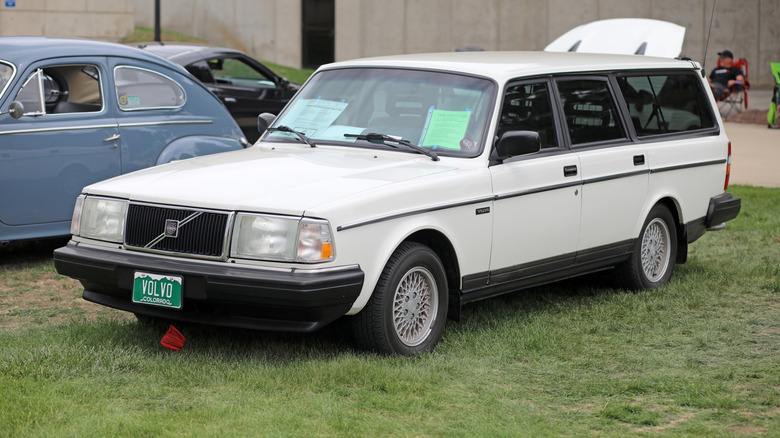
Let's be real, when you're a junior in high school, chances are you're not able to afford your own car. Work typically doesn't afford anything that nice, but if you're lucky, then your parents might either buy you something or give you their old car, and what better car for that purpose than the Volvo 240? Why is that? Because it's safe — okay, it's not safe by today's standards, but we're talking about the era of Ford Pintos and Chevrolet Chevettes here.
The Volvo 200-series came in a variety of flavors, but most of us know the 240 lineup from any angle. For one, it's arguably one of the most aggressively boxy vehicles on the planet, with memes and jokes about the Swedish brick still alive and well today. Over 2.8 million models were produced in various trims, engines, and body configurations, ranging from two-door coupes to that timeless wagon. These things were so popular that they're one of few models that actually outlived their replacements, in this case the Volvo 700-series. And they were absolutely perfect for first-time high-school owners.
First of all, these things were shamelessly slow and forgiving. They're big, lazy wagons with plenty of room for anything from drumsets to furniture for college. They're perfect cars for road trips, and they're famous for being safe, and we all know that our parents and grandparents just want us to be safe. Yes, even in the 1980s before we had geotags and apps to track our phones. They got from Point A to B reliably and safely, and were physically incapable of racing anything except a bicyclist. Good enough for a cautious parent.
The car for big families: Chrysler minivans
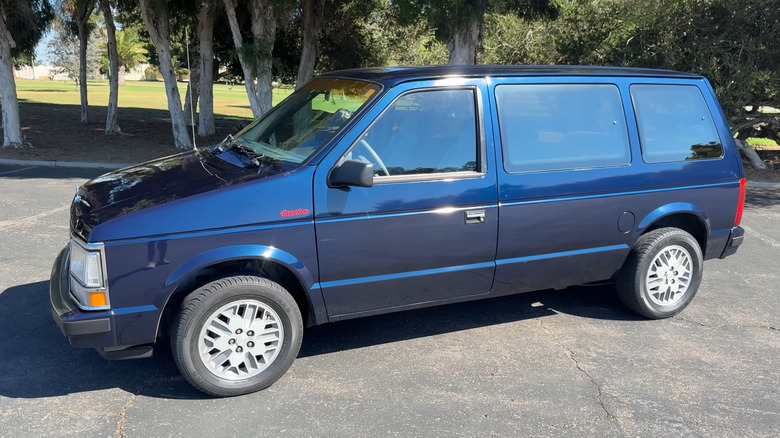
Built on the platform known internally as the Chrysler K-car, the Dodge Caravan and Plymouth Voyager were the true progenitors of the minivan explosion during the 1990s. These things were incredibly innovative and influential, even sporty — you could order one with a turbo and five-speed stick in 1989. There simply wasn't anything like this on the road back in 1984 when these were introduced.
The concept was straightforward enough — take the family hauling capability of a full-size van like a Ram or Econoline and shrink it down to fit in a typical suburban garage. Give it a contemporary body with that glorious optional simulated wood-grain and wire-spoke wheels framed in whitewalls. It's bigger and roomier than a wagon but smaller than the full-size stuff, combining the looks of both with cupholders aplenty, dual-zone air, and plump velour three-row seating.
These were smash hits when they were introduced, being one of the crown jewels in Lee Iacocca's impressive career — yes, the same Iacocca who was integral to the development of the Ford Mustang. While a Fox-platform Mustang was certainly cooler at the time, the fact is that you can't fit eight people in one unless you do some interesting Tetris-like stacking in that tiny rear seat. So if you didn't have a car of your own, and your baby-boomer parents gave you plenty of siblings, guess what you're arriving to school in? Some say that if you listen closely, you can still hear the sound of that sliding door clicking into place when it opens up and five teenagers come flooding out, spilling gummi-bears all over the parking lot.
The rich kid's sports car: Datsun/Nissan Z-cars
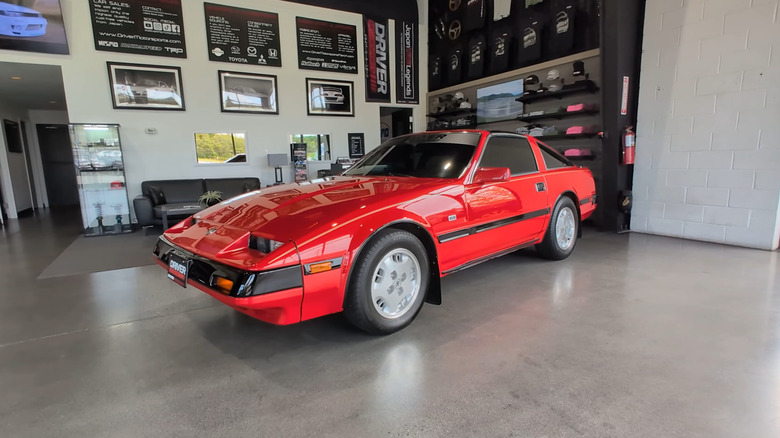
This is the car you got if you had more money than your average Camaro owner — the Datsun 280ZX was a few thousand bucks more expensive. These were more likely in the hands of admin staff or kids with particularly well-off families, and they were cool. Really cool; a newer Z31 300ZX, for example, had what's known as Electronic Voice Command, which is basically a little phonograph that yells at you when the door is ajar or the handbrake is up, stuff like that. It even had an optional Electronic Equipment Package with a full digital instrument cluster, one of the best dashboards that will never return.
Datsun Z-cars were the pocket Corvettes of their day. The C4 also had its own digital display, plus two extra cylinders, plus actual pop-up headlights, plus that same optional T-top, and so on. But the Z enjoyed a level of refinement beyond the C4 that placed it as a genuine threat, especially when the Z32 arrived in 1989. These were potent, turbocharged sports cars that looked contemporary and sharp, but left plenty of room for those classic '80s vaporwave vibes. The 1984 50th Anniversary Edition with the turbo in lowercase plastered along the side of those low-slung skirts is a particularly evocative image, complete with those turbofan rims.
Sure, the Z-car wasn't exactly common to see in a high school parking lot, but they did turn up. Estimates state that Nissan sold around 270,000 Z31s in the U.S. alone. And when they did appear, that image was likely stunning next to the Oldsmobiles and Volkswagens.
The fun compact: Volkswagen Rabbit
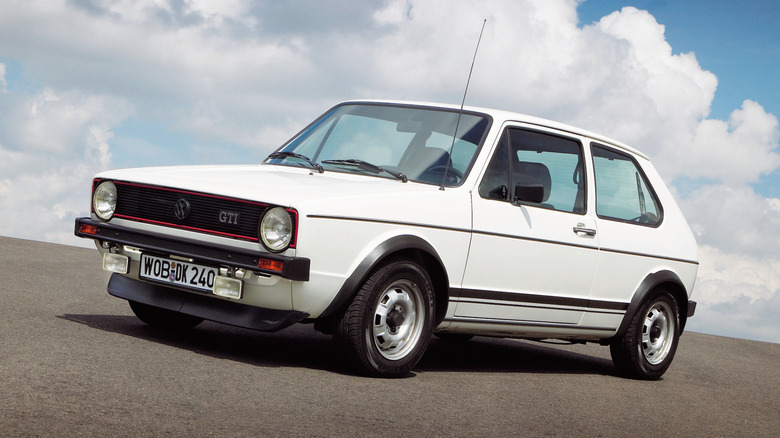
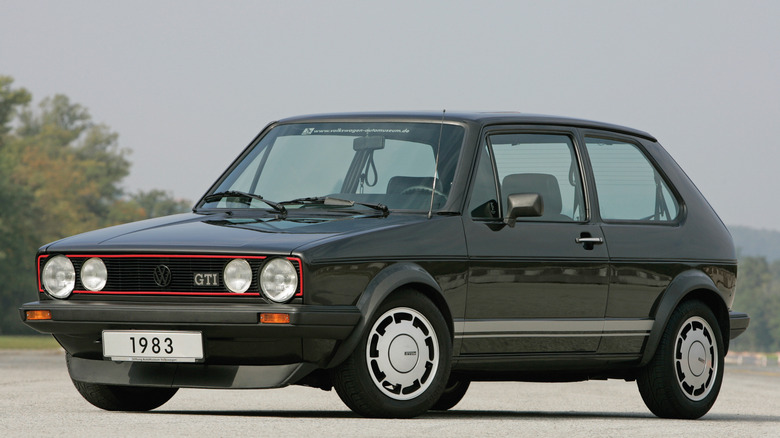
Now this is an iconic 1980s hot hatch, if ever there was one. And they weren't even 1980s, not entirely, anyway — Volkswagen built these things beginning in 1974, envisioning the Golf (or Rabbit in North American markets) as a successor to the Beetle. Needless to say, a successor to the Beetle had some mighty big shoes to fill, but the Rabbit arguably succeeded with flying colors.
Like the Beetle, the Rabbit was cheap, light, slow (in standard trim), but also far more practical. Gone was the rear-engine air-cooled layout, replaced with the quintessential hatchback configuration shared with other giants like the Honda Civic and Austin Mini. It was a winning formula, too — a transverse, front-wheel drive layout coupled with a basic, but roomy passenger compartment makes for an incredibly practical and fun daily driver. It's a few of many reasons why these first-gens are so beloved today. That and Giorgetto Giugiaro's utterly sublime design, which seemed to absolutely revile curved lines.
The first-gen Golf/Rabbit, along with the Mk2 that followed, were both smash successes and became some of Volkswagen's top-selling cars ever produced. These early generations shared much of the same aesthetic — small, boxy hatchback; but rightfully earned a reputation for being fun and engaging drivers' cars. Especially in top trim levels, these little guys were absolute riots to drive quickly, and were generally affordable enough new or used to fit a budding enthusiast's budget. Whether as a basic daily driver for the average teenager or a hopped-up tuner for someone more discerning, these were the Converse All-Stars of the high school parking lot.
The car everyone wanted: Pontiac Trans Am
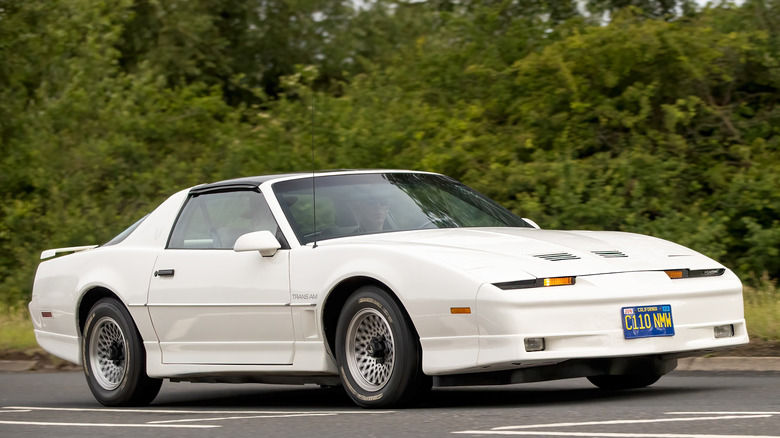
Of course, for every fifty kids with a Rabbit, there was the one kid with the mullet, thick-frame sunglasses, double-denim jacket and jeans, and Pontiac Firebird Trans Am keys hooked to a pocket chain. Or the Camaro — it's not like kids were particularly picky, as long as it was cool. The Trans Am was the coolest of the bunch; introduced in 1982 with a 5.0-liter four-barrel carbureted V8 as standard, Pontiac emphasized these cars' aerodynamic capabilities first and foremost, boasting its impressive 0.34 Cd drag coefficient. Not that teenagers cared because just look at it. Look at it next to your beige 1980 Plymouth Champ and weep.
Pontiac heavily advertised the Trans Am in movies and TV shows as well, only further bolstering their image as the cool kids' car. "Knight Rider," "Big Trouble in Little China," "Smokey and the Bandit" and its sequels — this was Pontiac's second finest hour besides the Muscle Era by a long shot. Okay, maybe third finest hour, because the late-2000s had cars like the Solstice, GTO, and G8. Yes, the latter two are actually different cars beyond just the door count.
Regardless, there's no debate that these were some of the most evocative 1980s aesthetic designs ever created. You could never in a million years mistake these as anything other than 1980s sports cars, and a lot of that is due to its insane popularity with the youth of its day, and it helps that it was accessible. Sure, you likely would never own a Countach unless you make big money, but you could reasonably snag a Trans Am, and that everyman's sports car vibe carried weight.