

Every Spare Tire Type & How To Tell Which One You Need
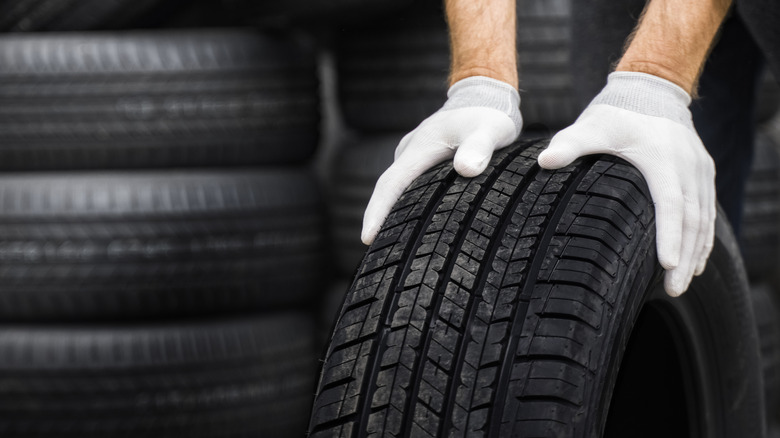
Most people have probably driven a vehicle that comes with a built-in spare tire. Using it might require removing everything from your trunk, plus some elbow grease or even a roadside service call. Yet not every vehicle is as well equipped as you might hope. Some new cars don't come with spares at all. Even cars with a spare in the trunk might not keep you out of the local tire shop.
The type of spare tire you have will determine how far you can travel, and at what speed, before fixing the original tire. Depending on your driving habits, budget, and other factors, you might want something better than the spare that came (or didn't come) with your car.
From how long you can drive on a spare to what tools you'll need to make it work for your vehicle, there's a lot to consider when investing in a spare tire. Here's every spare tire type you should know, and how to decide which one you need.
Matching full-size spare tire
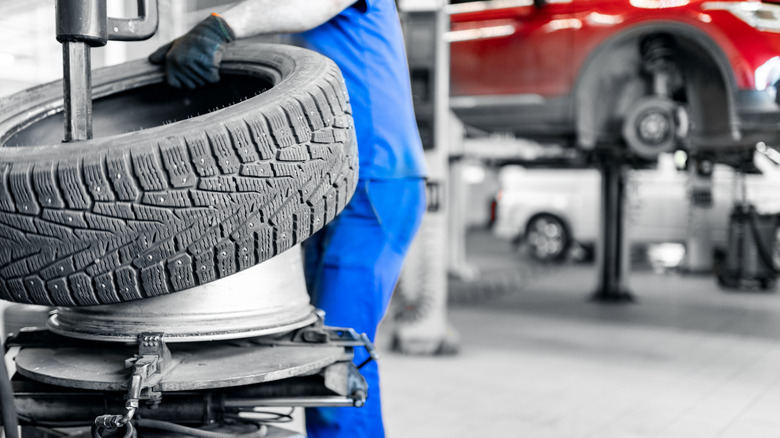
Have you ever wondered why a car can't have a matching, full-size spare tire? It may be less common than other options, but one noteworthy spare tire type is a matching full-size tire identical to the other four on your vehicle. Obviously, having a fifth tire (and wheel) means rotating your tires so that, when you need the spare, it has similar wear to the rest of the set.
If you're considering a full-size spare, a good time to swap it out is when the original spare expires. Whether you should replace your spare tire depends on a few factors. According to Consumer Reports, a spare tire should not be in service for more than ten years. That's separate from the 5-year rule for tires, which suggests that after five years of owning a set of tires, you should have a professional check them regularly, in addition to checking tire pressure and rotating the tires.
AAA recommends rotating your (four) tires every 5,000 to 7,500 miles, or what's recommended in your car's user manual. Your tire pro might use a few different rotation strategies for four tires, but for the fifth tire, Bridgestone suggests moving the spare to the right rear and taking the former right rear tire out of rotation until the next swap.
Standard full-size spare tire
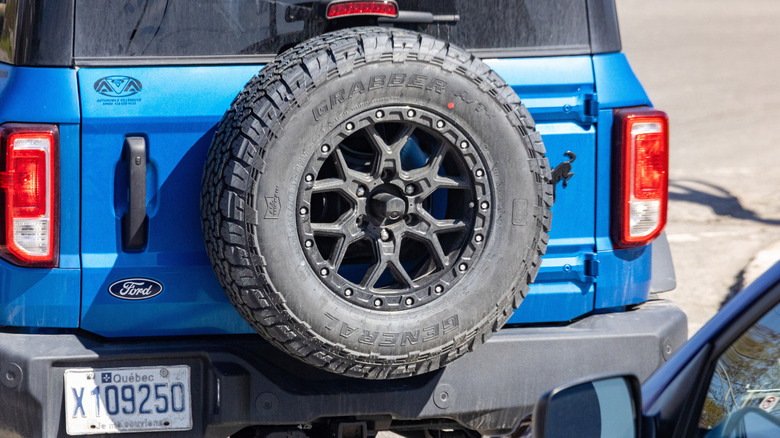
While a matching fifth wheel and tire is definitely one spare tire type to consider, you can also choose a standard full-size tire that doesn't necessarily match the other four. The difference would come down to the wheels, not the tire. Especially if you choose custom wheels for your car or truck, buying a fifth might seem a little excessive. With a full-size spare, you have the right size for your vehicle, but you may not need to rotate it into use.
The full-size spare can also be an entirely different tire, one that's lighter weight and with a shallower tread. That way, you still get some of the benefits of a more compact spare, plus the perk of being able to drive at generally normal speeds while you wait to replace the busted tire.
Ford, for example, says some vehicles are equipped with non-matching spare wheels, but they can be the same size as the regular tires. Ford notes that these tires are still only for temporary use. Some Ford vehicles, instead of carrying a spare, have a tire inflator and sealant kit. That doesn't mean you can't buy a spare, of course, if you have enough space to store one.
Compact or donut spare tire
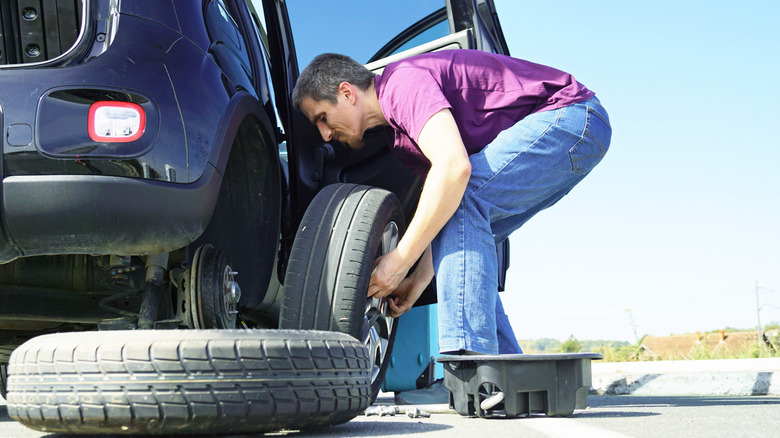
A relatively common spare-tire setup is a compact, AKA donut, tire. These are the spare tire types I've had on my vehicles, which have mostly been Toyotas. Generally, these tires come with a label with the appropriate cautions. In most cases, this means not driving over 55 miles per hour while using the spare. It's also recommended to replace the temporary spare with the original wheel and a new tire as soon as possible.
Another common guideline is the 50-50 rule for spare tires, which suggests keeping your speed under 50 miles per hour and traveling no more than 50 miles on the spare. If you prefer to err on the side of caution, slower is, of course, better.
When it comes to a donut versus a full-size spare, the distinction is obvious. A donut spare tire is generally lighter weight than a full-size tire. As a result, it takes up less storage space. The smaller size can make them easier to handle, especially when you're struggling to swap a tire on the side of the road on your own.
Inflatable spare tire
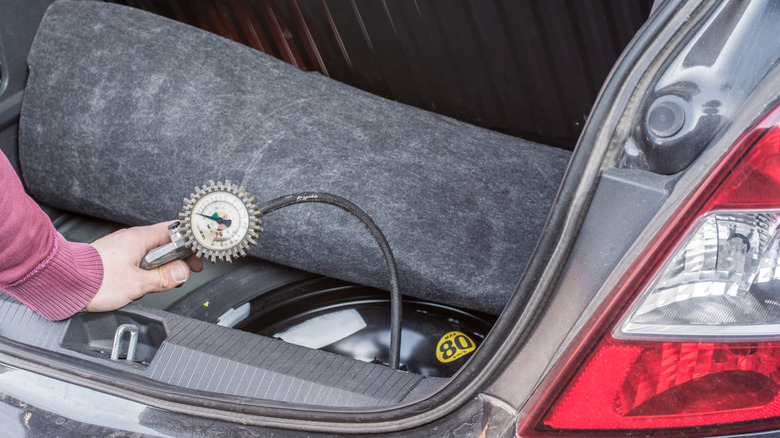
In addition to full-size and compact spare tires, you may also encounter inflatable types. Other descriptors include folding or collapsible, but the concept is the same. An inflatable spare tire needs inflation before use, which can be tricky depending on what equipment you have and where you are.
When it comes to spare tires stored in unusual places, an inflatable tire could pop up where you least expect it. If your vehicle already has this type of tire onboard, it's good to know where to find it and how to prepare it for use. It's also good to know whether you have onboard air, in case you need to find it elsewhere.
For example, the Rivian R1T comes with a matching full-size spare, but the R1S has a compact inflatable type. With Rivian, the spare tire kit comes with a jack, tools, a jacking puck, and a riser base. However, it doesn't mention the air itself. Some older models of Audis, like the Q5 Hybrid, come with an inflatable spare and an attached compressor.
How to choose: How far (and fast) you drive

When choosing a spare tire, consider your general driving habits. If your commute is short or you typically drive within city limits, a compact spare — with its low speed limit and limited performance — might be fine for emergencies. With the 50-50 rule in mind, if you're usually within 50 miles of a tire shop, a standard donut tire or an inflatable option could work well enough.
From experience, driving slower than 55 mph on a 65 mph highway limit, with around 60 miles to cover, can feel stressful with a compact spare.
If your commute is long, or you generally travel on long stretches of highway or freeway with no outlets, a more robust spare might be a better idea. In this case, a matching or non-matching spare is more flexible and convenient for maintaining your regular routine. You may be able to put off visiting a tire shop with a matching tire, especially one that's been rotated with your other four.
How to choose: Budget
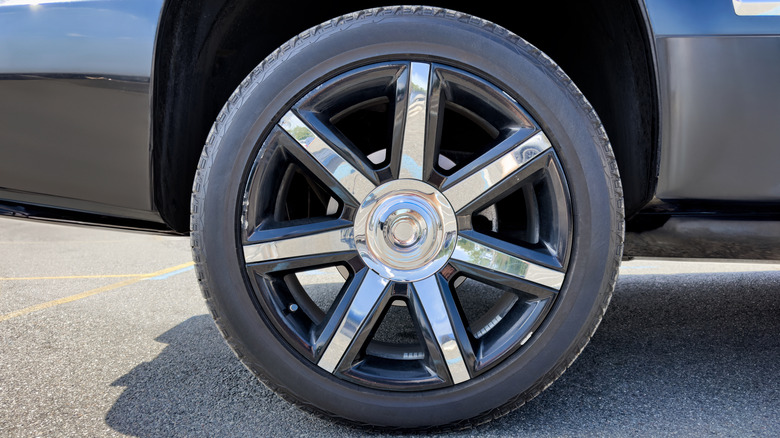
Generally, the most affordable spare tire is the one that comes with your vehicle because it's already included. If you need to replace the onboard spare, or your car didn't come with one, then price becomes a significant factor.
If budget matters when choosing a spare tire, you may want to skip the most expensive option: a matching full-size spare. Especially if you have custom wheels or an unconventional tire size, the price can jump when you add a fifth wheel to the set. Even with a different wheel or rim style, a full-size tire could be the priciest option.
The compact or inflatable tire that comes with your car is essentially free, but replacements can easily cost a few hundred dollars. When we looked for aftermarket compact spares on Amazon, kits started at around $300. We couldn't find any inflatable spares on Amazon, so you may need to visit a specialized retailer for an aftermarket option.
How to choose: Spare tire storage
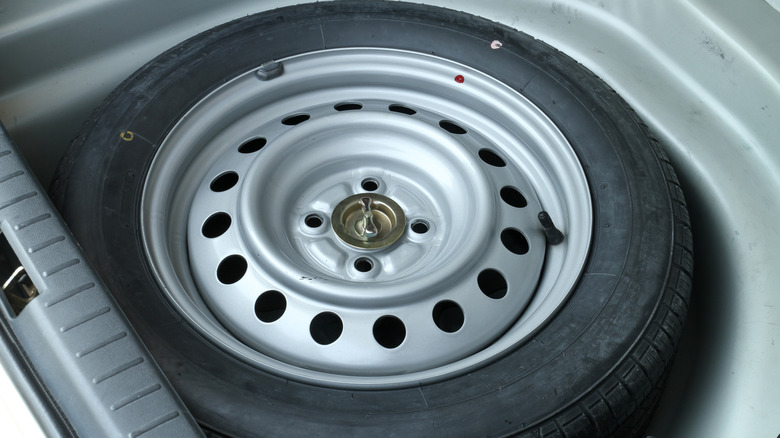
Onboard storage may be the most important factor when choosing a spare tire type. After all, if your vehicle doesn't have a storage spot in the trunk or a rack on the tailgate (or under it), it will be hard to fit a spare. However, you might be able to add an aftermarket spare tire mount to your vehicle. We found several options on Amazon, but the exact configuration depends on your vehicle's dimensions and existing accessories.
Ultimately, the size difference between a spare tire, a donut, and an inflatable tire could limit your options, especially if your vehicle typically uses a larger tire size. Simply put, a spare tire slot in the trunk that's meant for a compact tire probably won't hold one that matches your 20-inch wheels if the vehicle came with 17-inch models.
Inflatable tires, though they are the most compact option, will still need a slot with a specific circumference and depth, unless you're okay with having a tire bumping around in your trunk with your groceries.
How to choose: Equipment needed
If you've ever changed a tire, you already know some equipment is non-negotiable. First, you'll need the spare tire, which you may need to locate in the vehicle's user manual. It's always a good idea to check the manual anyway, especially for specifics on how to safely use the spare once it's on.
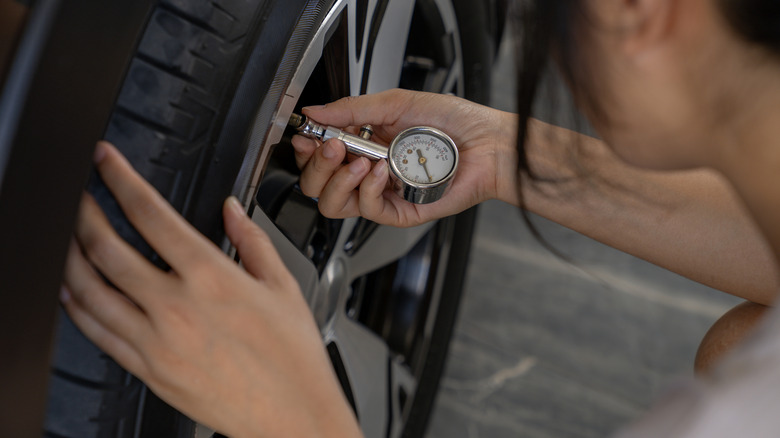
You will need a jack to safely lift the vehicle before removing the wheel, and ideally wheel wedges or chocks to keep the car stationary. Then, you'll need a lug wrench to remove the offending wheel. A tire pressure gauge is also a smart addition to your tire-changing toolkit, as is a flathead screwdriver in case you need to pry off hubcaps.
All of those things are necessities no matter which type of spare tire you have. Yet if you have an inflatable tire, you will also need, at minimum, a portable tire inflator. Most people probably don't carry an air compressor in the trunk or a portable inflator, so this is a necessity if you have a spare that needs initial inflation.