

What Is The 5-Year Rule For Tires?
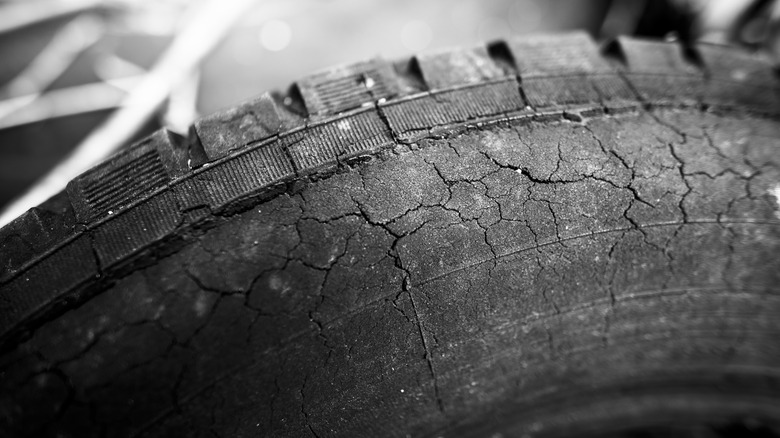
Similar as it might sound, the five-year rule for tires is nothing like the five-second rule for food. No, the five-year rule actually has some merit to it: After five years of ownership, it's recommended you start getting your tires checked by a professional at least once a year. While some might just assume tires are supposed to be driven until they blow, tire manufacturers, not to mention your fellow drivers and other passengers, would prefer that not be what it takes for you to get a new set.
The five-year rule exists because not everybody gets warning signs that it's time to replace. Even if your tread depth looks completely fine, small cracks and other dangerous problems can still start developing around the five-year mark, and oftentimes, it'll be without any sort of obvious visual warning. Things like the popular penny test won't help you here. If anything, they might hurt you by giving you a false sense of security. After a certain point, the five-year rule is a much more reliable rule of thumb to live by.
The science behind the five-year rule
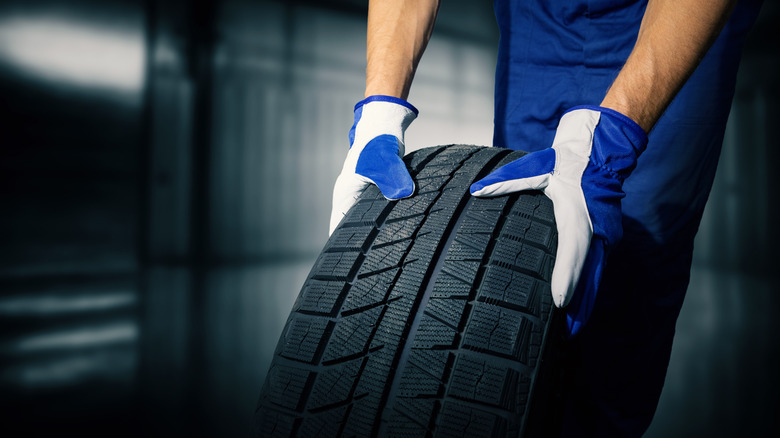
As you drive, your tires get exposed to all sorts of elements: UV, heat, moisture, ozone, you name it. Any one of these things, or a combination of all four, can alter the chemical composition of the rubber. That leads to hardening, which leads to surface cracking, which leads to worse grip on the road. After enough time, you're going to end up with a flat or worse. This problem with aging becomes a lot more common after five years. Hence, the five-year rule. Even spare tires can age.
Of course, it's important to note that there's no universal rule for tire lifespan. There's no law that says you must get your tires inspected or change them out after a set period. Rather, studies into the many risks of driving with aging tires simply make this a strong recommendation. As the National Highway Safety Administration reports, hundreds of incidents with fatalities or injuries involving tires older than six years happen every year. It's why it's in your best interest to start getting those inspections and replace them when you're told.