

2027 Mercedes-Benz GLC Electric Review: What's Great And What's Gimmicky
Mercedes-Benz is in the midst of an EV reset. Like competitor BMW, the people running Mercedes have decided that building electric versions of existing models is a better approach than introducing dedicated EVs that strain to be as different as possible, and then trying to sell them alongside the familiar internal-combustion cars customers are more likely to gravitate towards.
But this isn't because Mercedes is trying to minimize electrification at a time when, in the United States at least, fighting climate change and promoting public health are considered politically unfashionable. Instead, Mercedes is ensuring that EVs become an inextricable part of its lineup by launching new generations of its familiar models with electric powertrains first. This course correction began with the 2026 CLA, but it picks up speed with the 2027 GLC.
The current-generation GLC is Mercedes' bestselling model, mainly because it's a compact crossover SUV, the most popular type of car in the luxury market as a whole. So launching the next-generation GLC as an EV is quite a statement. But like the CLA that preceded it, the 2027 Mercedes-Benz GLC Electric might require a bit of acclimation from current GLC owners.
A rolling light show
That need for acclimation starts upon first seeing the GLC EV. The gasoline GLC isn't the most daring design, but at least it's handsome and restrained in a way that fits a classy luxury brand. The electric version is not that.
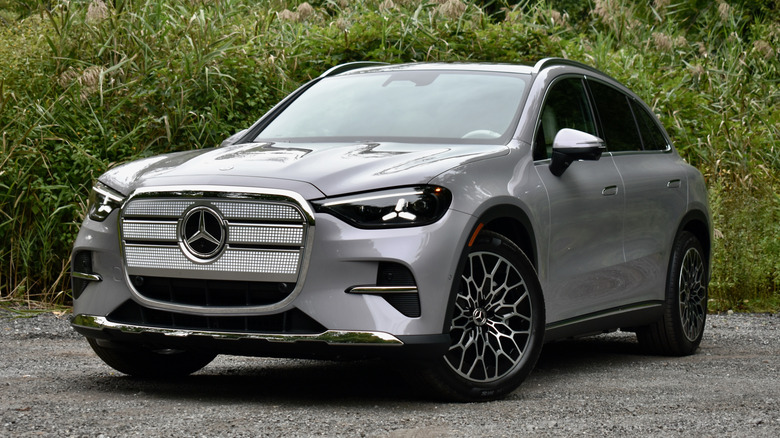
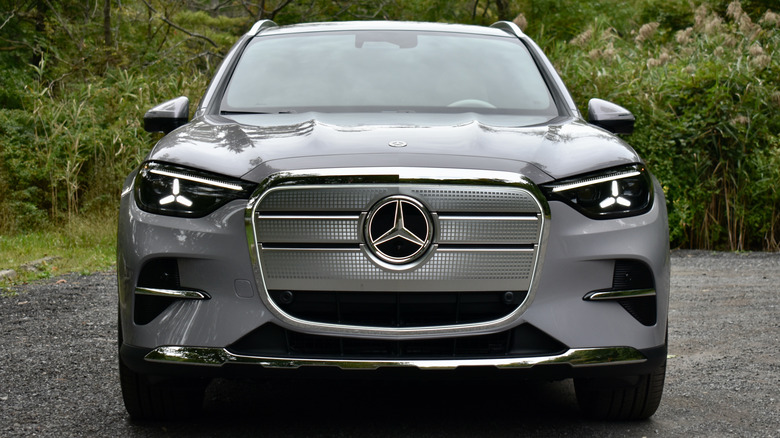
The defining feature is an enormous shield-shaped grille that's designed to be illuminated. On my Pinnacle-trim test car, it shone like a disco ball. Whether that's something you want or not, it isn't very noticeable during the day, and isn't a standard feature. So many owners, most of the time, will just have an awkward-looking appendage that serves no obvious purpose. This is an EV with minimal cooling needs, after all.
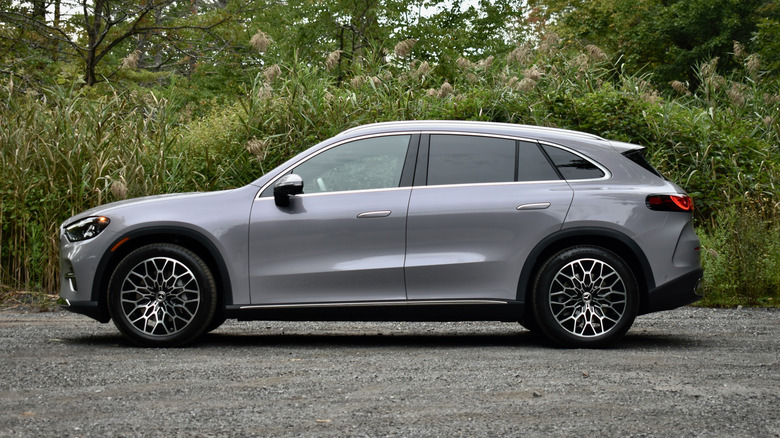
The grille just doesn't mix well with the rest of the exterior, which actually has fairly nice proportions. The GLC is sleek-looking, but with more form and definition than the blob-like EQE SUV and EQS SUV. The way the body sides step out from the greenhouse gives it a purposeful appearance. And that doesn't really affect aerodynamics. The GLC's Cd of 0.26 is only slightly draggier than the EQE SUV's 0.25 Cd.
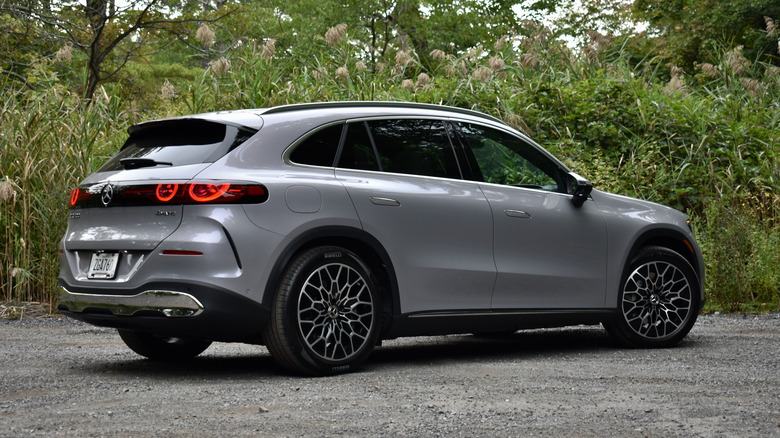
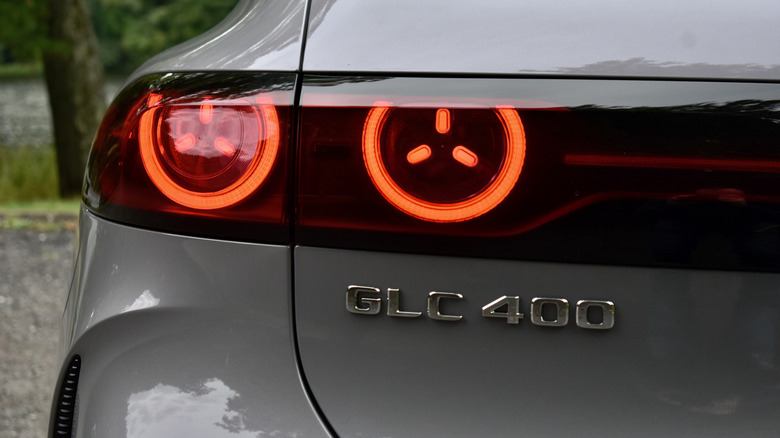
Also present are the star-shaped headlights and taillights that are now proliferating across the Mercedes lineup. They're also a bit gauche, but they also don't stand out as much here because the other dramatic styling features.
Quicker than expected
At launch, the GLC EV is available one spec, badged as the GLC 400 4Matic. It has a dual-motor all-wheel drive powertrain, with the rear motor employing the same two-speed transmission first seen in the CLA. This helps better balance the needs of acceleration and highway cruising, and the gearbox's operation isn't noticeable from behind the wheel. A front-axle disconnect further improves efficiency by reverting the GLC to rear-wheel drive when extra power or traction aren't needed.
With 483 horsepower and 590 pound-feet of torque on tap, Mercedes says the GLC 400 will get from zero to 60 mph in just 4.2 seconds. That makes it the quickest electric SUV in Mercedes' current lineup, despite the EQE and EQS SUVs ostensibly sitting above it in the hierarchy. It's also just 0.2 slower than the gasoline AMG GLC 53 4Matic+, despite the GLC 400 not wearing an AMG performance badge.
The GLC 400 is also a few tenths quicker to 60 mph than all-wheel drive competitors like the Audi Q6 e-tron, BMW iX3 50 xDrive, and Volvo EX60 P10. And this is a case where the numbers really do tell the whole story. From behind the wheel, the Mercedes feels quicker than expected for a car like this, while maintaining the calm character of a traditional luxury car.
Polished ride and handling
One thing owners coming from a gasoline GLC won't need to get used to is the way the electric version drives. It's comfortable yet composed the way a Mercedes should be, at least when equipped with optional chassis hardware.
This Pinnacle test car had the $2,900 Agility & Comfort Package, which adds adaptive air suspension and rear-axle steering. The air springs were well-tuned, keeping the ride free of disturbances from road imperfections while maintaining body control. Rear-axle steering, which can turn the back wheels up to 4.5 degrees, noticeably increased the GLC's nimbleness, particularly on city streets. Most importantly, the two elements blend together well. The GLC starts to wilt when you really push it, but at a stately pace it's delightful.
Another important piece of hardware is Mercedes' "one-box" braking module, which incorporates the brake booster, master cylinder, and computer controller. It's not only an example of efficient packaging, but the software prioritizes regenerative braking, only using the friction brakes when necessary. And the phantom brake-pedal movement of previous Mercedes EVs has been exorcised.
Range and charging are much improved over previous-gen Mercedes EVs
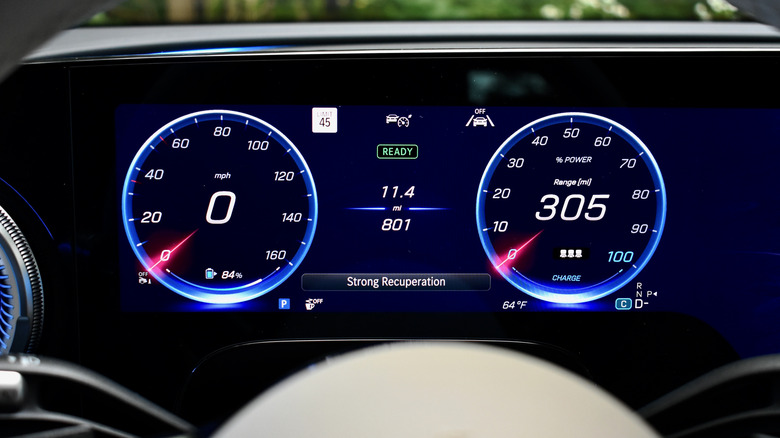
A more predictable brake pedal isn't the only indication that Mercedes is getting better at EVs. With its 94 kilowatt-hour (usable capacity) battery pack, the GLC EV achieves an EPA-rated 350 miles of range on its standard low rolling resistance tires. That drops to 331 miles on the all-season tires that will likely be the more popular option, but even that is 78 miles more than an EQE 320 4Matic SUV with a similar battery capacity (90.5 kWh).
Range also looks good compared to rivals. An all-wheel drive Volvo EX60 P10 gets nearly identical range, and the most efficient all-wheel drive versions of the Audi Q6 e-tron and Genesis GV60 don't get anywhere near 300 miles. Neither does the Rivian R2, which has to balance efficiency with off-road capability. Among likely competitors, only the BMW iX3 can embarrass the GLC EV, achieving a maximum 434 miles on 20-inch wheels with summer tires. And over a week of driving, the GLC averaged 3.3 miles per kWh, a fairly good efficiency number indicating that the EPA numbers should be within reach in real-world driving.
The GLC EV also adopts the 800-volt electrical architecture from the CLA, allowing for DC fast-charging at up to 330 kilowatts and completing a 10% to 80% charge in 22 minutes, according to Mercedes. Level 2 AC charging power tops out at 11.5 kW, making a 10-hour charge possible, Mercedes estimates.
Interior is tacky but practical
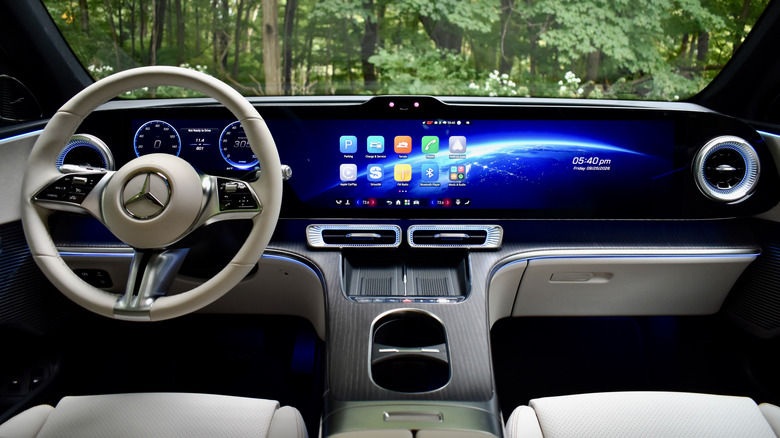
In recent years, Mercedes has shown up most of its luxury rivals (Genesis being a notable exception) with interiors that feel special and fun, reminding you why you're paying extra for a luxury car instead of something mainstream. Now the automaker mainly seems interested in cramming as many screens as possible into the dashboard.
Consequently, the GLC EV's interior is about as welcoming as a Best Buy. And this isn't just the shock of seeing a door-to-door screen housing for the first time. The redesigned CLA that launched last year has a similar setup, and familiarity has not made it more appealing. Also like the CLA, parts of the GLC's interior also just feel cheap. There's plenty of Toyota-grade plastic, along with seat-adjustment controls that look like a bad copy of what you get in other Mercedes models.
The interior is at least functional. Headroom in both rows is in line with the competition, and the GLC EV gives rear-seat passengers 2.6 inches more legroom than an Audi Q6 e-tron or Volvo EX60. The 20.1 cubic feet of cargo space behind the rear seats is less impressive in this competitive set, but the 61.4 cubic feet available with the rear seats folded is better. And Mercedes included a 4.5-cubic-foot front trunk that's among the largest in the segment.
Tech is waiting on updates
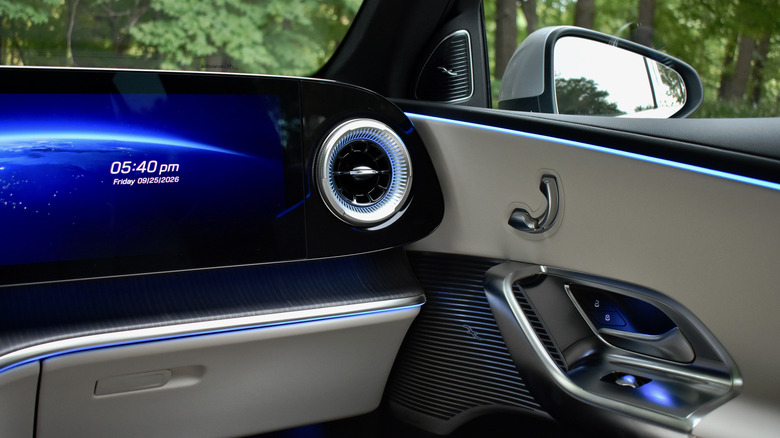
Mercedes' decision to build the entire dashboard around screens doesn't amount to much. The test car had the optional Hyperscreen display, with a 10.2-inch digital instrument cluster, 14-inch central touchscreen, and 14-inch front-passenger touchscreen. The latter isn't standard, but that's just as well because I've yet to meet a passenger who cares about these.
What you see on the other screens looks like what you get in other Mercedes models. The main touchscreen has a "zero layer" layout with widgets imposed over a navigation map, and the instrument cluster has gauges rendered in a colorful scheme that compliments the ambient lighting. But behind the graphics is a fourth-generation infotainment system based on Mercedes' own MB.OS operating system. The user experience just isn't that different, at least not yet. The benefit will presumably be the ability to add more features via future updates.
Similarly, the driver-assist tech available at launch is what you should expect in a modern car. But soon (when the lawyers are satisfied), Mercedes will enable its MB.Drive Assist Pro system, unlocking hands-free driving on city streets and highways alike. The test car came with three years of access prepaid for $3,950.
2027 Mercedes-Benz GLC Electric verdict
Pricing for the 2027 Mercedes-Benz GLC Electric starts at $64,950. That's in line with the Audi Q6 e-tron and BMW iX3, both of which come standard with all-wheel drive like the Mercedes. The Volvo EX60 starts a few grand lower, but the base model is rear-wheel drive and has slightly less range. The Genesis GV60 and Rivian R2 are a lot cheaper, but they're more social climbers than true members of the luxury class. Still, if you want an EV that's fun to drive and quirky (Genesis) or that can actually go off-road (Rivian) they're good options.
The GLC EV's problem is that the version that's worth getting is a lot more expensive. The car I tested had an MSRP of $78,775, but that included options like leather upholstery, wood trim, air suspension, rear-axle steering, MB.Drive Assist Pro, and a few convenience features that really made it feel like a luxury car. Even at that price, parts of the interior still felt more appropriate for this car's base price than its as-tested price.
Nearly $80,000 is still not outrageous for a small luxury SUV these days, though. The GLC EV is also a big leap in engineering compared to previous-generation Mercedes EVs, and as an SUV it's more relevant than the CLA sedan it shares most of its hardware with. Just a shame that the exterior design and screen-saturated cabin make it harder to take seriously.