

Driving Volvo's New EX60 Reset My Expectations (And Changed Which Model I'd Pick)
Much to the chagrin of its dealers, Volvo has embraced EVs with an enthusiasm and openness for experimentation matched by few other established automakers. It started in 2021 by repurposing a combustion-car architecture with the XC40 Recharge (now the EX40), leaned into software-based features with the EX90, and relied on corporate sugar daddy Geely to make the EX30 a true mass-market EV. Sadly, none of those things worked.
As nice as the EX40 is, it's held back by the inherent compromises of the CMA platform shared with the gasoline XC40. The EX90's SPA2 platform also didn't go far enough, so this expensive SUV mainly served to highlight Volvo's inability to deliver on its software promises. The EX30 was undone by politics. But instead of giving up, Volvo is trying harder.
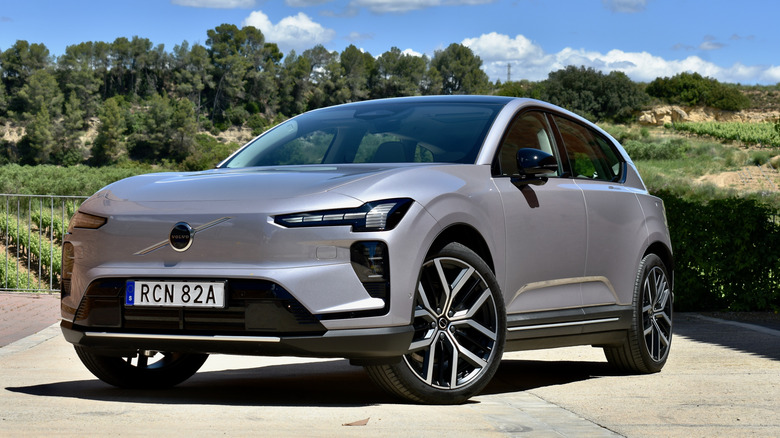
The 2027 Volvo EX60 is the Swedish automaker's most ambitious EV yet, and perhaps its most ambitious new model of any kind since the launch of the second-generation XC90 about a decade ago. Like that XC90, the EX60 springs from the cleanest of sheets. It's based on a dedicated EV platform called SPA3, outfitted with motors designed-in-house, and incorporating design elements meant to make the EX60 more efficient and cheaper to produce. A first drive in Spain showed that it's also still very much a Volvo.
Evolutionary styling hides revolutionary construction
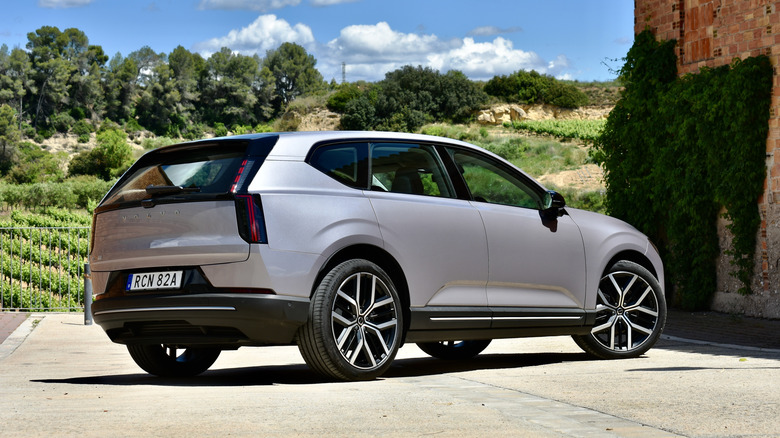
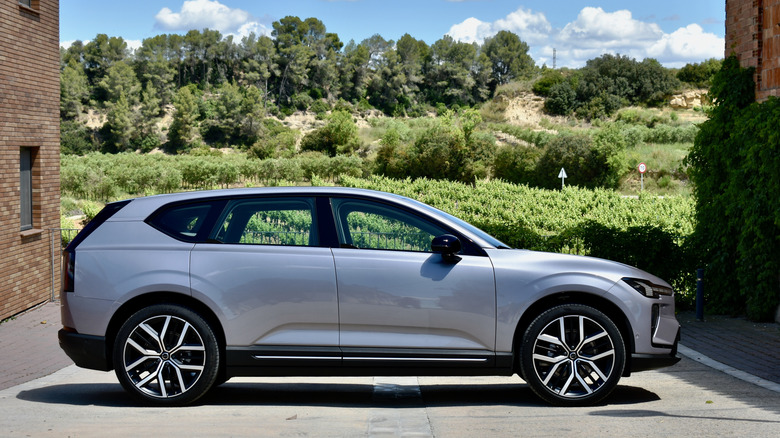
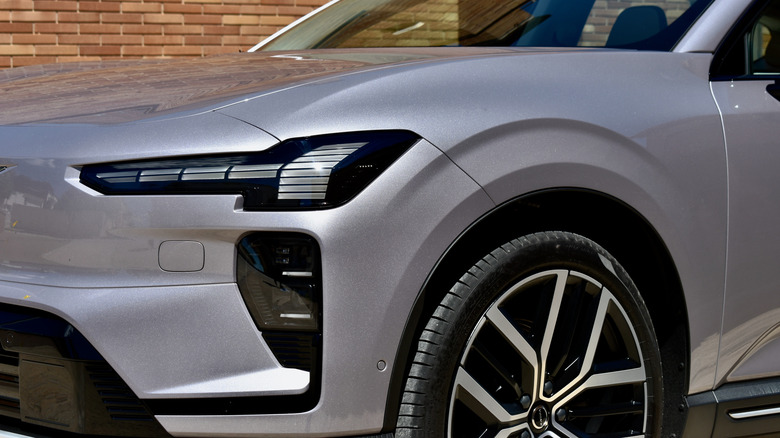
The EX60 represents many new firsts for Volvo, but styling isn't one of them. It continues down the same path as the EX90 and EX30, but that still makes for a handsome electric SUV. The "Thor's Hammer" headlights are streamlined to the point that they look more like the tiny wings that adorn the helmet of the Marvel version of the Norse god of thunder, the upright tailgate suggests the wagons Volvo sadly no longer wants to make, and the high-shoulder, low-roof shape is a good blend of traditional SUV proportions and the needs of the wind tunnel.
What you can't see is that Volvo has integrated the battery pack with the body. Cells are mounted directly to a housing without modules, and that housing serves as the floor of the vehicle. Take it out, and you'll be driving Fred Flintstone style. This saves weight by eliminating not only the battery modules, but also reinforcement beams that would normally run perpendicular to the centerline. It also leaves more room for cells, increasing battery capacity without increasing physical size.
In addition to this "cell-to-body" construction, the EX60 incorporates megacast components: big hunks of metal that replace many smaller pieces. The largest—covering the rear wheel housings and the area in between—replaces 107 individual parts, according to Volvo. This saves more weight (the megacast parts are aluminum, and eliminate fasteners and welds), while also simplifying the manufacturing process to keep costs down.
Drives like a Volvo should
The novel engineering isn't apparent from behind the wheel, at least not in the two versions of the EX60 Volvo had on hand for the test drive SlashGear was hosted at.
The EX60 launches in single-motor rear-wheel drive P6 and dual-motor all-wheel drive P10 forms. A more powerful P12 version is scheduled to follow later in the 2027 model year, and the more rugged EX60 Cross Country is due to follow as a 2028 model. Passive frequency selective dampers are standard on the P6; the P10 and P12 have adaptive dampers; and the Cross Country will have an air suspension system.
Volvo provided a P6 and P10, both with the largest 22-inch wheels (20-inch and 21-inch wheels are also available). I started in the P6 and was immediately impressed by its overall composure. Even with the big wheels, ride quality was what should be expected of a premium-brand vehicle (at least on the fairly well-maintained Spanish roads) and the steering and suspension were set up to make smooth driving easy. It was harder to be smooth with the brakes, but they do at least allow for strong regeneration for drivers that want it.
The EX60 P6 is what a Volvo should be. It's not sporty (it doesn't even feel rear-wheel drive) but it is pleasant and comfortable. It shows that there's a path between sportiness and somnambulance in luxury cars, something Volvo's gotten very good at over the years. So good that the P10 didn't feel like an upgrade.
Powertrains leave expectations—and the competition—in the dust
Like many other EVs, the EX60 gives you a lot more power than can be expected in a comparable gasoline car. The single-motor P6 generates a healthy 369 horsepower and 354 pound-feet of torque, getting it from zero to 60 mph in a manufacturer-estimated 5.7 seconds—specs that would have once been unthinkable for a Volvo.
The EX60 P10 gets 503 hp and 524 lb-ft of torque from its dual motors, dropping the zero to 60 mph time to 4.4 seconds. A difference of 1.3 seconds should be significant, but the P6 felt so quick that I wasn't exactly craving extra power. The average Volvo customer probably won't be, either, and may in fact be in for a shock if they select the P10 simply because it's the one with all-wheel drive.
And the upcoming P12 will be quicker still. Preliminary specs include a 3.8-second zero to 60 mph time, enabled by 670 hp and 583 lb-ft of torque. The P10 is already quicker than a BMW iX3 50 xDrive and just 0.2 second slower than a Mercedes GLC 400 4Matic Electric, but the P12 will also beat an Audi SQ6 e-tron to 60 mph.
Now that Polestar is a separate brand, it's understandable that Volvo wants to add more muscle to its standard models. But at some point, all of that power will clash with the EX60's more relaxed chassis. The P12 may be quicker, but will that make it better to drive?
Charging more impressive than range
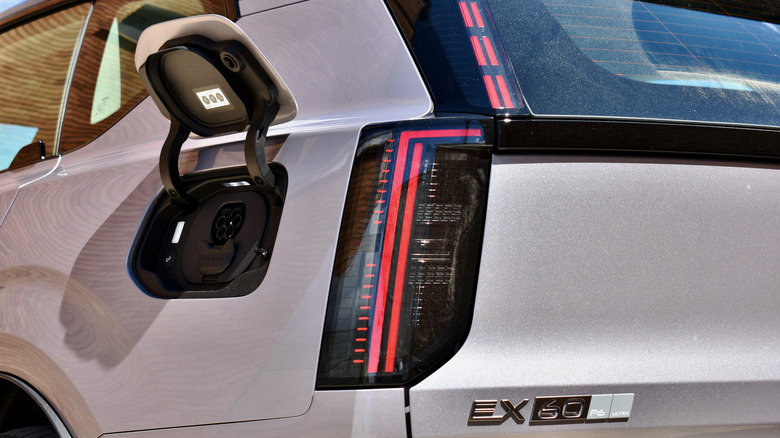
Buyers may not care, because the P12 will have by far the most range of any EX60 variant. Thanks to a 117-kilowatt-hour battery pack (with 112 kWh of usable capacity), it's estimated to get 400 miles of range on 20-inch wheels.
The other models don't come close to 400 miles, but they also have smaller packs. The P10 maxes out at 322 miles with its 95-kWh (91 kWh usable) pack, and the P6 is expected to have 307 miles of range with an 83-kWh (80 kWh usable) pack. Observed efficiency of approximately 3.9 miles per kWh in the P6 and 4.1 miles per kWh in the P10 means hitting those numbers in the real world shouldn't be too difficult.
Quick charging shouldn't be a problem, either. With SPA3, Volvo has finally adopted an 800-volt electrical architecture (along with a NACS port), allowing for DC fast charging at 320 kilowatts in the P6 and 370 kW in the P10 and P12. But, as Volvo CTO Anders Bell put it, "any fool can just push power into a pack." So the automaker also partnered with startup Breathe on software that optimizes charging power for given conditions, and uses excess heat from the motors for preconditioning.
The result is a 10%-80% charge in 16 minutes and the ability to add at least 155 miles in 10 minutes of charging. A 19.2-kW onboard charger should ensure the quickest-possible Level 2 AC charges at home.
Stylish interior with some quirks
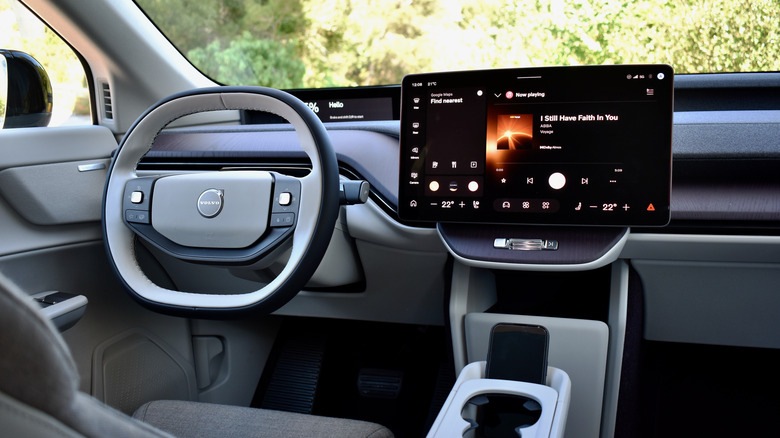
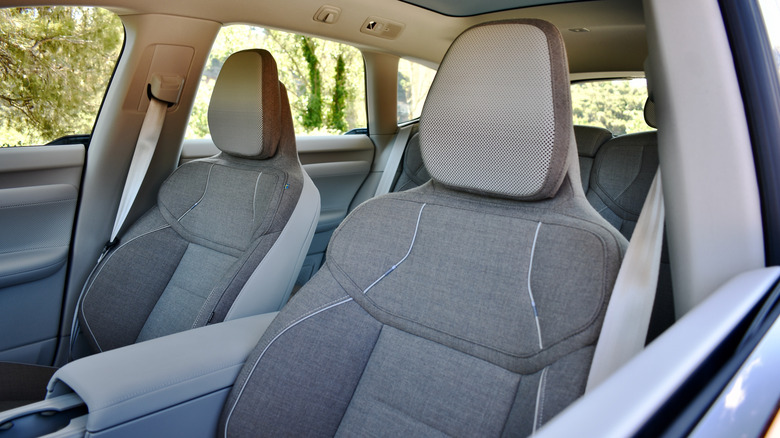
Volvo interiors continue to exemplify Scandinavian design, and not just because there are tiny Swedish flags hidden throughout the cabin. The minimalist design, light color palette, and available wool upholstery looks and feels both distinctive and upscale.
Things are arranged a bit differently than in other recent Volvos, though. A stepped dashboard places the instrument cluster much higher, about where a head-up display would normally project. This helps keep the cluster in the driver's line of sight, which is why BMW did something similar with the iX3. But instead of a door-to-door display, Volvo kept a separate instrument cluster and central touchscreen.
A small, square steering wheel ensures the cluster won't be blocked, but it's a bit awkward to use on curvy roads. It's not the only control that was awkward, either. There's no place to rest your hand when using the touchscreen, and instead of a volume knob Volvo chose a scroll wheel that also requires a preternaturally steady hand to use while moving. And good luck figuring out what to hold onto when closing the door.
All trims get a glass roof, but it's not dimmable as standard. It does at least add to the spacious feel of the cabin, and while the EX60 has a lot less cargo space behind its rear seats than an iX3 or Q6 e-tron, it does have a neat removable plastic bin below the floor of the cargo area for smaller items, or dirty ones.
Solid tech with some potential
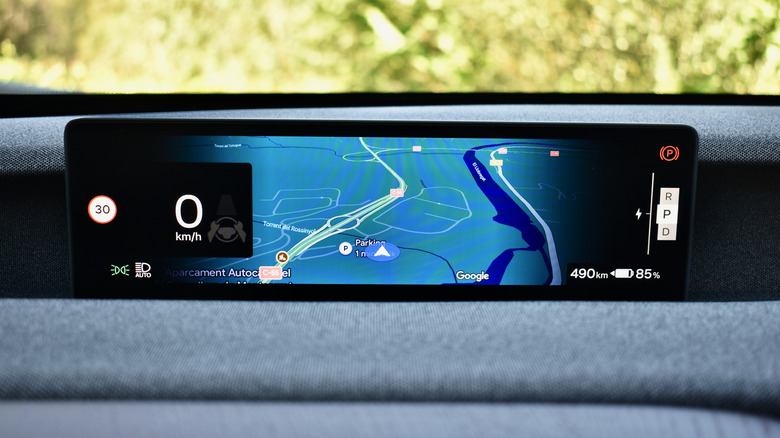
The standard 11.4-inch digital instrument cluster and 15-inch touchscreen seem about right for the amount of space available on the dashboard. As with other Volvo models since the start of the automaker's EV adventure, they're backed by an Android-based operating system that still supports wireless Apple CarPlay and Android Auto. Analog controls are few and far between, leading to a lot of menu clutter that can make finding what you want difficult.
The main infotainment news is the integration of Google Gemini, but my experience was mixed. On the first attempt, I got two different voices (each of which was also different from the Google Assistant voice) and a lot of lag. But when asked to find a detour to a scenic spot that could be reached via a twisty road—something you can't simply ask Google Maps to do—it delivered. And it may soon be able to help cut through the touchscreen-menu clutter.
The available Bowers & Wilkins audio system performed more consistently. It's got 28 speakers, including a pair in the headrest of each outboard seat. The headrest speakers can't route phone calls or navigation directions to the driver, as in Infiniti's Klipsch systems, but they distribute sound more equitably without having to crank up the volume. Dolby Atmos is included as well, but that feature remains limited to certain songs on certain streaming services.
Conservative driver-assist tech, with headroom for more
The EX60 comes standard with the expected array of driver-assist features, but nothing unexpected. Volvo's commitment to safety has diverged from the broader evolution of this tech. Its Pilot Assist system can accelerate, brake, and steer on highways, but can't execute fully automated lane changes or allow for hands-off driving. Such features are more about convenience than safety, but that probably won't matter to customers comparing the EX60 to other EVs.
Pilot Assist also had trouble negotiating some curves, driving too deep and then abruptly steering. This isn't a behavior I've experienced in other cars with this system, and might be down to pre-production software. But it's not great considering that Volvo is claiming better performance thanks to an upgraded computing stack named HuginCore—after the raven companion of the Norse god Odin that embodies the concepts of thought and perception—capable of 250 trillion operations per second.
Volvo claims it will feed the EX60's onboard systems data from crashes and near-misses other cars experience to improve performance over time. But for now, HuginCore will enable something of much more immediate import to safety: a "multi-adaptive seatbelt" that automatically adjusts to a user's weight. Volvo invented the three-point seatbelt, so it's only fitting that it's reinventing it.
2027 Volvo EX60 verdict
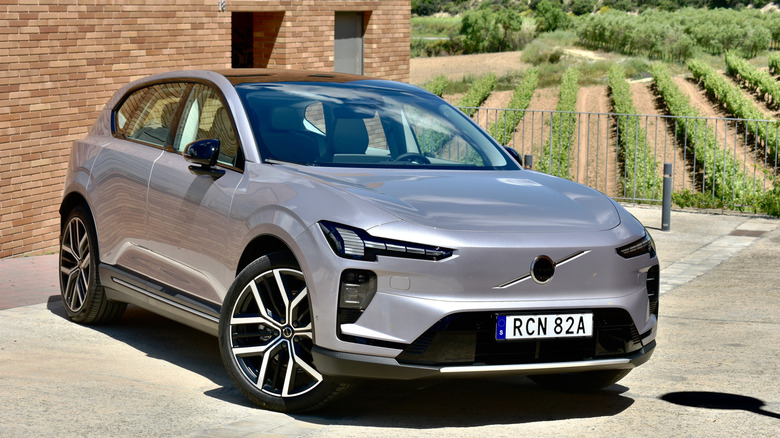
From its megacast chassis components to its Ikea-for-2050 interior, the EX60 is as new as a car from an established manufacturer gets. But that doesn't matter when you're staring down a lease agreement.
Pricing starts at $59,795 for the single-motor P6 and $62,145 for the dual-motor P10, both in the base Plus trim level. An Ultra version of both models is also available for $6,600 more, adding the high-end audio system, a dimmable glass roof, Nappa leather upholstery, integrated booster cushions and heating for the rear seats, ventilation for the front seats, and 21-inch wheels, among other features.
Volvo said it tried to match pricing of a comparable plug-in hybrid, and the P10 does cost a few hundred dollars less than the XC60 T8, which has a similar footprint and all-wheel drive. But looking outside the Volvo showroom, a BMW iX3 will be a better deal. The all-wheel drive iX3 50 xDrive starts at $62,850 with 434 miles of range to the P10's 322 miles. It's unclear how pricing and EPA range ratings for the Mercedes GLC Electric will shake out, but the all-wheel drive Audi Q6 e-tron starts at $65,795 with about the same range as the EX60 P10.
Numbers aside, the EX60 still offers a uniquely calm demeanor and Scandinavian design sensibilities that are appealing in their own right. And—finally—it gives Volvo a solid EV foundation to build on.