

The Most Overhyped Car Of Every Decade, From The '60s To Today
Hype is possibly the one thing that the car industry produces more than horsepower. Every generation has its poster car, the one journalists fawn over, and the big screen immortalizes, like the iconic cars from the Fast & Furious franchise, and that is perfectly normal. However, when this happens on flimsy evidence, with a car simply in the right place at the right time, it can be misleading. So every so often, you find a car that was never quite as magnificent as people agreed. Now, to be clear, we're not saying these are bad cars or poor examples of automotive engineering; virtually every car on this list is pretty good from a technical perspective.
You'll notice a trend: many of the cars on this list still serve as tuner platforms. So when people see a stock version of that car and mentally compare it to something else, the issue lies in the gap between what these cars actually were and the towering reputations they somehow picked up along the way.
You had a base Ford Mustang riding on the bones of the Ford Falcon, looking aggressive while making barely 100 horsepower. You had a beautifully designed Lamborghini Countach that even die-hard fans said fought the driver at every turn. Sometimes the legend and the metal simply don't match when it comes to cars, and here are seven such examples.
1960s First-gen Ford Mustang
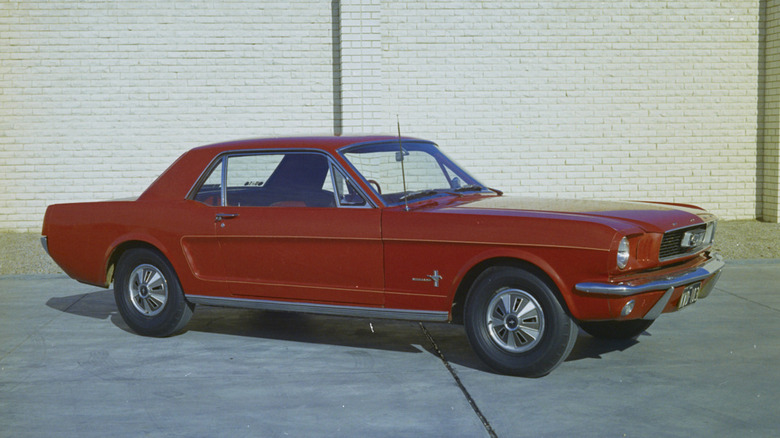
Before you start hammering away at your keyboards with thinly-veiled angst, let us clarify that we're not talking about the Shelby GT350, K-code 289, or Bullitt 'Stangs of the 60s. We mean the base-model, bare-bones first-generation Mustang released somewhere in 1964. That car used the suspension setup from an earlier model, the Ford Falcon, to be precise, and while the styling was more aggressive and defined than before, it was unmistakably a budget sports car. The key word is "budget", since everything on the base-model Mustang was lower-end, even for the time.
The biggest letdown from a collector or owner perspective today had to be the 170 cubic inch (2.8 liter) six-cylinder engine under the acres of bonnet. This power unit produced a princely 101 hp and 156 lb-ft of torque. While the hp figure was already low, consider the vehicle's weight, which clocked about 2,612 pounds in 1964, and you'll see why we aren't too enamored with the car.
To be clear, this generation of Mustang offered a range of engine, transmission, and suspension options; it's just that the base models were uninspiring. Car and Driver tore into the car in its review, calling the ride akin to "a small boat hitting choppy waves head-on" and the base 170 engine "as exciting as a dish of baby food."
1970s Lamborghini Countach
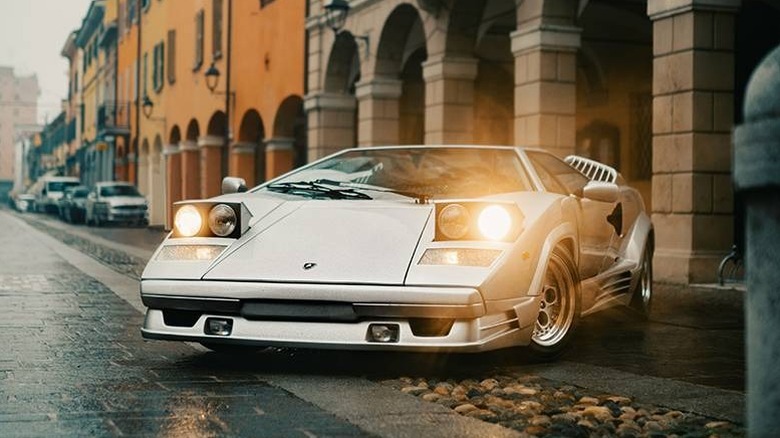
"Insignificant" isn't a word anyone would use to describe the Lamborghini Countach. Still, the pedestal the Countach sits on is completely unwarranted.
The engine was a 3.9-liter, 12-cylinder motor that revved to a screaming 8,000 rpm, paired with a five-speed manual gearbox. This setup sent all 375 hp (later versions) directly to the rear wheels, making the Countach a proper mid-engined, rear-wheel-drive Italian monster in every right way. That, and the show-stopping, poster-inspiring looks, were where this car's good things ended.
Visibility was absolutely miserable, especially with the giant fixed rear wing in place. Famously, this wing was purely for show, adding little to no performance benefit for owners who installed it, with the major downside of reduced rear-window visibility. Without power steering, the Countach was heavy and cumbersome at low speeds, and the clutch was also heavy and prone to slipping. Also, a fun fact: Horacio Pagani, yes, that Horacio Pagani, had a major influence on the Countach's design process. In light of all the above, even the brand's most die-hard proponents admit the Countach is a deeply flawed car, which is why it earns a spot on our list.
1980s DeLorean DMC-12
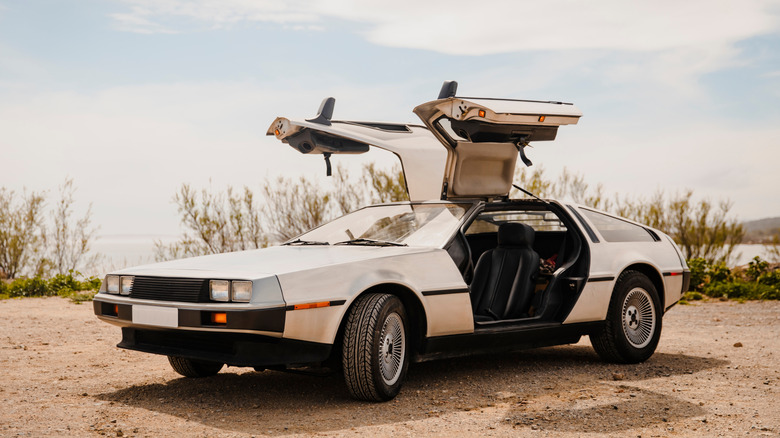
Another victim of the silver screen is the DeLorean DMC-12, a futuristic-looking, wedge-shaped car that rose to fame on the back of the "Back To The Future" movie franchise. The marketing hype behind the car was insane, pushing it as the sci-fi, the-future-is-here-now kind of thing. DeLorean even offered a gold-plated DMC-12 to American Express Gold Card holders, which says a lot about the company's thinking. And to be fair, if DeLorean had delivered on its promises, the car would have been good. However, numerous delays in production stemmed from factors such as funding issues, production bottlenecks with complex components, and more.
It was initially set to sell for $12,000; in fact, that's where the "12" in the model name came from. The consumer-grade DMC-12 shipped with a 2.8-liter V6 engine sourced from Renault, producing a watery 130 hp and 156 lb-ft of torque. This gave the car a top speed of just 130 mph and a 0-60 mph time of 10.5 seconds, so the car definitely looked a lot faster than it was, adding to the disappointment.
By the time the car was production-ready, though, the numerous delays had already made it a bad look for the company; the asking price for one in 1981 was closer to $25,000. It's no wonder not many DeLorean DMC-12s were made after all.
1990s Toyota Supra MkIV
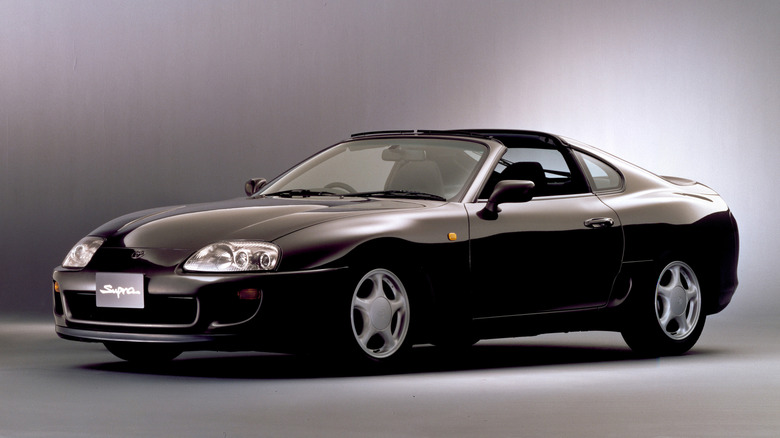
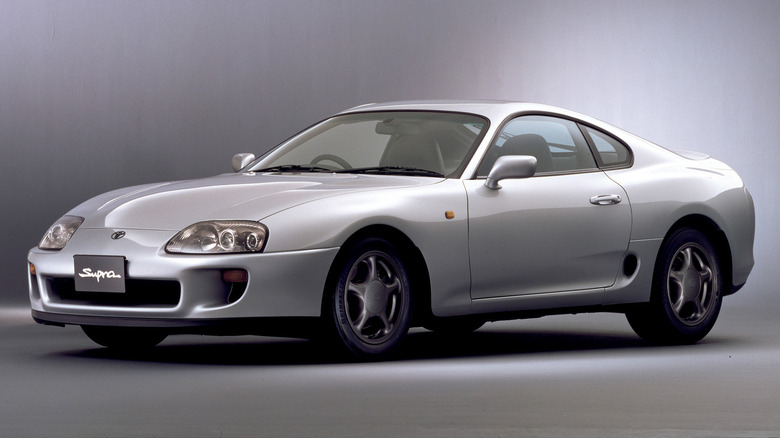
Though the Toyota Supra had been around for years, entering its fourth generation—hence the MkIV designation in the name — in the 1990s, the car suddenly became popular shortly after. Part of that can definitely be attributed to Hollywood, and the public seemed to run with it. We can respect the engineering, but the A80 Supra has been ruined by the fanboys and fangirls who ogle it. It was a good car, with great specs for the time, but the mythological status it's been given is completely undeserved.
I recently had the opportunity to drive one in the Hajjar mountains near Dubai, and by God, it's a chore to drive. The turbochargers take about three seconds to kick in, and when they do, they deliver an aggressive burst of power in seemingly separate batches to the wheels. The clutch is heavy, and the Getrag V160 transmission will fight you at every shift.
Give me a Mazda RX-7 any day. The MkIV engine was the legendary 3-liter, six-cylinder 2JZ, making 320 hp stock, though it can make well over 1,000 hp when tuned. These iconic high-hp builds are a major reason why the Supra gets so overhyped. Yes, a modded 2JZ MKIV can beat supercars, but a stock Supra won't smoke an Aventador the way some people think. The main problem is by far that people routinely judge the stock A80 by what heavily modified 2JZ cars can do.
2000s Maybach 57/62
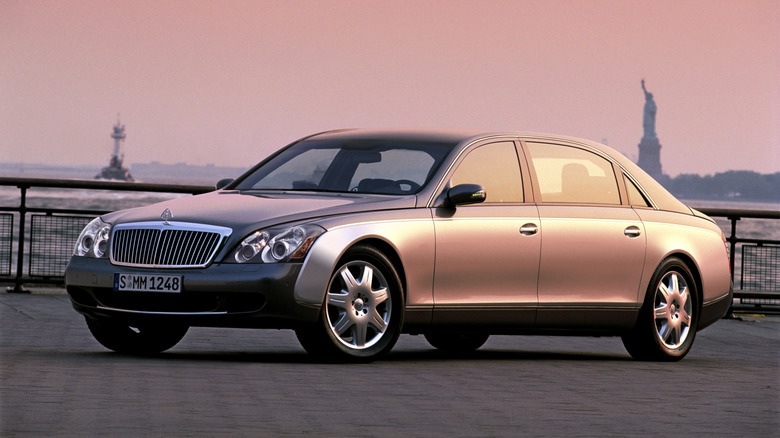
Back in the early 2000s, Maybach, a rival car company Mercedes acquired in the 1900s, took the already luxurious Mercedes S-Class and stepped things up a notch. The result was the Maybach 57 and the Maybach 62, two ultra-luxury vehicles that were comparable, on paper, to cars produced by brands like Bentley and Rolls-Royce at the time.
The contemporary hype for both new Maybachs was enormous, with many auto publications fawning over them to no end. Car and Driver sang its praises, but Daimler was trying to make a Rolls-Royce competitor, and the 57 and 62 ended up looking like stretched-out S-Classes. The car was brilliant, but for $600,000, it didn't feel different enough from Mercedes' standard, if you can call it that, S-Class offerings.
It boiled down to people feeling that Rolls-Royce and Bentley had unmistakably distinct identities, while the Maybach 57 and 62 were just rebadged S-Classes. The cars used a 5.5-liter V12 making 543 hp, while "S" models got the larger 6-liter V12, which bumped power to 604 hp. Interestingly, the cars were good on paper — the zero-to-60 time stood at 4.9 seconds, which was insane for the early 2000s, especially on a non-Cadillac land-yacht like this one.
2010s BMW i8
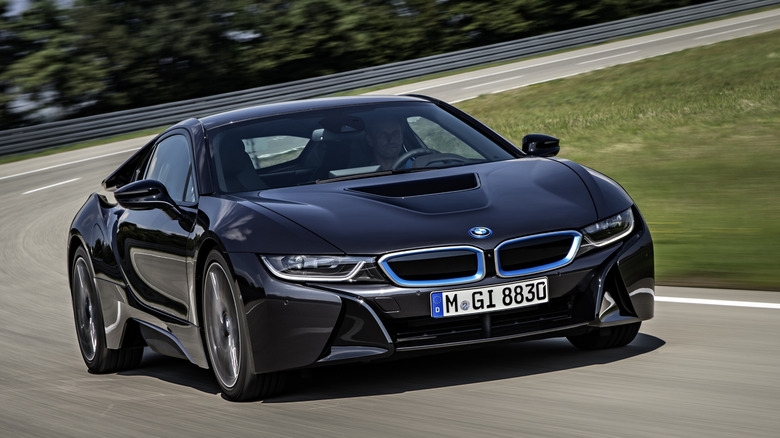
I remember being in the theatre and watching Tom Cruise clamber into one of these in a scene that was shot in India. In a high-stakes chase scene, Tom Cruise, playing IMF agent Ethan Hunt, next to Paula Patton (playing IMF agent Jane Carter), wove and dodged traffic in the streets of Bombay in the hitherto unseen BMW i8. Funnily enough, the car in the movie was left-hand drive, while India is a right-hand-drive market — the more you know.
Audible gasps filled the cinema hall, and the car was a legend before the first rubber hit the road. Later that year, the marketing team went crazy with the i8, hiring Gus Van Sant to make mini scripts and mini movies about the car. Remember, the concept for this car was revealed in 2011; the Mission: Impossible movie debuted on December 21, 2011 – but the production car wouldn't arrive until 2014. One ad (for BMW UK) had people transitioning from horses to this car, and overall, the i8 was a disappointment.
Reviews noted disappointing hard interior plastics and comparatively ordinary-feeling details. The engine in the now-discontinued BMW i8 was a 1.5-liter 3-banger, which gave the car a top speed of only 155 mph and a somewhat respectable standing-to-60 mph time of 4.6 seconds. Like the DeLorean DMC-12 we covered above, its performance was lackluster compared to its futuristic looks, and its EV-only range was just 34 miles.
2020s Tesla Cybertruck
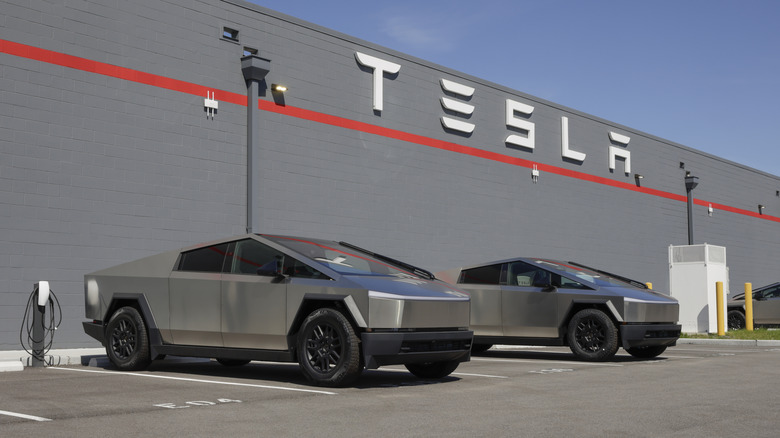
Let's start by saying not all electric cars are bad—many, including Teslas, are actually pretty good value for the end consumer. It's just that the Tesla Cybertruck has drawn so many parallels with the DeLorean DMC-12 that it's quite shocking. Both cars faced innumerable production delays, kept hiking prices even before the first production units hit the market, and were aggressively marketed. Even the designs were somewhat similar, with a strong silvery, futuristic, sci-fi vibe in both models.
For those who don't know, the Tesla Cybertruck was supposed to launch in 2021 with a base price of $39,900. Instead, the launch was delayed until 2023, and the base MSRP somehow climbed to $60,990, a staggering 52.5% increase. Compounding the issues surrounding the Cybertruck, quite literally, was the fact that many components were found to be of not the best quality, let's put it that way.
Trim pieces were glued on instead of welded, durability was a concern, and several safety-related issues were also raised. Chief among these safety issues were early models catching fire, self-driving problems, and myriad electrical issues. All in all, the Cybertruck failed to live up to its promises, which is why we're featuring it in our rather undesirable spot for the 2020s' failures. However, a little under half the decade remains, so it's still to be seen whether any brand can top this.