

Why The New Lexus ES Hybrid Was The Most Surprising Car I Drove All Year
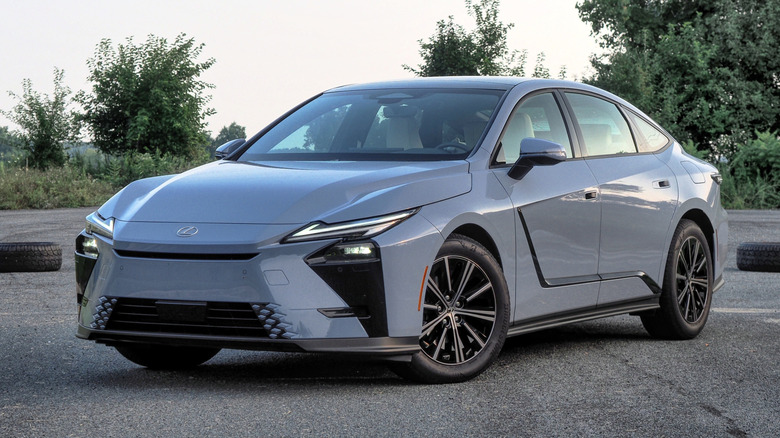
At a time when so much in the auto industry feels like careful evolution rather than daring revolution, the 2026 Lexus ES is genuinely astonishing. Similarly, when so many new car shoppers are picking SUVs and crossovers, it's a surprise that Lexus put this much effort into a mid-range sedan. Then, the cherry on top is comparing this new ES to its predecessor.
That is, assuming you can remember the old Lexus ES at all.
 Chris Davies/SlashGear
You'd be forgiven for such lapses: that seventh-generation car, first launched in 2018, always felt like a compromise. The sedan you settled on, because your budget didn't stretch for a flagship Lexus LS. Only now the LS is on hiatus, and there's a new ES which feels like a thoroughly modern version of Lexus, not to mention an unapologetic vision of what the automaker's luxury should look like on today's roads.
One ES, two electrification strategies
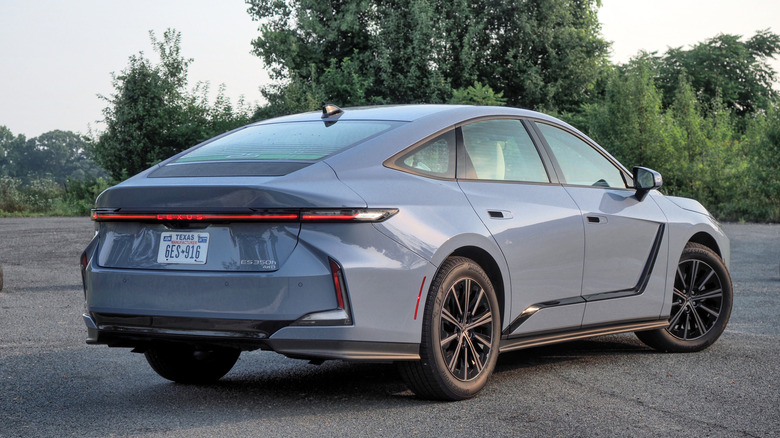
There's one ES badge, but two very different versions of the car. Cheapest — from $48,895 (before $1,395 destination) — is the all-electric 2026 ES 350e, with a single electric motor driving the front wheels; from $51,895 (before destination) the 2026 ES 500e adds a second motor for all-wheel drive.
Meanwhile, the 2026 ES 350h is a hybrid. It's also offered in front-wheel drive or all-wheel drive form — from $51,095 or $52,495 (before destination) respectively — with a gas engine and either one or two electric motors. When just the front wheels are driven, the EPA rates it for 48 mpg in the city, 44 mpg on the highway, and 46 mpg combined. The all-wheel drive version dips to 47, 42, and 44 mpg respectively.
 Chris Davies/SlashGear
It's no great surprise that Lexus, like Toyota, is hedging its bets when it comes to electrification. The automaker has been cautious in its embrace of full EVs, and it's not unfair to say that while zero-emission models like the Lexus RZ have their charms, they're far from perfect. Forcing ES buyers into going all-electric would've probably been a misstep.
Goodbye 'Predator' grille
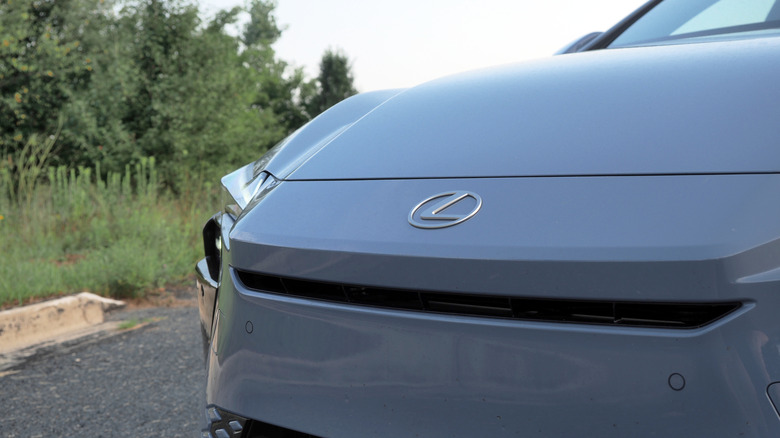
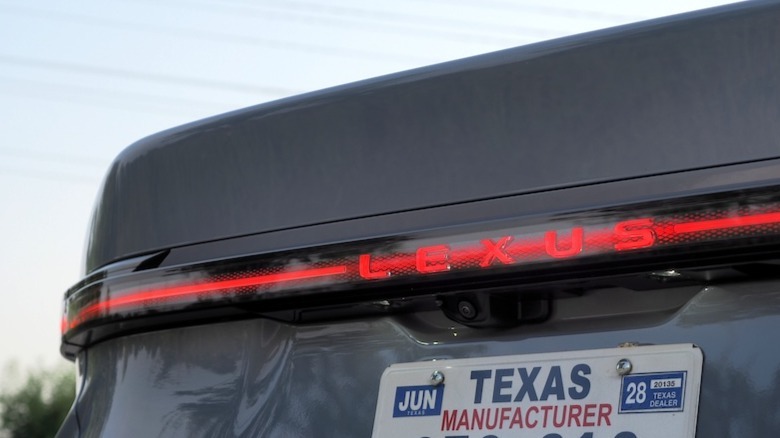
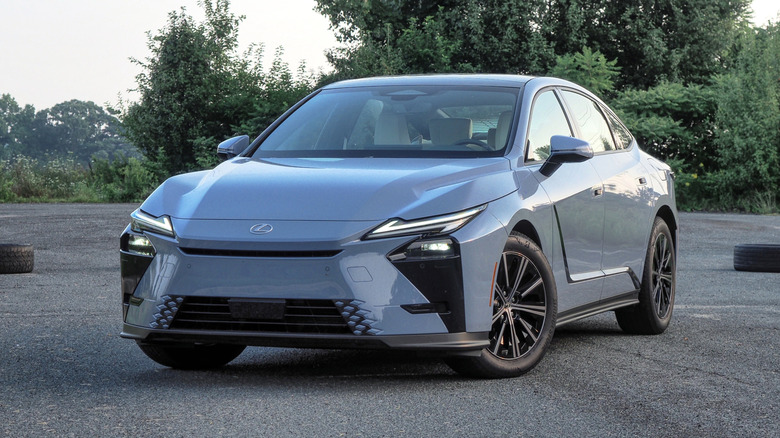
Regardless of powertrain, the new ES doesn't look much like Lexus models before it. In fact — missing the gaping maw of the traditional spindle grille, and with its sharply sculpted side lines — I think it looks more akin to a Toyota Crown Signia than anything else in the automaker's portfolio. The result turns heads in the suburbs, something I can't say I recall being achieved by any other Lexus bar the LC 500.
LED lights front and rear, rain-sensing wipers, and a power trunk lid for the 13.3 cu-ft cargo area are standard across all hybrid trims. So are 19-inch alloy wheels. Lexus even has a couple of brighter paint options available, including a fetching Wavelength blue and eye-catching Copper Crest red.
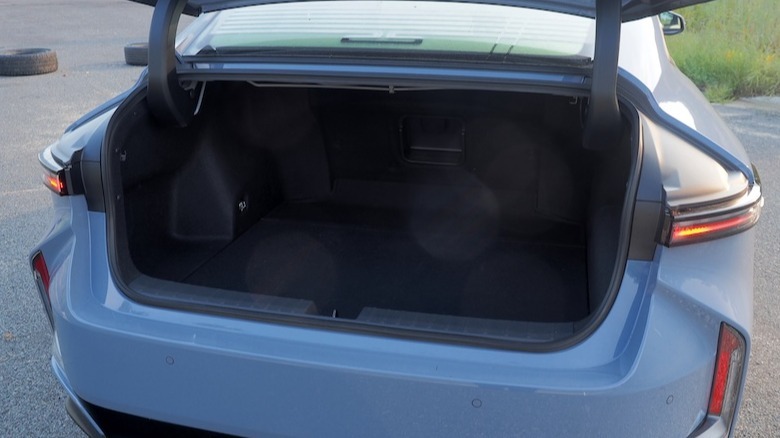 Chris Davies/SlashGear
Lexus Safety System 4.0 is standard across the board, including adaptive cruise control, lane-departure alerts with steering assist, Proactive Driving Assist, pre-collision with pedestrian detection, and auto high-beams. Blind spot alerts with rear cross-traffic warnings are also standard; parking assist and Remote Park are standard on the Premium+ and options on the Premium trims, as is Front Cross-Traffic Assist. Only the Premium+ gets digital key support, a 360-degree camera, and digital rearview mirror.
A focus on frugality rather than speed
Testing the fully-electric ES will have to wait, but this 2026 Lexus ES 350h Premium+ felt ample, if not overly enthusiastic. In all-wheel drive form, its 2.5-liter inline-four gas engine is paired with both an electric motor driving the front wheels, and a second, smaller example for the rear. Total power for the system is 244 hp (confusingly, given not all those maximum horsepower numbers arrive at the same time, the FWD version also clocks in at 244 hp, despite not having the rear motor).
 Chris Davies/SlashGear
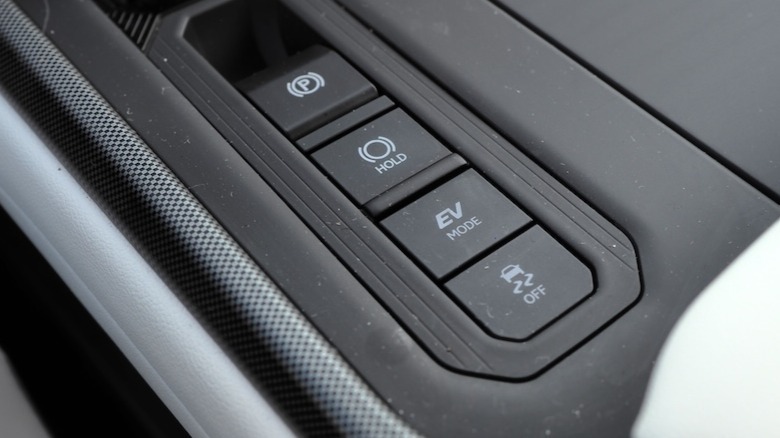
A continuously-variable transmission (CVT) makes all the constituent parts work together, with a small li-ion battery keeping the electric motors going. The hybrid ES isn't a plug-in: it relies on regenerative braking and the gas engine to make sure the battery always has a charge. As such, though there's an EV-only mode, it's tiny and the ES automatically restarts the gas engine if you lean into the throttle with anything other than absolute restraint. If you want true electric range, the ES EV is rated between 272 and 307 miles, trim depending.
The ES is no sports sedan (nor does it claim to be)
Unsurprisingly, 244 horsepower does not a speed demon make. (For what it's worth, my colleague Emme Hall wasn't exactly blown away by the performance of the 221 hp ES 350e or the 338 hp ES 500e, either.) Lexus doesn't bill the ES as anything close to a sports sedan, and that's just fine.
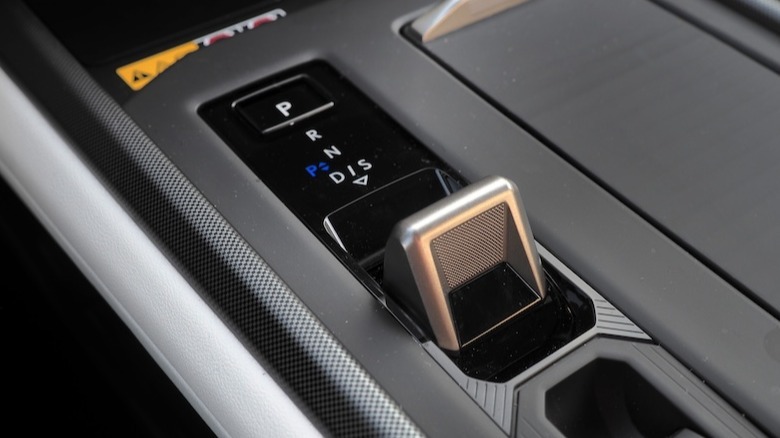
Instead, there's quiet refinement here; the electric motors getting the ES moving with ample quickness and then the gas engine kicking in with reasonable discretion. There's no fancy adaptive suspension, just a well-rounded tune that doesn't embarrass itself with undue roll in corners. It could be a little more compliant on bumpy surfaces.
 Chris Davies/SlashGear
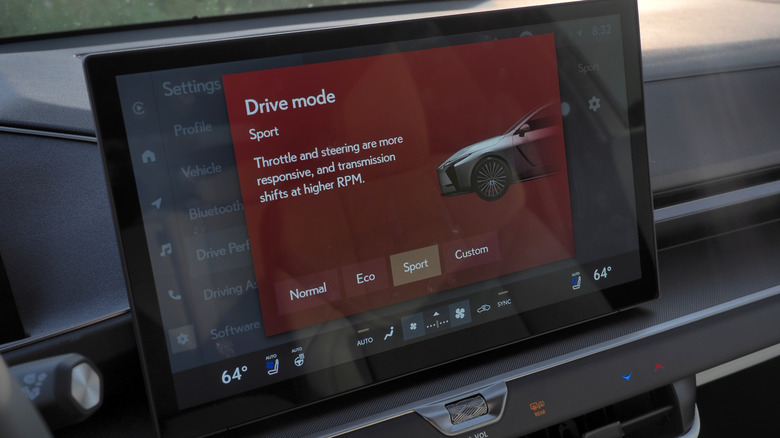
There are various drive modes, including a Sport setting, but you get the feeling Lexus is halfhearted about them: they're buried in the touchscreen's menus. In a straight line, Lexus says the FWD hybrid will do 0-60 mph in 7.3 seconds, while the AWD hybrid trims that to 7.1 seconds. Either way, that's quicker than the single-motor electric ES' 7.4 seconds, though the dual-motor version cuts it to 5.1 seconds. Really, though, you don't pick the ES for its driving thrills.
A game-changing cabin
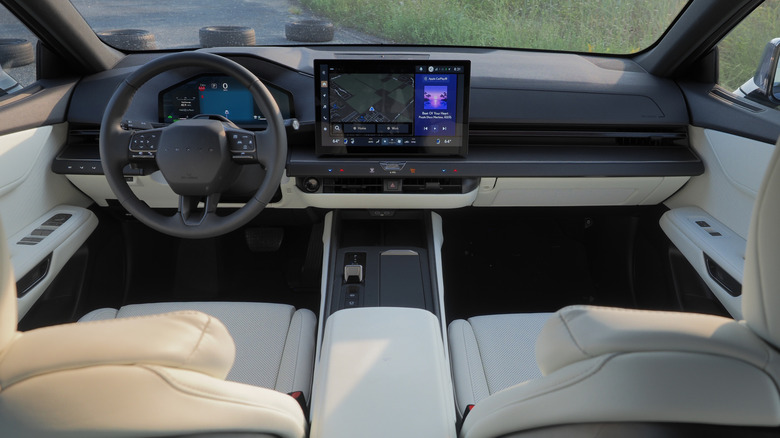
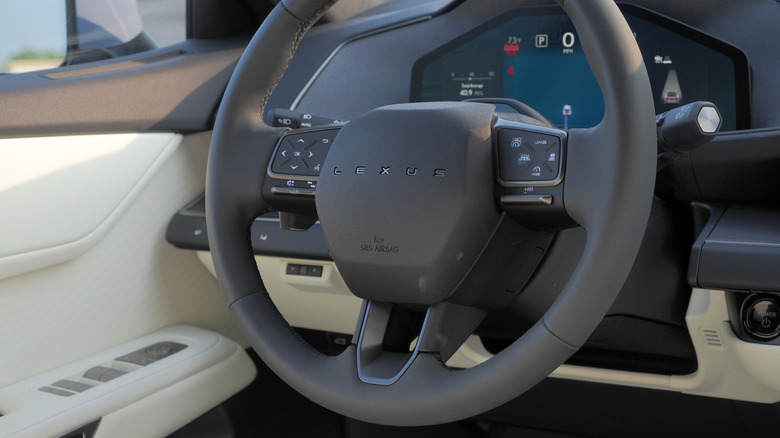
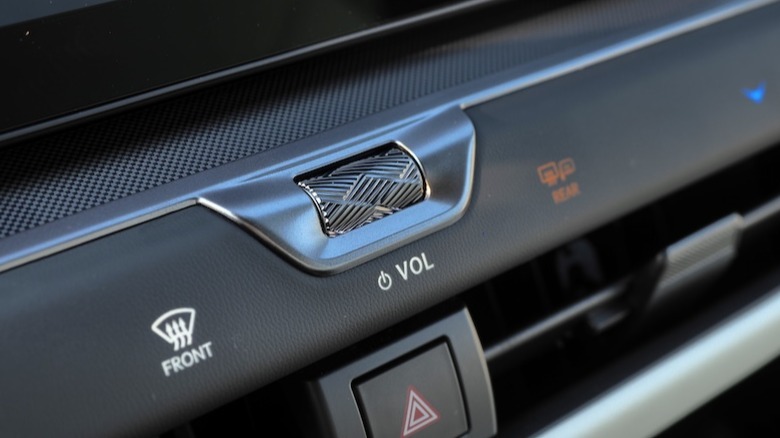
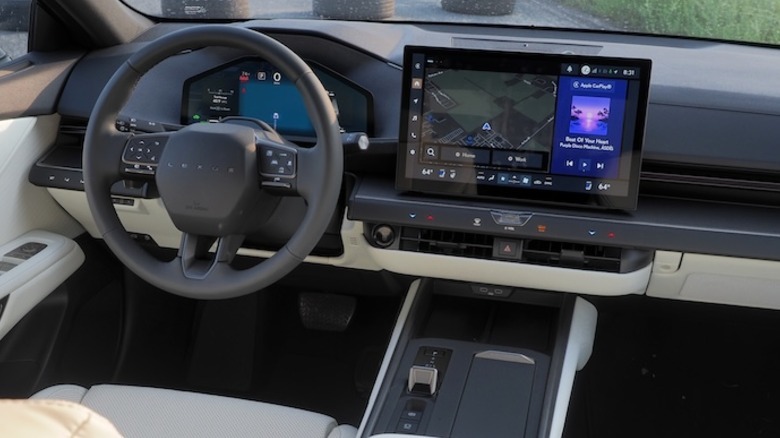
It's inside where the 2026 ES really impresses. The somewhat fussy aesthetic of the old ES dashboard is replaced by clean lines fit for a Japanese spa, with careful detailing that certainly looks the part. Illuminated climate control buttons glow through the horizontal bar running the width of the cabin (they're physical buttons too, depressing slightly and not just touch-sensitive, even if there's no texture to guide your fingertip to them) from either side of a physical volume dial; a 14-inch center touchscreen is standard on all trims, floating out from the dash.
 Chris Davies/SlashGear
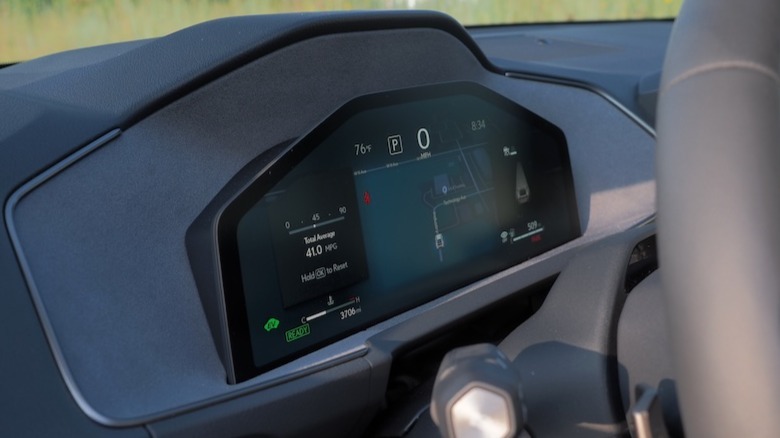
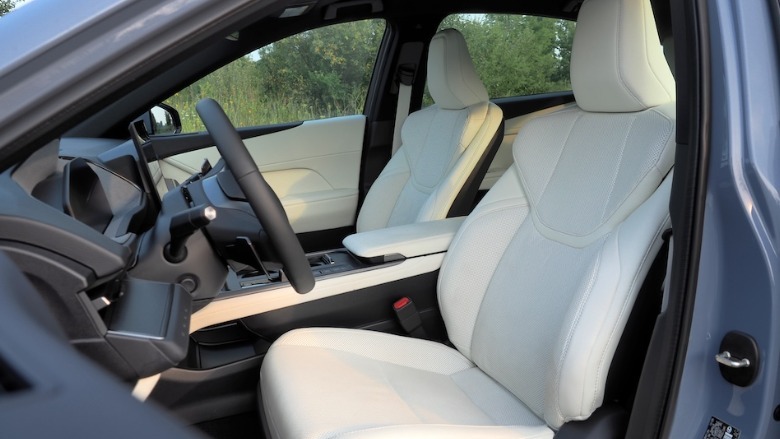
Driver instrumentation gets a 12.3-inch cluster screen, its atypical shape framed in a backlit nook lined with suede-like microfiber as soft as a baby hamster. A head-up display is standard on higher trims, as is a fulsome 17-speaker, 1,800 watt Mark Levinson audio system. The seats get either NuLuxe fake leather or real semi-aniline leather. Electronic door latches are guaranteed to confuse passengers the first few times.
 Chris Davies/SlashGear
Where Lexus' budget shows itself is when your fingertips get involved. The ES never feels less than sturdy, but switchgear that looks like metal at first glance usually turns out to be plastic.
 Chris Davies/SlashGear
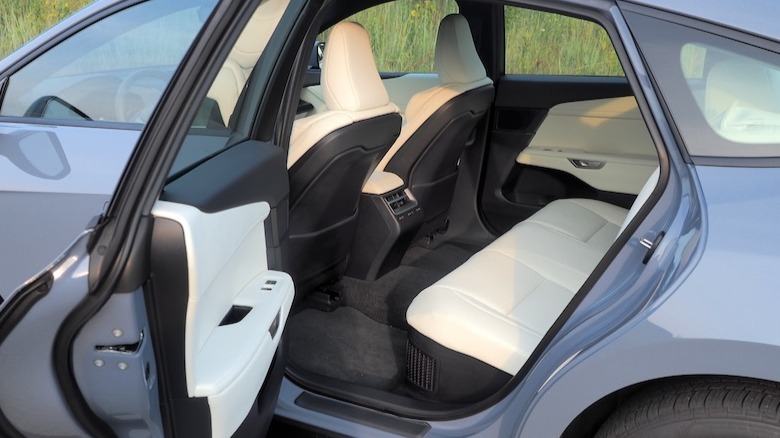
If true luxury is space, though, the ES delivers in spades. The front row is airy and welcoming but the second row is positively capacious, encouraging two adults to sprawl out with its plentiful legroom. In fact there's almost an inch and a half more of that, compared to the old ES, along with more headroom. Not only does the 40.7 inches of rear legroom best the 5 Series and E-Class sedans, it's actually almost two inches more than the LS offered back there.
2026 Lexus ES Hybrid verdict
If there's a broad takeaway from the new Lexus ES, it's that honesty pays dividends. The new sedan doesn't aspire to be your first choice for twisty backroads; its materials acknowledge that more than half of the battle is looking the part, and then backing that aesthetic up with solid materials that never forget the overall budget. And — as with Toyota's decision to go all-hybrid for the perennially popular Camry — there's a clear economy advantage in the ES' electrification.
The 41 mpg I observed over mixed driving might not quite match the EPA estimates, but it's a huge leap over most rivals. Genesis' G80 is similarly priced to this well-specified ES, but its 2.5-liter turbo-four gets a mere 23 mpg combined rating. Certainly, the Genesis is more fun to drive, but the price of that is roughly double the fuel costs.
 Chris Davies/SlashGear
While the LS may have encapsulated Lexus' success-through-obsession approach, and the LC its commitment to be aspirational, the ES has always felt like the automaker at its most rational. A balance of price, and performance, and luxury, that borrows from more expensive models without ever losing sight of its role as a gateway to Lexus ownership. This new ES doesn't forget that strategy, merely excels at it.