

2026 Toyota C-HR Review: Don't Let The Badge Fool You
Toyota first introduced the C-HR in concept form at the 2014 Paris Auto Show, evolving the subcompact crossover over the next couple of years with the intent of selling it as a Scion. By the time the production-ready model finally launched in North America in early 2017, though, Scion — and all but the iM, renamed the Corolla iM — was dead. Thus, the C-HR was a Toyota right from the start of its showroom life. It did fairly well there, too, peaking in 2018 with nearly 50,000 sold in the U.S. A facelift in 2019 helped a little bit, but sales fell off a cliff in 2022, the year Toyota opted not to bring over the second-gen C-HR to the North American market; we received the first-gen Corolla Cross, instead.
Then, just last year, the automaker brought the name back to our part of the world with a friend (the Subaru Uncharted) on the same platform as the bZ. This new C-HR would be a fully electric vehicle, riding alongside the bZ and the more rugged bZ Woodland. All part of Toyota's slow, carefully thought-out move towards full electrification, having been the flag-bearer for hybrids for a generation.
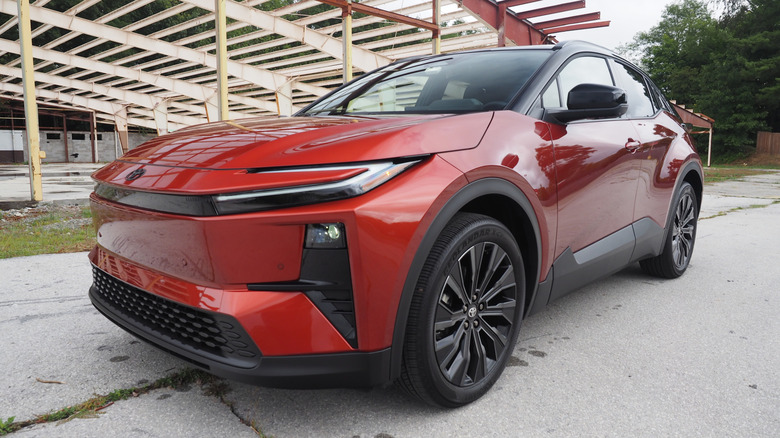
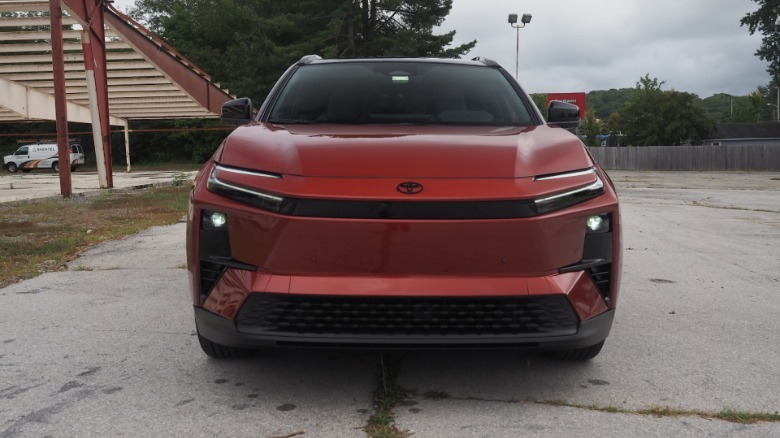
With this in mind, the automaker sent a 2026 C-HR XSE in Tandoori with a Midnight Black Metallic roof to spend a week celebrating my birthday in Southwestern Virginia. Though I couldn't eat this Toyota despite the paint color's name, perhaps I could have my cake and eat it, too, with this latest EV to cross my path.
A couple of choices, other options loom
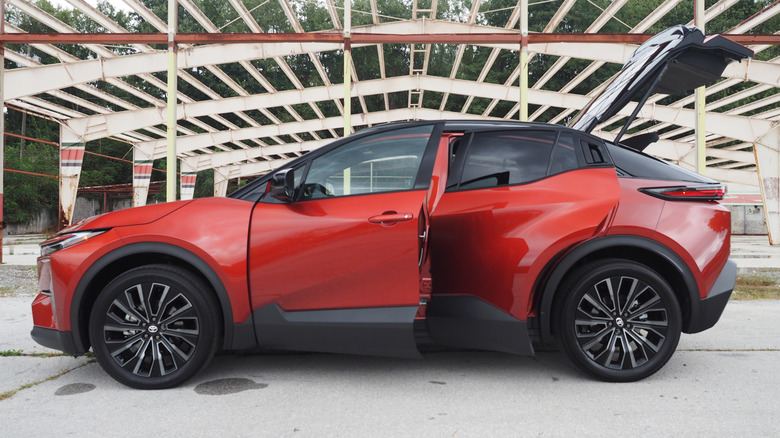
Slotting in the middle price-wise within Toyota's very small EV lineup, there are just two trims to consider regarding the 2026 C-HR. Here's what you can expect to pay after the $1,450 destination fee:
- SE: $37,000
- XSE: $39,000, $43,429 total sticker as-tested
There are quite a few electric crossovers up for consideration, though a few are either more performance oriented, like the Ford Mustang Mach-E, or on the larger side, like the three-row Hyundai Ioniq 9. Though lovely options in their own right, it's best to focus more in the C-HR's neighborhood, beginning from within the inner circle (ovals?) of Toyota. The refreshed-for-2026 bZ ($34,900 – $43,000) offers more range to go with its updated interior, exterior, and NACS (Tesla-style) charging port. The bigger bZ Woodland ($45,300 – $47,400) brings electrification to the woods with a more spacious interior. Like the C-HR, both bZ models only come in two trim levels.
Outside, the aforementioned Subaru Uncharted ($34,995 – $43,795) is one of a few Subarus to offer front-wheel drive, though the all-wheel drive versions offer a smidge more off-road capability. The bZ-based Subaru Solterra ($38,495 – $45,555) sticks to the automaker's tried-and-true all-wheel drive formula over its four trim levels, and is also ready to hit the trail.
The now-discontinued Honda Prologue ($47,400 – $57,900) was pricier than the C-HR, which likely hurt its chance with the public. The returning Chevrolet Bolt ($27,600 – $31,600) kills the Toyota on price, as does the third-gen, newly crossover'd Nissan Leaf ($29,990 – $38,990), though the Nissan offers more range per charge for the money.
No frunk, no shirt, no problem
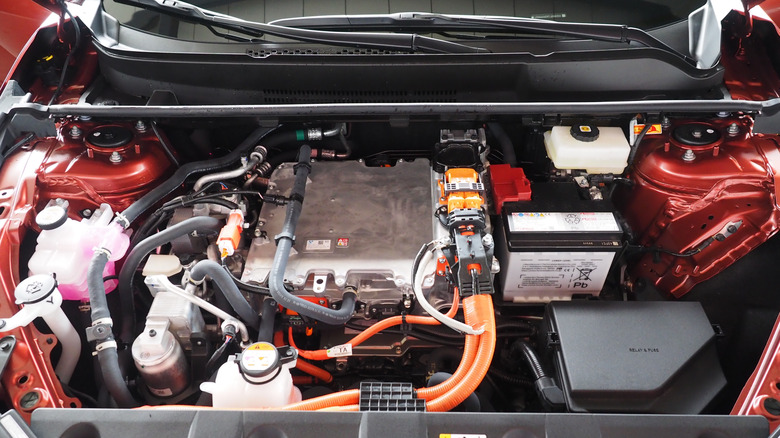
There appears to be a theme with Toyota's electrification efforts thus far, for its own models as well as its equally small Lexus EV lineup:
No frunk.
Most EVs have a small storage space under the hood for holding charging equipment, with a few going so far as to have enough space to be used as a legitimate second trunk (like the Chevrolet Silverado EV). Not here. Instead, the front space of the 2026 C-HR is treated exactly like it held a hybrid, PHEV, or gas-only powertrain under the hood. None of those are there, of course.
 Cameron Aubernon/SlashGear
Instead, you get to see the fully electric setup in all of its orange-cabled, Full Monty'd glory. That setup, by the by, is a pair of electric motors (one up front, one out back) fueled by 74.7-kWh lithium-ion battery pack, sending 338 horsepower and 323 lb-ft of torque down upon the tarmac via a single-speed automatic transmission.
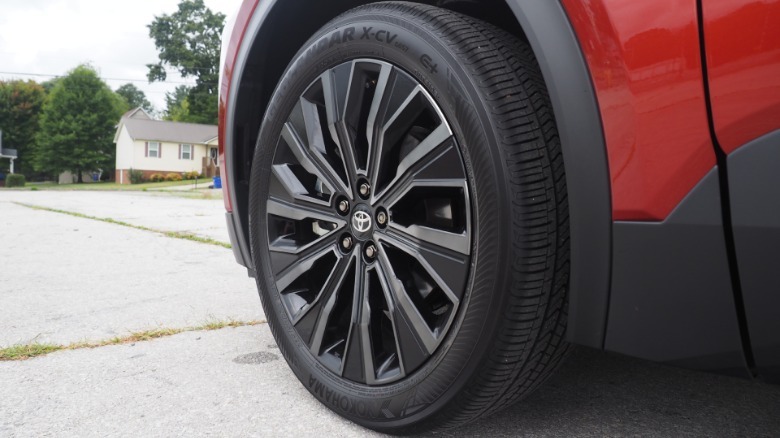
The base SE gets that power down to the road through a set of 18-inch black alloy wheels, while my XSE did the same through 20-inch gunmetal-finished multi-spoke alloys. That difference is one of several factors that determine how much range per charge a given 2026 C-HR will have (more on that later, though). The EPA's estimate is 287 miles for the SE or 273 miles for the XSE, which isn't too bad for a subcompact EV crossover with all-wheel drive. That said, what's on paper isn't always going to match up with reality.
A little Prius here, a little Lexus there
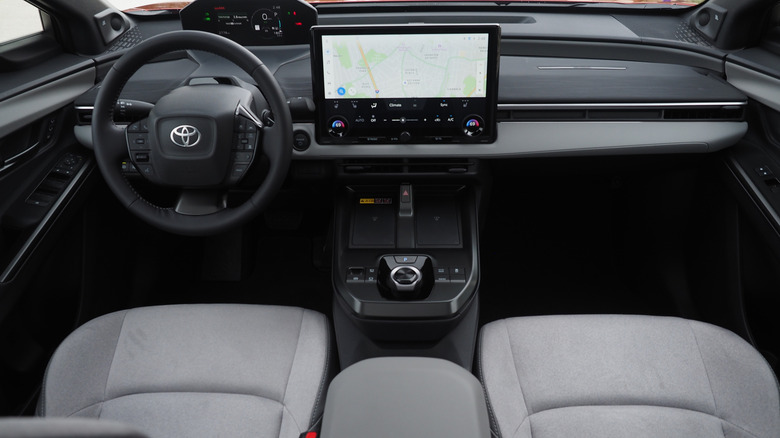
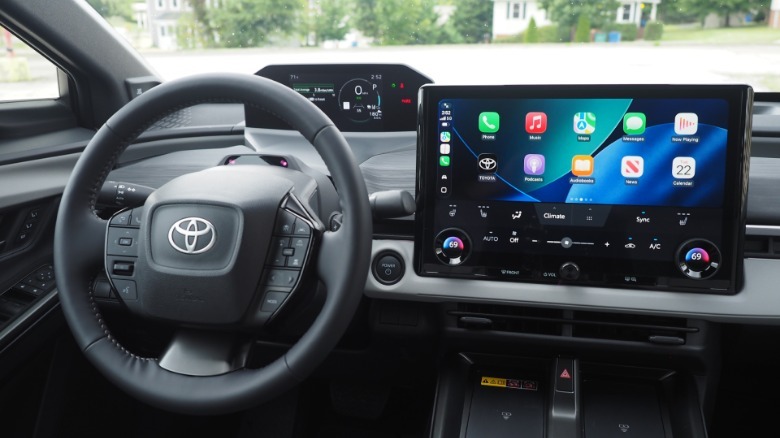
The thought never once crossed my mind that I'd one day see a Lexus-style touchscreen in a Toyota spending some time with me. The 2026 Toyota C-HR is among the first to bring that experience downmarket. Instead of the usual array of buttons, knobs, and switches found on something like the 4Runner or Grand Highlander, it's just a pair of dials with a colorful temperature display at the center of each, a knob in the middle for volume control, a few long buttons for heating the windshield, mirrors and rear glass, and a big 14-inch touchscreen to navigate every other function.
And if that steering wheel and placement of the 7-inch digital gauge cluster looks familiar, that's the same wheel and placement (and cluster) from the Prius. Thus, you get a head-up display without an actual head-up display; your mileage may vary as to how to feel about that.
 Cameron Aubernon/SlashGear
As for what you'll find behind the wheel, the C-HR comes standard with wireless Apple CarPlay and Android Auto, satellite radio, a pair of wireless device charging pads, four USB ports, Bluetooth, and a six-speaker base stereo system. The only available entertainment option is a nine-speaker JBL unit exclusive to the XSE trim.
On the safety front, the Toyota has a good list of standard items there, too, like a rearview camera, pedestrian detection, adaptive cruise control, automatic high beams, vehicle-exit warning, and forward and reverse automatic emergency braking. Available extras include a surround-view camera system, traffic-jam assist, and automatic lane change.
Minimal, yet cozy and practical
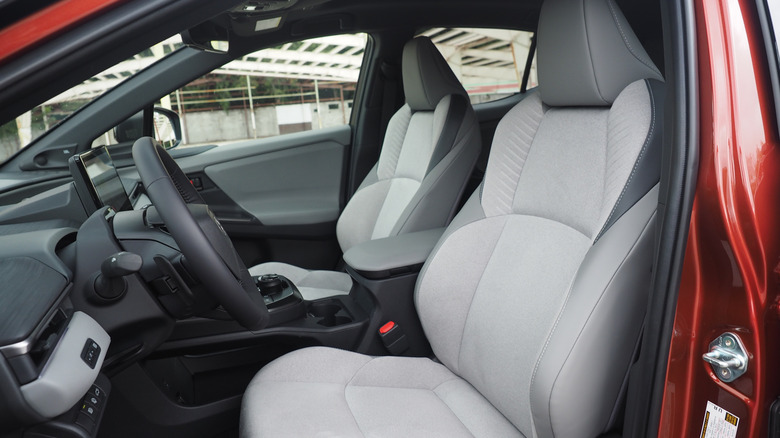
Interior choices are minimal inside the 2026 Toyota C-HR. The SE only comes in black cloth and synthetic leather seating for five, while my XSE can also have a couple shades of gray in a color called Boulder; both colors in the XSE are offered in synthetic suede and leather. Either way, the front seats were soft and comfy, offering power adjustments for both occupants (the SE only has this for the driver; the front passenger has to adjust their own manually).
Dual-zone climate control and heated front seats are standard. Heated rear seats are optional, as is a panoramic sunroof on the XSE.
 Cameron Aubernon/SlashGear
Being a subcompact crossover, things are going to be a bit cozy in the 2026 C-HR. Front legroom is good at 42.1 inches, while the three occupants behind you get 32.2 inches. Front and rear head and shoulder room is quite good in comparison, with around 38 to 39 inches for the head and 58 inches even for the shoulders of the front occupants, 37.5 inches and 54.7 inches respectively out back.
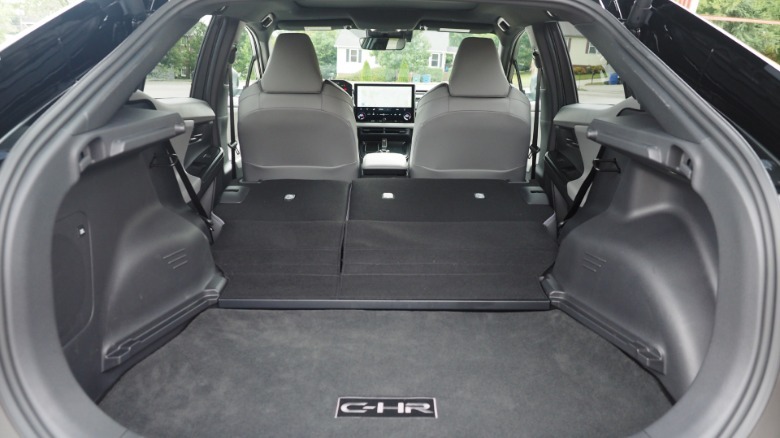
As for holding things, there's 25.3 cubic feet of space with the second-row 60/40-split bench seatbacks upright, plus a privacy cover to keep things out of sight. With the seatbacks down, that jumps to a respectable 59.5 cubic feet for bigger shopping trips. The charging cable and NACS-to-CCS and -CHAdeMO adapters all live in a cubby in the cargo floor underneath the mat.
A confident moment of Zen
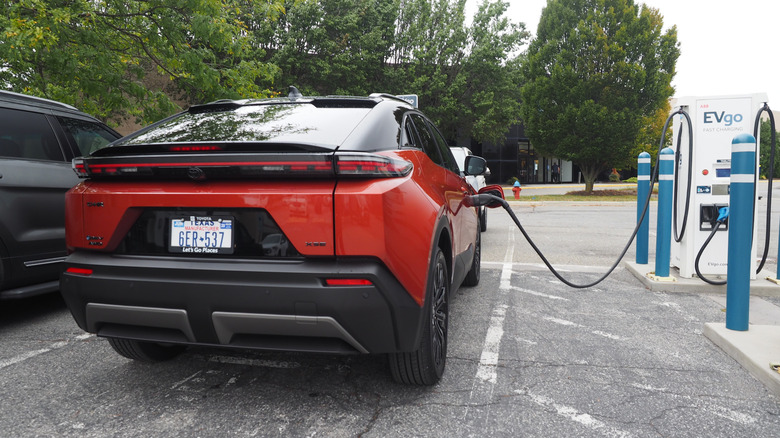
Since the 2026 Toyota C-HR arrived just before my birthday weekend, I wouldn't be doing as much driving in-town as I usually would. Instead, I took on two long drives: a round-trip between my home and the Amtrak station in Roanoke over I-81 and I-581 (with a charging stop before heading back to my house), and my usual 60-mile loop between home and Draper Mountain Overlook in Pulaski County, Virginia.
Add in a few in-town drives and a final charging stop before sending it back home, I managed a final total average of 3.7 miles/kWh, which comes out to 125 MPGe, surpassing the EPA's own estimate of 112 MPGe combined (122 city/102 highway). Range, of course, would fluctuate, based on ambient temperature throughout the day plus whether or not I used the AC. I ultimately had around 243 miles to work with, about 30 miles less than the 273 miles of range on the window sticker.
 Cameron Aubernon/SlashGear
As for driving overall, the C-HR was composed everywhere it went. It definitely has the traditional instantaneous-torque feel familiar from most EVs, especially off the line. On the interstate, I could get out of the way of more than a few big rigs (and then some; zero to 60 arrives in 4.9 seconds). Heading back down the mountain onto the quieter streets and highways, the subcompact crossover glided through the switchbacks and bumps as the wind. Speaking of, I opted to leave the radio off the entire loop to enjoy the (relative) silence offered by an electric powertrain. It was all comfortable and a bit Zen the whole way through.
2026 Toyota C-HR verdict
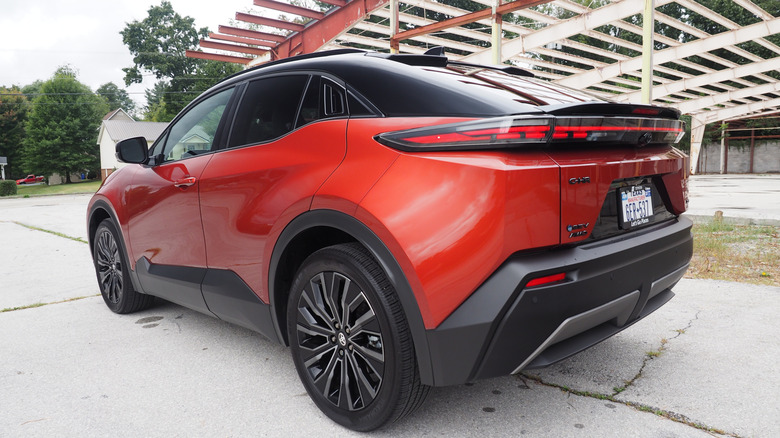
After a week with the 2026 Toyota C-HR, it's safe to say that this is a welcome return for the nameplate in the North American market. More could be done about better handling the environmental influences over its range (not to mention its own climate controls affecting said range), of course, as well as boosting the capacity just a smidge more to 300 miles per charge or above for the few who go for the long drive. The pricing could come down a bit, as well, maybe to below the bZ to better compete with the Nissan Leaf and Chevrolet Bolt.
Nonetheless, this C-HR is a huge step up over the last one from 2022. It offers more than double the horsepower of the gas-only past, which all went through a little-loved continuously variable transmission (CVT) to only the front pair of wheels. It has more cargo space than the old subcompact, despite both offering similar legroom dimensions front and rear, too. And finally, considering how these are/were used (to run errands around town), the new, all-electric C-HR offers a more green (blue?) impact on its environment; no gas or oil to deal with, for starters.
Sometimes, it's better to blow it all up and start again. Toyota has a good thing going with the new C-HR. Whether customers agree will be seen sooner rather than later.