

I Knew The 2027 Chevrolet Bolt Was Cheap, I Didn't Expect It To Be So Cheerful
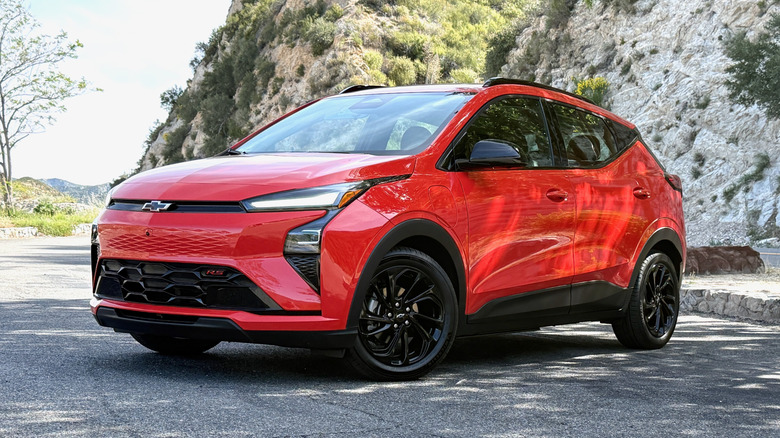
After 4 years absent from the market, the Chevrolet Bolt is back. A small, practical hatchback, the discontinued Bolt was always one of my favorite EVs. And towards the end of its last generation's life, it was available in two sizes: small and medium (also known as the standard Bolt EV and the similar-but-slightly-bigger Bolt EUV). Instead of big, luxurious, electric-powered travel, the bantam-weight Bolt offered transportation for the masses at an affordable price. It was never particularly upscale or flashy, but it didn't need to be – nor did it need continent-crossing range. It could be had for a below-average price, used for efficient daily transportation, and it had creature comforts that brought it above bare-bones status.
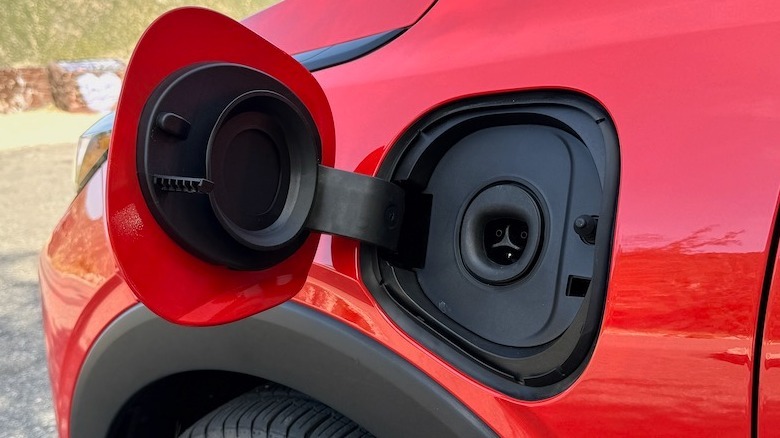
The returning 2027 Bolt has much of the same value proposition. Technically, the current Bolt is an updated version of the old Bolt EUV, but the EUV was just as appealing, with more space and better driving dynamics. It gets new-ish looks compared to the old EUV, along with some functional upgrades, too. It now charges via the increasingly-common NACS port, so it can be charged at Tesla supercharging stations, and the charging speeds are significantly increased. And just about everything else with this resurrected model sticks with the "if it ain't broke, don't fix it" ethos.
Pricing gives it immediate appeal
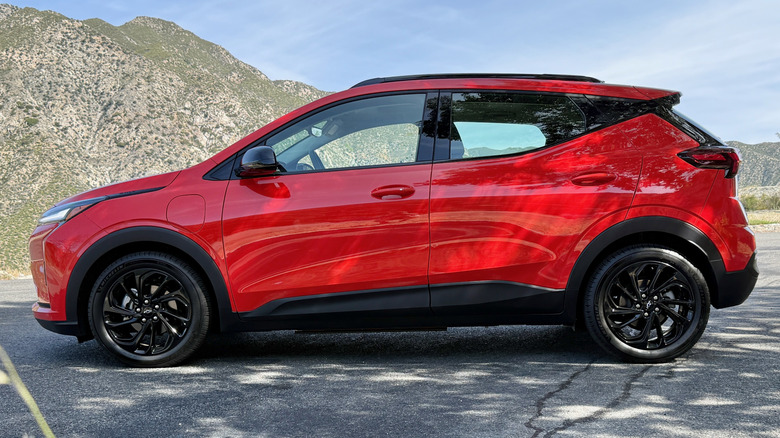
There aren't a lot of fun cars available for under $30,000 these days, but the 2027 Bolt is amongst them, and in both its trims (LT and RS) the little Chevy provides a lot of value for the money. The base 2027 Bolt LT starts at just $28,995 (including $1,395 destination fee). That's only $200 more than the last 2023 model — a number that seriously undercuts inflation — and makes it the cheapest EV you can buy in the U.S. so far this year. There's no range or power penalty for going with the entry-level model, either. It comes with the same 65 kWh battery, the same 11.5 kW on-board charger, and plenty of standard equipment.
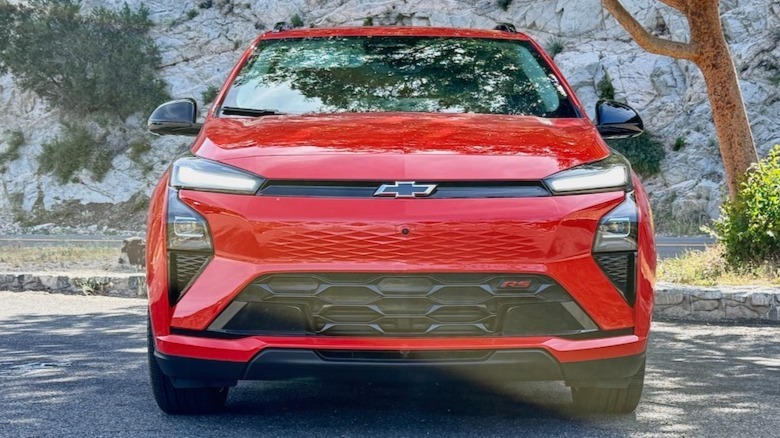
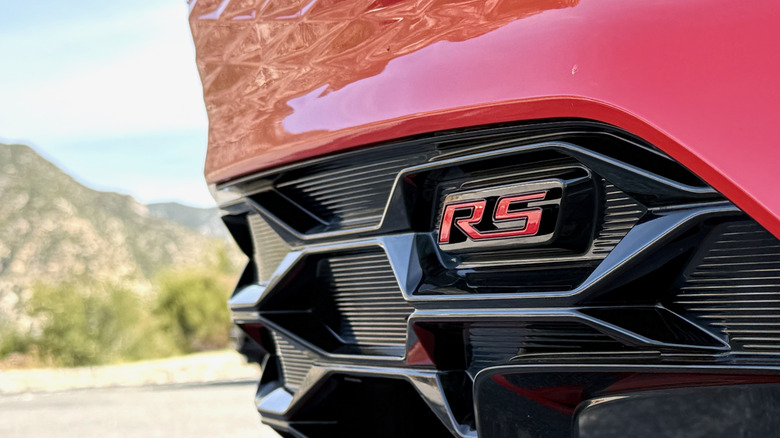
On the base LT trim level, you get the Bolt's new 11.3-inch center touchscreen, remote start, automatic climate control, adaptive cruise control, lane departure warning and lane keep assist, forward collision warning, and a Wi-Fi hotspot. The RS trim level (the one I tested) adds some creature comforts like heated and ventilated front seats, a heated steering wheel, a power-adjustable driver's seat, an auto-dimming rearview mirror, and ambient interior lighting.
 Travis Langness/SlashGear
At $32,995, I think the RS upgrades are worth the extra cost. My test car was priced at $35,685 and had a few optional extras like a panoramic sunroof ($1,495), and the available technology package ($1,195) — which adds a 360-degree camera, wireless smartphone charging, and a rear pedestrian sensor -– but I wouldn't spring for those features. The standard RS is a nice intersection of affordability and feature inclusion.
All the power you really need, and range to get you there
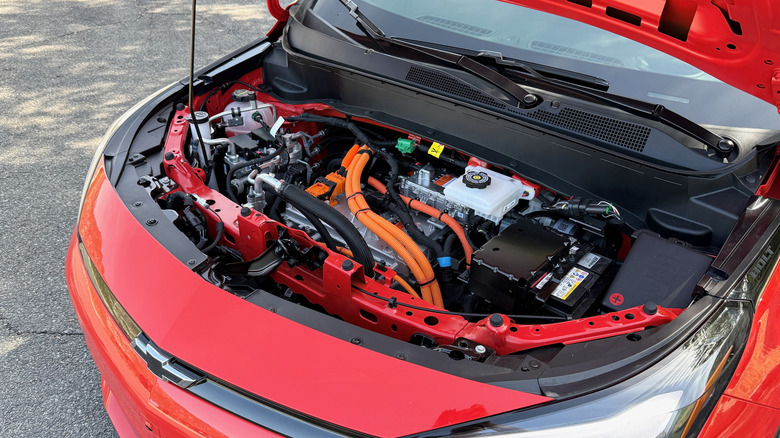
Scooting around town, merging onto the highway, and even doing a bit of enthusiastic back-road driving during my test, there was always enough power to make my time with the Bolt entertaining. Mash the throttle to the floor and you get a nice surge of acceleration, especially when taking off from a stop. With something as diminutive as the Bolt, there's no point in having a tire-shredding power rating, so the 210 hp and 169 lb-ft of torque that it provides are both more than adequate.
The last-generation Bolt EUV made 200 hp and 266 lb-ft, so there's a big drop off in terms of torque, but it didn't make the new model feel any less peppy. After all, the Bolt weighs less than 3,800 lbs, which is pretty light for an EV.
 Travis Langness/SlashGear
The 65 kWh battery pack powering the Bolt sends all its power to a single motor at the front wheels. Keeping the Bolt cheap means there's no all-wheel-drive option, but that means range doesn't suffer from an added set of drive wheels either. The 2027 Bolt has an EPA-estimated 262 miles of range, but with conservative driving habits, I feel like I could stretch that a bit further. Even driving around with a relatively heavy right foot for a week, taking extra trips, and paying no mind to my efficiency, I was unable to exhaust a full charge from the Bolt.
 Travis Langness/SlashGear
According to Chevy, via DC fast charging, the Bolt can go from 10% to 80% charge in 25 minutes, so road trips with abundant charging stations aren't out of the question. At home, on a basic 120-volt outlet, it'll add 4 miles of range every hour, speeding up to 27 miles of range per hour on a 240-volt plug supplying 7.7 kWh of power.
More fun than you might expect
Small and nimble is the name of the game with the Bolt. If you want a car that can fit in tight spaces, this is where it's at. At 169.6 inches long from nose to tail and with big windows offering excellent outward visibility, it's easy to parallel park, or fit into tiny parking spaces of any variety, and it still has more than enough space inside for adults (more on that in a bit). But being small is also part of what makes it fun to drive.
 Travis Langness/SlashGear
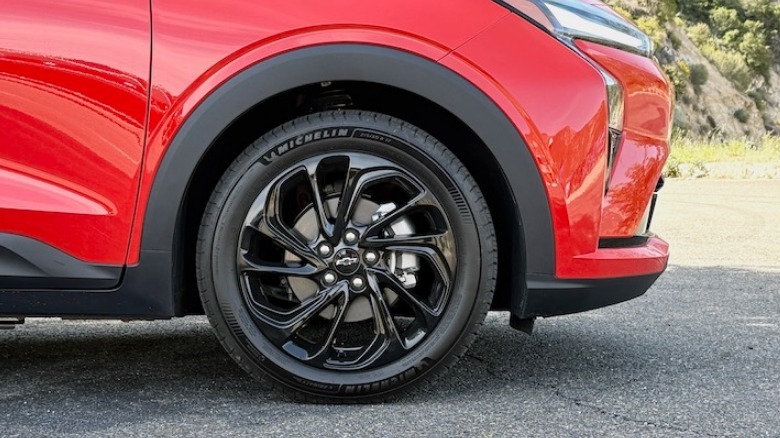
Around corners, at speed, the Bolt feels unencumbered by weight. It never gets pulled out of line, and stability is excellent. Find a few back-to-back corners and the Bolt will happily navigate them quickly, changing direction in a flash, with well-weighted steering. It's been a while since I thought something like "I would totally autocross this EV," but the Bolt had that sort of fizz.
 Travis Langness/SlashGear
The regenerative brakes have three settings: off, normal, and high — high was what I used for most of the entertaining driving I did in the Bolt. Normal was a bit better for city driving, and both settings, with proper practice, allowed for a one-pedal driving experience. I could accelerate, slow, and stop the Bolt in the city without ever putting my foot on the brake pedal; it's a great way to reduce fatigue on heavy-traffic days.
Lots of comfort and space for the money
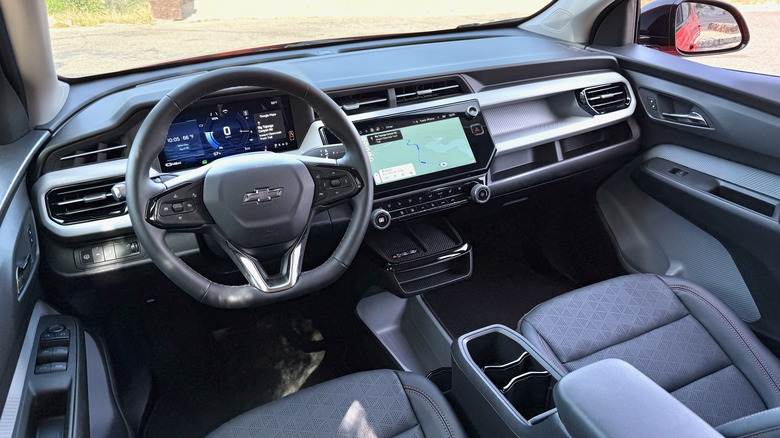
Looking around the interior and living with the Bolt, it's easy to spot where money is saved. There are lots of plastic surfaces in the cabin, which is to be expected at this price point, but thankfully, those plastics and surfaces don't feel cheap. Most of the materials feel dense instead of hollow, and the interior construction is strong, too. The seats, steering wheel, arm rests, and most of the other high-traffic touch points have a quality feel.
 Travis Langness/SlashGear
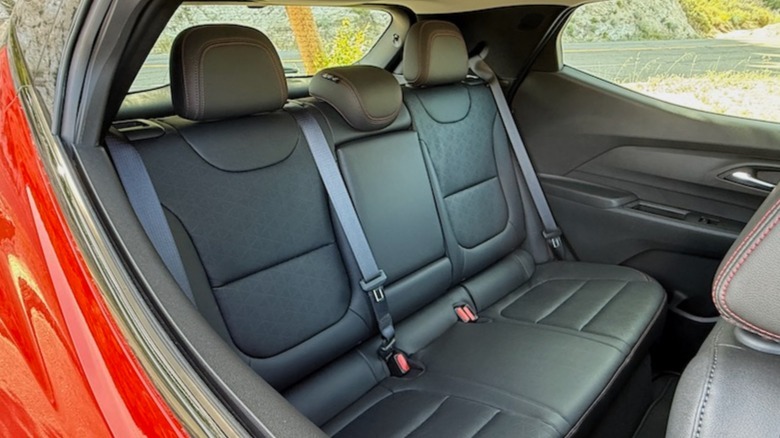
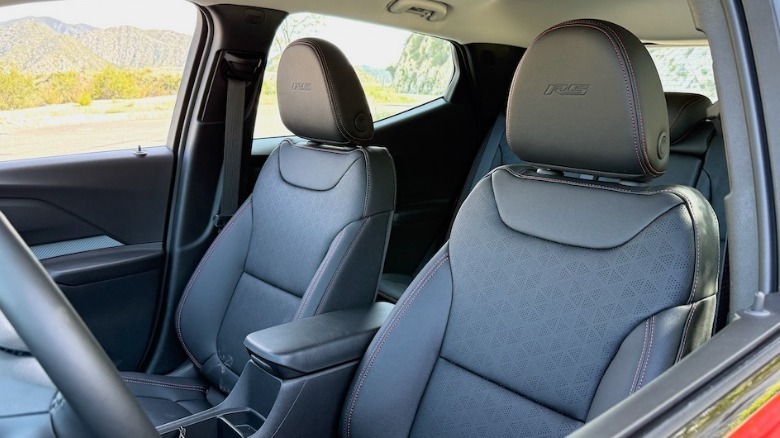
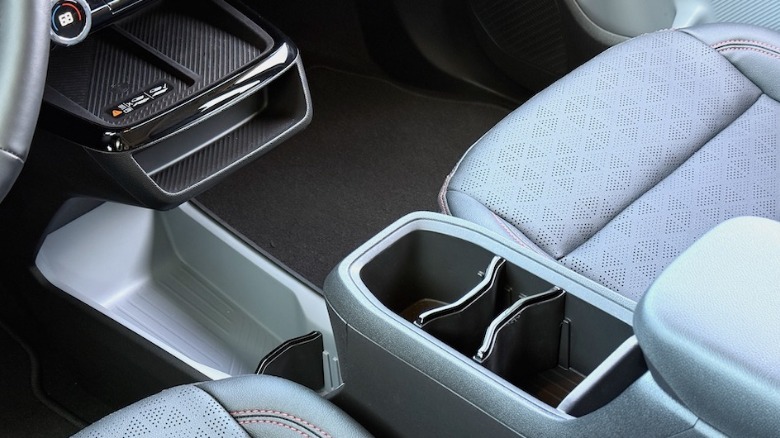
Considering how little space it takes up on the outside, the Bolt feels roomy on the inside. Like any good utilitarian vehicle, it has lots of cubbies and storage spaces for your small items. Wallets, big cell phones, water bottles, and coffee cups galore all have a place in the Bolt. For the driver and the front passenger, there's lots of headroom, legroom, and hip room to wiggle around in.
Rear adult passengers will have no problem spreading out either. The seats are supportive, well-padded, and they'll likely be pretty comfortable on long drives. Plus, the Bolt's suspension, while firm, didn't translate most of LA's road imperfections into the cabin.
 Travis Langness/SlashGear
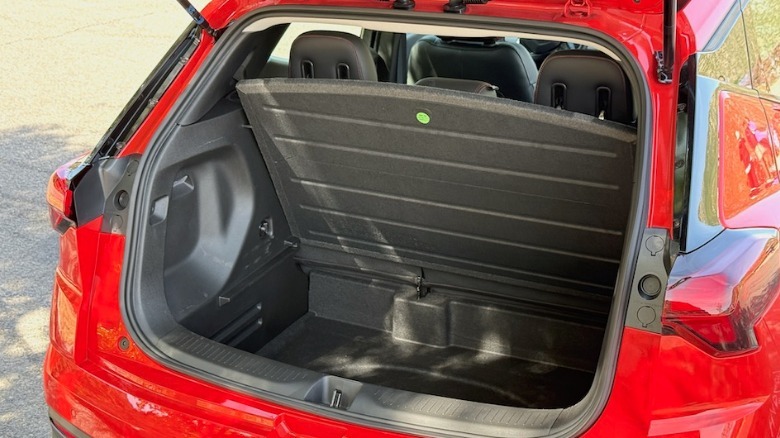
With 16.2 cubic feet of cargo behind the rear seats (including a nice little drop-down trunk floor), and 56.3 cubic feet of cargo space when the seats are folded, there won't be too many items too large for the Bolt. Even some large suitcases should fit in the trunk if you end up road-tripping the humbly-sized EV.
A missing tech piece, but it's not a dealbreaker
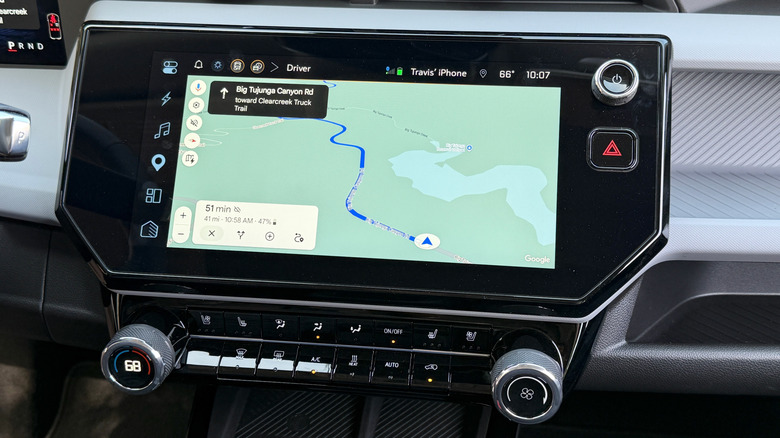
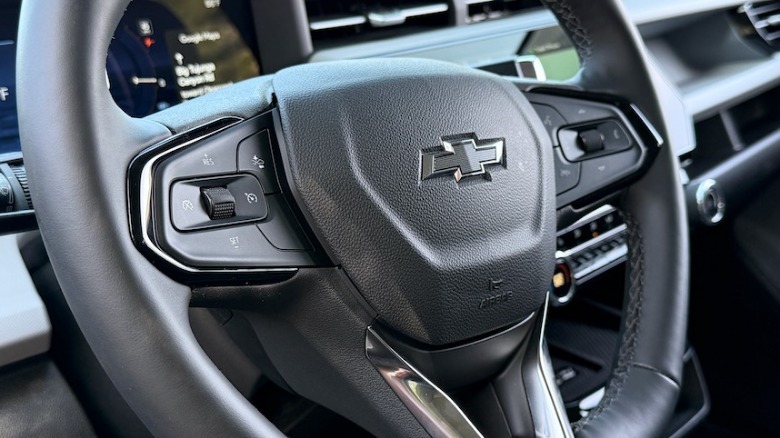
There's some tech, new and old, worth mentioning in the new Bolt, but one of the biggest missing items is smartphone connectivity. Sure, you can connect via Bluetooth, and there are plenty of USB ports to plug into when charging your devices, but there's no Apple CarPlay or Android Auto to speak of — an omission making its way across all GM vehicles. Instead of those relatively ubiquitous systems, Chevy equipped the Bolt with Google built-in, which works reasonably well (but it will require paying a subscription once the initial free period runs out).
 Travis Langness/SlashGear
Aside from the missing smartphone link, the Bolt's other tech works well, especially the driver aids. Adaptive cruise control keeps a reasonable distance from cars in front, and all the various safety warnings are well-tuned — nary a false alert was heard during my test. The big center screen is crisp and easy to use, too. As a bit of a loud-music enthusiast, I'd like a stereo that gets about three times as loud as the underwhelming stock stereo in the Bolt, but it's something I could live with if I needed to.
Even though it's one of the least-expensive cars Chevy currently makes, and the cheapest EV available in 2026, the Bolt does offer a pricey tech option if you want to spice things up. Notably, you can get GM's hands-free driving system, Super Cruise, but it'll cost over $3,200 on top of the optional technology package. For about a 10% increase over the cost of the standard RS, that's an upgrade I'd skip.
2027 Chevrolet Bolt verdict
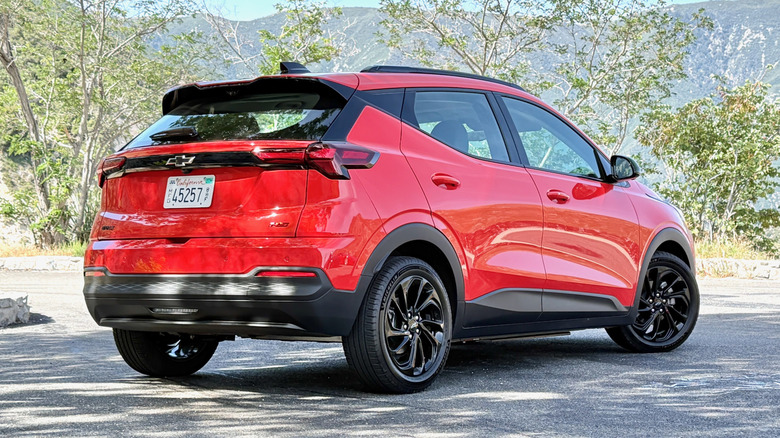
It's relatively cheap, spacious transportation, full of enthusiastic life, filling a big void in the automotive world. As a city car, a daily commuter, and even on the occasional well-planned road trip, the Bolt can be satisfying to drive without fully obliterating your bank account. And after a week behind the wheel of the Bolt, I kept coming back to the same idea: the new Bolt is the closest thing the automotive world currently has to a Honda Fit.
The Fit was discontinued back in 2020, and while Honda still sells the larger HR-V, there isn't much else out there that has taken up the mantle for small, affordable, fun-to-drive hatchbacks. That's where something like the Bolt fits right in. Even if it's basically the same vehicle as the old EUV, the changes that have been made make it worthy of attention, and in 2026 money, it's an even cheaper car.
Just because the new Bolt is good, though, doesn't mean it's without rivals. The newest Nissan Leaf is a bit more premium, with more range than the Bolt, though the Leaf's higher prices may steer some shoppers away. The Fiat 500e offers less range via an even-smaller package than the Bolt, at a slightly higher price, but it might have some aesthetic appeal for some (and attractive lease deals for others). And, of course, there are a few gasoline-powered cars that are similarly priced (or available for less), like the Honda Civic or the Toyota Corolla. Even considering those into the equation, there's still plenty of room for the Bolt to be at or near the top of your short list.