

iPhone 18 Pro Review: Apple's Flagship Is No Longer Its Most Expensive Phone
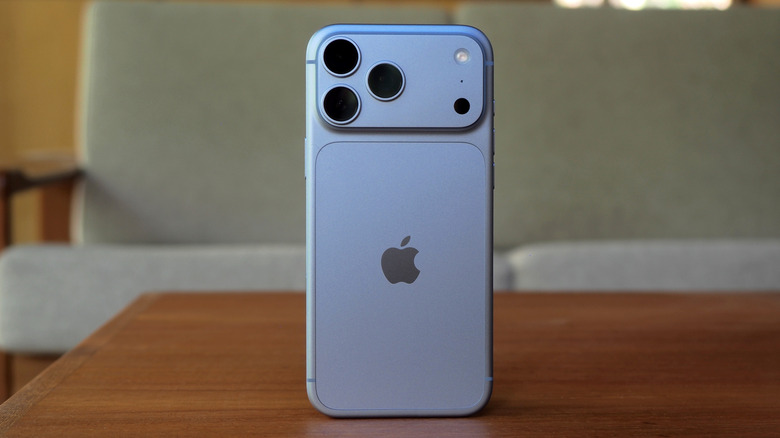
With the iPhone Duo, Apple's first foldable smartphone, stealing most of the oxygen in the room, you could forgive the iPhone 18 Pro for feeling overshadowed. The "Pro" phone has, until this year, sat at the top of Apple's tree, both in capabilities and price. Only now there's a foldable to make even the sizable screen on the iPhone 18 Pro Max start look a little small.
Apple's tick-tock approach to iPhone updates — revolution one year, evolution the next — dovetails neatly with the Duo's arrival. The iPhone 18 Pro and 18 Pro Max are refinements on the significantly revamped Pro models of 2025: a targeted approach to improvement rather than wholesale reinvention. It's a sensible strategy, focused as it is on the areas owners care about (and use) most.
 Chris Davies/SlashGear
So, the iPhone 18 Pro promises more usable screen, more performance, and more battery life, along with more camera flexibility and more efficient power management. It's also — though not quite as expensive as an iPhone Duo — hardly cheap, at a time when budgets all over are shrinking and belts are tightening. Without a fancy-pants flexible display, is the iPhone 18 Pro still any sort of flagship?
The outward changes are subtle
Last year's iPhone 17 Pro saw Apple's aesthetic get serious. A sturdy aluminum frame replaced the glittering titanium fancies of the previous generation, complete with a more dominant "camera plateau" and matte-finish colors. It was instantly distinctive from the iPhones that came before it.
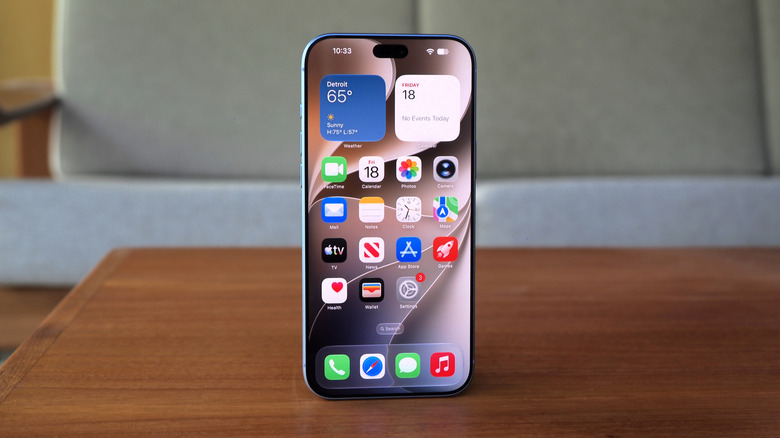
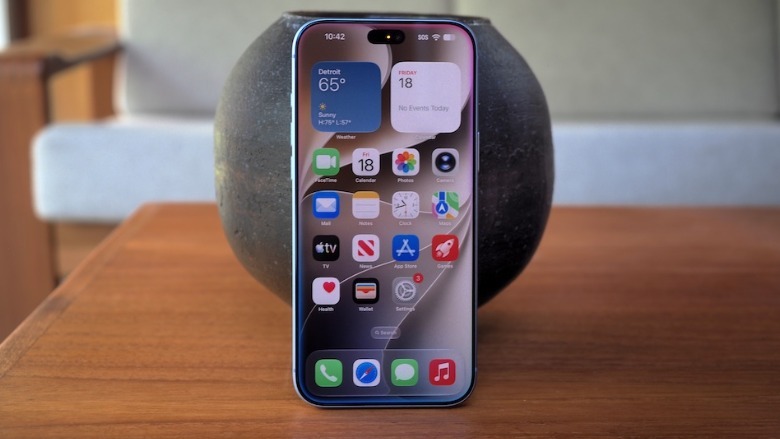
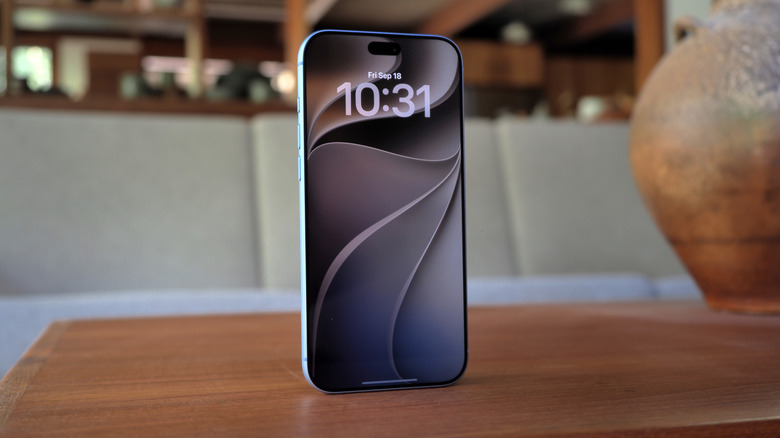
The iPhone 18 Pro looks basically identical: IP68 dust and water resistant aluminum unibodies inset with color-matching toughened glass on the rear. Apple has shuffled the palette for 2026: gone are the Deep Blue and eye-searing Cosmic Orange, and in their place are Black, Silver, Glacier — a pale blue — and Burgundy. Apple does claim the black finish is "the darkest color ever" on an iPhone, though you'll want Glacier or Burgundy if you need those nearby to recognize you upgraded.
 Chris Davies/SlashGear
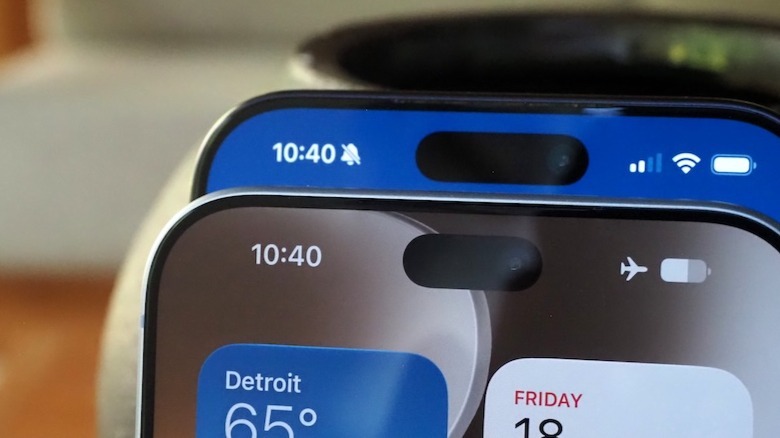
As before there's either a 6.3- or 6.9-inch Super Retina XDR display, and as before it's a beautiful panel, color-rich and supporting both high brightness and great contrast. There's the same always-on display tech and 120Hz ProMotion variable refresh, too. However, Apple has trimmed the Dynamic Island — the black lozenge around the front-facing camera and other sensors — by about a quarter.
To do so, it had to hide the infrared illuminator (used by Face ID) under some redesigned pixels, so it could actually shine light between them, not that you'd notice that. All you'll really see is more space for Live Activities — the little status icons for things like music playback or active exercise sessions — with three rather than two now supported. As before, tapping them summons a larger information widget. I haven't noticed any impact in Face ID speed or accuracy from the new design.
Not only more power, but more usable power
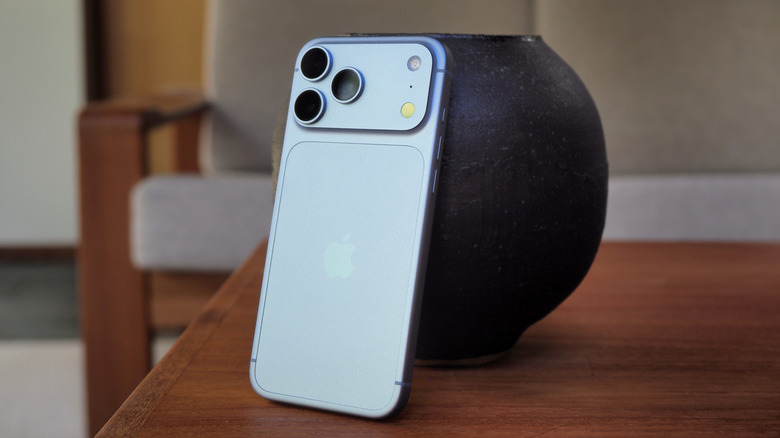
A new iPhone usually means a new chipset, and the iPhone 18 Pro brings the A20 Pro out to play. It promises the expected performance gains — up to 40% more CPU grunt than the iPhone 17 Pro's A19 Pro, and a 50% increase in memory bandwidth — but that wouldn't be half as impressive if Apple hadn't improved thermal performance, too. It's fair to say that the iPhone 17 Pro could certainly be speedy, but it also got dang hot in the hand in the process.
Again, there's a laundry list of improvements — tripling the surface area of the vapor chamber; new materials that better wick heat from the chipset and the display; and smarter packaging including separating the chipset and the memory rather than stacking them like a hot club sandwich — but the proof is in your hand from day one. Restoring an iPhone from a previous backup and updating all your apps can be system-intensive (just like extended photography sessions or other CPU/GPU-heavy tasks like gaming) and the iPhone 17 Pro got conspicuously hot during setup, particularly on the rear right side. The iPhone 18 Pro has so far been noticeably less toasty.
Now, last year's phone never felt outright uncomfortable, but heat impacts more than just that: get too hot and the chipset has to throttle back, meaning you lose performance. Apple claims up to a 40% gain in sustained performance over last year's phone, and up to double that versus the iPhone 16 Pro. It's a metric that's tricky to test — throttling is all handled automatically, in the background — but my early experience of the heat (or lack of) is definitely promising.
Digital can't do everything
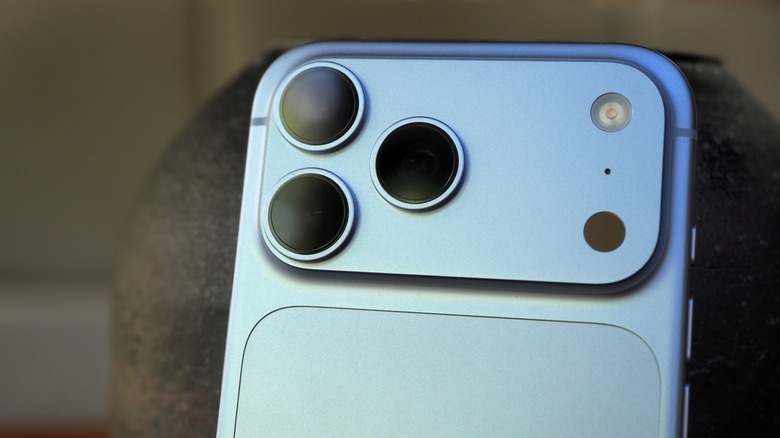
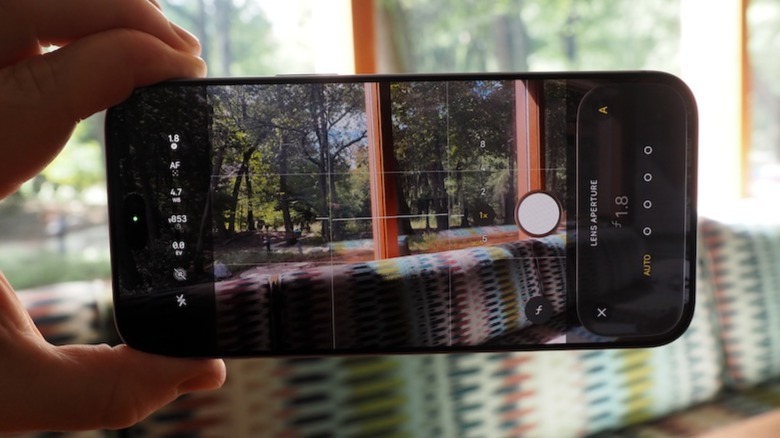
Computational photography is likely one of the main causes of all that heat, and while the iPhone 18 Pro's trio of rear cameras may look unchanged at first glance, there's some mechanical magic going on behind the glass. The 48-megapixel Fusion Main camera — the primary sensor which doubles as the 2x telephoto — now has variable aperture, courtesy of six tiny blades that open and close to adjust the amount of light making it through.
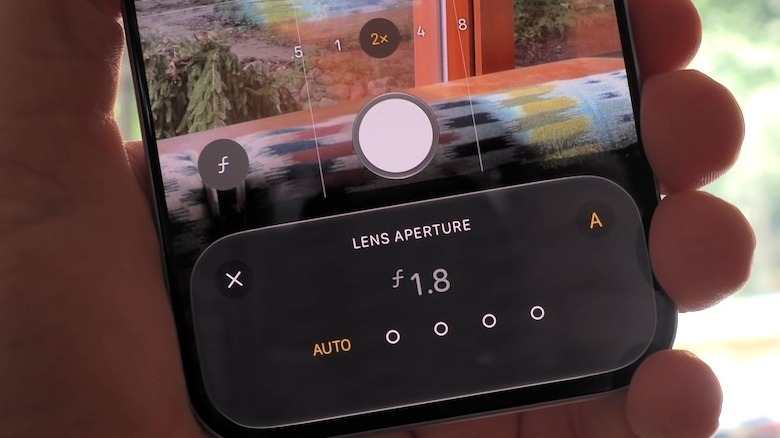
There are currently four aperture options: f/1.48, f/1.8 (the default), f/2.8, and f/4.0. At f/1.48, Apple says, there's around 50% more light hitting the sensor; at f/4.0, however, you get a longer depth-of-field. Basically, it's a trade-off between handling lower light scenes versus how much of the scene can be in focus at any one time.
 Chris Davies/SlashGear
By default the iPhone's Camera app chooses automatically — if it spots multiple people in the scene, for instance, it'll switch to f/2.8 or f/4.0 so as to keep more of them in focus — but you can flip between the four manually, too. An update to the Camera app adds things like a histogram and a user-customizable toolbar, onto which controls like aperture, white balance, shutter speed, and more can be pinned.
Alongside the new Fusion Main camera are the familiar ultra-wide and 8x telephoto zoom cameras. Both also support up to 48-megapixel captures, though neither has the fancy mechanical variable aperture system.
A new tool in smartphone photography
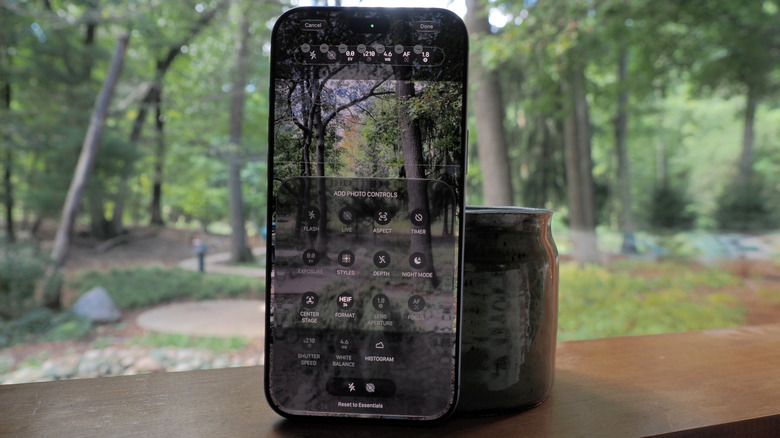
The difference between the various apertures can be subtle: the relative crispness around the edges of a subject, and the degree of clarity of what's behind. It's fun to play with, especially with the knowledge that you're tinkering with actual light rather than entirely in some computational pipeline.
 Chris Davies/SlashGear
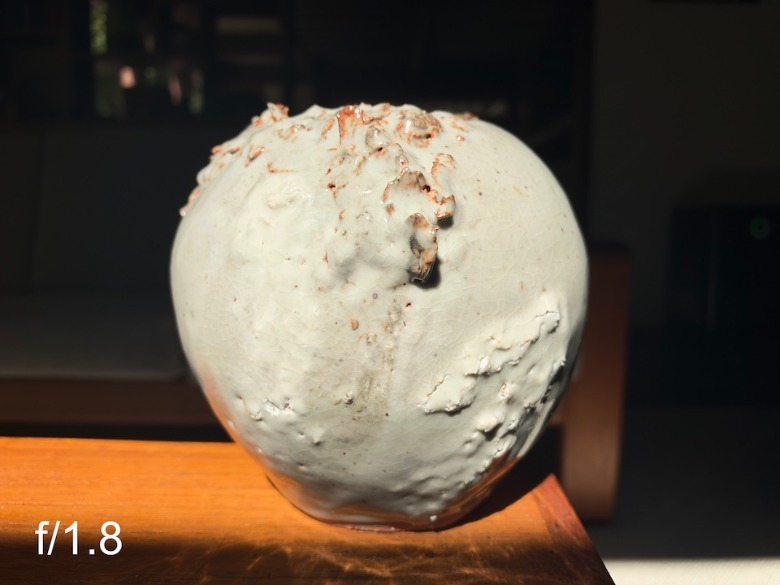 Chris Davies/SlashGear
 Chris Davies/SlashGear
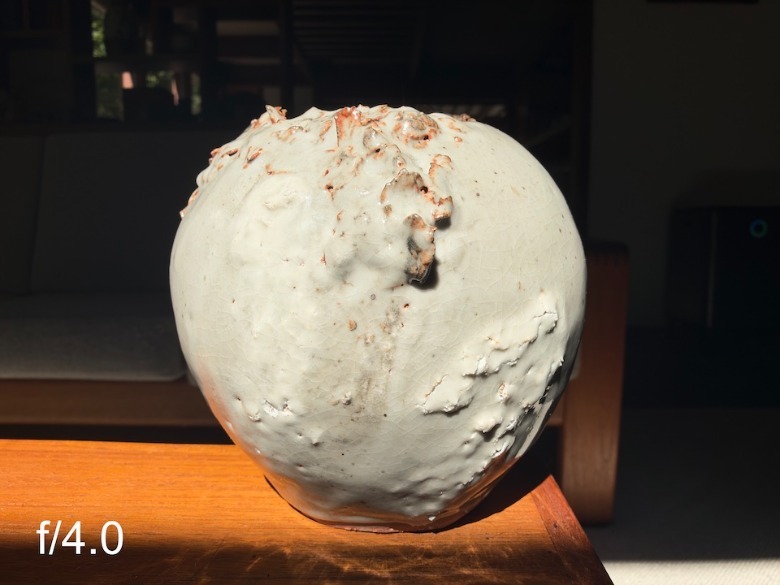 Chris Davies/SlashGear
The usual night modes offered by modern smartphones are undoubtedly impressive, technically — pulling out far more detail than can be seen with the bare eye — but I often find myself wondering if they produce good pictures. In contrast, the areas of dark and shadow from a wide-open aperture feel more realistic and natural.
One frustration I encountered while taking manual control over aperture was iOS' automatic switching between sensors. Since at times the Camera app will decide to use a different sensor depending on the current conditions — the ultra-wide for a close up, perhaps — you can suddenly find the aperture options are grayed out.
More ways to change photos and video, and a way to tell what's real
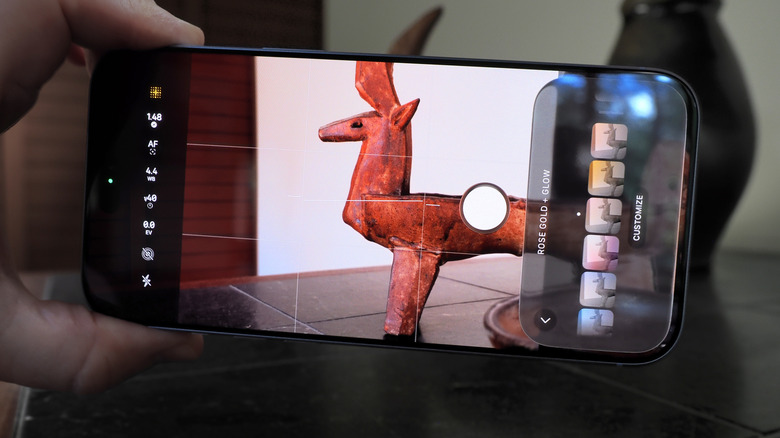
Cinematic effects can now be applied to video post-capture, even if you didn't shoot in a specific Cinematic mode: it makes adding things like dynamic blurring easier, as the iPhone is saving depth data by default. Then there are the latest batch of Photographic Styles 3, which can adjust things like grain, glow, and skin softness. Apple says they're less obvious than a traditional beautifying feature, which I'd agree from my own experimentation. Quite honestly, I don't tend to find myself really using these styles and filters: I'd much rather have the standard picture.
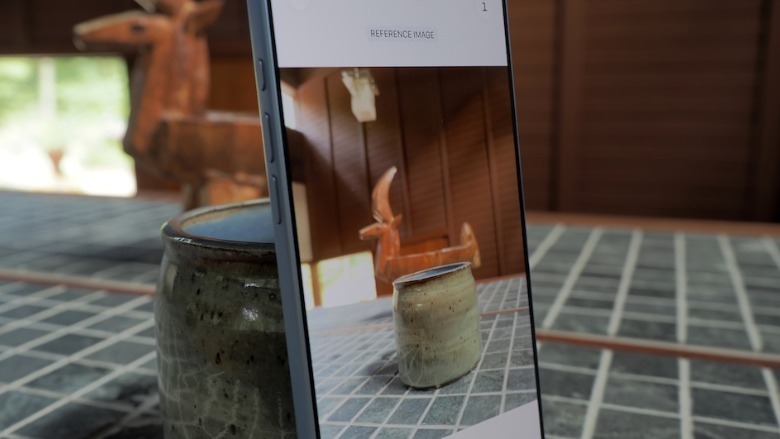
On that front, the iPhone 18 Pro introduces Apple Reference Image. It's effectively a way to verify that the photo you're looking at is what the camera took, something which seems all the more important given the proliferation of edited, faked, and AI images out there. It's not just software, but integrated into the Fusion Main camera sensor (which also means the new Reference mode in the Camera app only supports that sensor's 1-2x zoom; it won't support the ultra-wide or 8x telephoto).
 Chris Davies/SlashGear
In the Photos app you can "develop" a Reference image to see the difference between any edits made and what the sensor authenticated at the time of capture. That processing is done using Private Cloud Compute, not on-device.
Siri AI and iOS 27
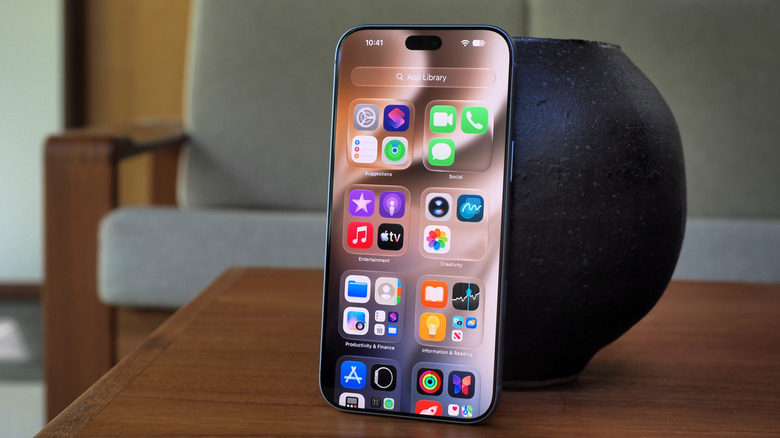
Private Cloud Compute is also instrumental in the enhanced Siri AI functionality, part of iOS 27. It's currently in beta in English, though Apple says there'll be French, Japanese, Korean, Portuguese, and Spanish support in short order. One of the biggest changes is the combination of natural language recognition combined with Siri AI's ability — with permission — to dig into things like your messages, calendar, and reminders to bolster its contextual knowledge. That's not limited to the iPhone 18 Pro, mind, rather part of iOS 27.
There's also Visual Intelligence — effectively AI-powered search for what the iPhone's camera sees — and promised improvements in things like voice-to-text dictation. Plus the image editing and generation tools, along with generative text in pretty much any app that shows the iPhone keyboard. I still can't say I'm a fan of either generative AI generally, or Apple AI's over-enthusiastic auto-suggestions for how to respond to emails.
 Chris Davies/SlashGear
As for battery life, Apple is now quoting not only the usual video playback times — up to 36 hours on the iPhone 18 Pro, and up to 45 hours on the 18 Pro Max — but a new "typical usage model" it claims encompasses time spent in the camera, browsing, AI, and other tasks proportioned out by real-world data. On that metric, the iPhone 18 Pro is rated for up to 24 hours, and the 18 Pro Max for up to 30 hours.
Even with my own experience skewed by the inevitable search re-indexing that happens with a newly-setup iPhone, I've been ending the day with a decent amount of juice on the meter on this iPhone 18 Pro Max. Certainly it's in-line with what the iPhone 17 Pro Max delivered, though greater distinction will take more testing.
Is iPhone 18 Pro the flagship, or is iPhone Duo?
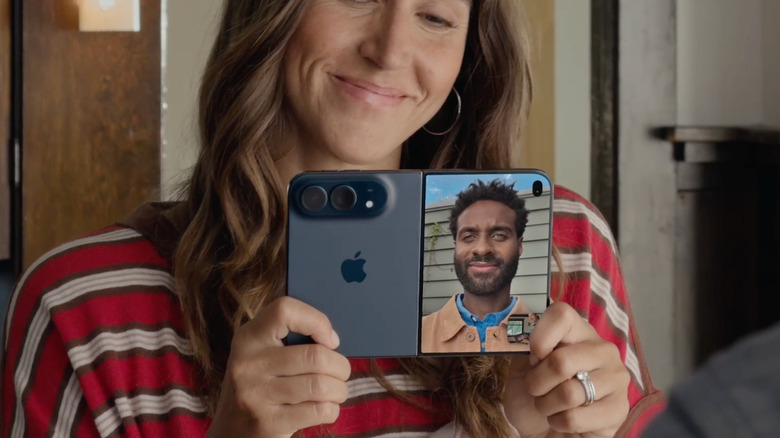
You could well argue that not since Apple split the iPhone line-up into regular and "Pro" models back in 2019 has the potential for shopping confusion been so great. Since then, after all, the regular iPhone has been for regular folk, and the Pro version for deep-pocketed prosumers. Coughing up for the latter got you the best screens, the best cameras, the best performance. Opinions might've differed with each generation as to just what the delta between them was, but it was a straightforward pitch nonetheless.
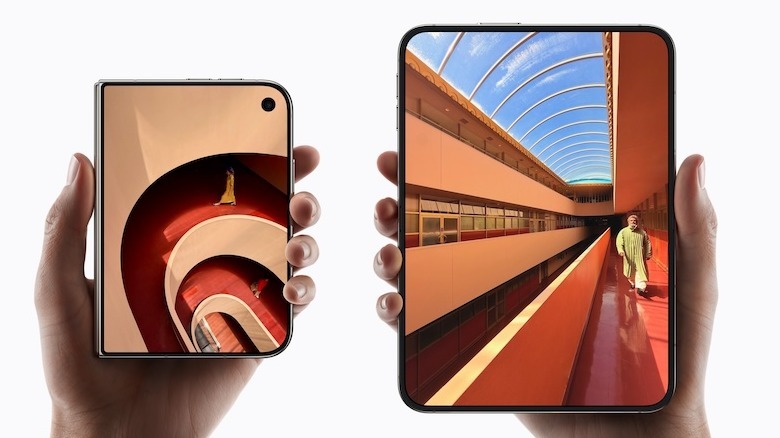
The iPhone Duo upends that. It's significantly more expensive — starting at $1,999 when it arrives in late October 2026 — and has a bigger display when unfolded; the very fact it can do that singles it out as something special, compared to the familiar iPhone 18 Pro aesthetic. At the same time, it lacks the variable aperture on its Fusion Main camera and the dedicated telephoto that the iPhone 18 Pro enjoys, misses out on ProRAW and pro controls in the Camera app, is bulkier and has less battery life, and gets Touch ID rather than Face ID.
 Apple
Apple
I'm yet to test out the iPhone Duo, at least as I write this, but my gut reaction is that while high-end phone users will be comparing it to iPhone 18 Pro (or probably more likely iPhone 18 Pro Max), the two aren't really direct competitors. The iPhone 18 Pro is a workhorse: Apple's most capable cameras and most likely its best cooling, wrapped up in a body that is likely to be far more resilient than iPhone Duo. It's hard to imagine videographers relying on iPhones to pick the foldable, for example, though gamers might be swayed by the Duo's bigger internal screen (and note-takers by its promised Apple Pencil support).
iPhone 18 Pro verdict
Without an iPhone 18 to directly compare it to — Apple's fall updates skipping the more mass-market iPhones — the gulf between the iPhone 17 and iPhone 18 Pro looks even more significant. You have to assume that was at least part of Apple's strategy, here. Up against the iPhone 17 Pro, meanwhile, the improvements are certainly not non-existent. All the same, you'd have to really want the new variable aperture camera to justify upgrading.
It's a much easier argument for iPhone 16 Pro owners (or earlier), as has long been the case for Apple's tick-tock two year update cadence. I won't claim that Apple's $100 price bump on iPhones across the board is especially palatable, but I also suspect buyers of the iPhone 18 Pro will be less dissuaded by it than, say, someone considering an iPhone 17 that now starts at $899.
For now, the best iPhone you can get makes a solid case for itself. The rough edges of last year's Pro-branded iPhone have been smoothed out, with just enough that's new — and new hardware — to add the necessary sparkle.