

These 7 Three-Row SUVs Each Have A Different Family In Mind
No two families are alike, and the same goes for family SUVs. While we're spoiled for choice when it comes to three-row transportation these days, what works for one driver may not fit the bill for another. The good news is, whether you're looking for a little luxury, some off-roading talent, or a zero-emissions ride, I've got strong suggestions across the board.
Now, I may be a strong believer in the idea that a lot of American families could do much worse than pick a minivan, but I do recognize the sliding door lifestyle isn't for everyone. I've tested a lot of three-row SUVs lately, with seating for up to eight in some cases, and each has something which sets it apart.
I've picked this list based on my hands-on experience with each model (and many of its competitors). So, if you're putting together a test drive shortlist, these might be the three-row family SUVs that ought to be on it.
1. Honda Pilot - Because you just want buttons, dammit
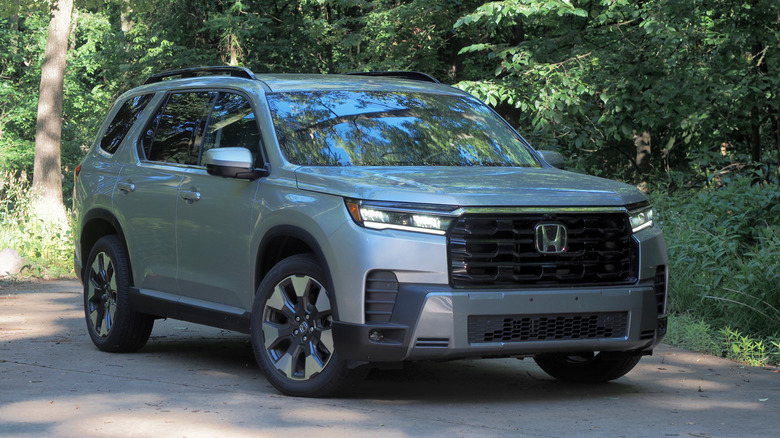
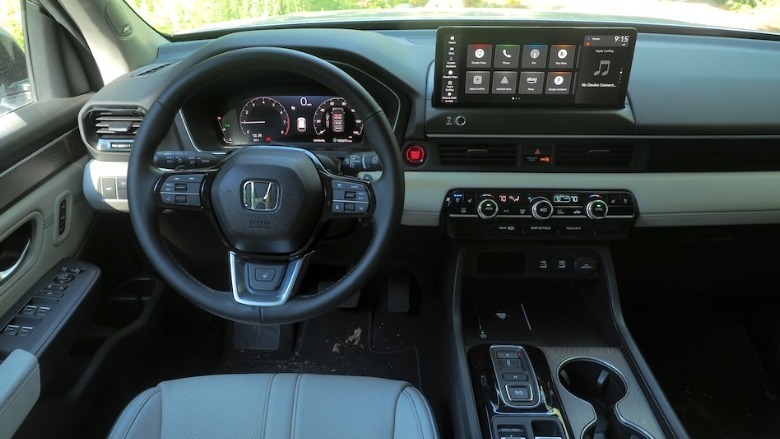
Clambering into Honda's 2026 Pilot feels a little like stepping back in time, though not in a bad way. If the industry rush to embrace vast dashboard displays, oust physical switchgear, and generally turn vehicles into computers-on-wheels has you exhausted, the Pilot's relatively old-school cabin may feel like a breath of fresh (albeit nostalgic) air.
 Chris Davies/SlashGear
The 12.3-inch central touchscreen isn't small, and all Pilot trims get Google built-in with Google Maps support and wireless Apple CarPlay/Android Auto, but it feels right-sized for the Honda's sober black dash. The tri-zone climate control is adjusted by knobs and buttons; the steering wheel switchgear is clicky and distinct to the touch, meaning there's no question of whether or not you've pressed properly.
 Chris Davies/SlashGear
If there's one place I wish Honda had been a little more aggressively modern, it's under the hood. The Pilot's 3.5-liter V6 and 10-speed automatic pairing — feeding 285 horsepower and 262 lb-ft of torque to AWD as standard on all but the two cheapest trims — is smoothly adequate, but even with just a couple of passengers onboard it doesn't ever feel eager. 20 mpg in my mixed-driving testing feels average: even a mild hybrid would be a welcome improvement.
 Chris Davies/SlashGear
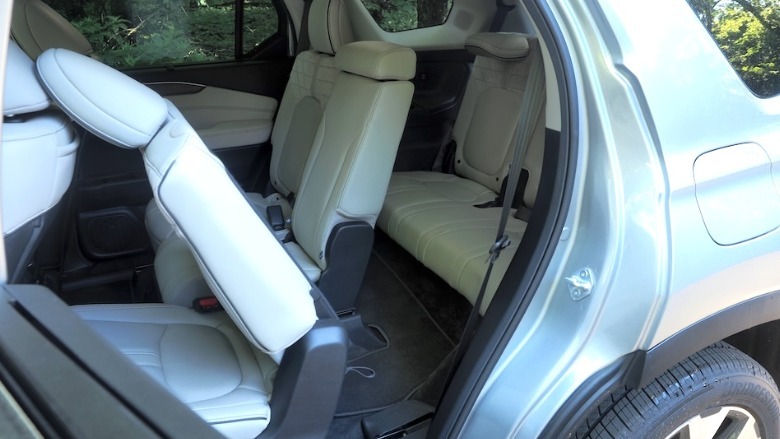
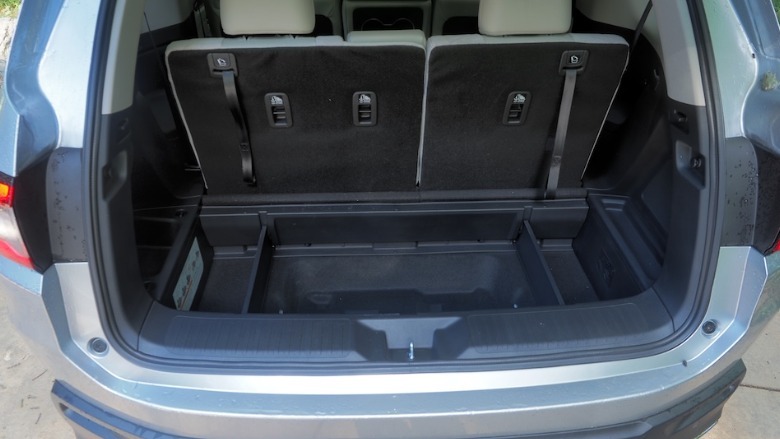
Still, with pricing from $45,990 (for AWD, and including $1,495 destination) the Pilot is spacious and straightforward. Even accessing the third row is made easy with big buttons and levers, and the trunk's hidden underfloor storage bins are admirably practical.
2. Subaru Ascent - To answer the siren song of the great outdoors
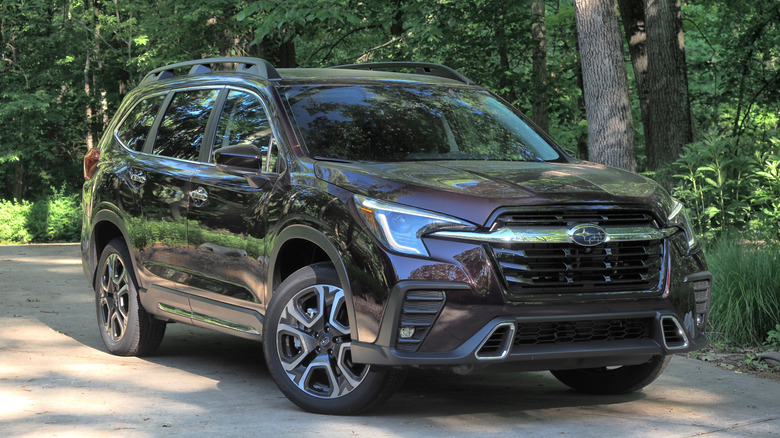
Find the sensible Honda appealing, but need something a little more rugged? Subaru's reputation is a hard-earned one, and I'd argue the 2026 Ascent is the epitome of that straightforward, reliable, everyday-workhorse ethos. It certainly hasn't forgotten that an SUV was once expected to be off-road ready: along with a very reasonable $42,245 (including $1,450 destination) starting price for a base 8-seat configuration, there's reassuring cladding on the outside for those ventures into mud and stones.
 Chris Davies/SlashGear
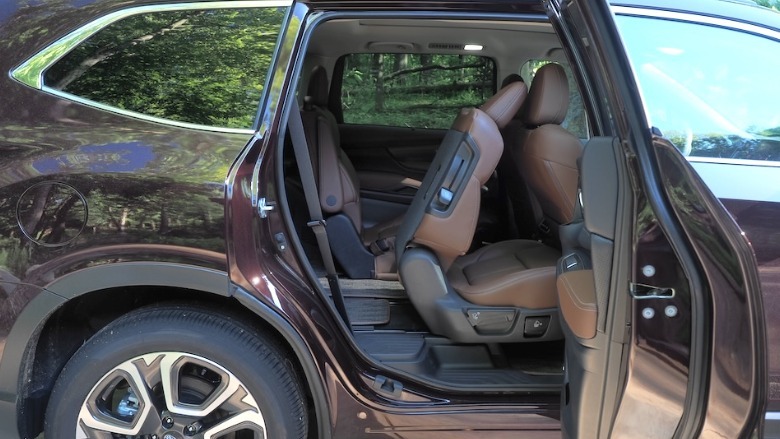
No, the Ascent isn't going to take you too far into the wilderness. All the same, its 8.7-inches of ground clearance and standard all-wheel drive edge it ahead of most three-row SUV rivals when the asphalt runs out. Subaru's sturdy plastics may err on the side of practical rather than plush, but that's probably a wise decision given the predicted stomping grounds. For that reason, the readily-wiped-down StarTex upholstery offered on many of the trims seems like another wise choice.
 Chris Davies/SlashGear
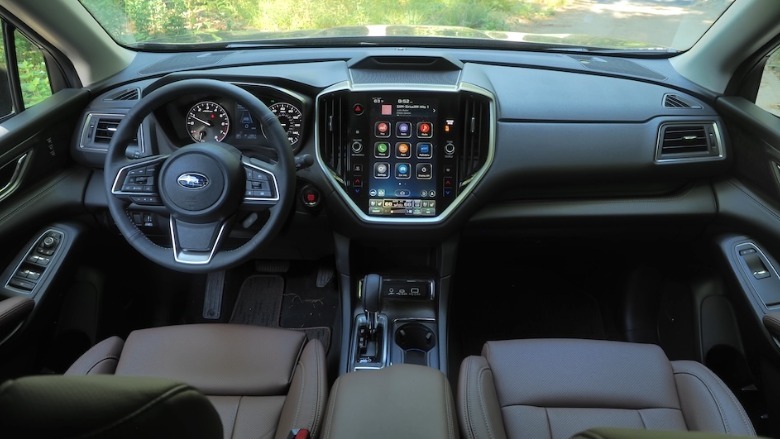
In an ideal world the Ascent would have Subaru's new infotainment system — as in the 2026 Outback — but, busy graphics and occasional sluggishness aside, it's perfectly adequate. The same could be said for Subaru's 2.4-liter turbocharged four-cylinder engine. With its 260 horsepower and CVT it doesn't exactly deliver thrills, but it'll still tow up to 5,000 pounds on all trims. I saw 23 mpg in my own, mixed driving: better than the official 21-22 mpg combined rating in fact.
3. Cadillac Vistiq - Because luxury and near-silence work so well
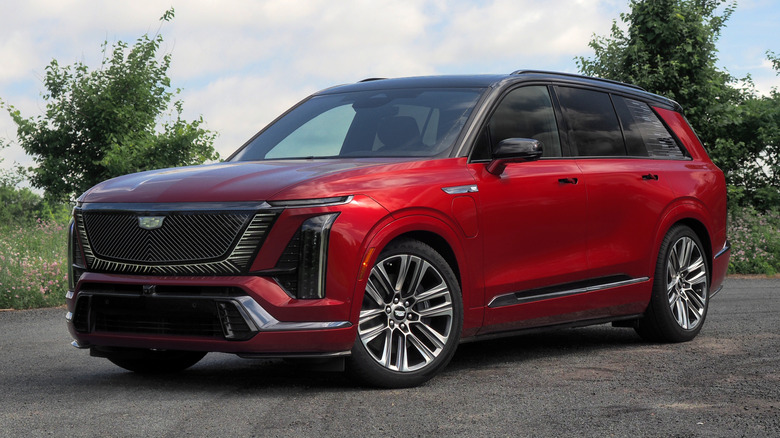
On the one hand, it's tough to describe a $79,090 (including $1,695 destination) electric three-row SUV as exactly affordable. The thing with Cadillac's 2026 Vistiq, though, is you could very reasonably cross-shop it with the automaker's own Escalade IQ, and that starts north of $130k (with destination). Suddenly, even this well-equipped Vistiq Platinum's near-six-figure sticker starts feeling fair.
 Chris Davies/SlashGear
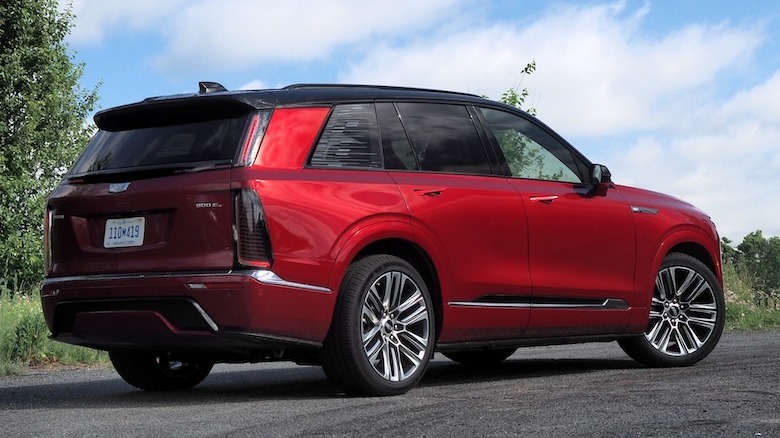
The big EV's appeal goes beyond comparative value, however. Dual-motor as standard, its maximum 615 horsepower and 650 lb-ft of torque are genuinely vast, and straight-line speed is borderline silly for something in this segment. Just remember to slow for the corners (Caddy's blend of regen and physical brakes is top-notch) because even the air suspension standard on the upper trims can't quite hide the whopping 6,326 pound curb weight.
 Chris Davies/SlashGear
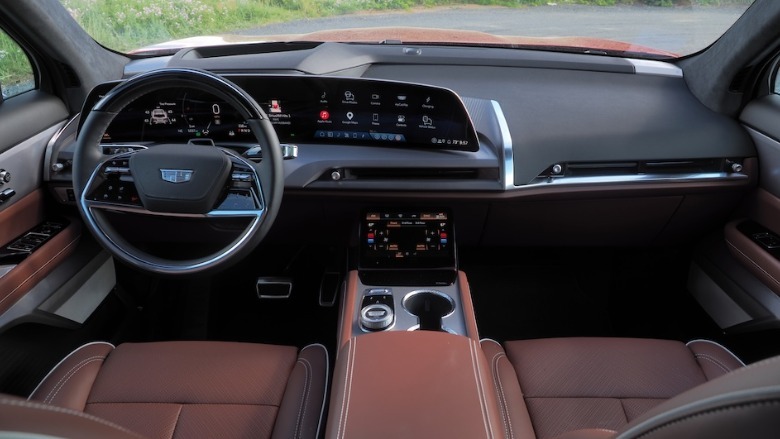
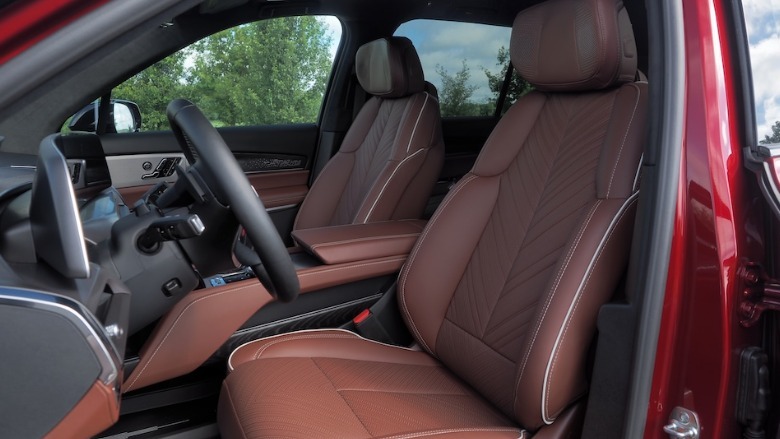
Better, arguably, to waft in Escalade-like refinement. Even the Vistiq's third row is reasonably adult-scale, and all rows get the expected creature comforts. The display-heavy dashboard may take some acclimating to, but GM's excellent Super Cruise hands-free highway driving tech is standard across the board.
 Chris Davies/SlashGear
Cadillac quotes 300-305 miles of range, trim depending, from the 102 kWh battery. The 2.8 miles per kW I saw after my mixed driving suggests that with a little coddling it'd be an achievable number, even if rival SUVs can go further. None quite possess the same combination of brash modern luxury as the Vistiq, though.
4. Land Rover Discovery - Adventure with the whole family
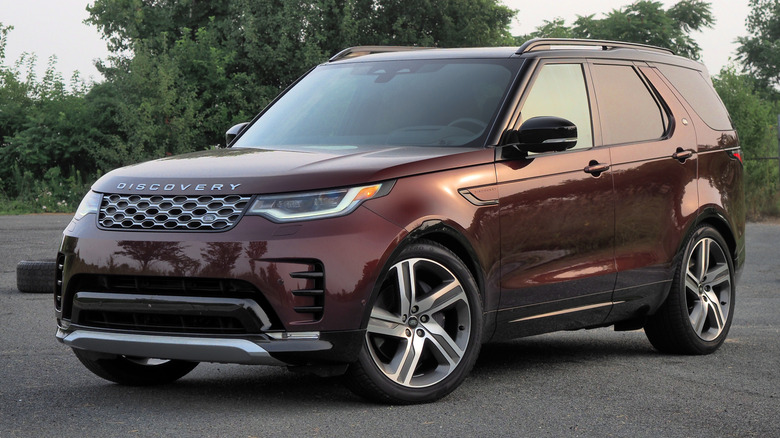
Land Rover's workhorse SUV doesn't need to play to luxury off-road ambitions like the Defender, nor sporting ones like the Velar. Instead it's all about three rows of family transportation with the promise of not balking when the road runs out. Think Ascent, but more upscale — and more capable.
 Chris Davies/SlashGear
Pricing kicks off at $64,900 (plus $1,850 destination), with a 3.0-liter six-cylinder gas engine with 355 horsepower and 369 lb-ft of torque as standard on all trims. 0-60 mph arrives in 6.2 seconds, officially, though even with its mild hybridization the Defender doesn't ever feel urgent. Switching the 8-speed automatic transmission to its sportier "S" mode helps somewhat. All-wheel drive is standard, as is height-adjustable air suspension which can crank the SUV up to 10.62 inches for off-road use.
 Chris Davies/SlashGear
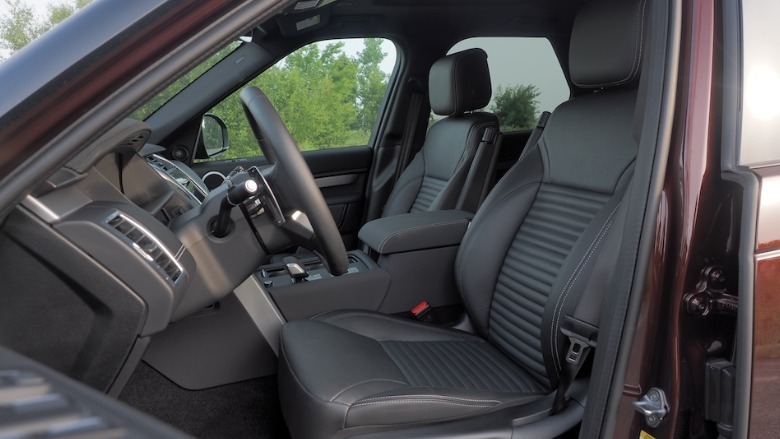
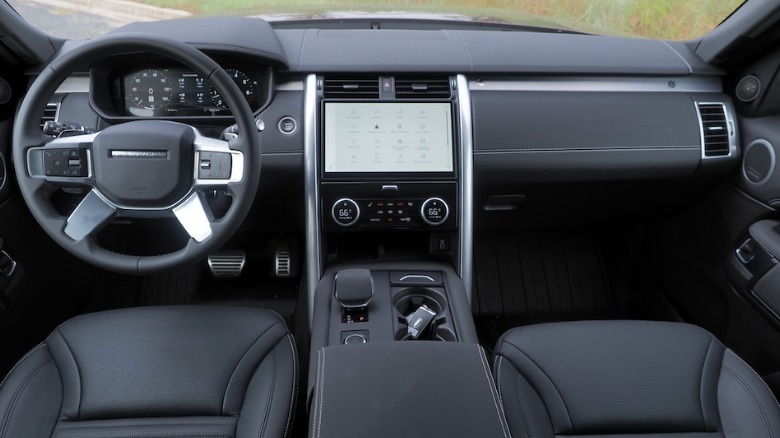
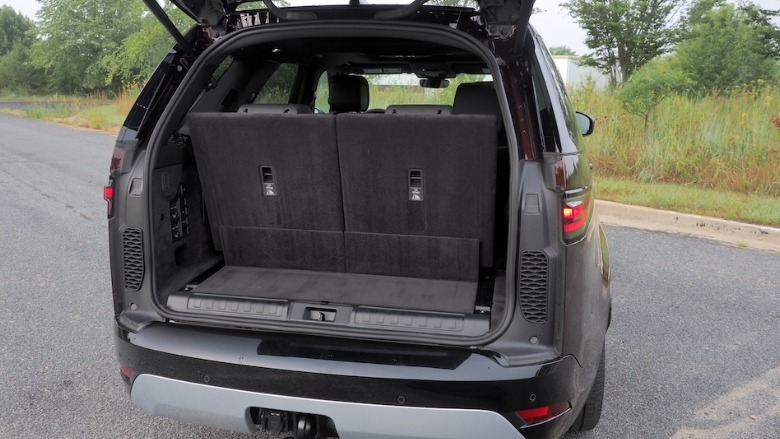
Inside, things err on the sturdy side (this is no Range Rover) but that's no bad thing. Space is solid in all three rows, with power-folding rear seats a $700 option. I'd spend that, plus the $2,400 on the Advanced Off-Road Capability Pack with its upgraded Terrain Response 2 drive mode system, twin-speed transfer box, active rear locking diff, and more.
 Chris Davies/SlashGear
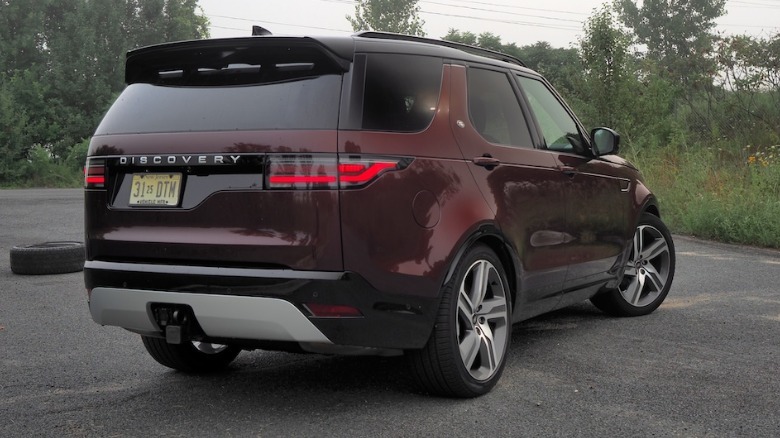
The 22-inch wheel upgrade ($1,650, plus $760 for a full-size spare) looks handsome, but seems like a recipe for tears if you actually take the Discovery where it's capable of going.
 Chris Davies/SlashGear
The biggest surprise was gas economy. Land Rover quotes an EPA figure of 19 mpg combined; my own, mixed driving landed two or three points above that. The Discovery's dashboard gets the same decently-sized infotainment touchscreen as its Range Rover siblings, but also keeps physical center console controls for drive mode and volume inexplicably absent in those SUVs.
5. Volvo XC90 T8 - Frugality with some secret speed
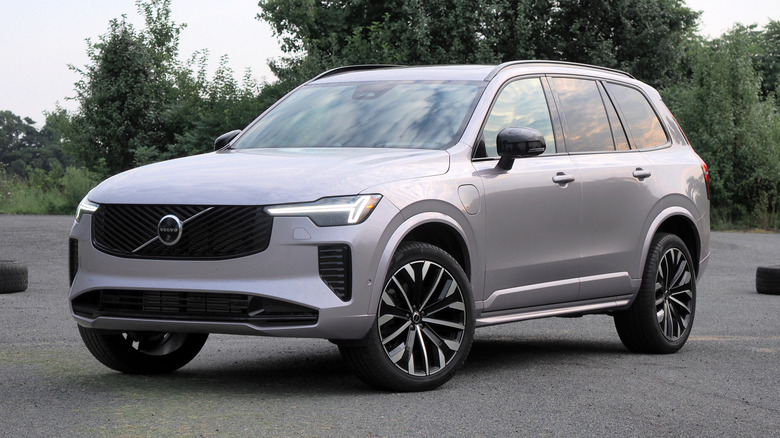
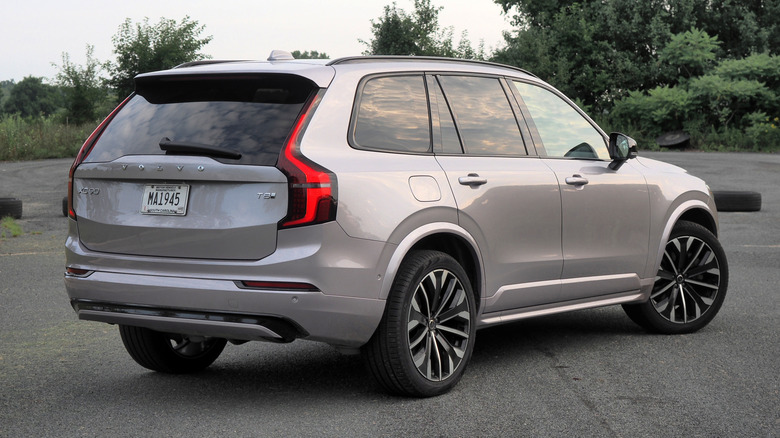
You'd be forgiven for taking a glance at the XC90 and concluding it was simply a wholesome family SUV with an emphasis on safety. The top-spec T8 Plug-In Hybrid, though, has performance to recommend it too. Volvo may not make it the headline feature, but with its 455 horsepower and 523 lb-ft of torque this is one seriously swift three-row hauler.
 Chris Davies/SlashGear
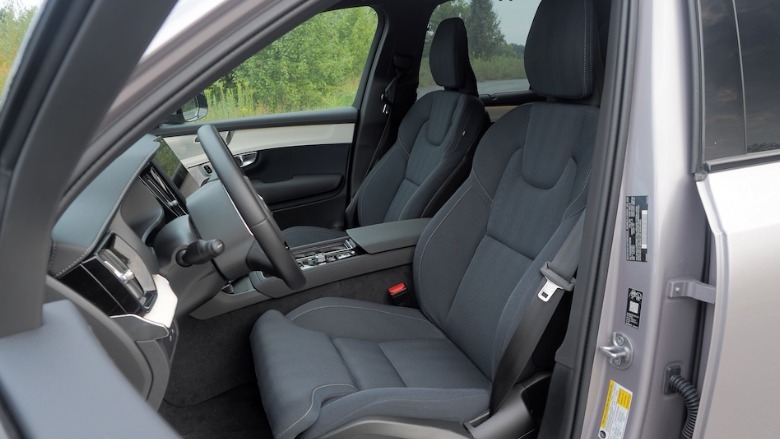
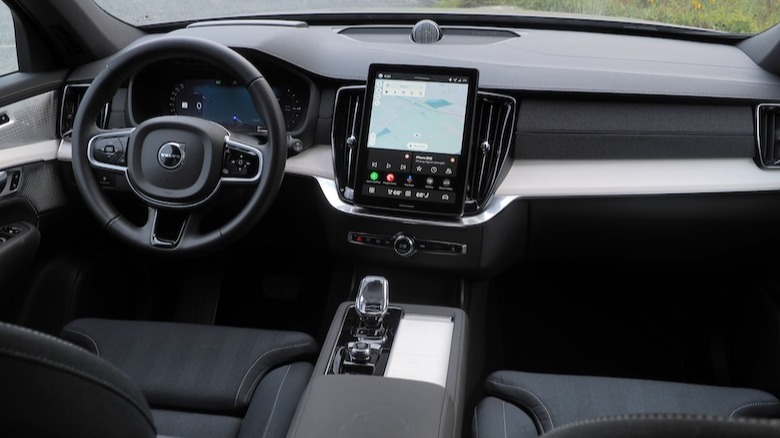
Driven with restraint — something the plush cabin and Volvo's ever-classy materials and design encourage — and there's up to 32 miles of electric-only range (a lot less than the all-electric EX90). However, the XC90 T8 can juggle its 2.0-liter turbo-four gas engine and rear electric motor automatically, for a reasonably frugal blend of PHEV power.
 Chris Davies/SlashGear
An optional active chassis with air suspension package keeps things smooth either on the highway or — more surprisingly — in the turns.
 Chris Davies/SlashGear
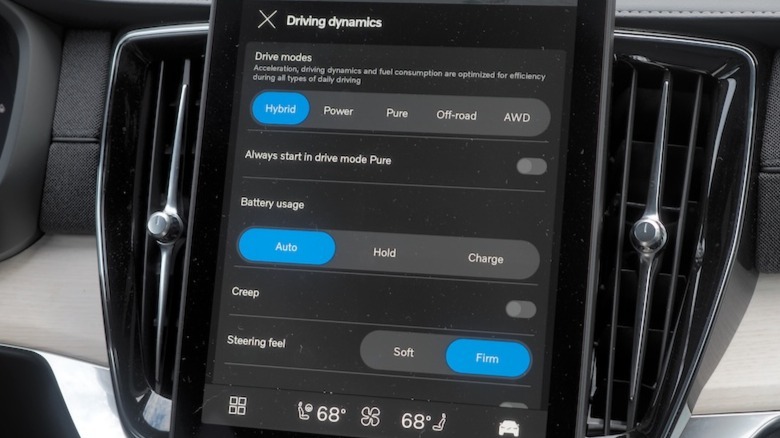
Switch to the "Power" drive mode, though, and there's a 5.0 second 0-60 mph time and some serious hustle. It's hard not to fall for that duality (and the range reassurance of a PHEV you can fuel up at a regular gas station) even if the $77,595 (before destination) starting price isn't cheap.
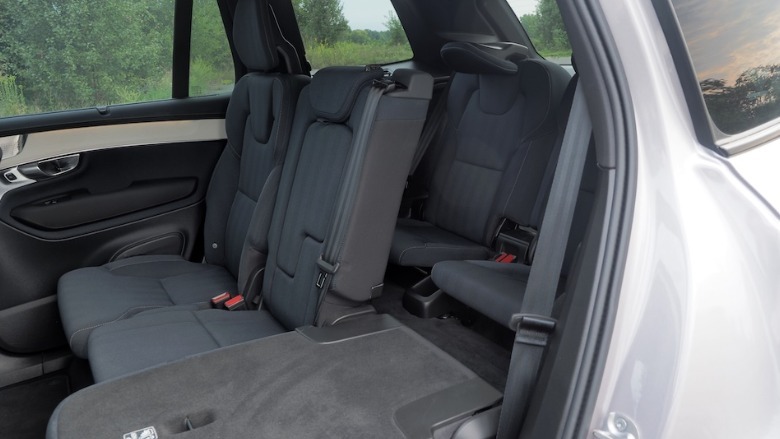 Chris Davies/SlashGear
Figure on almost $87k for the fanciest Ultra trim with the air springs. If you refuse to sacrifice fun to go with your comfort and frugality, though, the XC90 T8 is definitely worth considering.
6. Infiniti QX80 - The tow king
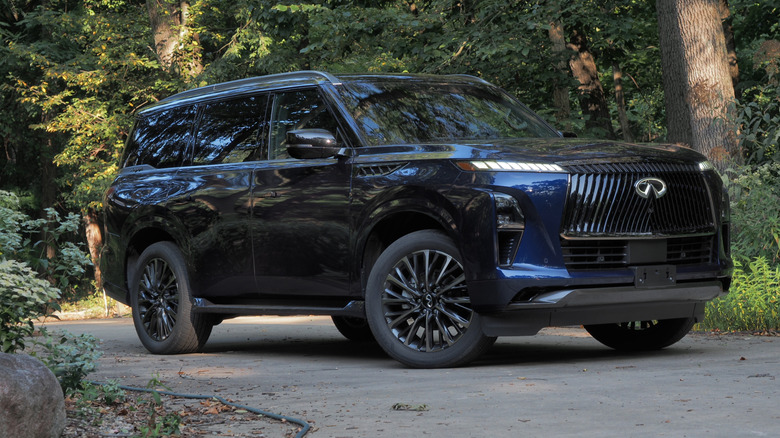
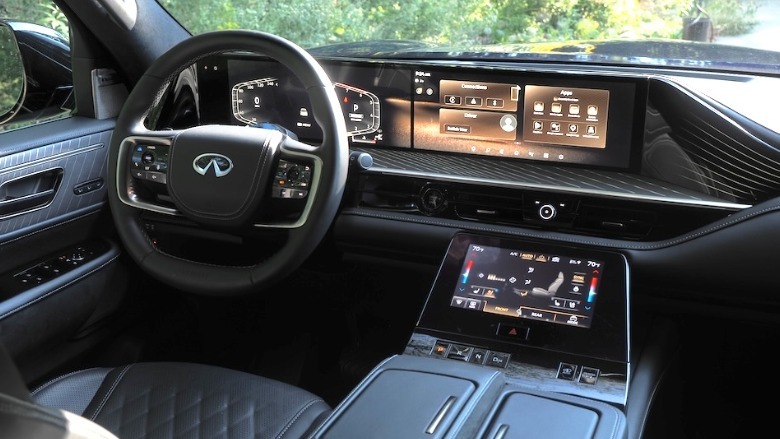
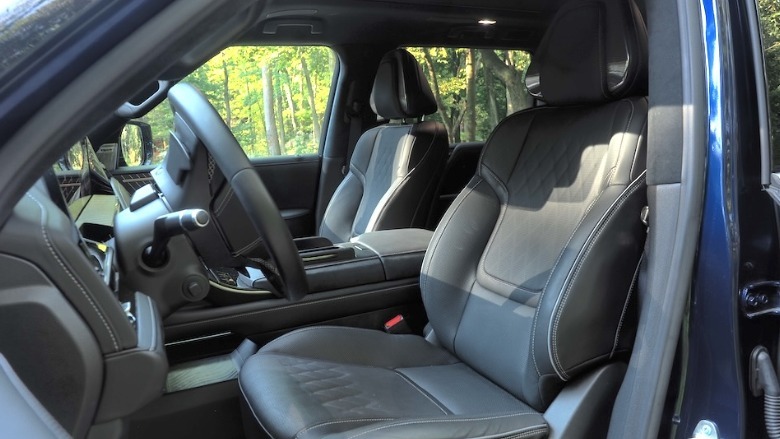
Infiniti's biggest SUV got a significant refresh recently, though the 2026 QX80 doesn't forget one of its most appealing virtues. The full-size three-row SUV ostensibly plays in the luxury space: by the time you get to this six-figure Autograph version you're looking at open-poor wood and semi-aniline leather, ventilated massage seats for the first and second rows, hands-free highway driver assistance, and a mighty 24-speaker Klipsch audio system.
 Chris Davies/SlashGear
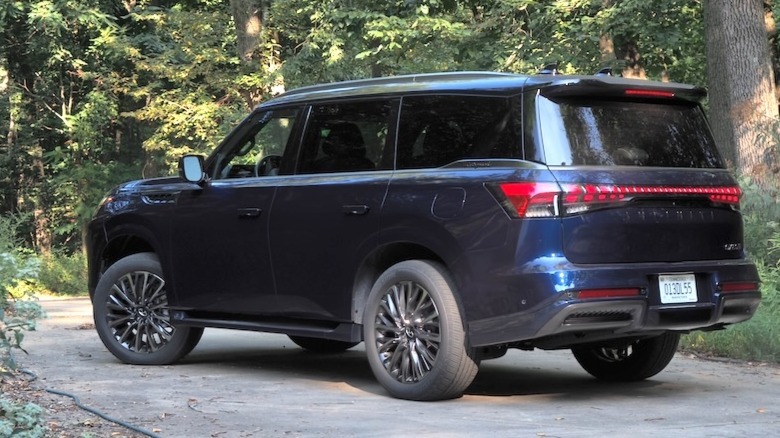
The splashy looks and tactile trim only gild the QX80's big distinguishing strength, however: it's a rare body-on-frame option in the segment, those truck underpinnings paired with a beefy 3.5-liter twin-turbo V6. Its 450 horsepower and 516 lb-ft of torque add up to not only a decent turn of speed, but a massive 8,500 pound towing capacity.
 Chris Davies/SlashGear
Combined with three spacious rows and decent trunk space, the QX80 makes a very strong argument for those weekend getaways where you don't want to leave your boat (or side-by-side) behind.
 Chris Davies/SlashGear
The drivetrain is a little less refined — and the ride less syrupy — than true luxury competitors, but if cargo is as important as family accommodation then it's hard to dismiss this flagship Infiniti.
7. Volkswagen Atlas - Comfort on a budget
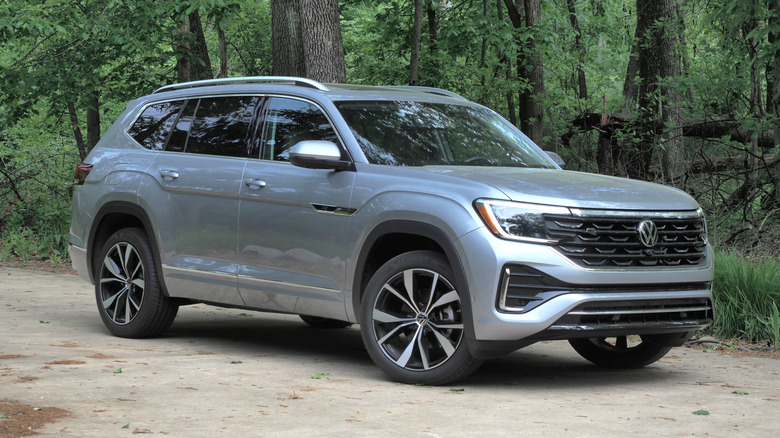
Times are tough, and budgets stretched to breaking point. What hope, you might think, for a family wanting a little luxury without the massive initial outlay? That's where the 2026 Atlas comes in.
 Chris Davies/SlashGear
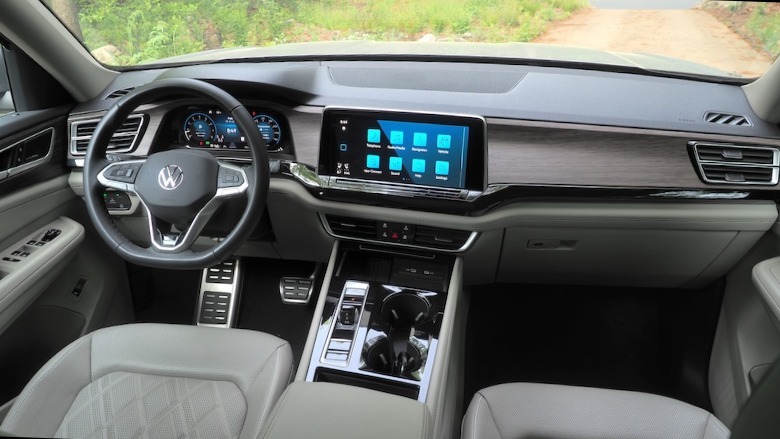
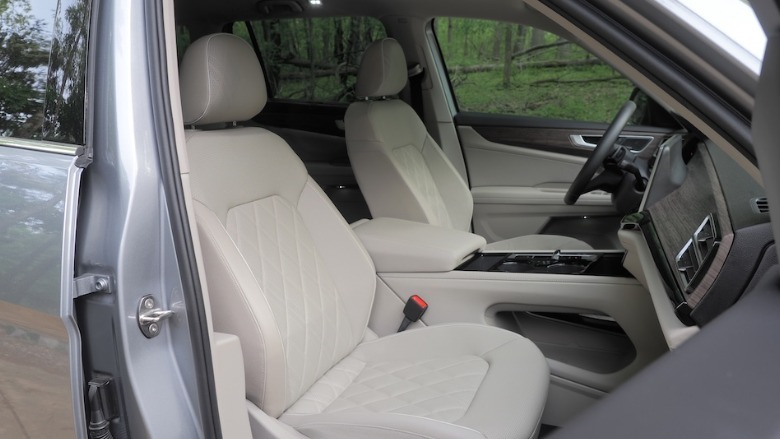
Volkswagen's three-row SUV — not to be confused with the two-row-only Atlas Cross Sport — starts under $40k (admittedly before destination) but, by the time you get to this well-equipped SEL Premium R-Line, the $56k all-in sticker includes features you'd expect to be on an Audi instead.
 Chris Davies/SlashGear
Comfortable seats — wrapped in leather and some including heating, ventilation, and massage — along with comprehensive (but not overwhelming) tech make the Atlas easy to live with.
 Chris Davies/SlashGear
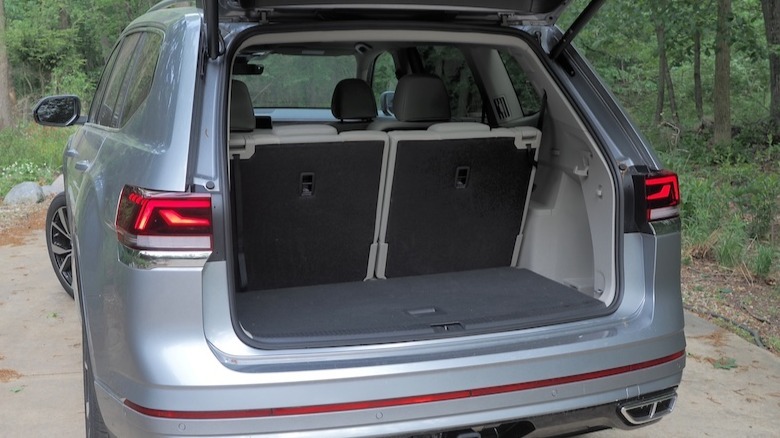
The 2.0-liter turbo-four gas engine isn't going to win any speed trials, but it — and the standard eight-speed automatic transmission and all-wheel drive — is reasonably refined and smooth. It'll tow a respectable 5,000 pounds, too, and I hit the 21 mpg EPA combined fuel economy rating with no issues. It may not be splashy like some of the SUVs on this list, but for an everyday drive that's above-average on comfort, the Atlas earns a spot on the shortlist.