

Toyota's 2026 Sienna Is The Hybrid Minivan To Beat (And This Could Be The Best Trim)
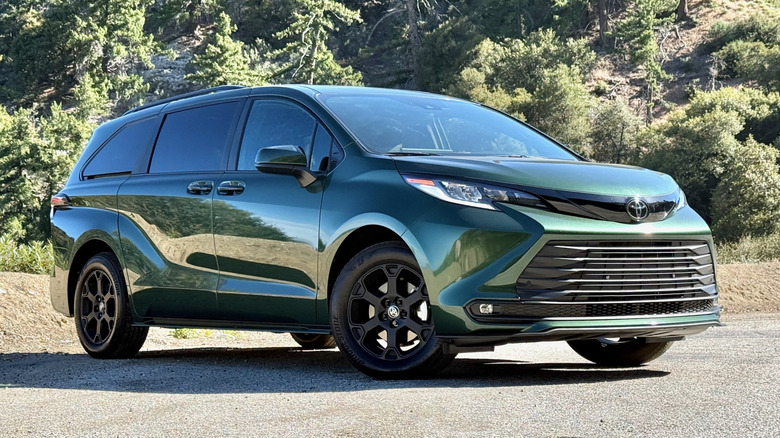
If you're looking for a minivan that values efficiency above all else, the Toyota Sienna is the top choice in the class. The plug-in hybrid Chrysler Pacifica is discontinued going forward, so with the standard hybrid powertrain under the hood of every Sienna, there's simply no beating the Toyota for minivan fuel economy.
Even the hybrid version of the Kia Carnival at an impressive 32 mpg combined can't top the Sienna's EPA rating of 36 mpg combined. Rivals like the now-V6-only Pacifica, the V6-variant of the Carnival, and the V6-only Honda Odyssey all offer more power, but they fall way behind in the mileage department — deep down in the 20s.
 Travis Langness/SlashGear
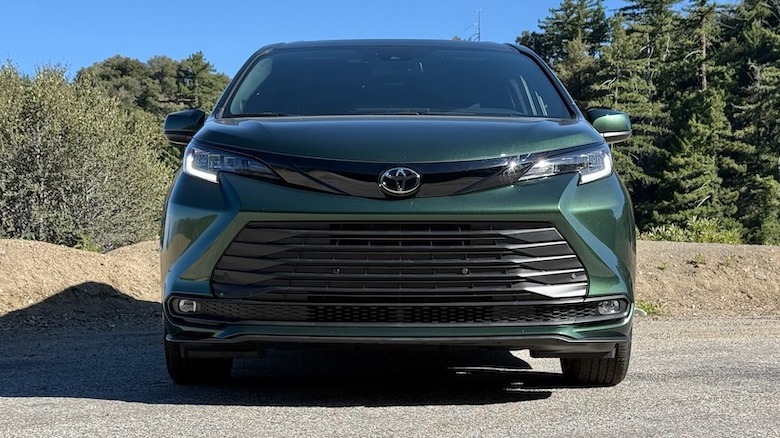
More than just at the top of the heap when it comes to what it costs you at the pump, the Sienna is every bit as good at transporting your family around in comfort. It's properly spacious, equipped with all the amenities and modern tech you'll need, and easy to drive. And to add a bit of pizazz to the mix, Toyota will even make you a Sienna in the ruggedly styled Woodland Edition. It's not exactly an overlanding-capable family hauler, but it helped make the Sienna feel right at home while I was driving it on my local mountain roads — all part of my week-long test of the Toyota minivan.
All the efficiency you'll need, and just enough power
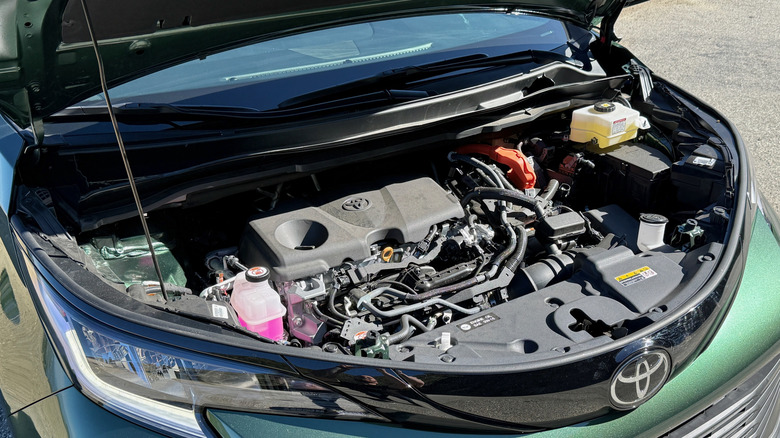
Using a 2.5-liter four-cylinder engine paired with Toyota's hybrid system, the Sienna puts out 245 combined horsepower. That's basically the lowest output of any minivan, falling behind the Chrysler Pacifica and Kia Carnival at 287, and the Honda Odyssey at 280. Even with that 40-ish horsepower deficit, though, the Sienna feels adequately powered. It has confident acceleration and calm, peaceful low-speed driving via the batteries before the engine kicks in. A flat-footed pass on the highway will take you a bit more time, but the juice is definitely worth the squeeze with this one.
 Travis Langness/SlashGear
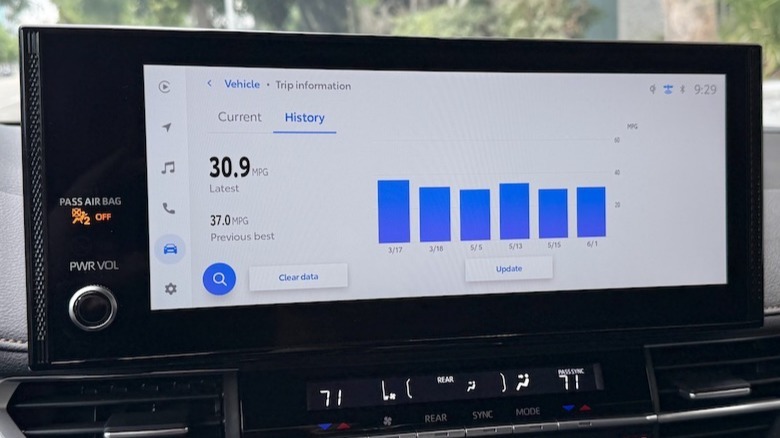
After 160 miles behind the wheel of the Sienna, commuting around town, taking it up in the mountains to test its handling capabilities, and making a few trips on the freeway, I looked down to check my fuel levels, and I hadn't even used a quarter tank of fuel. The math at fill-up worked out to nearly 40 miles per gallon without even a thought towards hypermiling.
If we use the Sienna's lower fuel economy estimate on all-wheel-drive models (35 mpg, according to the EPA) to do a bit of "How much would it cost to own?" math, there's a lot of money to be saved. Using the EPA's estimate of 15,000 miles driven annually, with 45% highway and 55% city driving, the Sienna will cost $1,800 a year to fill up. The Kia Carnival Hybrid is close behind at $1,950, but the Pacifica and Odyssey will cost $1,050 more than the Toyota per year to fill up. You've got to value an extra 40 horsepower quite a bit to give up that much money every year.
Space to stretch out
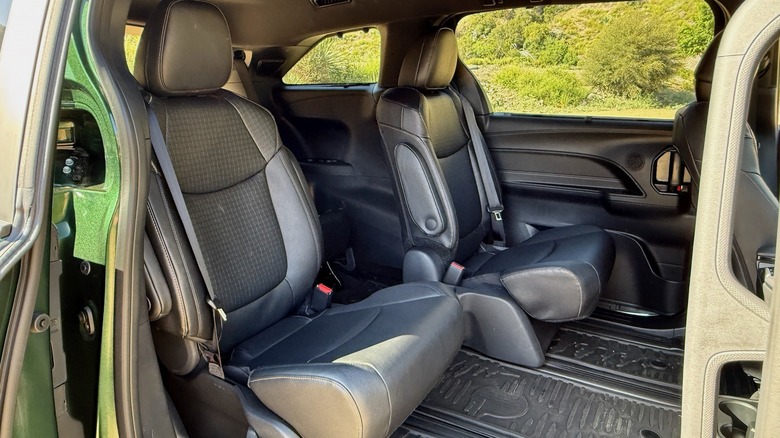
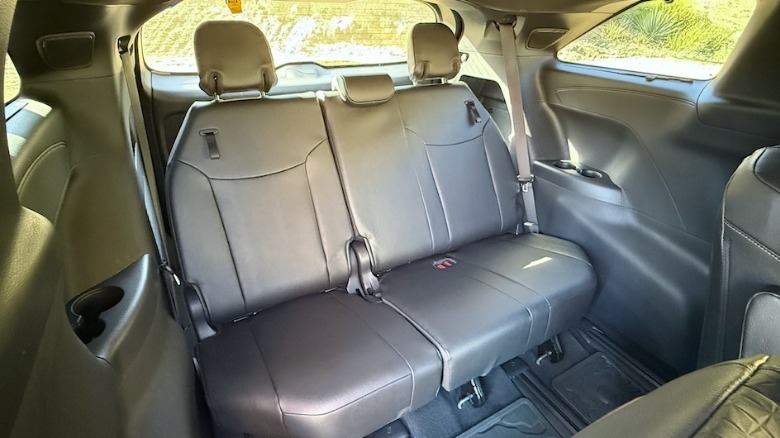
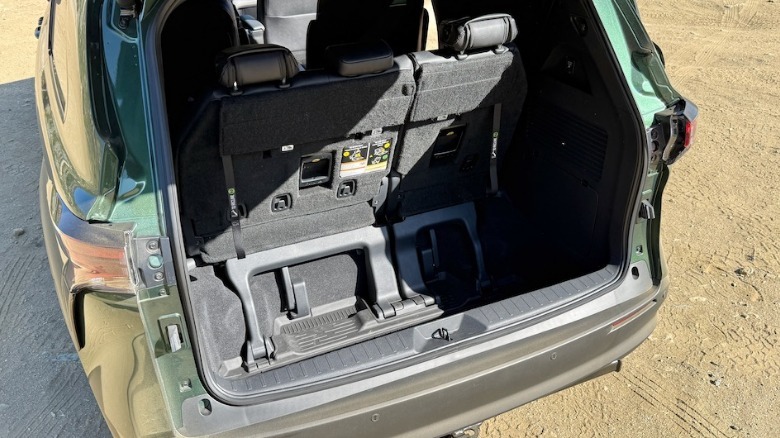
The Sienna's exterior dimensions are all pretty average for the segment, within about an inch of all the major minivan rivals. On the inside, though, the Sienna makes excellent use of the space it has. Behind the third row of seats, there's an extra-large drop-down floor that'll help with extra luggage if your family chronically overpacks.
And if they have way too many devices and water bottles, the cabin has a solution for that problem, too. Center console storage between the two front seats is what can only be described as massive. There are cupholders everywhere you turn in all three rows.
 Travis Langness/SlashGear
No matter where you sit in the Sienna, there's plenty of legroom and headroom. The side doors provide big openings for adults to load in and out, and adjusting the second-row "Super-Long-Slide" captain's chairs is an easy task. If you're constantly loading passengers in (basically a certainty for minivan owners), or lifting child seats in and out of the back on a regular basis, the sort of elbow room you get in the Sienna will come in handy. Forget the rough-and-tumble full-size SUVs — minivans are where it's at.
Its own particular kind of quality
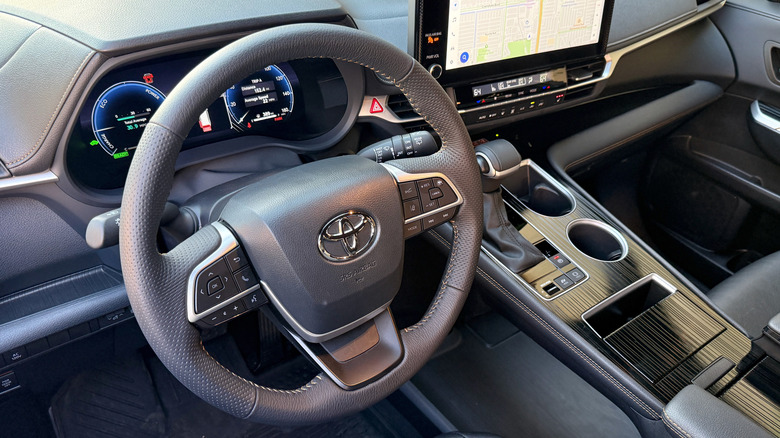
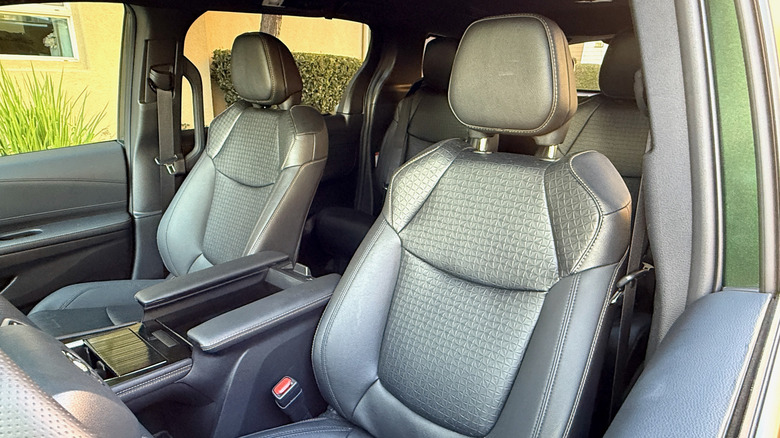
The Sienna feels like it has a no-frills approach to interior design. There's a bit of a gray-on-black motif on the dashboard and door panels, and there isn't much color to break up the monotony — or at least there wasn't in my particular test vehicle. There are some varying textures, and a bit of contrast stitching, but even those variations felt understated. So, as a result, it felt basic compared to the premium vibe of some rivals. Sturdy, and capable of holding up to abuse over time, but still basic.
 Travis Langness/SlashGear
Out on the road, I lamented the wind and road noise in the cabin, but it was low enough that a bit of music seemed to drown it out. Speaking of which, the 12-speaker JBL stereo is a nice addition for a minivan, giving it proper volume and audio quality for even the most out-of-pitch family sing-alongs. The optional 12.3-inch center screen is clear, easy to see, and it responds quickly to inputs. It connects to smartphone functions and hooks up to Apple CarPlay easily, even if it does look a bit down-market thanks to lower-resolution graphics.
Definitely not an off-roader, but that's okay
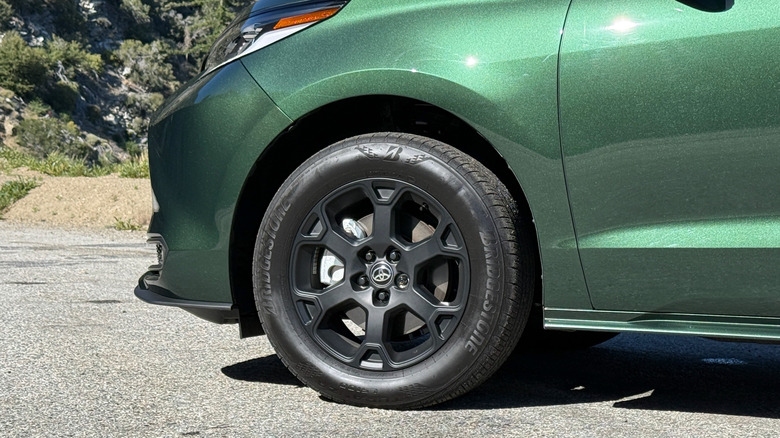
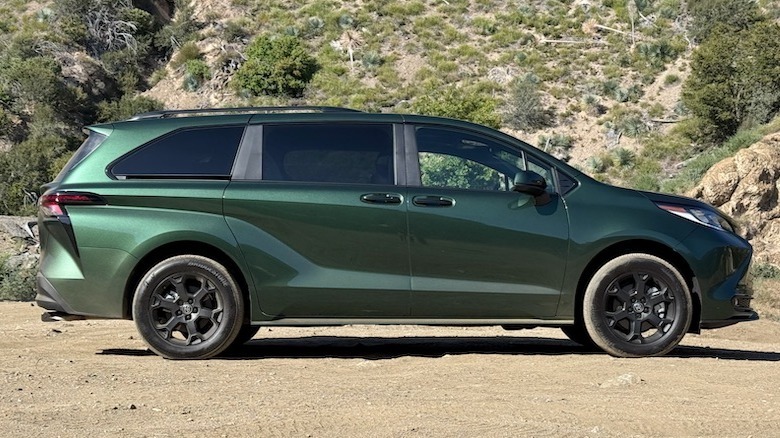
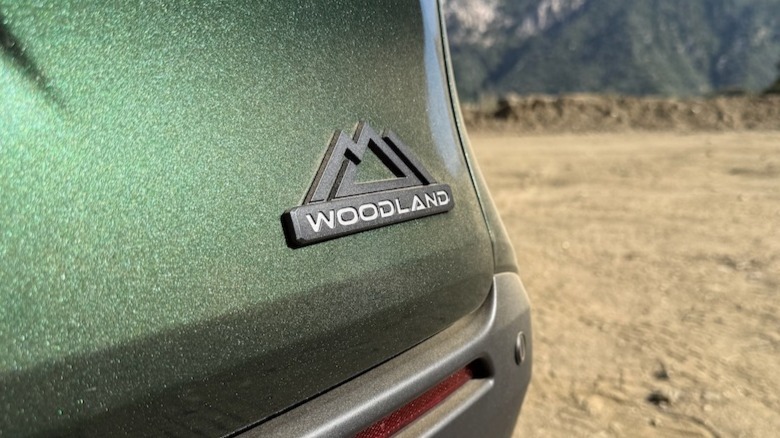
The Woodland Edition of the Sienna is faking the funk a little bit. There are badges with pictures of mountains, and the blacked-out wheels are a nice touch, but it doesn't have all-terrain tires or any special off-road equipment to take it very far off the beaten path. It does come with all-wheel drive as standard, and compared to standard versions of the Sienna, it has about 0.5 inches of additional ground clearance, but those small changes aren't quite enough to make a significant difference while off-roading. If you live in a rural area, it may save you from a few scrapes with a steep driveway or a gravel road, but that's about it.
 Travis Langness/SlashGear
Thankfully, the Sienna's off-roady looks and all-wheel drive are enough to make it enjoyable on a spirited drive. On busted-up highways and even mild dirt roads, the Sienna's sufficient tire sidewalls soak up the little stuff with ease. Big bumps are shrugged off too, and while the Sienna isn't particularly entertaining, it's the sort of minivan that'll devour miles on long road trips or commutes over crumbling infrastructure.
Features across the range
I enjoyed my time in the Woodland, but there's a lot more than just one trim to focus on in the Sienna lineup. In fact there are six: LE, XLE, XSE, Limited, Woodland Edition, and Platinum. While it's at the bottom of the trim-level lineup, the base LE isn't exactly bare bones. It has an MSRP of $42,415 (including $1,595 destination fee) and standard features include a power liftgate, three-zone automatic climate control, sunshades for the second and third row, smartphone connectivity, an 8-inch center touchscreen, and driver aids like blind spot monitoring and rear cross-traffic alert.
The XLE switches to a four-zone climate control system, upgrades to a 12.3-inch center screen, and adds power sliding doors, while the XSE adds features like a sport-tuned suspension and a 12-speaker JBL stereo.
 Travis Langness/SlashGear
The Woodland actually represents a nice slightly-above-the-middle-of-the-range sweet spot. It builds on the XSE's equipment with its outdoorsy look and has an MSRP of $53,195. That's not cheap, but it's competitive in the minivan world. Testing cars for a living, I'm so used to the most expensive version of a vehicle showing up, maxed out with options – but this one was reasonably equipped with creature comforts without relying on options packages. For what it's worth, the top-of-the-line Platinum trim will certainly add some swank to the mix, priced at $60,280 and adding features like a 360-degree camera, heated and ventilated front seats, a built-in vacuum cleaner, and a built-in fridge.
2026 Toyota Sienna verdict
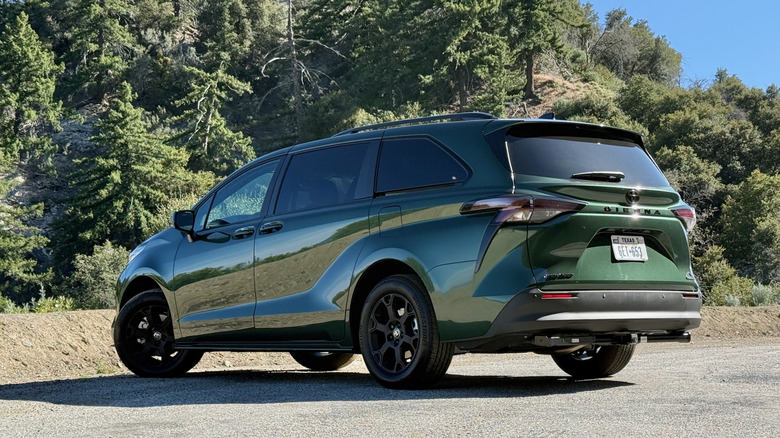
I've driven just about every minivan there is in the last few months, with the exception of the refreshed Chrysler Pacifica (my DM's are open, Chrysler), and the Sienna is the softest of the bunch. If you're planning on carving up the canyons, something like the Carnival will likely be a better tool for the task, but if you want maximum comfort paired with class-leading efficiency, the Toyota is impossible to beat.
On top of having the fuel economy numbers to beat the competition, the Sienna outperforms its stats in the real world. It's overly efficient without much driving effort (and there's no need to plug it in), it feels even more spacious than it is, and it performs almost flawlessly as a family runabout. There's a wide array of trim level choices spanning a large pricing area, so there are choices for buyers with varying luxury tastes, but all of them are likely to impress.