

10 Valuable Car Parts You Should Be Looking For At Junkyards
Owning a car can be an expensive affair. We know that all too well when it comes to buying one, whether you're paying in full or financing. While those numbers hit all-time highs earlier this year, they represent only half of the expense puzzle. Maintenance is the other variable; it's much easier to neglect since you likely won't be staring at thousands of dollars' worth of repairs in the first few years post-purchase — especially if the car is brand-new. However, depending on the car brand you're buying, maintenance could end up costing you well north of $10,000 over a decade.
That's a significant sum, and it can mostly be divided into two components: labor costs and parts replacement. While buying spare parts directly from a manufacturer is recommended, the cost can be draining in the long run. For your peace of mind (and warranty purposes, if applicable), opting for OEM parts might be the right decision despite the steep cost, but it's never a bad idea to explore the used parts market.
You're probably thinking of aftermarket parts, but junkyards can be a cost-effective source too. Since most vehicles that end up there are viewed as scrap and are essentially there to be picked apart, you can get a bargain on multiple parts instead of paying full price.
Complete engines
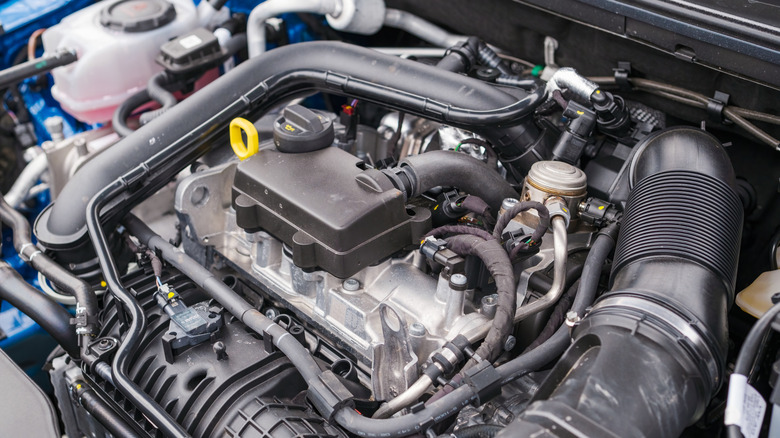
Replacing a faulty engine is a particularly tricky and costly task. In fact, in some cases, repairing the damage may not be the most economical decision — it might be better to buy a new car outright. However, if your car's market value is still high enough, replacing or repairing the engine isn't out of the question. We weigh the pros and cons of both decisions here. According to J.D. Power, a standard engine replacement can cost between $2,000 and $10,000, depending on factors such as the car model, labor costs, and age.
While buying a new engine has its benefits (not worrying about the owner's history, for example), that price point can be steep to cough up all at once. Engines that are on sale at the junkyard, however, offer the greatest cost savings: they cost between $150 and $400 for a regular 4-cylinder or V6.
V8s and diesel-powered engines tend to cost a bit more, but $400 is a pretty solid anchor for any engine type or weight you're buying. Given that these are practically giveaway prices, it's only fair for you to be skeptical of the quality. That's why we've outlined six things to keep an eye on before buying a junkyard engine, like making sure the crankshaft turns.
Transmissions
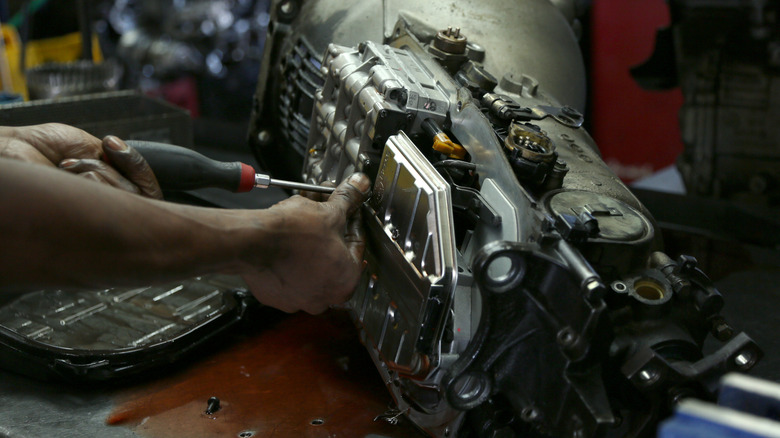
Nobody wants to deal with transmission problems; they're difficult to fix, and they're expensive. Once the delicate balance of power transfer and smooth acceleration that the transmission handles is compromised, shopping for a new one is usually the next move. Consumer Affairs estimates a $6,000 price tag to buy and install a new transmission (about $4,700 for the part itself and $1,300 on average for labor costs).
One option to cut back on expenses is to have your transmission rebuilt; it's usually half the cost of buying a new one and isn't as risky as a used transmission. If you don't mind buying used, though, you could find your next transmission at a junkyard.
According to Scrap Monster, the average price for aluminum transmissions in the United States is about 27 cents per lb. Transmission weight varies by type, but most fall between 100 and 400 lbs. Mathematically, that corresponds to a spend between $27 and $108, although it wouldn't be out of the ordinary for the price to tick towards $150. Of course, opting for a used transmission has its own pros and cons — you'll need to confirm that the spline count matches your driveshaft needs, and there's usually no warranty recourse if anything goes wrong.
Rims
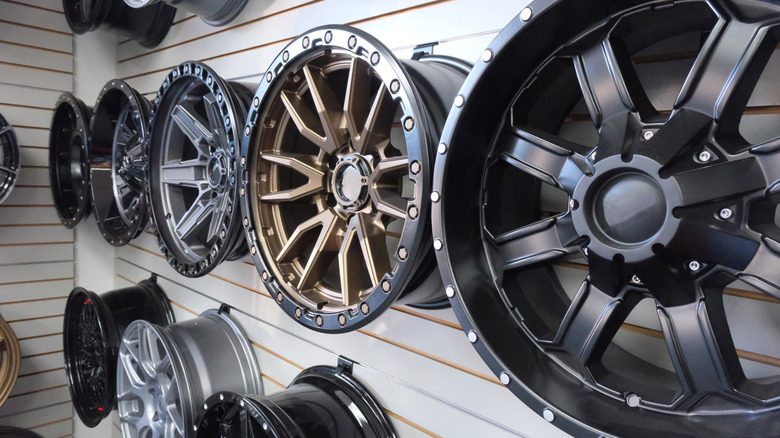
The tires are the only direct contact your car has with the road, and you want to make sure they're in perfect condition every time you drive. While watching for flats and tread wear might be the regular modes of maintenance, you might sometimes need to swap out the rims due to structural damage.
J.D. Power estimates the cost of a brand-new rim at $200 to $500 per tire. That means a full set change could cost as much as $2,000. That's an expensive figure to fork out in one go, and chances are, if one rim has structural issues, the others need attention too. So, one way to save money is to shop at the nearest junkyard. The price can vary wildly depending on the junkyard — some charge solely to pull the part itself — but you should find aluminum wheels for around $20 to $30.
That number will probably climb into the low-to-mid 300s when you add installation costs, but it's still much cheaper than buying brand-new. Before accepting a piece, though, check for signs of corrosion, wobbles, or tarnishing to avoid buying a compromised part. Also confirm that the bolt patterns on the junkyard part and your current rim match, and whether the rim size fits your manufacturer's specifications. That way, you'll avoid awkward vibrations and instability.
Catalytic converters
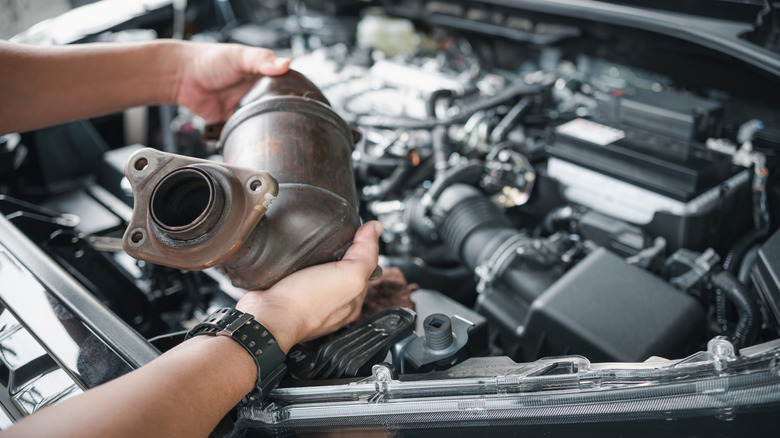
Catalytic converters may not be as central to your car's operation as the engine or transmission, but that doesn't mean they're not as important. They convert harmful emissions from your car's internal combustion process into less toxic ones, and the Clean Air Act makes it a federal crime to drive around with a manipulated catalytic converter. So, if you've noticed that your exhaust emissions are getting out of hand, replacing the converter is one item on your checklist.
Figures from RepairPal show how wildly the price tag for a catalytic converter can vary. For a Toyota Tacoma, you can expect to spend about $1,500, including labor. A converter for a GMC Sierra 1500, on the other hand, will set you back about $3,100. That's double the Tacoma's figure and change. Most prices fall within that ballpark ($1,500 to $3,100), although a Ram 1500 can be particularly expensive if you drive a late model.
Comparatively, shopping from scrap lets you spend several orders of magnitude less. According to data from ScrapMonster, the largest GM-built catalytic converter costs $180. That's about 5.8% of what you'll spend on the Sierra 1500, and you could get a better deal if there's wiggle room to negotiate with your seller. There's a legal caveat to note if you're in California, though: aftermarket catalytic converters must be granted an exemption by Executive Order before you can legally install them on your car.
Infotainment/navigation systems
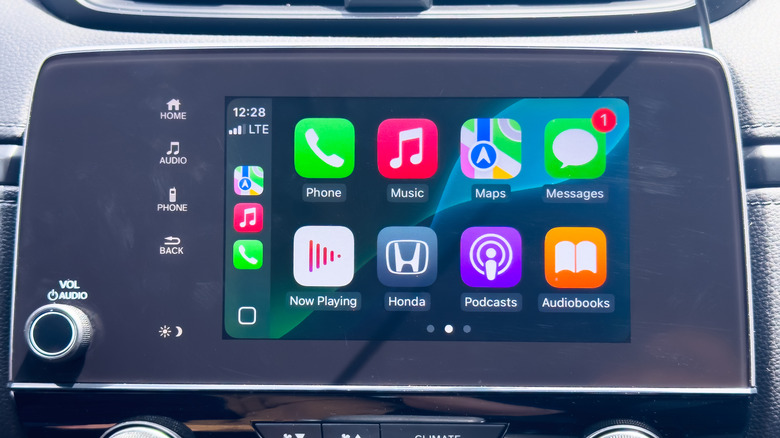
Logically speaking, this one's mostly a market for drivers who are buying a used car and want to upgrade it. Say you're interested in a car model from before the 2010s that only has the basics: a stereo and a CD player make up the bulk of your infotainment, and there's barely any navigation. In that case, the only real options available are to buy a stand-alone GPS device or use the navigation apps on your phone.
None of those are perfect solutions since they either don't address the infotainment side of things or introduce distraction to your driving. Buying a dedicated infotainment system equipped with navigation software is the move that gets you the best of both worlds. Going the OEM route in this category isn't as expensive as some of the other items on this list; the average factory navigation system costs around $500 to $1,000, and aftermarket prices aren't much different once you add installation costs.
At the junkyard, though, you could probably get your hands on the info display screen for $100, and from there it's a question of installing your favorite apps. You'll want to make sure the version you're buying supports mobile integration and that it's properly secured on your dashboard to guard against theft.
Head and taillight assemblies
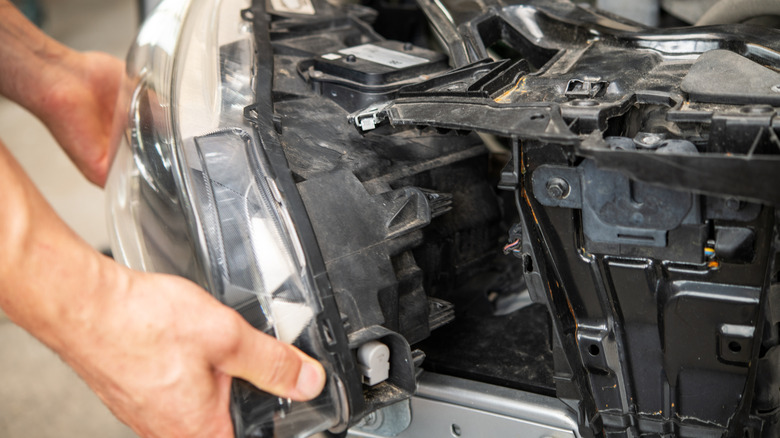
We all know the importance of using headlights and taillights for visibility, especially at night. Unfortunately, even the best ones don't last forever. Physical damage, severe oxidation, or electrical issues could necessitate changing the ones that came with your car when you first got it. Now, with head and taillights, it's one of the car parts we recommend replacing in pairs, even if only one is burned out or damaged.
That's where the problem is: cost. Pricing for headlight assemblies can vary; KBB estimates they cost more than $1,000 for most modern cars, and AutoZone estimates the cost could exceed $4,000 if the assemblies house high-tech lighting systems. At that price point, the principle of changing in pairs can put a big dent in your wallet, so you could either break that rule or shop at a cheaper marketplace.
Again, cost varies, this time depending on the salvage yard you visit and the type of headlight they'll be housing. You could find some without specification guidelines in the ballpark of $20 a pop, but others like High-Intensity Discharge (HID) retail for closer to $100. That's a tangible difference when compared to the quotes for brand-new fittings, so if you're searching for a new headlight assembly, it's worth taking a look at the junkyard.
Fuel injectors
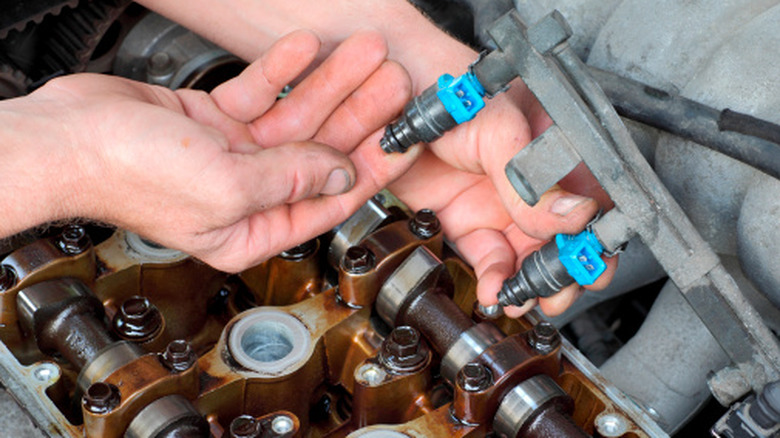
Every internal combustion engine needs a fuel injector: it delivers fuel at the exact time and in the precise quantity that the powertrain requires to function properly. Hence, with any performance dip, you'll notice symptoms such as hesitation, stumbling, reduced fuel efficiency, and, in severe cases, engine misfires. Since driving around with a faulty fuel injector can cause far more costly engine damage, you'll want to replace it as soon as possible.
What you'll spend largely depends on the car's make and model, as well as how many injectors you're replacing at once. For instance, replacing a fuel injector in a Honda Civic should cost about $600 according to RepairPal; the same operation in a Chevrolet Silverado comes in at roughly double that number. Replacing multiple at once usually qualifies for discounted pricing, but chances are you're looking at roughly $1,000 in expenses. It gets even more expensive if your engine runs on diesel: those can run into multiple thousands for each injector.
Buying one at a junkyard can save you hundreds of dollars — the injection rail costs between $11 and $22, while the injectors themselves go for $7 to $15 a pop. Of course, labor costs will also influence your final bill, but it's likely to be nowhere near the $1,000 estimate from the brand-new route.
Radiators
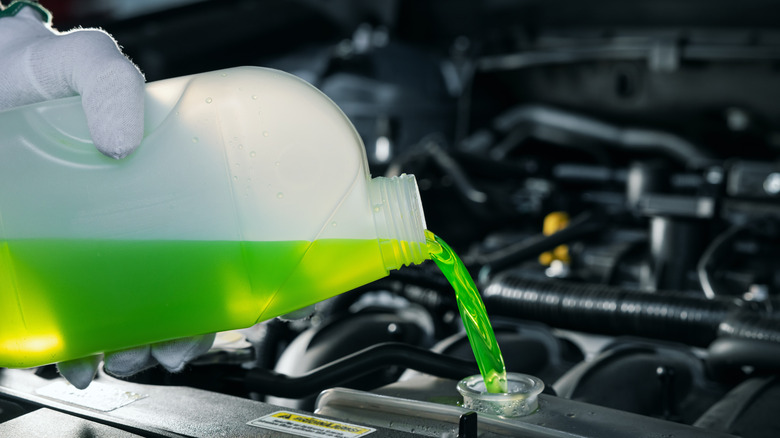
Ever been in a vehicle that was overheating? It's intensely uncomfortable to put your feet on the car floor even with shoes on, and you can't risk driving for too long if you notice the internal temperature rising abnormally. Overheating is usually a sign of a faulty radiator; it's the radiator's job to regulate the engine's temperature.
However, like most parts situated in the engine, a brand-new replacement isn't cheap. ConsumerAffairs estimates that the average radiator replacement costs between $1,200 and $1,500, so repairing the faulty radiator would be cheaper. If it's beyond repair, though, you could check out the options at your nearest available salvage yard.
At scrap locations, there's no exact guideline for how much you'll spend. ScrapMonster says car radiators are sold for $1.7 per lb, so if we use a 2006-2011 Honda Civic as an example (which weighs 9.6 lbs), that estimate comes out to $16.32. Some other sources report an average figure closer to $50, and when you account for labor, you can achieve significant cost savings by going the junkyard route. Just remember to inspect for damage, and don't skimp on coolant and antifreeze — they're things you should never go cheap on.
Leather seats
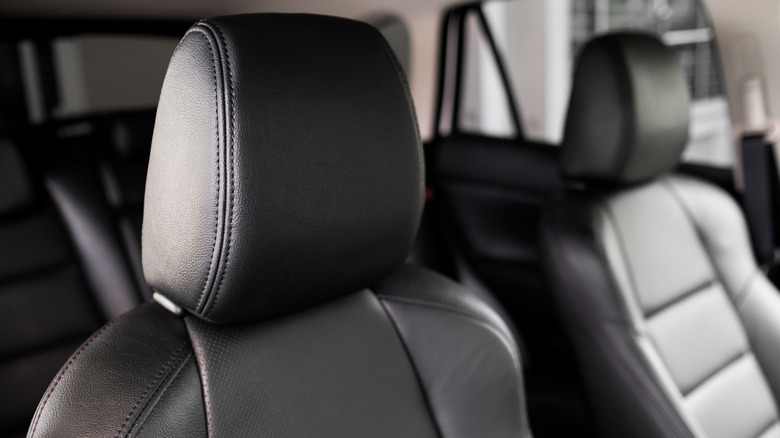
Keeping your car's upholstery in pristine condition is another maintenance task that can drain your wallet. They're a major part of the interior aesthetic, and they're prone to damage; UV rays can cause them to crack, liquid spillage can seep into and ruin the fabric, and stains can be hard to remove depending on the material. If they can still be saved, you could have them reupholstered. Unfortunately, per J.D. Power, that process costs roughly $350 a pop, and you can run up a bill of up to $2,500 if you're touching all the seats, depending on your car type.
Buying new seats isn't that much better, either. So you really have two options if you're on a budget: buying a seat cover or visiting the junkyard. Seat covers usually cost between $20 and $50, but they're merely a cosmetic solution to the underlying problem. That's not to mention that they could interfere with airbag deployment if they don't perfectly fit your car's specifications. It's one of the reasons seat covers are featured on our list of car accessories to avoid.
Leather seats taken from cars sitting in self-service junkyards can do the job. Quotes vary among providers, but you can expect to shell out between $30 and $60 per seat. If you're going down this route, though, thoroughly inspect the seats for rips and bugs; the last thing you want is to introduce pests into your vehicle.
Airbags
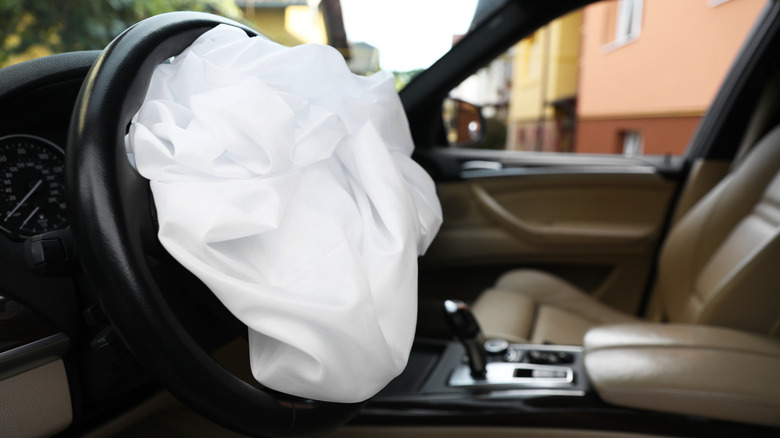
If your car is involved in an accident severe enough to deploy the airbags, you'll need to replace them before you can drive safely again. However, they can be very expensive. According to AutoZone, a single airbag replacement costs between $1,000 and $2,000 (Edmunds puts this figure at around $500), and you're likely to need multiple replacements.
Factoring in the other costs of fixing a car that has been in an accident, a bill of $1,000 per airbag can be a bridge too far even if you have insurance. So, even as a temporary fix, you could buy an airbag from a junkyard for $50-$200 to get you back rolling on the road. Now, airbags are on our list of car parts not to buy used, and for good reason — there's no failsafe guarantee that the airbag you're buying has never deployed before or that it's not counterfeit.
According to the National Insurance Crime Bureau (NICB), 17 states have adopted legislation against counterfeit airbags, and seven more have bills under consideration. You'll want some form of certification from your seller to make sure you're not buying a counterfeit product, and make sure to check the airbag cover for any uneven seams; it's usually a telltale sign that it's been deployed before.