

5 TV Mounting Options That Beat Using The Basic Wall Bracket
We may receive a commission on purchases made from links.
A smart TV is an important part of any home setup. But the basic wall mount that comes with some TVs is doing no favors. It clamps the TV flat against the wall at one fixed angle, and once the holes are drilled, there's no going back. You're stuck watching it from that one angle, with no way to adjust it later if your couch or seating changes unless you're okay drilling another couple of holes in your wall. That's a lot of compromise for something you will stare at every evening for years.
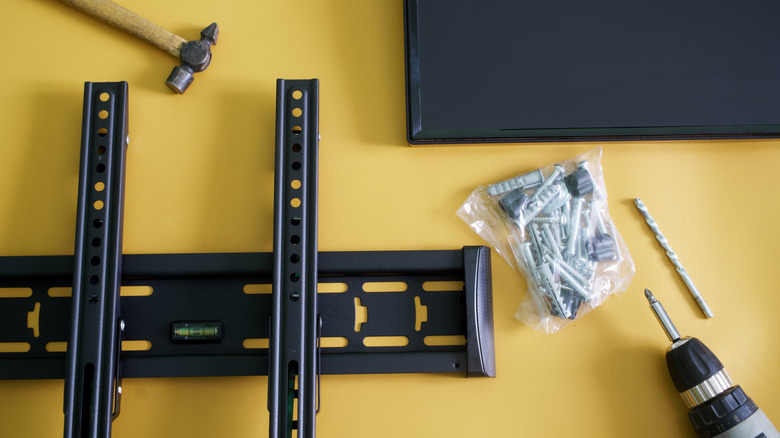
The good news is that you don't have to settle for that boring basic wall mount bracket. Once you've got the right tools for the job, the real decision is picking a mount that matches the vibe of the room and how you have envisioned it. A gamer wants full focus and high performance, while families just want something discreet that doesn't distract during meals but matches the aesthetics of the room. But before you commit to any permanent holes, it's worth thinking through what wall mounting a TV really involves, since not every living room setup calls for drilling in the first place.
Below are five different types of TV mounting options that solve problems a fixed bracket simply cannot. This includes tight viewing angles, wasted corner space, low ceilings, and rental walls that nobody is allowed to touch. Some cost more than a basic bracket; some don't cost a cent extra beyond a bit of planning.
Full-motion articulating mount
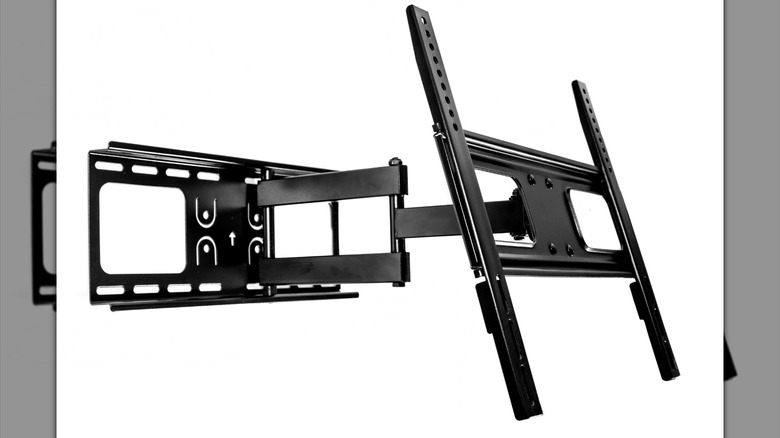
A full-motion mount does what a fixed mount cannot physically do: It pulls the TV away from the wall, swivels left or right, and angles it up or down. It's one of the best mounts for adjusting the TV the way the viewer wants to see it, no matter what angle they're viewing it from. A full-motion mount makes the screen face the viewer instead of the other way around. That matters most in open living rooms, kitchens attached to the living area, or any space where seating shifts depend on who's over.
Instead of moving the couch from its place, a TV mounted on a full-motion articulating mount lets you move the TV in your direction. This flexibility exists because of a shared hardware standard. Nearly every flat-screen TV sold today has four threaded holes on the back panel in a pattern set by the Video Electronics Standards Association (VESA). This is why a full-motion mount, like one from Mounting Dream, will fit almost any TV panel without guesswork. However, it's important to check the mount's listed compatibility and VESA pattern before buying, since not every TV mount is universal.
The tradeoff is installation. Full-motion mounts are heavier and stick further off the wall than fixed mounts. So they need studs or a properly rated anchor behind them, as they won't hold securely in drywall alone. You should also measure the mount's reach before drilling, since a fully swiveled TV can end up closer to a walkway than expected.
Tilting wall mount
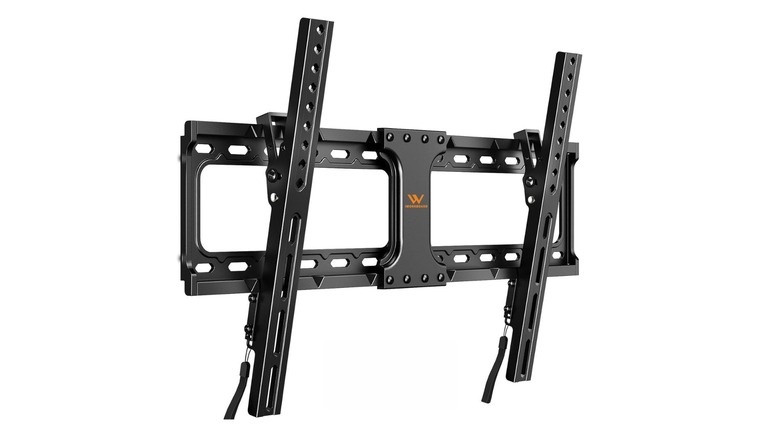
A tilting wall mount is limiting compared to the full-motion arm, but it's meant to do one job, and do it well. It lets the TV angle downward once it's placed higher than eye level. That single adjustment solves the most common complaint people have after mounting a TV too high, which is a sore neck from looking up for hours at a time. It's a simpler, cheaper piece of hardware than a full-motion arm, but for the right placement, it solves the actual problem better.
You can use the tilting wall mount to mount your TV above a fireplace, since the mantel forces the screen higher than a comfortable sightline. That said, you should pick the placement carefully and not carelessly. Consumer Reports has noted that mounting a TV above a fireplace isn't generally recommended in the first place, since the heat and smoke can damage the TV. But if that's the only place you have to mount your TV, you should use a tilting wall mount like the one from Iworkboard.
A tilting mount also earns its place on any wall where the TV has to sit above something like a bookshelf, a console, or a built-in cabinet. Getting the height right matters just as much as the tilt itself. So, you should measure the right mounting height for the room before drilling anything.
Corner wall mount
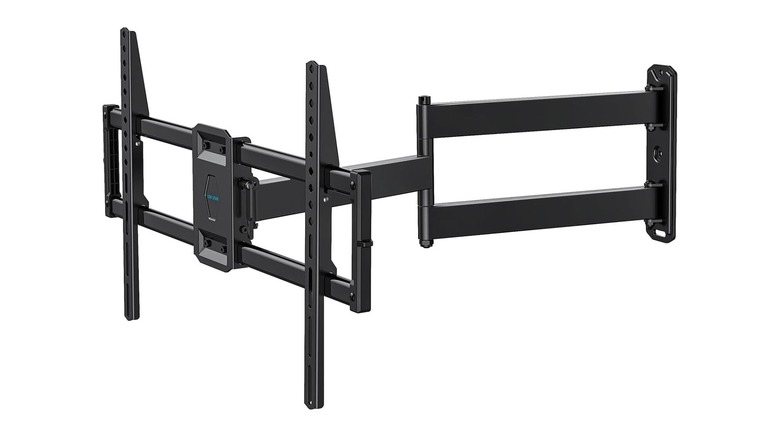
Corners are dead space in most living rooms. They are not only unsuitable for placing a TV, but you should also not place your subwoofer in a corner if you care about sound quality. But the thing is, you can put up your TV if you are using a corner wall mount, which is built to make such dead space actually useful. Some houses don't have much room for fitting in all the stuff, and only corners are the areas left for a TV. Unlike a standard flat mount, a corner bracket angles outwards from two adjoining walls, which works well for rooms with tight spaces and awkward layouts.
But even if you get a top-rated corner wall mount like the one from USX Star, you still need to find solid backing to drill into. Corners are where two separate stud lines meet, and depending on how the room was framed, that intersection may not always line up with the mount's position. The good thing is that once you have a wall that is sturdy enough to hold the mount, you can start drilling, and the corner wall mount will hold your TV in its place.
A corner-mounted TV actually makes for better viewing angles, especially if you have a seating arrangement in an L-shape, which is common in smaller apartments and studios. It's also worth checking the mount's swivel range beforehand, since corners often require more side-to-side motion than a flat mount.
Ceiling mount
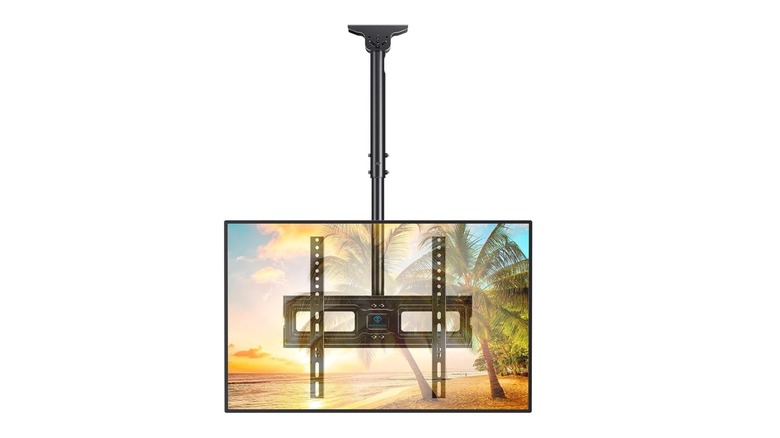
When you live in an apartment where there is no wall to use at all, like around a kitchen island, a garage, or a loft with glass on all sides, then a ceiling mount can come in handy. It solves a problem no other type of TV mount can. Instead of mounting your TV on a flat wall, the whole assembly bolts into the ceiling above and drops the TV down on an adjustable pole, which also frees up wall space entirely for shelving or artwork. You might have seen this type of setting in railway stations or malls.
Because the TV hangs from above rather than sitting flush on a wall, the hardware needs to be anchored properly, since a ceiling-mounted TV places significant weight on its anchor points. The U.S. Consumer Product Safety Commission's long-running anchoring guidance applies to this type of installation, and it recommends following the manufacturer's instructions and confirming the ceiling joist can actually bear the load.
Ceiling mounts also tend to offer more swivel and tilt range than fixed brackets by design. They are used to offer an uninterrupted view to a large seating area from different angles. You can get a TV ceiling mount from Perlesmith that can hold up to 110 lbs of weight, perfect for most types of setups. This flexibility is genuinely useful, but it comes with more visible hardware and cabling, which, if not done right, is difficult to conceal.
Floor-to-ceiling pole mount
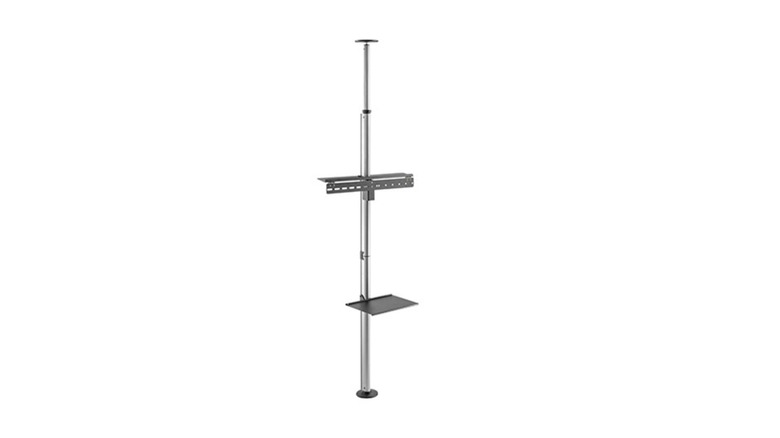
A floor-to-ceiling pole mount is the answer for those who aren't allowed to drill, either because of their rental agreement, a concrete wall, or a landlord who has said no. Instead of mounting the TV on a wall, the floor-to-ceiling pole mount braces itself vertically between the floor and the ceiling under tension. It holds the TV in place through pressure rather than screws or wall anchors, which is one of the better ways to skip drilling entirely.
This is also one of the more flexible options in the list since you can slide the mount up and down the pole to change the viewing height without ever needing to touch the wall or drill new holes. The whole thing can be taken down and moved to a new apartment in one piece. It's a setup even for people who could drill but simply don't want to, since it's genuinely one of the few wall-mounting alternatives that leaves zero marks behind when dismantled.
Weight capacity is an area where you should pay attention when choosing a floor-to-ceiling mount because the TV isn't mounted on a wall. For instance, this mount from Lumi supports TVs up to 30 kgs or 66 lbs.