

5 Of The Worst Places To Put A Subwoofer, And Why
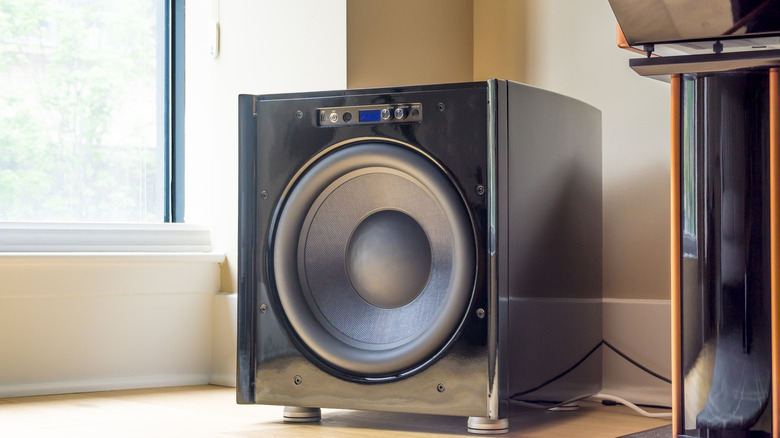
Getting the best subwoofer can make or break the home theater setup that you are trying to make. But the thing is, even if you have the best subwoofer and speaker system, it may not sound great if it's placed in the wrong spot. You will not want to hear a flat or boomy sound from your pricey subwoofer. Bass is a bit tricky because, unlike treble and mids, low frequencies tend to interact heavily with a room's walls, corners, and furniture. This is why placement matters, because two similar subwoofers may sound completely different in two different spots.
If you understand how a subwoofer works, you would know that it shouldn't be placed wherever there's free floor space and calling it done. The drivers inside it move a lot of air, which has to interact with the room before it reaches your ears. And if you're planning on getting more than one subwoofer to smooth out the bass, then knowing how to connect multiple subwoofers is even more important, since bad placement multiplies the problem rather than fixing it.
So, before you start cursing your subwoofer for bad bass quality, you should understand the spots you should never place it in. Spoiler alert: The corner of your room is one of the worst. Here are some other areas you should avoid when positioning your subwoofer.
Directly in a room corner
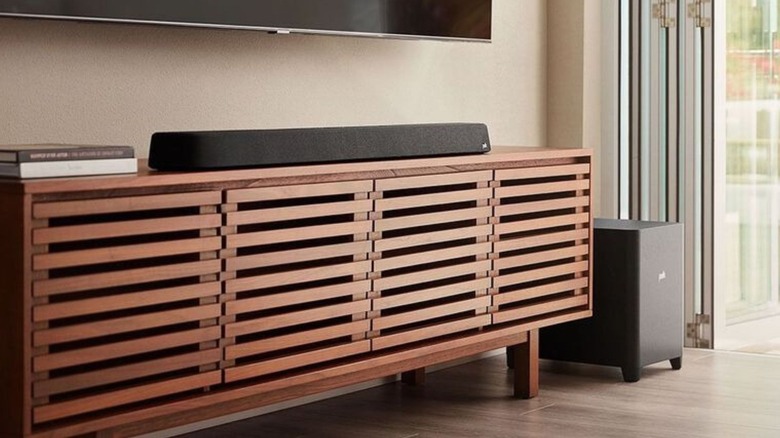
Most people shove their subwoofers in the weirdest places possible, one of which is the corner of a room. The reasoning is simple: It's out of the way, frees up floor space, and looks tidy. But as mentioned above, corners (touching two walls) are the worst possible places for a subwoofer, even though many people assume that corner placement technically boosts low-end output.
The problem is that a corner reflects the sound waves off two walls at once, which piles them up over the original sound. Depending on the note, they either add together and get way louder, or cancel each other out and get way quieter. This is the reason why bass coming from a corner of the room sounds uneven — one note feels thumpy, while another barely registers. You can hear it for yourself by placing your subwoofer in a corner and playing music with deep, sustained bass.
According to acoustic treatment specialists at Acoustic Fields, corner placement is one of the most common mistakes home theater owners make. Since subwoofers are designed to move large volumes of air efficiently, giving that air two hard, close surfaces to bounce off only amplifies the imbalance. If you are reluctant to keep it in the corner, or have no other place for it, then you should at least try to keep it a few feet away from the nearest corner.
Inside a media cabinet
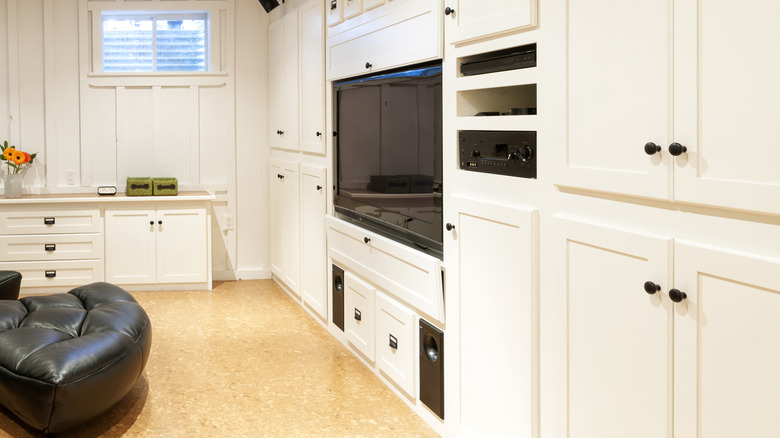
Another place where people — who don't want to hamper the aesthetics of their TV unit or the room — hide the subwoofer is inside a cabinet. This way, the cabinet feels like a win, as it goes with the clean look they might be trying to achieve. You get no visible box and no cables in sight. Unfortunately, the clean setup you are trying to achieve hampers sound quality. Subwoofers need open space to breathe, both literally and acoustically. Enclosing one in a cabinet muffles the output, as the wood panels absorb and dampen the sound.
Additionally, cabinets trap heat, and subwoofer amplifiers run warm during heavy bass output. So, poor airflow can shorten the lifespan of the unit over time. Anyone who has built a subwoofer enclosure from scratch knows how important it is to calculate the enclosure volume and venting. This is why you cannot just put a subwoofer in any random media console, since most aren't built with subwoofer specifications in mind.
Sound & Vision also points out that cabinets essentially become an uncontrolled second enclosure around the subwoofer's housing, which interferes with the manufacturer's intended tuning. For those wanting to put a subwoofer in a cabinet anyway, they should look for a slimmer model and avoid putting a full-size unit into a cabinet it was never meant to sit in.
Flushed against a bare wall
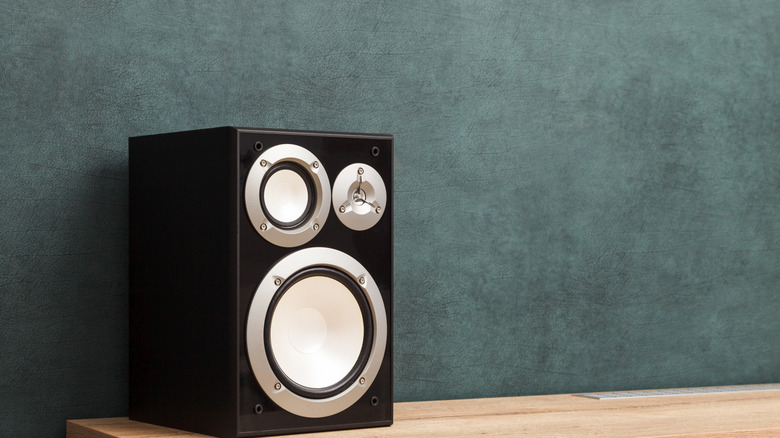
This is something that I also corrected in my home theater setup at my house. I thought that placing the subwoofer dead-center against a wall not only looked neat, but also gave nice symmetry to rooms with TV units or a fireplace. It looked good to me, lined up cleanly with the TV and the unit specifically meant for the setup, and overall, it felt like the correct spot. But when you look at things acoustically, symmetry isn't always your friend when it comes to bass, and this is one of those cases where a tidy option works against you.
A flat wall reflects bass waves straight back into the room instead of soaking them up. When the subwoofer is placed dead-center along a wall, those bounced-back waves line up with the bass already bouncing between the front and back walls. This stacks everything together instead of spreading it out. According to Polk Audio, placing the subwoofer against the wall turns it into an acoustic amplifier, which exaggerates the bass to the point where it sounds boomy rather than accurate.
The fix for this is the "rule of thirds," where the subwoofer is pulled a third of the way into the room or kept at least 12-18 inches from the wall. This setup produces far more even bass than leaving it flush against the wall. It's also worth noting that subwoofers don't need to be placed centrally within the stereo field the way front-facing speakers do.
Built into a wall
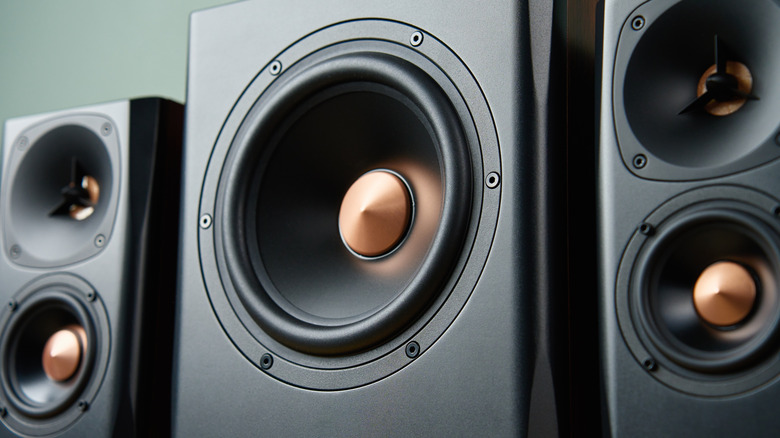
Custom home theater rooms sometimes take too much inspiration from Pinterest and go all-in, placing subwoofers inside a wall. They think that this will give their setup a showroom-style finish. While it does look good on paper (and on Pinterest), you get no visible box, no visible wires, no floor space lost, and nothing for the kids or the dog to bump into. But that clean setup comes at the expense of your subwoofer's sound quality and creates one of the biggest limitations a subwoofer can have.
Bass response depends entirely on where the unit sits relative to walls, furniture, and the listening position. If a subwoofer is flush with a wall, it cannot be readjusted a few inches to fix a dead spot in the room. You have to live with the output provided by the setup you've created. According to K&B Audio, in-wall systems become permanent fixtures the moment they are installed, trading the easy repositioning of a freestanding subwoofer for a fixed spot that cannot be adjusted, upgraded, or moved without major construction work.
Subwoofers really benefit from having the freedom to be moved to test the correct spots for perfect bass. A permanently recessed subwoofer doesn't allow you that, and you either have to be acoustically knowledgeable enough to choose the right permanent spot, or leave the placement to guesswork.
Behind your seating position
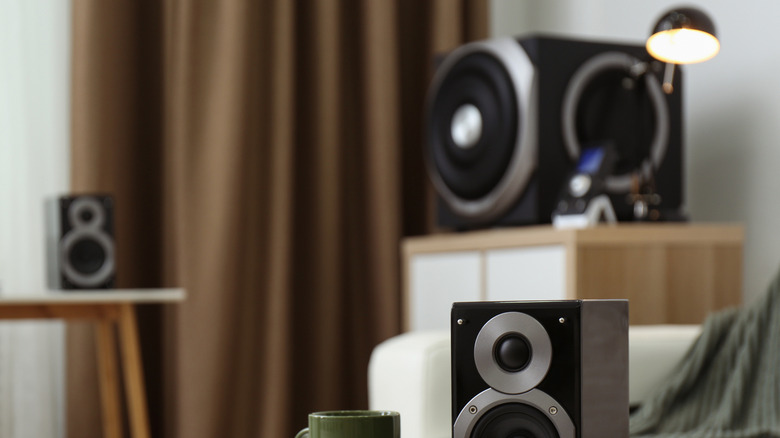
This is another place where you should not put the subwoofer, even though you can feel the bass right behind you. Many think that putting the subwoofer there not only sounds great, but also keeps it out of sight, out of high-traffic areas, and frees up space in your TV unit to accommodate other devices. But bass coming from behind the audience creates a subtle mismatch that a lot of people feel without knowing why.
SVS Sound's own placement guide suggests that front-of-room woofer placement is the most common approach people go with, and it's the best setup. It blends in well with the main speakers and center channel while minimizing localization, meaning you shouldn't be able to tell where the bass is coming from at all. The guidance is clear — you should place the subwoofer in such a way that it doesn't give away its own location.
Bass should feel like it's coming from all around you rather than one specific spot. This is especially important if you have one of the best-rated soundbars under $200, since the included subwoofer already carries a lot of the system's overall sound.