

7 High-Horsepower V6 Engines That Put The HEMI To Shame
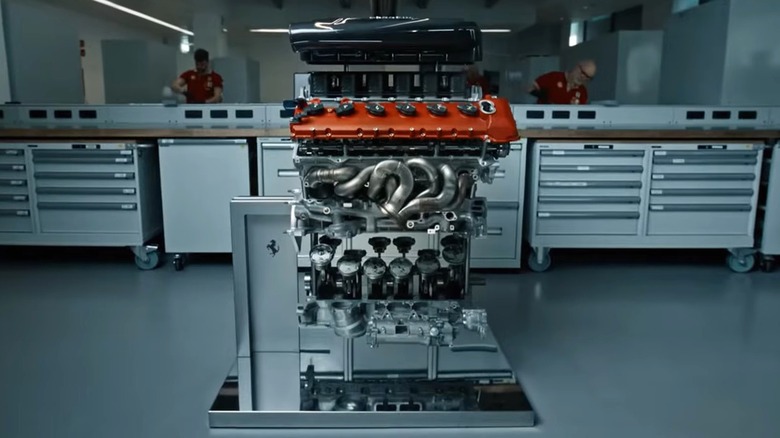
The HEMI badge carries a certain kind of confidence that only a handful of eight-cylinder engines have ever matched, and for the longest time, the 6.4L HEMI V8 was the go-to answer for anyone who needed to settle a horsepower argument quickly. At around 475 horsepower in its strongest factory form, it sat comfortably above what most people expected from a production engine. But something has been quietly happening on the V6 side of the equation, and the numbers are now impossible to ignore. That's exactly what this list is about.
This shift came from the performance demands that modern motorsport and hypercar development place on manufacturers, which requires a different approach to engine designs. Smaller displacement, forced induction, hybrid integration, and race-derived architecture all converged at the same moment, and the engines that came out of that process left the 6.4L HEMI behind entirely.
Some of the engines on this list clear that mark by a few hundred horsepower, and that's before any hybrid assistance is brought into the picture. Some live in road cars that you could theoretically buy today, while others were forged under the brutal conditions of the World Endurance Championship racing, where engines that can't hold together under maximum load for hours simply never make it to the grid. Regardless of where they were built or what they were built for, every single one of them shares the same six-cylinder layout and a horsepower figure that leaves the 6.4L HEMI with some catching up to do.
Maserati Nettuno — 621hp
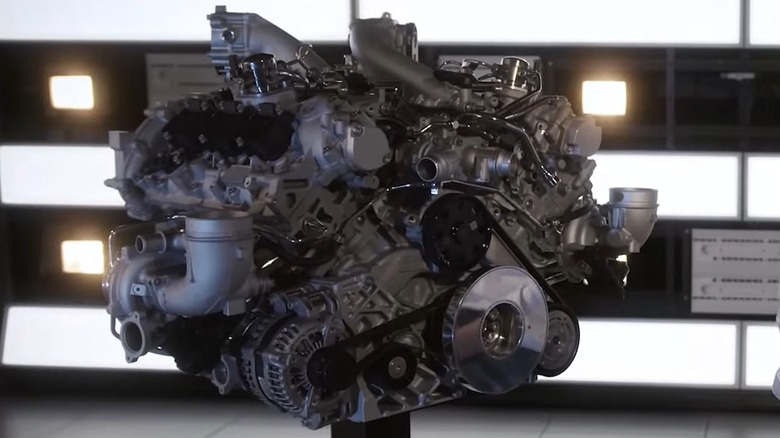
Built from scratch specifically for the Maserati MC20, the Nettuno is a 3.0-liter twin-turbo DOHC V6 with VVT that produces 621 horsepower and 538 lb-ft of torque, putting it comfortably among the strongest production car engines in the market right now. All of that power reaches the rear wheels through an eight-speed double-clutch automatic, plus the Maserati gives drivers five drive modes to work with — GT, Sport, Corsa, Wet, and ESC Off. GT handles everyday driving just fine, but flip it into Corsa and the MC20 gets down to business, covering 0 to 60 mph in under three seconds.
What makes the Nettuno story even more interesting is what Maserati did by carrying the same engine into three other builds and turning up the output each time. The one exception is the GT2, which held onto the MC20's exact power figure; but beyond that, the two cars have very little in common. The GT2 is a full track-bred package built around the MC20, with the double-clutch being swapped for a six-speed sequential gearbox and a limited-slip differential, for good measure.
The GT2 Stradale, on the other hand, took things further by bumping the Nettuno to 640 horsepower in a road-legal body, which is about 200 mph flat out and a 0-to-62 sprint in 2.8 seconds, whether you're in the Cielo or the Coupe. Then at the very top sits the MCXtrema, formerly known as Project24, another track-bred variant that pushes the Nettuno all the way to 740 horsepower through a six-speed sequential racing gearbox, with just 62 examples ever made.
Ford GT's 3.5L EcoBoost V6 — 660hp
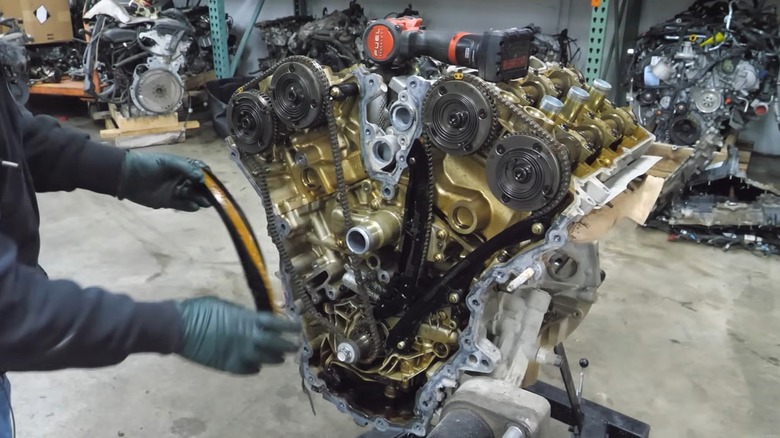
Ford's 3.5-liter EcoBoost V6 traces its roots back to the Duratec 35 block, and from the beginning, it was built around a cast aluminum block and an aluminum cylinder head running a dual overhead cam layout, with the six cylinders arranged in a V shape, twin injectors for fuel delivery, and a variable camshaft timing chain on both ends. Over the years since its 2010 debut, the engine matured into a more refined package, picking up port fuel injection and a stronger dual-chain cam drive that addressed the reliability concerns that plagued production models earlier than 2015. That same core package has found its way into vehicles like the F-150, Ford Explorer, and Ford Taurus, but none of them extract what the Ford GT does from the same setup.
In the GT, the twin-turbocharged V6 churns out 660 horsepower at 6,250 rpm, and a torque of 550 lb-ft at 5,900 rpm. The Ryre variant stretches the redline all the way to around 7,500 rpm while a seven-speed dual-clutch transmission handles all the gear changes and sends everything to the rear wheels automatically. Despite that output, the Ecoboost still manages 18 miles per gallon on the highway. Ford stands behind the GT and its powertrain with a 36-month unlimited miles warranty, for added peace of mind.
Ferrari 499P V6 — 680hp
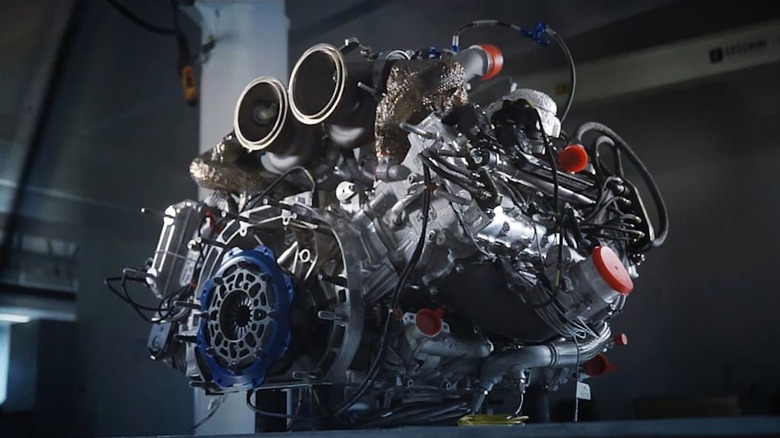
Ferrari built the 499P around a 3.0-liter twin-turbo V6 that shares its bloodline with the 296 GT3, with both turbochargers arranged in a "Hot V" configuration sitting behind the cabin and powering the back wheels through a seven-speed sequential gearbox. On its own, the internal combustion engine produces 680 horsepower, but it works alongside an electric motor tied to an Energy Recovery System, which brings the front axle into the equation and gives the 499P all-wheel drive capability. When combined with the ICE, that can land at around 1,000 horsepower, but FIA WEC laws prevent it from using all of it in competition by enforcing a 118-mph threshold before the hybrid system is allowed to kick in.
Before the 499P ever turned a wheel in an official race, Ferrari put the entire assembly through close to a thousand hours of endurance testing — roughly 7,500 miles spread across two earlier prototypes — to make sure everything held together when it mattered. That preparation clearly paid off, as the 499P earned three consecutive wins at Le Mans starting from 2023, proving just how well the package holds together under racing conditions. For anyone who wants the full 499P experience without being bound by FIA competition limits, Ferrari also built a version designed purely for open track use called 499P Modificata.
Peugeot 9X8 V6 — 680hp
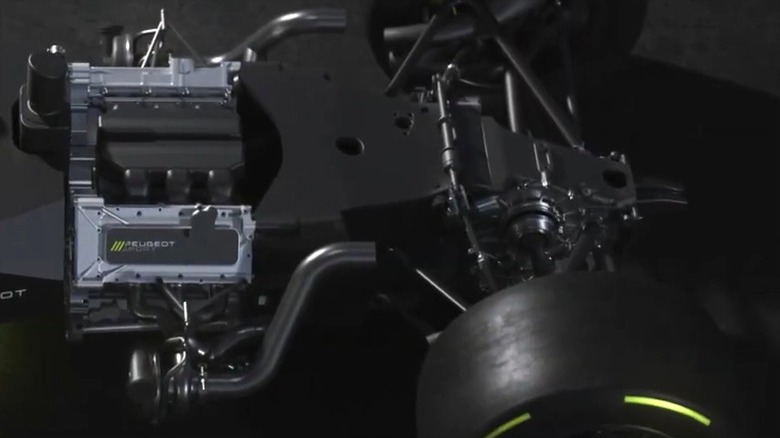
Built in collaboration with TotalEnergies and drawing on the legacy of Peugeot's earlier 908 and 905, the 9X8 rolled out in 2022 with the "Hybrid4 500kW" system, carrying a 2.6L twin-turbo V6 at its core. During development, Peugeot weighed it against a single turbocharger setup but ruled it out before the car made its first appearance at the Six Hours of Monza. The engine sits behind the cabin, routes power to the rear wheels through a seven-speed sequential gearbox, and tips the scales at 363 pounds. If left unchecked, the V6 is good for around 680 hp, with that figure rising to 700 when the electric side of the system runs out of charge.
The electrified half of the 9X8 runs a 200-kilowatt front motor producing 272 horsepower through a dedicated single-speed gearbox, and draws power from a 900-volt battery housed in a carbon-fiber shell. When the front axle comes into play, the V6 pulls back to 407 horsepower to keep the overall balance in check — and the FIA adds another layer to that by restricting hybrid deployment to speeds under 75 mph. On paper, both systems together are capable of reaching as high as 952 horsepower, but LMH rules keep the working output at 680 hp once the front drive unit reaches full operating speeds.
Toyota TR 010 V6 — 700hp
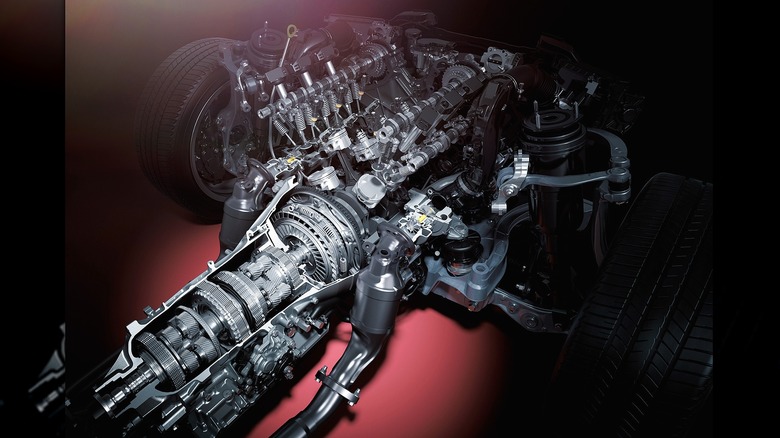
Developed for Toyota Gazoo Racing at the Higashi-Fuji engineering facility, the TR010 picks up where the GR010 Hybrid left off, making its competition debut at the Imola six-hour race in the 2026 World Endurance Championship. First, it bumped the 3.5-liter V6 twin-turbocharged from 680 hp to over 700 hp under the hood. When paired with an electrified powertrain setup built around a Denso rear motor and an Aisin front motor, the hypercar is capable of adding another 268 hp. However, Balance of Performance rules cap the combined figure at roughly 662 horsepower for competition use, with the hybrid system held back until the car drops under the 155-mph threshold while pulling all four wheels.
All of that output is managed through a transversally mounted seven-speed sequential gearbox, with constant-velocity tripod driveshafts carrying drive to the wheels. A mechanical locking differential keeps torque distribution in check. Both axles run independent double wishbone suspension on a pushrod layout. The fuel tank is sized at 90 liters (about 23 gallons), to handle the long stints endurance racing demands.
That engineering foundation proved its worth almost immediately, taking a win at Imola in 2026. After that, the TR010 also went on to win the 2026 Le Mans Hypercar 24-Hour race, carrying forward the legacy the GR010 had built during the previous generation.
Nissan VR38DETT V6 — 710 hp
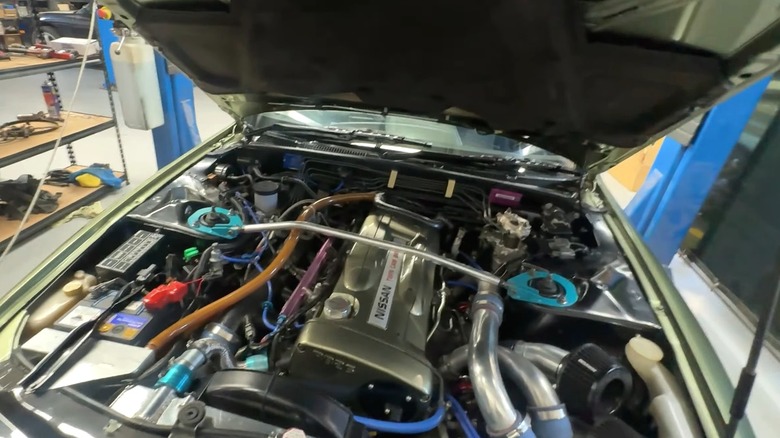
What makes the VR38DETT so special starts with how every single unit is put together manually by Nissan's engineering division and Nismo, rather than rolling off a conventional production line. The result is a 3.8L twin-turbocharged V6 that sits positioned ahead of the cabin in both the GT-R and the GT-R50 of which the latter arrived in 2019 as a 50-unit limited run. In the GT-R50 by Italdesign, power reaches all the wheels through a rear transaxle Attesa E-TS four-wheel drive system paired with a strengthened double-clutch six-speed sequential gearbox. Using Nissan's FIA-homologated GT3 racing program as the development blueprint, the VR38DETT in GT-R50 trim extracts 710 hp at 7,100 rpm and 575 lb-ft of torque peaking at 5,600 rpm, landing it well above the standard GT-R's 600 horsepower and making it more capable in every measurable way.
Getting there required a thorough reworking of the twin-turbo setup, with bigger GT3 competition-grade turbochargers, refined ignition mapping, better intercoolers, and revised airflow. These changes, alongside stronger internal components and higher-flow parts, had to keep the whole package within Euro 6 emissions standards. On the chassis side, a Bilstein DampTronic shocks adaptive suspension system handles damping duties, while the engine's differentials manage torque distribution at both ends to keep everything planted. What's worth noting, apart from the factory figures, is that the VR38DETT has earned a strong reputation among tuners as one of the more modification-friendly engines, and plenty of builds have pushed it far beyond its limits thanks to that extra headroom.
Ferrari F80 V6 — 900hp
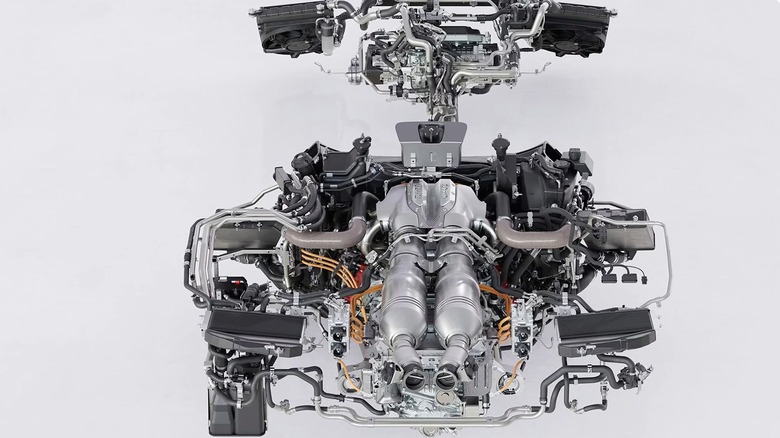
The Ferrari F80 is one of the fastest V6 cars around and one of Ferrari's all-time designs. That's because its F163CF engine was derived from the 499P Le Mans program and rebuilt for road use, all for just 799 units. The combustion engine sits inside a carbon-fiber chassis, and when paired with an eight-speed twin-clutch transmission, it is capable of 900 hp with a redline pushed all the way to 9,200 rpm and a top speed that stretches to 218 mph. On the electric side, the F80 borrows the rotor and stator arrangement from its Formula 1 grand prix racing technology, which begins to explain how the F80 manages an acceleration of zero to 62 mph in 2.15 seconds and of zero to 124 mph in 5.75 seconds.
The F80 has an 800-volt battery pack with inverters at both axles managing power delivery — and those rear inverters also pull double duty as the ICE's ignition source and torque aid when needed. Three electric motors complete the hybrid setup, one MGU-K unit at the back and two sharing the front wheels through Ferrari's all-wheel-drive system, contributing a combined 296 horsepower of power. Its suspension is handled by two electrically actuated turbochargers with 48 volts feeding into an active damping setup, alongside metal 3D-printed wishbones and a chassis management system pulling it all together. When the combustion engine and the hybrid system are working in unison, the F80 produces a record-breaking 1,200 horsepower.
Methodology
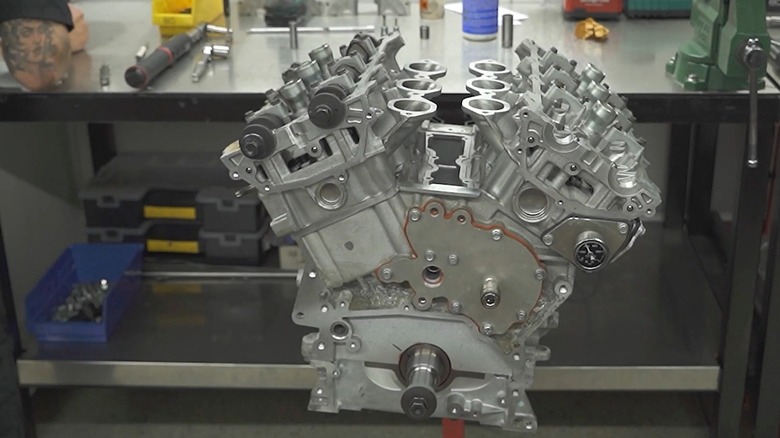
To keep this list credible from top to bottom, every engine included had to pass three filters. First, it had to comfortably surpass the 485 horsepower produced by the 6.4L HEMI V8, which we picked as our reference point because it's one of the most recognizable and well-respected eight-cylinder engines in history.
The next filter was configuration. Every engine had to be a genuine V6 — six cylinders arranged across two banks and built that way from the factory. No inline sixes, no turbocharged fours dressed up with big power numbers, and no engine swaps or heavily modified street builds where the original specification has been so thoroughly reworked.
Lastly, we cross-referenced every engine on this list against manufacturer specifications and at least one independent source, including the likes of MotorTrend, Road and Track, Car and Driver, and official FIA technical documentation for competition engines. For engines operating under Balance of Performance or LMH rules, we noted both the unrestricted output and the regulated competition figures. Most importantly, we did not include any hybrid system when calculating an engine's horsepower, only what the V6 could churn out by itself.