

12 Of The Best Engines For Tuning
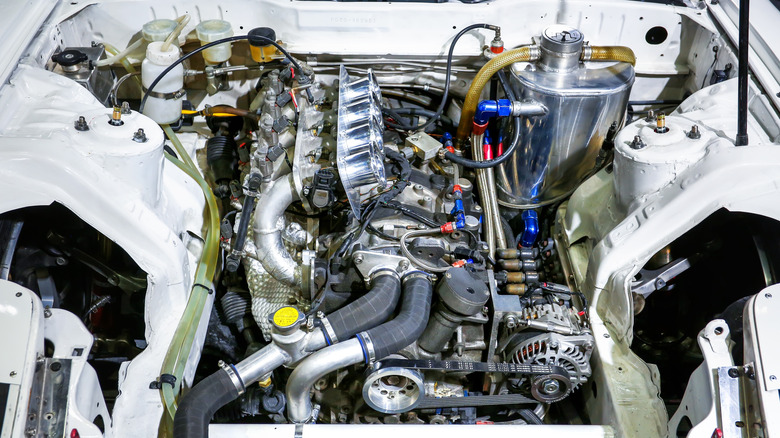
For many cars, their real life doesn't begin at the factory, but at the moment they roll off the dealership lot, and into the hands of an owner. For car enthusiasts, modification is a cornerstone of the passion. Expressing oneself through their car or giving their car the means by which to express its full character is one of the most rewarding outlets of the automotive enthusiast, and there is perhaps no other pursuit more suited to this than engine tuning.
With engine tuning, the enthusiast can use a manufacturer's creation as a foundation for their own. It's an expressive ritual, where some might want a drag racer powerhouse, and another might want a torque-filled drifting initiator. Every engine can be tinkered with, but some stand above the crowd as ideal starting places for the tuner's dream build. Strong and hardy parts, the ability to accommodate and move large volumes of air, accessible engine control units (ECUs), and other factors are what set some engines apart. Here are 12 of the best engines for tuning.
Toyota 2JZ-GTE
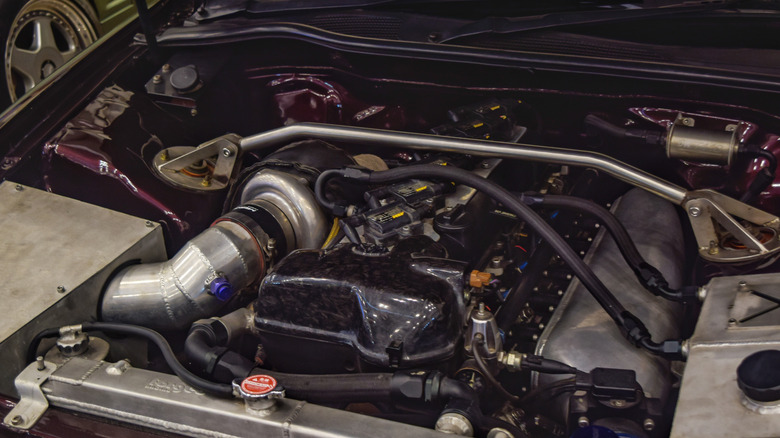
In the world of tuning, there are a handful of engines that have ascended to legendary status. Every tuner may have their own Mount Rushmore of perfect tuning engines, but the Toyota 2JZ-GTE will almost certainly be on it. If you want to build a rocket in your garage, there is almost no better engine to build it around than the 2JZ-GTE.
What makes the TOYOTA 2JZ so special?? Its story starts with the Toyota Supra, a car whose own legendary status is owed to this engine. The Supra was originally built to compete with Nissan's supremely successful Z, but it wasn't until the 3rd Generation 1993 A80 Supra that the 2JZ was released onto the streets. The 2JZ is a three-liter inline six that came from the factory with two turbos. This was already a recipe for power, but its real strengths as a tuning engine are hidden in all the nooks and crannies of its components and construction. The engine block is cast iron, with a closed-deck construction, meaning the cylinders are surrounded by solid metal, making it incredibly durable. The internals are all reinforced, meaning the engine can handle loads more power than it comes with, and its pre-existing turbo architecture means switching the stock ones out for bigger ones is easy. All this means that the 2JZ can gain massive amounts of power with very minor modifications, and it can reach obscene levels with major modifications.
Nissan RB26DETT
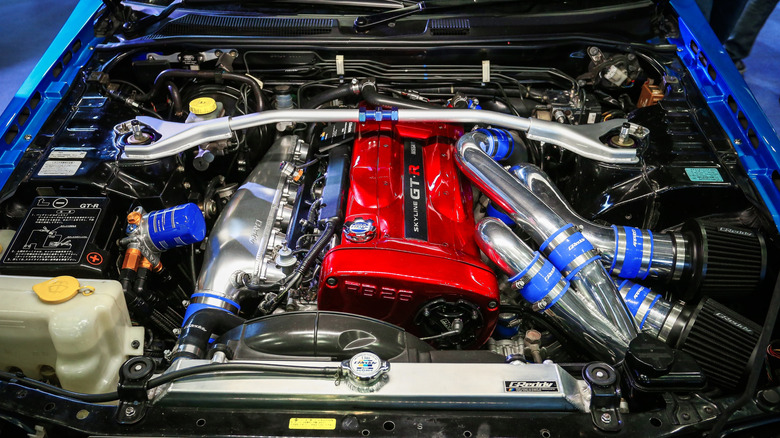
If there is any engine that can rival the 2JZ-GTE, it has to be the Nissan RB26DETT. Like the former, the RB26 is the stuff of legend. Also like the former, its history is connected with an iconic car in the form of the Nissan R34 GT-R. Since its inception in 1989, the RB26 has earned itself masterpiece status not just in stock form, but as a tuning platform as well. Like most engines, its name is an uninspiring alphanumeric splatter, though with some significance.
The RB26 came from the factory rated at 276 horsepower, though in reality they were somewhere just above 300. The engine was a superstar already, but it could become so much more with a pair of educated hands. The RB26 had an over-square configuration, meaning the cylinder bore was larger than the stroke, which let it rev high, and increase turbo boost by proxy. Each cylinder had its own throttle plate, making the engine highly responsive, and its cast-iron block was unshakeable. This means that the RB26DETT is highly dependable and capable in its stock form or with a couple of hundred extra horsepower added, making it a prime example of a tunable engine.
GM LS V8
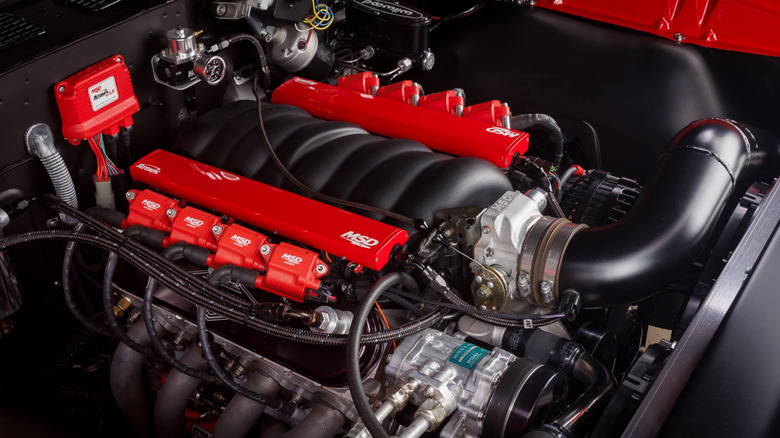
The General Motors LS V8 is the auto conglomerate's magnum opus in engine making, and it is one of the most versatile and widely used engines for any gas-powered project a car tuner can dream up. The history of the LS is a long and colorful one. Development of the LS started in the early 1990s, as Chevrolet needed a successor to the classic small-block V8 to power the 1993 Corvette. At its core, the LS was built around the classic single-cam pushrod design, but beyond that characteristic, everything was changed.
As is the case when talking about engines, there are seemingly endless numbers to describe the LS V8, but what makes it special is outside of this realm of specifications. The only thing you need to know is that it was a 5.2-liter V8 that was built as simply as possible. It became the foundation for the powertrains of countless GM cars and trucks, able to shapeshift to fit the engineer's every need. This ability also retained itself in the world of tuning. Its simplicity translated into sturdiness, and it made for the perfect starting point for any creation you could think of. Chevrolet even sells the LS as a crate motor, allowing gearheads to get their hands on a legendary engine without thumbing out extra dough for a car built around it. If you want a V8 to tinker with, the LS is unrivaled.
Honda K-Series
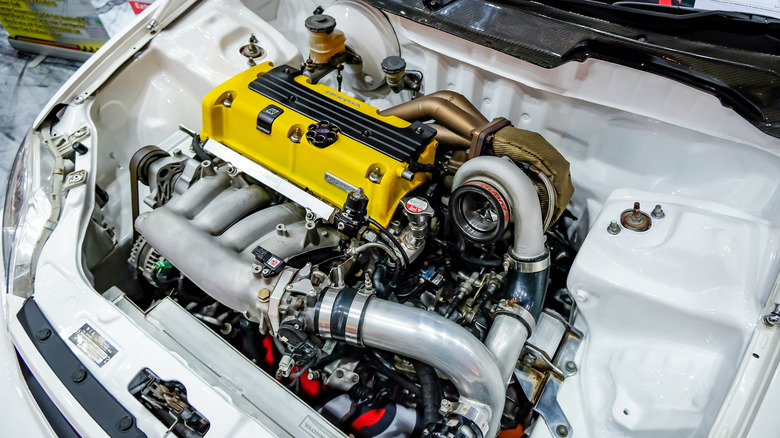
The Honda K-Series engines are masterpieces among masterpieces from the Japanese brand. The K-Series story begins in 2001, when the first iteration was born to power the Civic Type R, and Integra Type R. This family of engines is held together by their defining characteristics of natural aspiration and four cylinders of displacement.
All K-Series creations featured a 16-valve DOHC layout and enjoyed the benefits of Honda's VTEC system, which managed valve timing for prime performance across the rev range. The K-Series engines are well-suited for modifications as well. Iron cylinder liners and a forged crankshaft help the engines withstand higher power loads than originally intended, and their dime-a-dozen availability online makes them an easy acquisition that gives a lot of bang for your buck. With minor tunes like a cold air intake, larger exhausts to help extract the large air volumes these engines push out, or an ECU tune can produce noticeable performance increases without any complicated automotive surgery. While smaller than the other aforementioned Japanese counterparts, these engines are still one of the wisest choices a tuner can make.
Mitsubishi 4G63
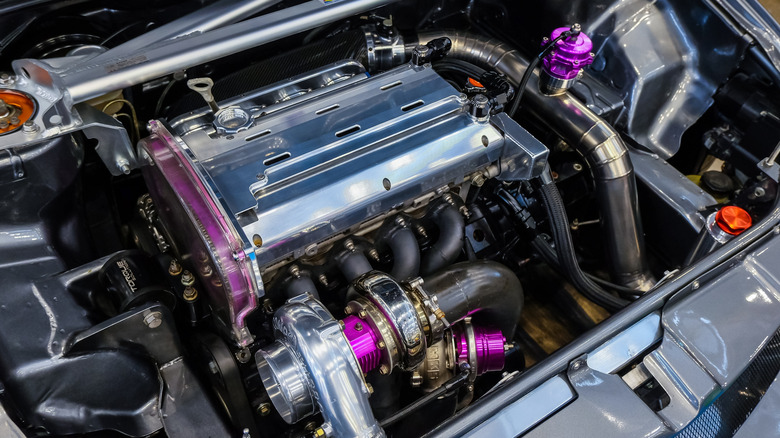
Following the trend we have set with three of our last four entries, the next engine to talk about is from, you guessed it, Japan. The automaker this time is none other than Mitsubishi. The iconic Lancer and Lancer Evolution helped solidify them as one of the Japanese greats, and as is the story with the others, the engine behind their superstar car is one of the world's favorites for tuning.
The engine in question, the 4G63T, was a four-cylinder, turbocharged engine that debuted in the 1988 Mitsubishi Galant VR-4. The 4G63T earned its motorsport chops in rally racing, where it won the World Rally Championship manufacturer's championship in 1998 in a Lancer Evolution. The Homologated version hit the streets, and the 4G63T became legendary. Its block is sturdy cast iron, with light aluminum cylinder heads, and a forged steel crankshaft. As we've seen with the others, these strong components mean it's able to handle more power than it was originally given. The engine's general strength translates to a high tolerance for boost, even with stock internals, allowing for easy turbo replacements that can produce big power jumps without adding extra stress. Its durability made big horsepower accessible and reliable, making it one of the tuning community's all-time favorites.
BMW B58
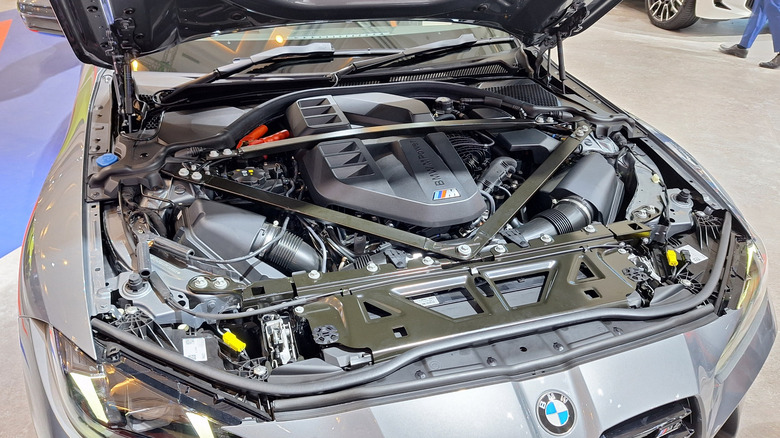
Japan may be the king of building tunable engines, but the European automakers have some worthy challengers as well. BMW has some of the most devoted fans and owners in the world thanks to its incredible motorsport history, engineering pedigree, and portfolio of amazing cars that have ignited the motoring passion in millions. The Bavarian flag-inspired blue and white logo has a mythos made up of many things, one of which is the inline six engine.
Its origins go all the way back to the 1930s, but the most recent iteration, the B58, is the engine in question today. Introduced in 2015, the B58 has powered a wide variety of BMW vehicles, with its three-liter inline six architecture complemented by a turbocharger. It has also been at the heart of countless tuning projects, seemingly born to be modified. It comes stock with a strong power output ranging from 322 to 382 horsepower, but it's capable of handling much more thanks to its closed-deck blocks, meaning the cylinder chambers are encased in solid metal. A quick tweak on the ECU can bump power up by 25% with no added parts, and its stock water-to-air intercooler and robust fuel injection systems mean it's eager for more, making it the perfect starting point for any petrol-head's project.
Mercedes M117
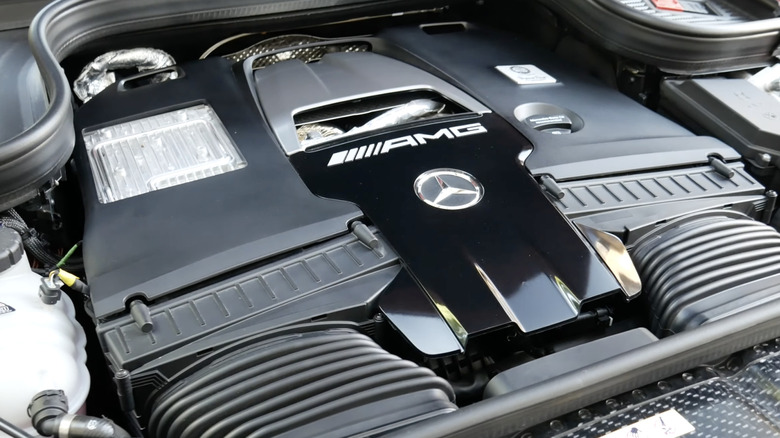
The German automakers are often renowned for their obsessive engineering, which walks the border between genius and convoluted, with a cold, calculated disposition. If any German brand breaks this stereotype, though, it has to be Mercedes. That's not to say they stray too far from the mad world of complex German engineering, but their affinity for power and theater breaks into a territory of character that can only be described as German muscle-car culture. One example is the Mercedes M117 engine.
Compared to our last entry in the B58, the M117 just adds more, more cylinders, displacement, and turbochargers to be exact. The M117 comes primed for tuning straight off the line, able to move tons of air and fuel thanks to its four liters of space made up by its eight cylinders, whose fuel is fed via a direct injection system, all good things and even better with the cherry, or cherries, on top in the form of two turbochargers. Its hot vee configuration means this pair of turbos sits nestled into the V shape of the engine, reducing the travel time of compressed air to the cylinders, which helps with turbo response. The entire engine is just asking for more air with its large displacement, primed fuel injection, and turbo architecture, and an upgraded intercooler, along with some ECU tweaks, can bump the M117's power noticeably, or substantially when paired with turbo upgrades.
Audi EA855 EVO DAZA
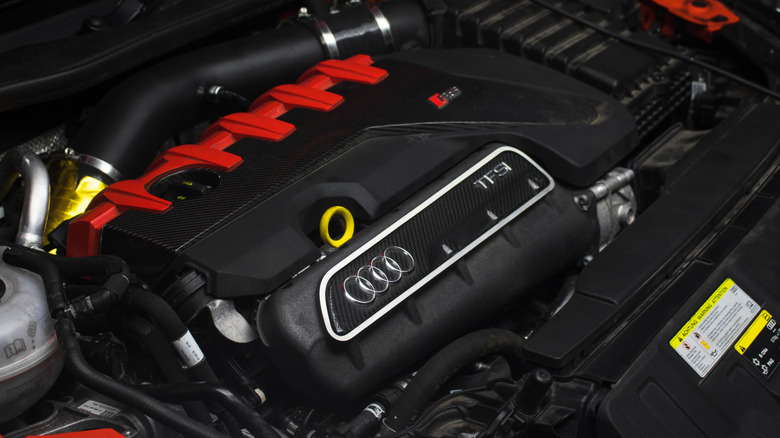
Remaining in Germany for our next entry, we come to one of the most unique engines on this list. Audi rounds out the big three German automakers, and they are perhaps the most "German" of all. The engine we're talking about today is a strange one, with a 50-year-long history, and five cylinders. An idea born of regulatory constraints paired with a manufacturer's cleverness and desire for more power, the Audi inline five is a weird but wonderful piece of engineering that has become part of the Audi story. Debuting in 1976, the engine family went on to power the 1980 Audi Quattro, and has become loved for its unique sound and hefty punch despite its compact size.
The EA855 EVO is one of the most sought after modern day Audi five-cylinder engines, featuring a light but solid aluminum engine block. 2017-2018 versions, codenamed DAZA, are held in particularly high regard for their lack of a gasoline particulate filter, making for a wonderfully animated sound. The engine's aptitude for tuning goes back to its long history. The five-cylinder layout is an awkward one, and over the years, Audi has had to revise and sharpen every nook and cranny in the classic German fashion, making modern examples engineering masterpieces that are just asking for more. A quick ECU remap and new downpipes let the engine stretch its legs and open the door for supercar-destroying builds.
Nissan VR38DETT
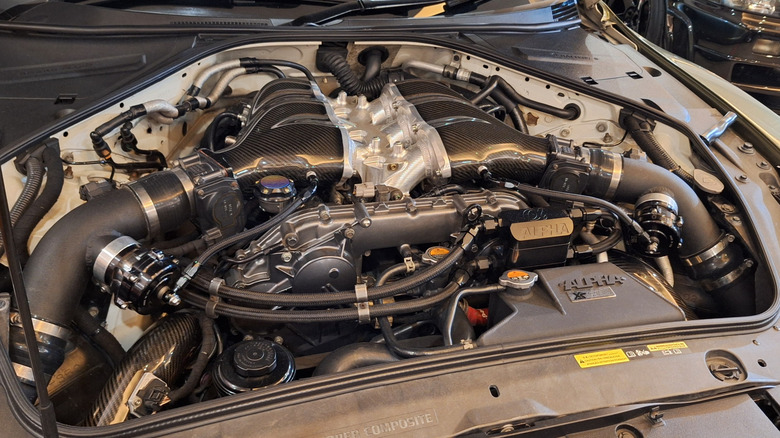
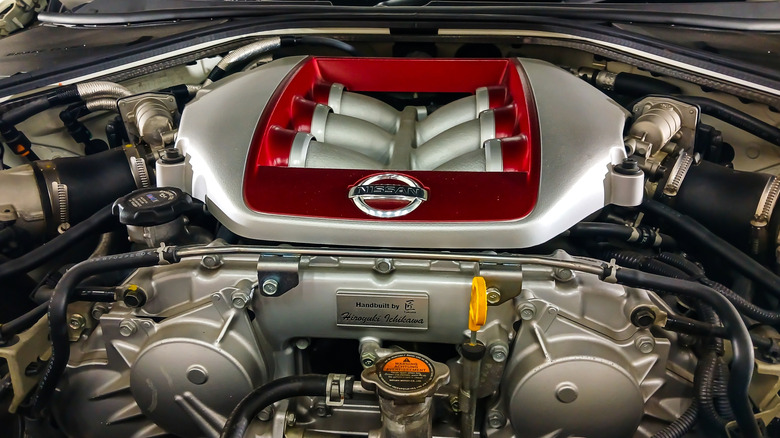
We make our inevitable return to Japan for our next entry and come back to another one of Nissan's great gas-powered creations in the VR38DETT. As with the last example from Nissan, this engine made a name for itself in the GT-R family line, specifically the R35, which itself has become the poster boy for Japanese domestic import culture in the modern day. The R35's colloquial Pseudonym, "Godzilla," is a title earned through its engine that is atomic and fire-breathing in every way but literal, so what makes it so special?
Built in Yokohama, Japan, each VR38 is overseen by four of Nissan's master craftsmen to ensure the 3.8-liter, twin-turbo V6 meets the standards of the R35. Made with an aluminum block, early VR38 models came from the factory producing 480 horsepower, with later models pumping out 530. These are big numbers, but they barely scratch the surface of what the engine is truly capable of. The VR38 is a perfected twin-turbo V6, minor modifications like an ECU tune and aftermarket exhaust systems can push this engine past its already-powerful state. Its large displacement and ability to handle boost make it the perfect heart for R35 builds of all flavors.
Porsche 9A2
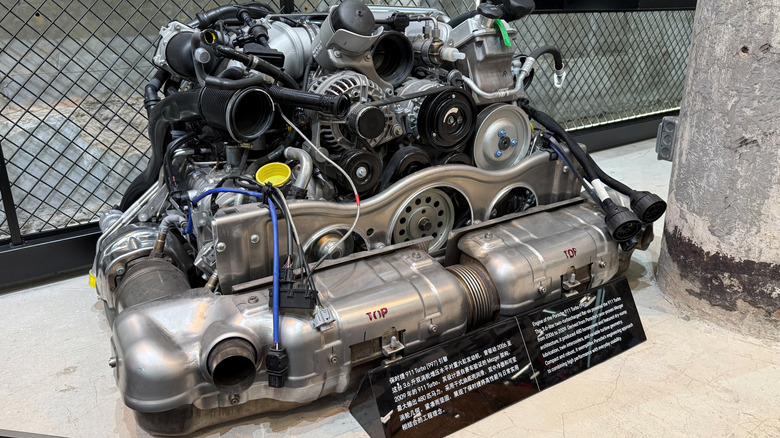
We already mentioned the big three German automakers, but there's another brand that operates a rung above the trifecta, and that brand is Porsche. If you want to talk about racing pedigree and performance accolades, Porsche clears the show. They have been, and remain the makers of the car that has set the standard for the consumer sports car for decades with the 911. Every 911 generation has some form of flat-six engine that becomes an important chapter in the brand's story in one way or another, but the 9A2 engine introduced in the 991.2 generation is one of the brand's best offerings when it comes to tuning.
Following Porsche's holy rules, the 9A2 is a flat-six engine and resides in the rear of its 911 host car. With three liters of displacement, the 9A2 could rev up to 7,500 RPM, and was built with aluminum cylinders, making it very light. Its fuel injectors are placed at the top of the cylinder heads, and spray fuel with a smooth fineness that allows for flawless air-fuel mixing. The engine is primed for performance, and easy additions like air filters, ECU adjustments, and pipe alterations can realize the engine's full potential with ease.
Volkswagen 1.8T
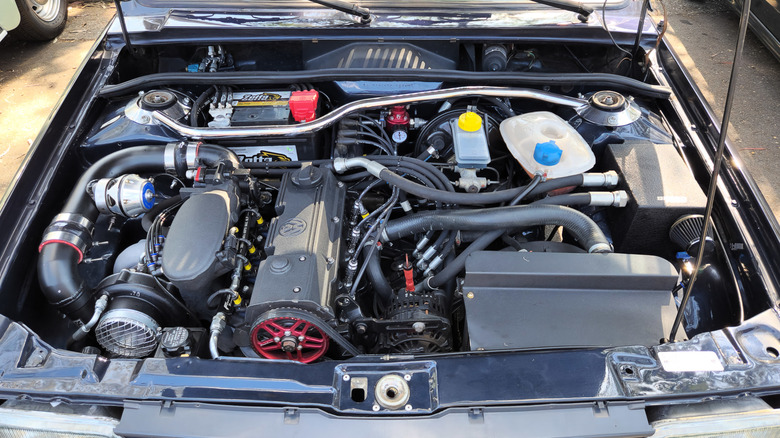
Bringing a new automaker into the conversation, we introduce Volkswagen and its 1.8 Turbo engine. While Volkswagen generally focuses on the average consumer, they have had their fair share of experience with performance cars and engines as well. One such example is their turbocharged 1.8-liter four-cylinder, which has made its home in a wide range of cars and automakers under the Volkswagen umbrella. This peppy little engine has a history whose bloodline can be traced all the way back to Volkswagen's original four-cylinder engines from the 1970s, where the brand set the foundations for what would later become the 1.8T when it was introduced in the 1990s.
The 1.8T comes stock with a competent intercooler and turbo from the factory, and features forged pistons, connecting rods, and crankshaft that give it the tuner-required sturdiness. Depending on the car it was paired with, these engines produced horsepower figures in the high hundreds and two hundreds, making them quick off the block. However, people found that with later versions like the EA888.3, minor alterations to the engine parameters via ECU flash increased power noticeably. As with all forced-induction engines, the name of the game is airflow, and a simple downpipe upgrade increased horsepower as well. These engines are small but mighty, and work perfectly as a tuning baseplate.
Mazda 13B Rotary
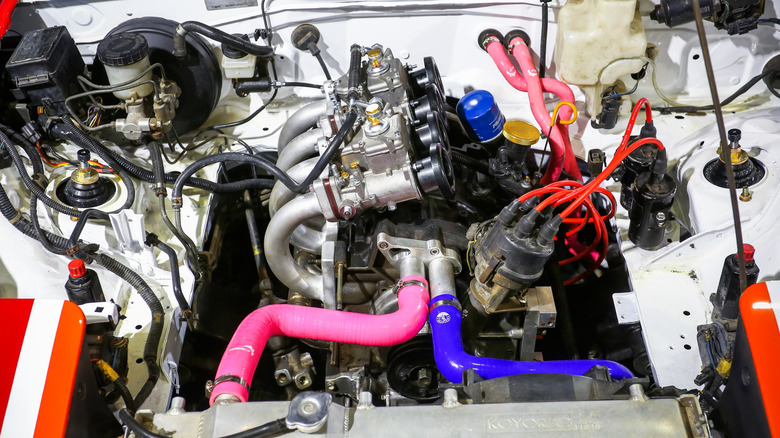
We've mentioned Japanese engines in the 2JZ-GTE and its counterparts, and we've mentioned strange engines in the Audi DAZA, but there is perhaps no more iconic and bizarre Japanese engine than the Mazda 13B Rotary. The rotary engine, with its Dorito-shaped rotors, is inherently smaller, lighter, and simpler than a piston engine, and these strengths led Mazda to embark on a year-long journey to perfect it.
One of their most coveted iterations of the rotary is the 13B, which powered the golden years examples of the legendary Mazda RX7. In the world of tuning, the inherent differences of the 13B rotary compared to a conventional engine can cause some difficulties, but it by no means makes it a poor option. The 13B is not as strong as most of the other engines mentioned, so extra caution is needed when increasing power. The factory ECU cannot be adjusted, meaning an aftermarket version is necessary. That being said, everyone loves a rotary, and its fame has come with the added bonus of endless aftermarket parts to choose from, and its ability for high revs and its small size make it the perfect candidate for a light weight power puncher. The 13B has an allure like none other, and in the hands of an experienced tuner, it can be transformed into a performance and cultural masterpiece.
Methodology
Given the individualistic nature of engine tuning, one tuner may find another's bread-and-butter engine a headache to work on and vice versa. It can be a very subjective matter what makes one engine preferable for tuning over another, which — combined with the fact that technically any engine can be tuned — can make it difficult to declare an objectively superior engine for tuning. However, despite this subjective nature of the topic, we can still identify some characteristics that make particular engines more suitable for power increases and modifications.
The aforementioned engines were chosen based on a few defining characteristics that are usually present in the most commonly and successfully tuned engines, such as forced induction capability, robust internal components that can withstand higher power outputs, efficient exhaust and airflow components, easily programmable ECUs, and higher-capacity injectors and fuel pumps. Some may have one characteristic and be lacking another, but each one features some combination of these inherently positive traits.