

8 Pickup Trucks That Get More MPG Than The Ford Ranger
Gas mileage may not be the most important factor when buying a pickup truck, but it is something to consider. Along with features like four-wheel drive and the ability to tow a boat or trailer, a decent miles-per-gallon estimate could sway your purchasing decision.
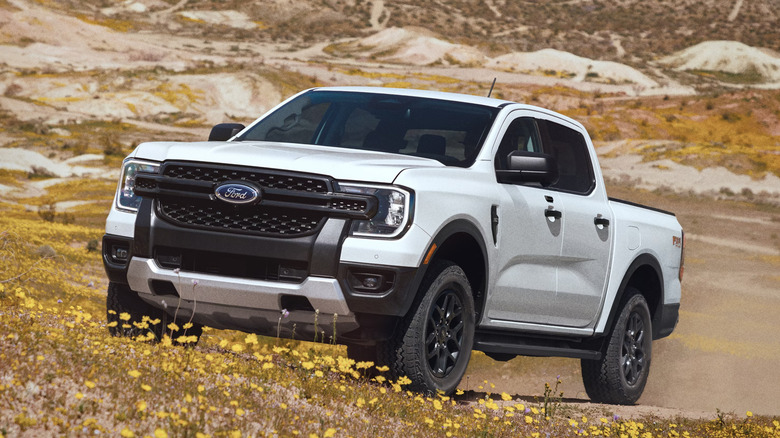
Though some pickups have a reputation for not-so-great mileage, the Ford Ranger is, admittedly, not the absolute worst. However, even the best Ford Ranger years may not have the best in-class mileage estimates. It turns out that the 2026 Ford Ranger gets, at best, 23 MPG combined when factoring in highway and city mileage.
The good news for drivers wanting a more efficient pickup is that you'll have plenty of options to choose from. No matter your energy preference — our roundup includes gas, diesel, hybrid, and electric vehicles — there's a pickup to fit your style. Read on for our picks, plus more on our methodology afterward.
2026 Chevrolet Silverado Diesel
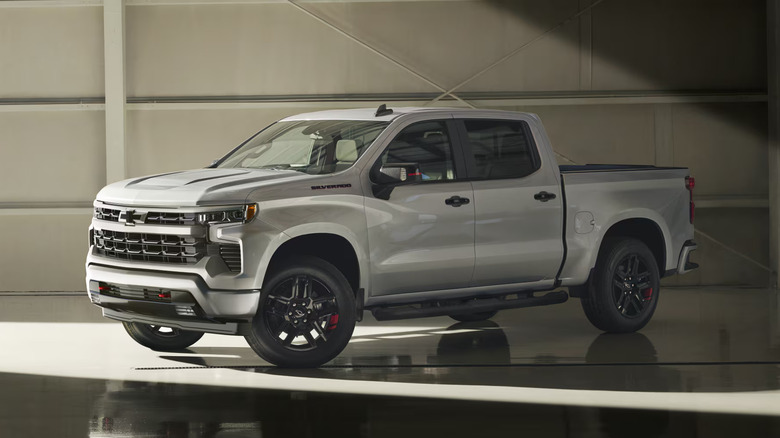
Chevy is known for great truck commercials, which often feature the very recognizable Silverado, which has been on the assembly line since the late '90s. While other trucks may struggle with fuel efficiency, some of the newer Silverado models are competitive, at least when compared to trucks like the Ford Ranger.
It turns out that the diesel-powered 2026 Chevrolet Silverado has an estimated fuel efficiency of 25 MPG combined, slightly better than the Ford Ranger. A two-wheel-drive diesel 2026 Silverado can reach 28 MPG on the highway, according to the U.S. Department of Energy, with a slightly lower 23 MPG in the city. Adding 4WD in sport mode drops the combined fuel economy to 24 MPG.
While buying a diesel truck in 2026 may feel a bit dicey with fluctuating gas prices, the mileage is far higher on a diesel model than a gas-powered Silverado, according to the U.S. Department of Energy's fuel economy ratings. Interestingly, a gas-powered 2026 Silverado is estimated to have the same fuel costs as the aforementioned diesel Silverado, which could sway your buying decision — at least until you meet the EV version of the Silverado.
2026 GMC Sierra Diesel
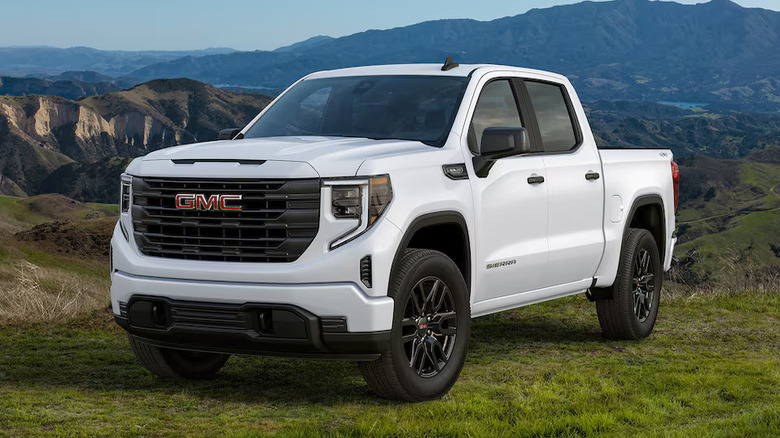
The 2026 diesel-powered GMC Sierra is another pickup truck that has better fuel economy than a Ford Ranger, according to the U.S. Department of Energy. The Sierra achieves 25 MPG combined, if you choose the 2WD Turbo model; four-wheel drive will cost you a deficit of about 1 MPG on average.
Like similar pickups with both gasoline and diesel versions, the diesel GMC Sierra has the same estimated fuel costs as a gas-powered model, though the latter has a far lower combined MPG estimate. That said, you can expect a higher upfront price for the diesel option; GMC lists the Duramax 3.0L Turbo-Diesel engine as an option only on GMC Sierra 1500 SLE and higher-cost models, not the base Pro model.
There is more good news, however, if you're considering buying a new GMC Sierra. In addition to diesel and gas-powered models at various price points and with various trim options, GMC also has an EV option for the Sierra.
2026 Hyundai Santa Cruz
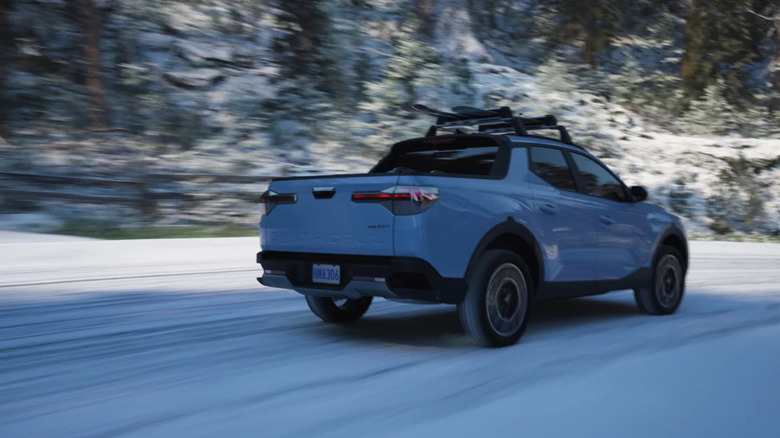
The 2026 Hyundai Santa Cruz is one of the most affordable pickups for its model year, and it turns out buying one might save you on gas, too. The U.S. Department of Energy's fuel economy calculations for the Santa Cruz are 25 MPG combined, making it the first pickup on our list that exceeds the Ford Ranger's estimated mileage without relying on a diesel engine to close the gap.
Our 2026 Santa Cruz review highlighted the perks of the compact truck, including multiple trim options (though some can get pricey, especially compared to the competition), a decent-sized bed, and competitive fuel economy on some trim options. The negatives center on the fact that the Santa Cruz doesn't offer a hybrid option, and the fact that the model itself may soon be phased out.
Although Hyundai has not made an official statement regarding the end of the Santa Cruz's run, multiple sources claim that the pickup will cease production by 2027. Even Kelley Blue Book has echoed reports that Hyundai will discontinue the Santa Cruz in favor of a midsize truck, but that remains to be seen.
2026 Ford Maverick
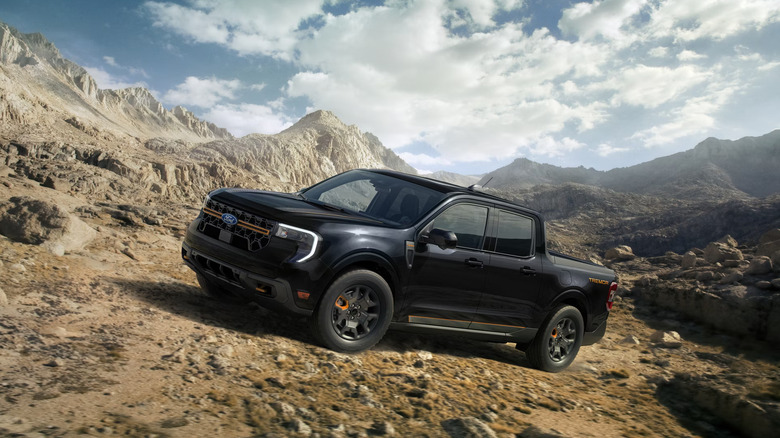
Often hailed as a direct competitor to the Hyundai Santa Cruz, the Ford Maverick does have some appeal for the frugally-minded driver. The Maverick achieves 26 MPG combined, according to official fuel economy ratings via the U.S. Department of Energy, and that's with the FWD option.
Ford places the hybrid Maverick front and center for 2026, and admittedly, the higher MPG might be appealing. For drivers who want to see the specifications for the non-hybrid, gas-powered Maverick, you'll need to dive deeper on Ford's website. Utilizing the 'build' tool allows you to see information specific to the gasoline model, including the difference in price (the gap starts at about $1,000, with hybrid models costing more).
With so many options, the Maverick can suit just about any budget. Ford's Maverick lineup offers the best bang for your buck when it comes to pickup shopping in 2026; an entry-level Maverick XL starts at around $27,000. Plus, the Maverick is estimated to have the lowest fuel costs per year among the diesel GMC Sierra, diesel Chevrolet Silverado, and even the Hyundai Santa Cruz.
2026 Ford Maverick Hybrid
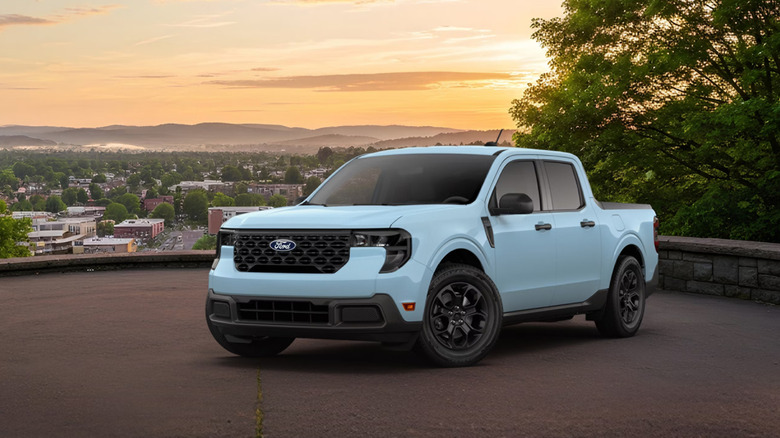
If the Ford Maverick's gas mileage sounds appealing, the 2026 hybrid model may tempt you even further. The hybrid Maverick claims 38 MPG combined, with an even higher fuel efficiency in the city of 42 MPG. In terms of pricing, the Maverick is also appealing, with a range of anywhere from $28,000 to nearly $31,000, depending on the trim and options.
Like its non-hybrid sibling, the hybrid Maverick has lower fuel costs than non-hybrid competitors with higher sticker prices. The U.S. Department of Energy estimates that the hybrid Maverick costs around $1,800 in fuel per year.
Even if you're completely sold on a hybrid pickup truck, you may need to consider whether the Maverick is a good fit for your needs. Unlike other pickups, the Maverick may have more of a car feel because of its unibody construction. The visibly smaller bed size is also something to consider, especially if your primary motivation for pickup shopping is hauling cargo. The Maverick also has AWD, not 4WD, so it may not be the ideal off-road vehicle. Yet if you're after impressive fuel economy and some space to transport goods, the Maverick hybrid could be a good fit.
2026 GMC Sierra EV
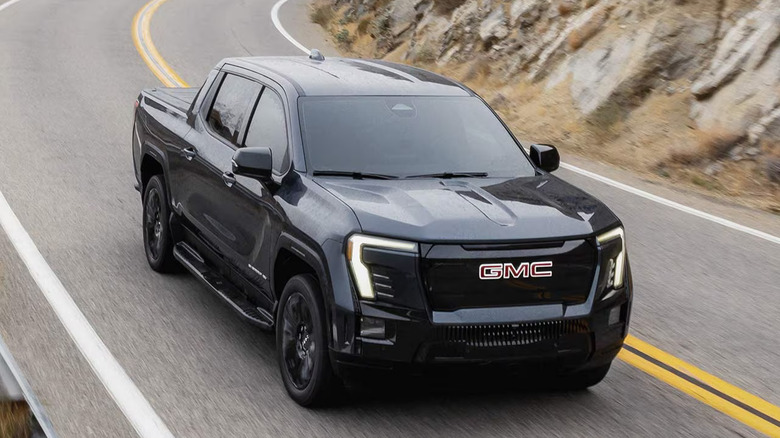
In a world vastly different from the humble gas-powered Ford Ranger, there is the 2026 GMC Sierra EV. The entirely electric GMC Sierra achieves 68 MPGe combined, with an even higher 75 MPGe in the city (and 61 MPGe on the highway). An estimated range of 410 miles also means greater convenience when stopping to charge.
The U.S. Department of Energy also estimates that the GMC Sierra EV will save you a few thousand dollars — $6,500, specifically — over five years, compared to the average new vehicle. A higher MSRP than comparable vehicles (the Sierra EV starts at around $62,000 for 2026) does make this pickup a higher up-front investment. Compared to, say, a Ford Ranger, the fuel efficiency is impressive. However, a Ford Ranger also starts at about half the cost (just over $31,000) when pricing a 2026 model.
The price is where we got hung up, too, during our 2026 GMC Sierra EV review. Although we were impressed with the Sierra EV's capabilities, the Elevation Extended Range model's price tag of over $70,000 might give some prospective buyers sticker shock.
2026 Chevrolet Silverado EV
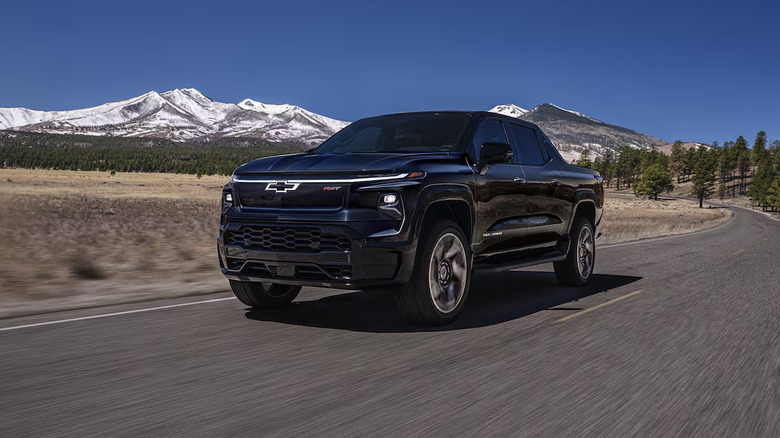
Even though a classic Chevrolet Silverado may be a predictable purchase in 2026, there are options. The diesel iteration of the Silverado has better mileage estimates than the gasoline-powered version, but the EV blows both of those out of the water with 70 MPGe combined.
Not only does the Silverado EV achieve 70 MPGe combined, but it can achieve as high as 78 MPGe in the city (and 63 MPGe on highways). As with other EVs, the U.S. Department of Energy notes that this one could save you thousands of dollars over five years compared to the average new vehicle.
Trim variations do result in a slightly lower estimated fuel efficiency, but every version listed by the U.S. Department of Energy claims 64 MPGe or higher. If you need a pickup truck and have the budget for an EV, the Silverado could be a great fit for cutting your fuel costs over time. The Silverado EV starts at around $56,000 for 2026, but the various options can easily add tens of thousands of dollars to the price tag.
2025 Ford F-150 Lightning
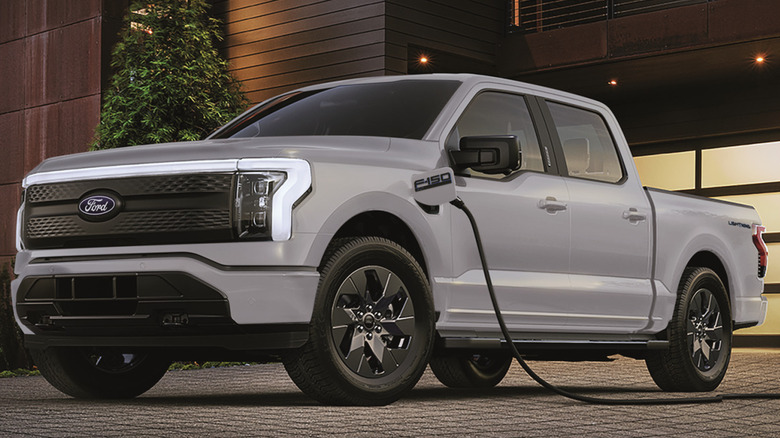
If you're shocked to find out that Ford now has an F-150 all-electric pickup, you're not the only one. Maybe it's not that surprising — Ford has the best-selling pickup in the United States, so it only makes sense to offer drivers more options to suit a wide range of needs. One of those needs, apparently, is an electric pickup truck that hits 72 MPGe combined. While the U.S. Department of Energy didn't have 2026 fuel efficiency figures at the time of publication, the 2025 Ford F-150 Lightning's numbers are impressive.
Topping out at 79 MPGe in the city and 65 MPGe on highways, the Lightning is a full-sized pickup with a 300-plus-mile range. Within the Lightning lineup are multiple trim options, but the options start with the Pro, which, at the time of writing, had a starting price of about $52,000.
When we reviewed the 2025 Ford F-150 Lightning Pro, it looked like any other F-150 on the outside. Yet the highlights were that very fact, as well as its utilitarian interior. It's functional, a fairly budget-friendly EV pickup, and you can't scoff at the estimated MPGe.
Methodology
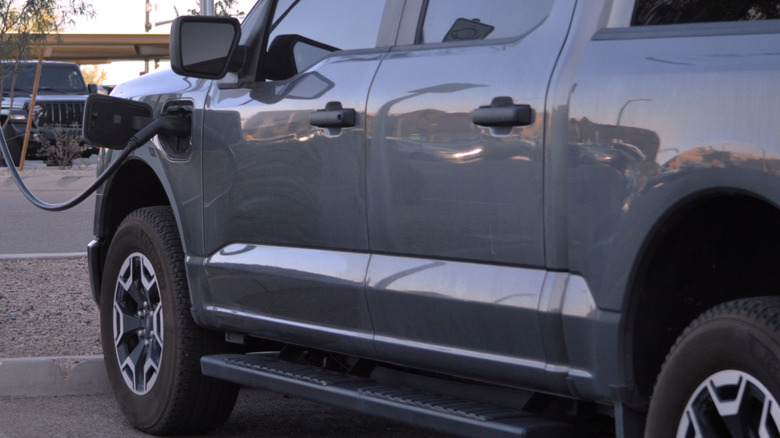
To come up with a list of pickup trucks that get more MPG than the Ford Ranger, we painstakingly checked every 2026 model year pickup on the market on the U.S. Department of Energy's Fueleconomy.gov website. We found that many gasoline-powered pickups couldn't match the Ford Ranger's relatively low MPG rating. Thus, our list includes diesel models, hybrids, and electric vehicles, as there are only three non-hybrid/EV trucks with lower MPG than the 2026 Ford Ranger.
All model years were 2026, except for the Ford F-150 Lightning, because the U.S. Department of Energy had not published 2026 figures at the time of writing.