

5 Common Wi-Fi Mistakes Far Too Many People Make
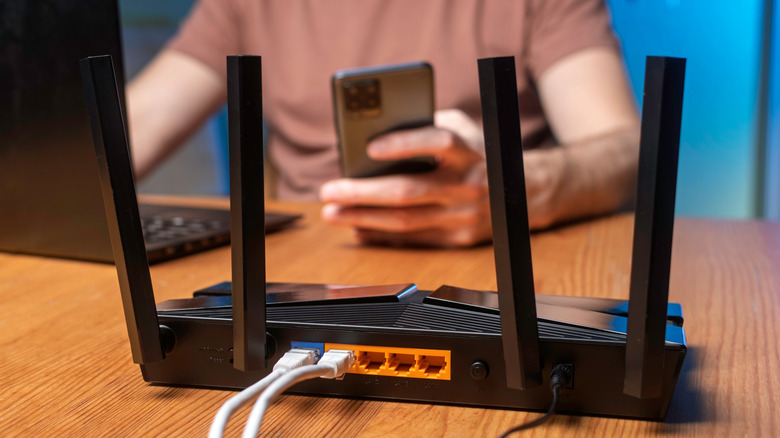
Wi-Fi is not always the fire-and-forget solution we wish it were. Weak signal in one part of the house, slow speeds, security warnings, and random device disconnects — it all adds up and can get pretty annoying in no time. There is only so much unplugging the router, counting to 10, and then plugging it back in can do. The good part is that most of the issues people have stem from common mistakes that can be remedied with some relatively straightforward fixes.
The fix may take you all of 10 minutes to open the router's admin settings and change a toggle or two, or it might involve a more prolonged, thoughtful relocation of your router, but having Wi-Fi that works is arguably better than tolerating continual frustrations. Before you throw up your hands and upgrade to Wi-Fi 7 in the hopes that it will solve your problems, consider the following.
Putting the router in the wrong place
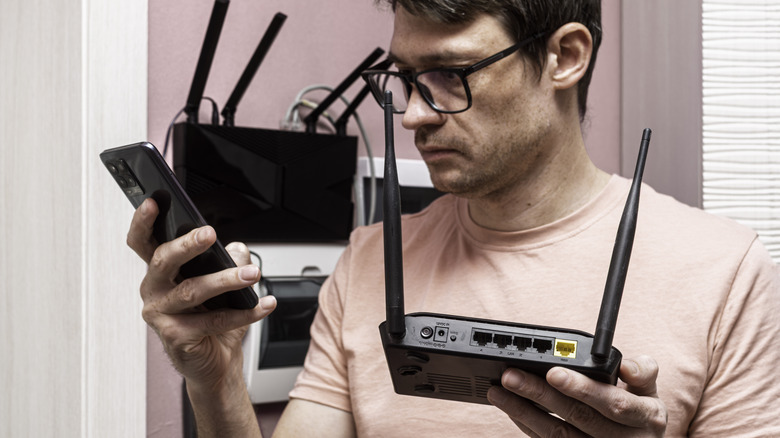
Wi-Fi's pretty sensitive to its environment. So sensitive that the tech nerds have figured out how to use it to detect movement in your house. Knowing that's possible, it's easy to see why a weak or intermittent Wi-Fi signal is such a common issue. It needs to be shouted from the rooftops until all have heard that where you put your Wi-Fi router makes all the difference in the world.
Every house is different, of course, and you may be limited by where the fiber-optic and Ethernet plugs are located. Generally speaking, we'd recommend giving your router a home closest to where the majority of internet traffic happens — living room, bedrooms, home office — and position it as high up as possible for a good signal. Resist the temptation as much as you can to hide the router from sight right next to an appliance, like your TV. And perhaps most importantly, don't trap your router inside heavy wooden furniture or surround it by decorations, as they can absorb and weaken the signal. While choosing the final location, be aware that your house is full of things you'd never have imagined could disrupt the connection, such as microwaves, mirrors, and TVs.
Also, don't forget that your walls and the floor heavily impact signal strength. If you're wondering why the Wi-Fi signal is so weak, even on the floor directly above it, that's possibly the reason. Think of it almost like an air traffic control tower that needs a good vantage point, a good line of sight, and minimal obstructions to see the devices it wants to talk to.
Using an outdated router
You should not be using a router that no longer gets updates unless you want to join the digital body of victims compromised in router-aimed cyberattacks. Check the router's model and refer to the manufacturer's website to see if it's still getting updates. If it is, make sure the firmware has been updated. Some routers require you to do so manually from the admin web portal. Some routers allow you to do so through their official app. Updating is, for the most part, as simple as finding the update button hidden in the settings and waiting for the router to reboot.
Has the manufacturer of your router stopped supporting it? Before replacing it, consider loading it with an open-source OS that receives long-term updates to keep it functional and secure. OpenWrt can breathe life into a router that would otherwise be destined for the landfill. The project supports hundreds of different router models. If it doesn't support your particular router, a quick Google search may reveal other firmware options, such as ASUSWRT-MERLIN.
Upgrading in this way is fairly easy. For an Asus router, you only need to upload the new firmware, make some changes in the network settings, and then flash a new image. Whichever router you have, you'll be able to find detailed step-by-step instructions that show you how to do it. If any of this looks a bit too daunting and you don't have a techie friend to do it for you, then we urge you to contact your ISP and have the router replaced with a supported one. In any case, keep that old Wi-Fi router because it still might be useful.
Using weak encryption
Most Wi-Fi routers support encryption out of the box, but not all encryption is equal. Older routers may still use WPA2 instead of WPA3, an outdated protocol that has known vulnerabilities. We cannot stress this point enough: WPA2 (or earlier) could be exploited. You should upgrade your router's encryption protocol to at least WPA2 AES, or ideally, the more modern WPA3, as soon as possible. The easiest way to tell if the connection isn't secure is through your devices. On Apple devices, for example, weakly encrypted networks will be labeled with "Weak Security." Android phones will clearly show the security protocol in the settings, and Windows will tell you that the network is insecure.
Log in to your router either by opening its web portal or connecting to its app. Look for security or encryption settings. In my case, I had to go to Wi-Fi settings and open Advanced to find drop-down menus for authentication and encryption modes. You may be limited by what your router supports or allows you to change, but make sure to at least enable WPA2 and AES encryption.
Do bear in mind that if WPA3 is an option, it may cause unintended issues. Older devices may be unable to connect. That said, WPA3 came out in 2018, so there's a good chance most of the stuff in your house will work just fine unless it hasn't been upgraded or updated in a long time.
Failing to secure the web portal
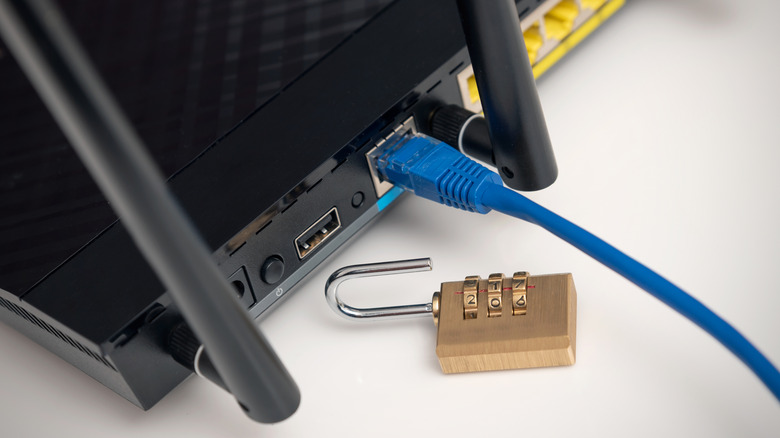
Something that should alarm you is that your router's password — as in, the password to access the router directly and change its settings — can often be found on the internet by anyone, not just printed on the back. Sometimes the username is just "admin," and the password is "admin" too. Many people never change their router's settings beyond changing the network name and password, leaving the door to the router effectively open. All of this becomes even more alarming when you consider that some Wi-Fi routers allow you to change these deeper settings without a physical Ethernet connection to the router — meaning your neighbor, passerby on the street, or anyone else in range could theoretically access your router.
We'd highly recommend taking just five minutes to open your router's admin portal, and — at the very least — change the admin password so only you can log into the router. You can update the router, upgrade the encryption protocol, and secure the admin portal in one sitting while you're there. For good measure, set a stronger Wi-Fi password, too, if you haven't already.
Avoid using the same password for the admin portal as you use elsewhere. You can use a password manager to help you with this. Password managers often include a built-in password generator that creates a password that's virtually uncrackable and saves it for you. Since your router uses a browser-based portal or an app to access its settings, you can use your password manager to log in more easily.
Not putting those extra LAN ports to use
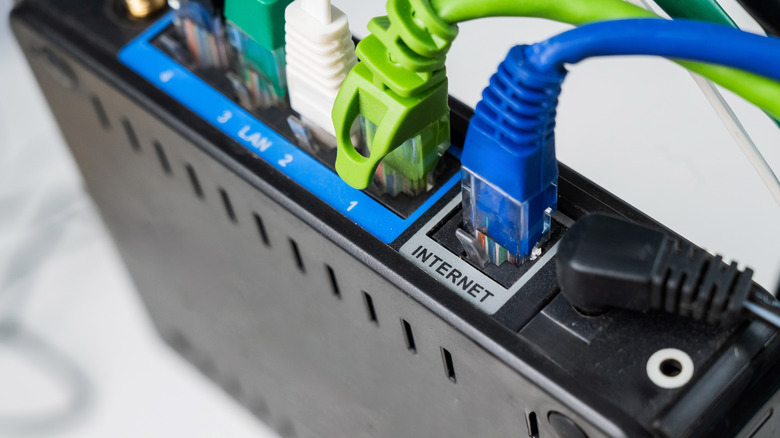
When comparing Wi-Fi to Ethernet, Wi-Fi naturally wins for its whole-house coverage and the ability to connect to dozens of devices simultaneously, cable-free. The advantages stop there. Ethernet is faster, has lower latency, and is more stable. For any device that stays in one place and benefits from having the throttle unlocked, it is practically a must. Computers, TV streaming boxes, game consoles, network-attached storage, and anything else with an Ethernet port should use it if possible. Your Wi-Fi router very likely has plenty of LAN ports to spare.
Really, the only downside here is that you may have to buy a flat CAT6 Ethernet cable and figure out how to route it from the router to the devices you want to connect. We'd argue, though, that the effort of drilling through a wall or two and running a cable raceway up corners and ceilings is worth the effort for the speed upgrade it offers. Game downloads could take minutes instead of hours, 4K content could load faster, and generally anything that has an Ethernet port may feel snappier and actually put your internet plan's top speeds to use. Just make sure your Ethernet cable run isn't too long.