

Do You Need To Replace A Router That No Longer Gets Updates?
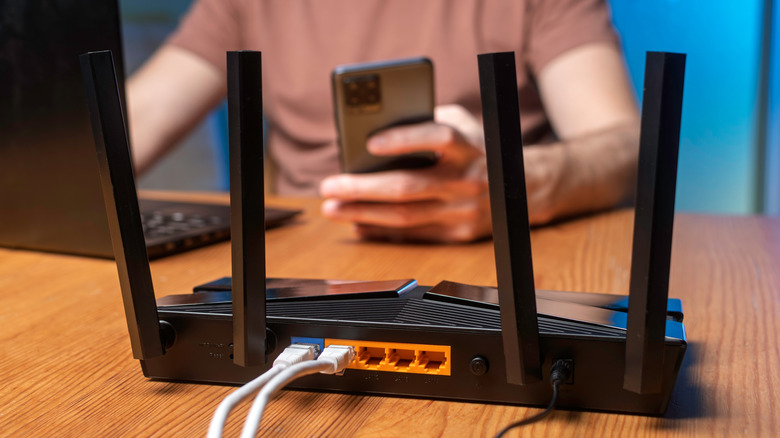
If you're like most people, you probably don't think much about your wireless Internet router until the Wi-Fi goes out. According to data from Parks Associates, 71% of households that are subscribed to home internet use the routers provided by their internet service provider (ISP). It's a set-and-forget device for the average user, and that's not a bad thing — no one wants to tinker with their router more than necessary, including tech experts. But what you may not consider very often is the fact that your router is the first line of defense for your home network's cybersecurity. And like any other secure device, it needs updates to keep itself one step ahead of hackers and other threat actors.
If you're now realizing you have never updated your router before, don't panic. The reason you're not constantly being prompted to update your router is that, if it is a managed gateway (meaning your ISP provided it), then your ISP is constantly updating it without any action required on your part. But if you purchased the router yourself from a company like Asus, Archer, or TP-Link, the burden of updates shifts to you. And, if said router has stopped receiving updates, no matter the reason, you absolutely should upgrade to a new one. There's more complexity coming down the pike, too, thanks to a sweeping FCC ban on foreign-made routers – which also covers security updates for existing routers. Here's what you need to know.
Without security updates, a router is a massive vulnerability

If your router stops receiving updates, either because it is past the end of its support cycle or because of new government restrictions on foreign routers (more on that later), then you should replace it immediately. That's because your router's maker deploys security patches through firmware updates. Like any wireless protocol, Wi-Fi can be hacked remotely, and there's an ever-evolving tug-of-war going on between developers and attackers. Attackers search for and exploit vulnerabilities, then rinse and repeat when manufacturers patch the holes. But if you never deploy those updates, it's the digital equivalent of not replacing a broken lock on your front door. Once an attacker has access to your network, they can easily begin to target your phone, laptop, and other devices connected to it.
If your router no longer receives updates, it is likely an older model, which only makes an upgrade more urgent. Old routers use older wireless standards, and, in many cases, buying a new router will make an immediate difference to your Internet experience. The latest Wi-Fi 7 standard offers more bandwidth, allowing more devices to connect at higher speeds. If your internet feels slow, it could be because your router is struggling to support the number of devices you've connected, or because you're using too much bandwidth on one device for things like video streaming. More importantly, Wi-Fi 7 includes new security measures that help protect against some of the most common attacks threat actors deploy against routers.
The U.S. government banned foreign routers, making upgrades and updates uncertain
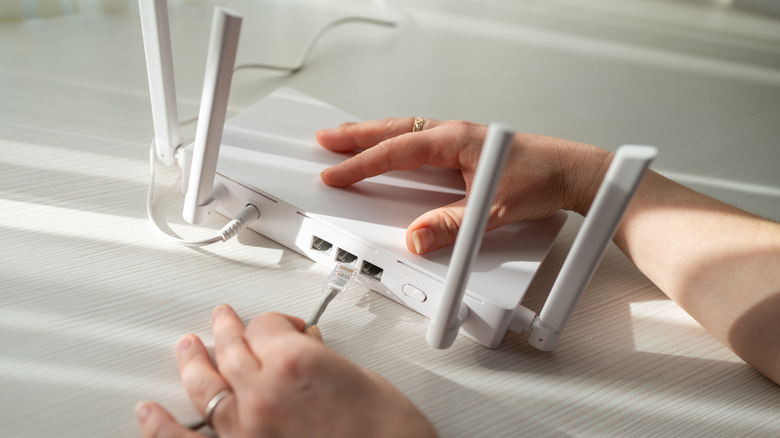
Your router's update schedule could be disrupted by an FCC ban on foreign-made routers, which came into force in March 2026. These routers will be part of the FCC's Covered List of products that allegedly pose unacceptable national security risks. Because no major wireless router brands manufacture their products stateside, it has raised worries that routers will become a scarce good for Americans and may exacerbate, rather than alleviate, security threats.
The foreign router ban has alarmed security experts, and one of their concerns is that router manufacturers may stop pushing updates to U.S. customers once the grace period for updates ends in March 2027. The ban could lead to so-called zombie hardware if foreign manufacturers are prevented from delivering updates to U.S. customers — or simply decide it's not worth their while. This, in turn, could lead ISPs to stop replacing outdated routers for their customers because they cannot acquire new models. As of this writing, only Elon Musk's Starlink manufactures routers domestically, but Starlink supplies satellite internet, not the high-speed fiber or cable on which most American internet users rely.
As of April 2026, there's still just under a year before the ban is fully enforced. What that means for consumers is that now may be the last chance to replace an ageing router with one that supports modern wireless standards such as Wi-Fi 7. It's still not going to help much if your router maker decides to stop shipping updates, but it may at least be more likely to receive support than older models, even after the ban takes effect.