

5 Overpowered Muscle Cars Inexperienced Drivers Should Steer Clear Of
There is a stark difference between a muscle car and a sports car. Decades have passed since the Oldsmobile Rocket 88 became the first muscle car. Beginning as large engines in mid-sized bodies, the original muscle cars were simple, mechanical beasts. They went fast in a straight line, sounded incredible, and were great at burnouts. Wrapped in some of the most iconic design language in the American automotive world, these muscle monsters drag-raced into history.
The muscle car renaissance of the mid-aughts brought back Hemi-powered Chargers and Challengers, high-horsepower Mustangs, and the classic Chevrolet Camaro. New engine tech made powerful V8s that could meet emissions standards — something unthought of when the first generation of muscle cars died out in the early '70s. And so the asphalt burner returned; Inexperienced driver, take heed.
Even with modern traction control and safety doodads, some muscle cars are better left to experienced drivers. Of course, those are the very models we marvel at for their powerful engines and dream about pulling up to the Christmas tree. With the automotive world teetering between internal combustion and EV, the next-gen Camaro rumbling in the distance, and the Ford GTD and Corvette ZR1X duking it out on the track, we visit the overpowered muscle cars that the novice driver would do well to steer clear of.
2026 Ford Mustang Dark Horse SC
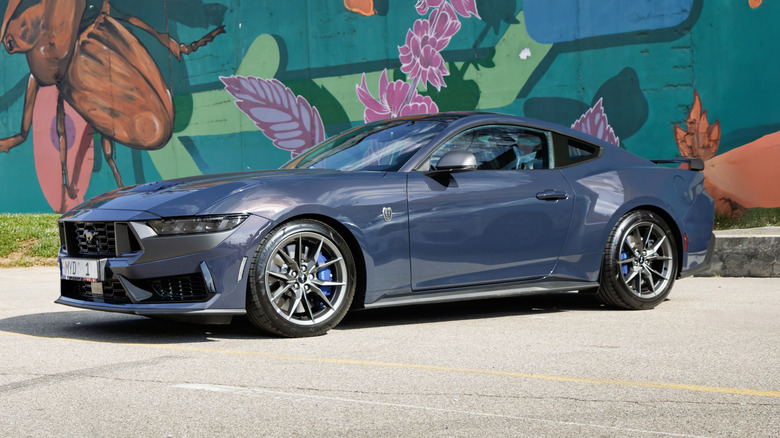
The Ford Mustang Dark Horse represents the pinnacle of the Ford Mustang this side of the Mustang GTD supercar, which will run discerning buyers between $330,00 and $375,000. While the Dark Horse is the top trim of the 'vanilla' Mustang, it's no budget buy. The projected MSRP is over $108,000 — not including the Track Package, which adds another $35,000 or so.
In the unlikely event that a novice driver is willing to drop six figures for a maniacal muscle car, the Dark Horse SC would fit the bill. The supercharged 5.2L V8 is known as the Predator. We're not sure what its prey is, but we wouldn't be surprised to find beginner drivers with fresh licenses somewhere on its food chain. The 500-horsepower rating may seem prosaic against the likes of the Corvette ZR1X's 1,250, but that much power to the rear wheels is more than enough to put the most hardened wheelman in a ditch, let alone a newbie.
While it might not be the best sweet sixteen gift, we're happy the Dark Horse is here. The Mustang is the only muscle nameplate in continuous production since the '60s. The Dark Horse SC represents the state of Ford's art of building muscle cars — a craft honed to a fine finish over six decades and seven generations. We'd be disappointed if the Blue Oval's best effort was a grocery-getter.
2021 Dodge Charger Hellcat Redeye
The original Dodge Charger didn't have four doors, but don't let that fool you. When Dodge revived its muscle car lineup with the return of the Charger and Challenger, few expected a sedan. Yet Dodge ended up delivering a muscle sedan for the ages that far outstripped the original. The new Charger developed its own legacy, with terms like Hellcat and Demon respected as part of the automotive lexicon.
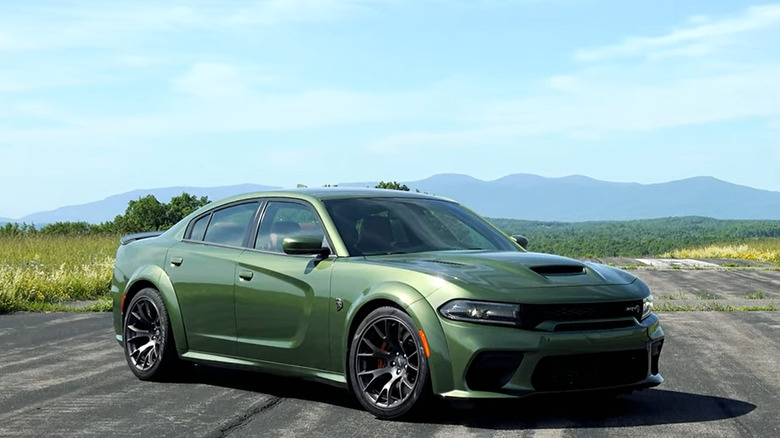
Handsome, almost sensible-looking, with a stately presence, wide stance, and muscular haunches, the 2021 Dodge Charger Hellcat Redeye looks not unlike many of the recent Chargers Dodge put out since the nameplate returned in 2006. The design hadn't changed much over the decade prior to 2021, but under the hood, it's a different story.
With Ford and Chevrolet competing, Dodge redefined its muscle legacy with outrageous Hemi engines. Case in point, the 797-horsepower 6.2L V8 in the 2021 Hellcat Redeye, which wasn't the first Hellcat Redeye, but came just two years before the final iteration. Nearly 800 horsepower is a heck of a lot of car to handle, no matter who you are.
2018 Dodge Challenger SRT Demon
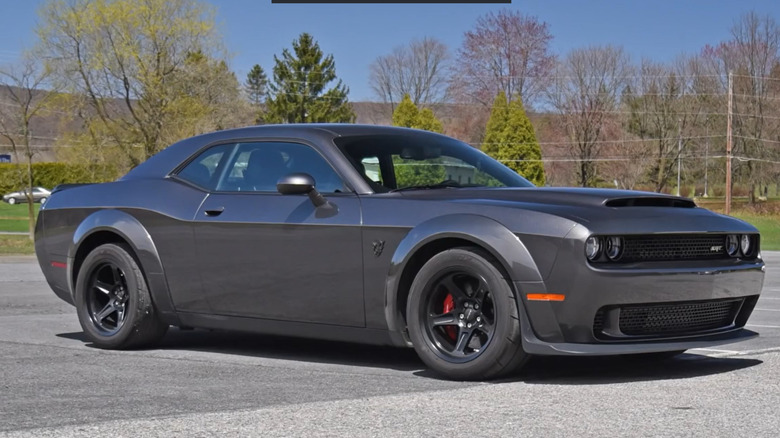
The Charger wasn't the beginning and end of the muscle car revival for Dodge. Its '60s golden-era muscle brother, the Challenger, would also be back, brimming with power previously unimaginable. Dodge tapped its SRT division of Viper fame to build a Demon worthy of the name, which originated in 1971. Except the Demon of old was less demon and more imp. The Challenger SRT Demon is another matter entirely.
Conventional wisdom remembers the original muscle car as darn good in a straight line, and not much else. Well, the Challenger SRT Demon takes that to the maximum. It is a drag-race machine that once held the world record for fastest to 60 mph. You know, the one spec every car manufacturer and publisher includes when raving about the new model. This car was the best at it, thanks in large part to 840 horsepower and 770 lb-ft of torque provided by a 6.2L V8 accoutred with a 2.7L supercharger and upgraded components including pistons, fuel injection, rods, and valves.
You can slap all the traction control, wheelie bars, and drag chutes on that thing you want; it will never make a suitable ride for a beginner. But it might be one of the most outrageous muscle cars of all time.
2024 Hennessey Exorcist Camaro ZL1
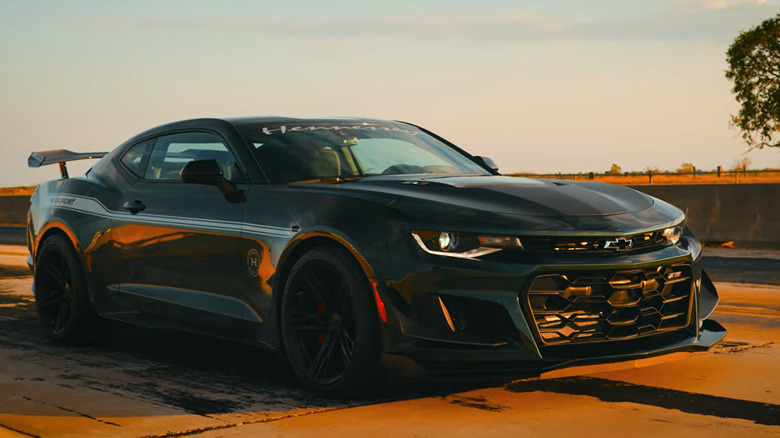
The Camaro is the Palpatine of the muscle car world, declared dead and returning... somehow. With the seventh-generation bowing out of production after 2024, Hennessey decided to bring in an exorcist in case it tried to come back. With the 2028 Chevrolet Camaro on the horizon, it doesn't look like it worked. But in the meantime, we got the 1,000-horsepower Hennessey Exorcist ZL1 Camaro that inexperienced drivers shouldn't even look at.
The Exorcist streaks to 60 mph in under 3 seconds and rips quarter miles in less than 10. It's a true 10-second (or lower) car powered by a supercharged 6.2L LT4. Chevrolet is no stranger to building outstanding V8S, and Hennessey has been building out aftermarket performance models for decades. Additions or modifications to the Camaro ZL1 package include long-tube headers, a high-flow supercharger, and a number of internal engine enhancements, such as custom camshafts, ported cylinder heads, and upgraded valves, all tuned on a dyno with a two-year warranty from Hennessey.
If its 1,000 horsepower and 883 lb-ft of torque don't inspire you to grab your novice driver by the shoulders and seek out a Kia dealership, Exorcist's rarity may. According to Hennessey, the Exorcist ZL1 was a limited run of 100 cars, but a 30-car run of the Final Edition boosted torque to 988 lb-ft and blazed a blistering 2.1-second path to 60 mph. Who knows — given the Camaro's penchant for resurrection, maybe we'll see another Hennessey Camaro in the future. They should call it the Zombie.
2019 Cadillac CTS-V
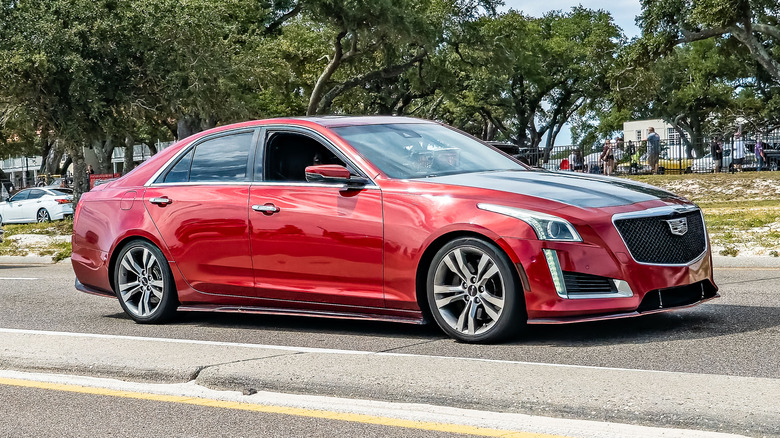
With the will-they-won't-they suspense in Dodge's Charger lineup regarding EV, it's hard to say for sure if American V8s are in their final form. As such, we'd like to nominate a new entry to the pantheon of the new age of American muscle. It is a pure mechanical V8 with a blower that produces 640 horsepower. It is one of the last purist holdouts of the three-pedal six-speed configuration. It may be the highest expression of the gasoline-powered era that made the V8 an icon. It is Cadillac's CTS-V.
The once-and-still luxury marque may have only recently entered F1, but Cadillac has been on the high-performance track for the better part of the 21st century. Its V and Blackwing line evolved into genuine Euro fighters looping around the likes of the M-Series and Mercedes-AMG. With its commitment to performance evident in its Formula 1 investment, imagine the benefits reaped by the street Cadillac. The 2025 Blackwing is not Marty Seinfeld's Fleetwood Brougham. It sneers at the mightiest Northstar. Claiming 668 horsepower from a supercharged 6.2L V8, it's not Cadillac's best foot forward anymore. It's the result of a quarter-century of development.
Even going back to the final year of the second generation, 2019, nets novice drivers 640 horsepower upon which to spear themselves in the tilts. It may have four doors, but so does the Charger. Considering its rear-wheel drivetrain and glorious manual transmission option, we put it alongside the greats of American muscle — perhaps the end stage of internal combustion, the pinnacle of the purely V8-powered rear-wheel-drive formula in the U.S. We're just glad the American V8 got a second chance, even if inexperienced drivers in powerful muscle cars often don't.