

5 Things You Should Never 3D Print At Home
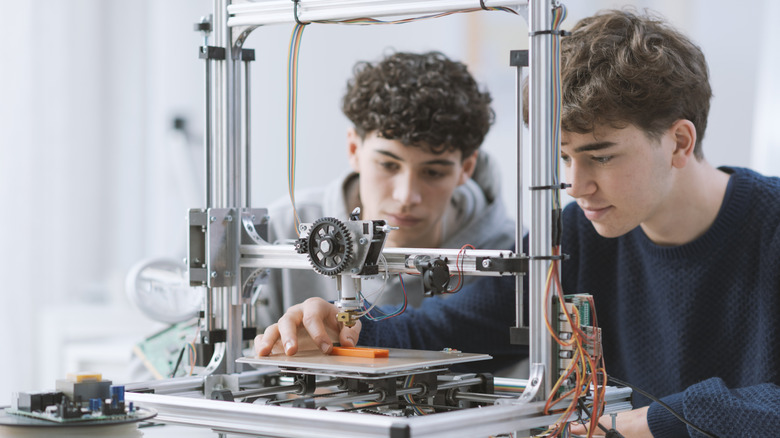
A 3D printer is the epitome of the phrase, "with great power comes great responsibility." You could 3D print almost anything imaginable as long as it can be made additively with melted plastic. Most people, of course, use their printers for innocuous things: projects to upgrade the home or useful tools that save them some money and teach hands-on lessons in engineering as well. But unlike a paper printer that will stop you from trying to photocopy Benjamins, your 3D printer won't stop you if you print something you shouldn't.
These are five things you shouldn't 3D print at home. To be clear, we're not strictly referring to items that are illegal to 3D print, though there are some of those. A lot of things that are perfectly legal to 3D print are not advisable, and in some cases can present a real risk of harm to you and those you love. This list is by no means comprehensive. More than anything, we want to get you thinking hard about whether or not to try that next 3D-printed project.
Kids toys

A hefty chunk of the 3D printing community is built around 3D printing toys. Sure, most of these people are making models that only ever sit on a shelf, but nonetheless, a 3D printer seems like an easy and effective way to make a kid's toy, possibly even for cheap. Hold off on that one. With likely few exceptions, we heavily discourage printing toys for young children.
The first reason is perhaps the most obvious: microplastics. 3D printers print in plastic, and plastic loves to break down into microscopic pieces that can enter our stomachs and lungs. To be fair, this is mostly a risk during the 3D printing process, when the plastic is being heated and released into the air. However, even after that's done, 3D prints — as anyone who has made one knows — require quite a lot of cleanup that could dislodge more plastic particles that children might ingest. Scientists are growing increasingly concerned about 3D-printed projects and how many microplastics they can produce, and in general, plastic children's toys are growing increasingly anathema. Stacking store-bought building bricks, for example, produces a ton. You get the point. Less plastic around small kids who lick their toys and don't wash their hands before eating is a good thing.
The second reason is toy safety. The U.S. CPSC has a long guidance list on what material toys should be made out of, how small they should be, what sorts of edges and projections they should have, and more. It's exhaustive, and thank goodness it is. Child choking hazards and the like are no laughing matter. So maybe just sit this category out entirely and buy toys from the store that have been subjected to government regulations.
Ghost guns (or gun parts)
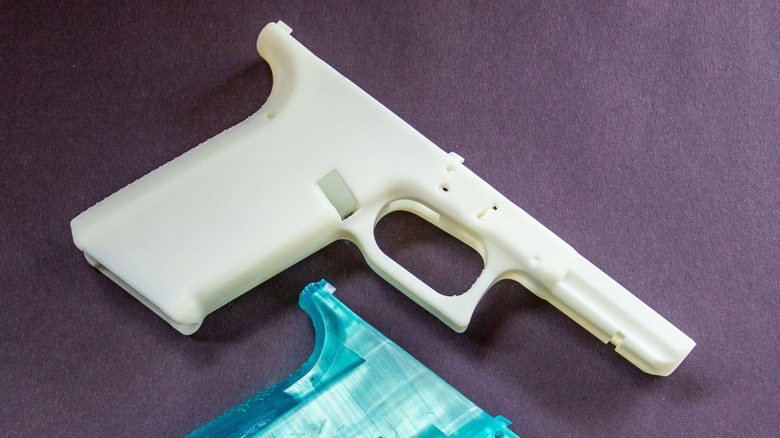
So-called "ghost guns" are a growing threat to public safety; a recent high-profile assassination may have used one. Ghost guns, for those blissfully unaware, are weapons that are partially 3D printed to avoid being serialized in government records. Someone who might not be able to get a gun otherwise would therefore be able to access one, either by making it themselves or buying it under the table — and we might find out about it when it's too late. You can't print a whole gun — at least not one made by major manufacturers — since a gun needs metal parts to withstand the heat and stress of firing, but already "Wiki weapons" have circulated online, guns that can be entirely plastic.
We're confident that 99.9% of people reading this are smart enough not to print a ghost gun, but it goes without saying that you shouldn't try, even just for fun. The legality of ghost guns is a complicated, open question, and we'd rather you don't fall on the wrong side of it just because you were curious. New laws could soon come into effect that — just as paper printers stop you from printing money — will block a 3D printer from making any firearm parts. Even so, 3D-printed weapons are not necessarily untraceable, so printing one is playing a dangerous game.
We'd also caution against trying to make gun accessories for a firearm you legally purchased. Legality aside, we don't want you to create any problems for yourself; a firearm with 3D-printed accessories could attract the wrong attention or pose a risk to you if the 3D-printed part fails. Play it safe. Avoid anything gun-adjacent.
Anything that comes into contact with your mouth
It's probably common knowledge by now that microplastics are everywhere. While it's debated what sort of health effects (and how much) they have, we can probably all agree that we don't want any amount lingering in our bodies forever. Anything that reduces exposure — not microwaving food in plastic containers, not using plastic cutting boards, etc. — is a good idea. We've already established that 3D printing poses a health risk with microplastics, so in that spirit, don't print anything that could make you ingest more.
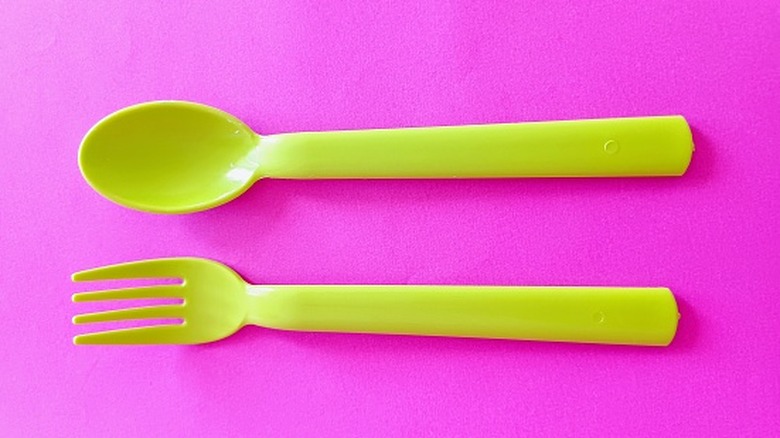
Generally speaking, we wouldn't recommend printing anything kitchen-related if it comes into contact with food. Aside from microplastics, there are concerns about how plastics could contribute to the growth of bacteria, seep toxic chemicals into the food they touch, and perhaps even indirectly introduce lead into your diet. Not ideal. And that's before we get into the topic of what filaments are FDA-approved for food contact. You're most likely better off buying something from a store that's had to go through some regulations than printing it yourself. Print a banana holder if you like, but never a spoon or a container for your coffee grounds.
You may also want to be cautious about other things, like musical instruments. Yes, 3D printers can print working musical instruments. One of the most popular projects on MakerWorld is the Fully Playable Deluxe Ocarina from "The Legend of Zelda." We're not trying to cast aspersions on the creator, as this is a really ingenious use of a 3D print, but nonetheless, microplastics going straight into your mouth is a factor you must include in your risk assessment.
Copyrighted items (especially for sale)
If there's one thing that defines our era, it's frivolous lawsuits for anything imaginable. Just look at Nintendo suing the pants off anyone who even thinks about the word "emulator." The point is, big companies with formidable legal departments and vast resources can and will sue someone into bankruptcy to protect their copyrighted material. So, when you're 3D printing anything that even approaches copyrighted material, take a pause and think hard about whether or not it's worth the risk.
If you've read even a handful of articles about these sorts of lawsuits, then you'll know it doesn't take much to infringe on intellectual property rights. The mere act of scanning an object in order to produce a 3D-printable file may constitute a copyright violation, according to New Media Rights. So right out of the gate, before you even hit print, you've technically already broken the law, even if you haven't suffered any legal consequences. You can see where we're going with this. When it comes to copyrighted, patented, or trademarked material — any intellectual property that isn't yours — keep a wide berth.
This goes double for 3D-printed items that you plan to sell. If it's your own design and you're 100% sure you're not riffing off a copyrighted design too closely, then you're probably safe. Just remember that when it comes to lawsuits, people will sue if you just look at them wrong. The historical record makes that clear, with countless examples of individuals and companies selling 3D-printed items or distributing print files that got them in trouble in one way or another. You can sell 3D-printed items, just don't underestimate the petty gods of copyright law.
Bike helmets (and other safety equipment)
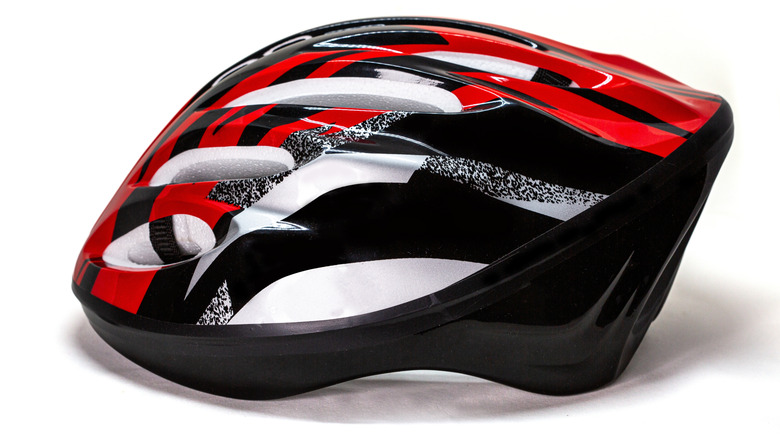
Do you like head injuries that could ruin your life? No? Then don't mess around when it comes to the things meant to prevent just that, like helmets. One of the things you should look for when buying a new helmet is safety certifications, because, well, you want that thing to crack in place of your noggin if you get into any kind of crash. But perhaps you're thinking of something more "low stakes," like a bike helmet. Don't. Reconsider, please.
Here's some relevant reading for you: safety standards for bicycle helmets, via Cornell Law's Legal Information Institute. To call bicycle helmets a chunk of Styrofoam is to do them an incredible disservice. These things have been meticulously designed and tested to prevent head injuries. Even an incredible, modern design like the Hövding airbag helmet can meet its demise — rightly or wrongly — running afoul of regulators, despite good engineering that really did protect people.
This is all a very roundabout way of saying that you shouldn't print things meant to protect you from harm. Buy your bike helmets, shoulder pads, knee pads, etc. from companies that make them professionally. As tacit evidence of this, a search for "bike helmet" in MakerWorld reveals no actual bike helmets, only 3D-printed cosplay ones. Even "bike knee pad" has a similar result. It's hard to even recommend 3D-printing items that don't have as many regulations around them, such as knee pads for flooring projects. Let the companies that have tried-and-tested designs that have gone through regulatory processes make the things meant to keep you safe.