

Before You Buy A MacBook Neo, You Need To Know These 5 Things

Apple just launched a new budget MacBook, expanding Apple's potential reach (as far as MacOS goes) to more users than ever before. Many are looking forward to this more affordable option, but that does not mean you should purchase this laptop with your eyes closed.
Even brand new, you might feel like you're missing out on Apple's latest tech with the MacBook Neo. It's only powered by an A18 Pro chip (a version of which also powers the iPhone 16 Pro,) and not by one of the significantly more capable M-series chips that first arrived in the 2020 M1 MacBook Air. Nevertheless, Apple says that it should be powerful enough for most everyday tasks like browsing the internet, using an office suite like Google Docs, streaming videos, and using AI. It should also have enough battery life to last you 16 hours on a single charge, so you won't have to stay plugged in or carry a power bank just to get things done throughout the day.
However, it's hard to imagine that Apple would want this cheaper laptop to cut into sales of the more powerful (and expensive) MacBook Air, so Neo's got other tradeoffs too. Here's what you need to know.
Memory and storage options are limited
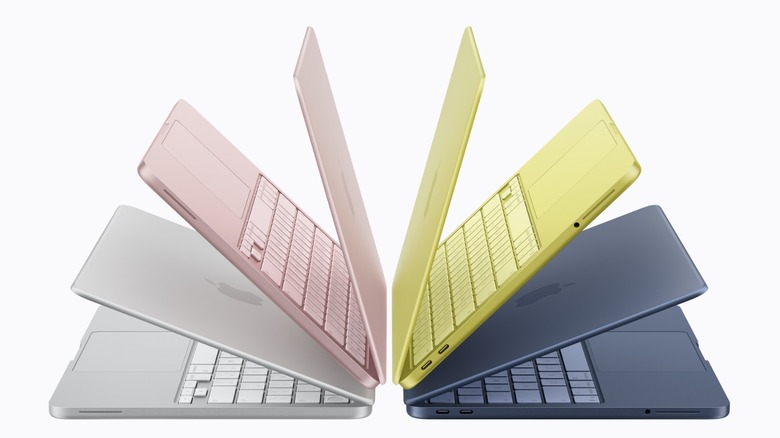
If you're a long-time MacBook customer, the lack of memory and storage configuration options will seem glaring. Unlike the more expensive MacBook models, which start at 16 GB of RAM (which Apple calls unified memory) and 512 GB of SSD storage and can be configured to have up to 128 GB of unified memory and 8 TB of storage, the MacBook Neo is limited to either 256 GB or 512 GB of storage, and only 8 GB of unified memory either way.
The small memory allotment on the MacBook Neo might not be an issue for many students and basic users. If you're a power user and want to run more than 20 browser tabs, Adobe Photoshop and Lightroom, and several other apps simultaneously, be prepared for your laptop to struggle. If you're planning on professional use, it's probably better to invest in a more powerful MacBook.
If you take a lot of photos and videos, or you're the type to install some games, you'll want to be aware that 256 GB of storage can get used up quite quick. In those cases, we'd recommend going for the more expensive 512 GB model. Alternatively, you can just buy a large external USB drive to keep the data that you don't often use much, or subscribe to an iCloud storage plan, especially if you're always online anyway.
Don't expect backlit keys and haptic feedback
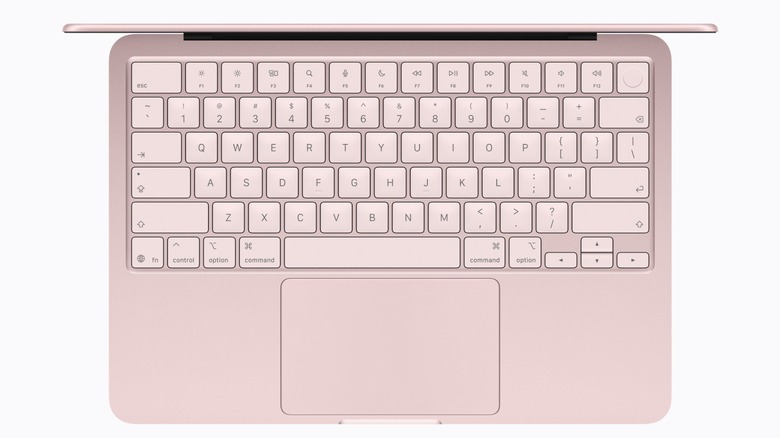
Before Apple introduced the MacBook Neo, the cheapest MacBook Air already came with backlit keys and haptic feedback. Long-time MacBook users probably take these for granted, but Apple was bound to cut its costs somewhere to hit such a low price.
The missing backlit keys won't necessarily be a deal-breaker for you if, for example, you're used to using a seven-year-old Apple Magic Keyboard without this feature, or you never work in the dark. On the other hand, you could always turn the screen brightness up, but that will have the side effect of stressing your eyes and increase battery consumption.
And although removing haptic feedback will not reduce the MacBook Neo's trackpad functionality, you won't get the same "clicking" sensation when you press down on it. However, it still features the usual smooth glass surface found on trackpads on other MacBooks, as well as the same capabilities when it comes to navigating and using trackpad gestures.
Touch ID is only available on the more expensive model
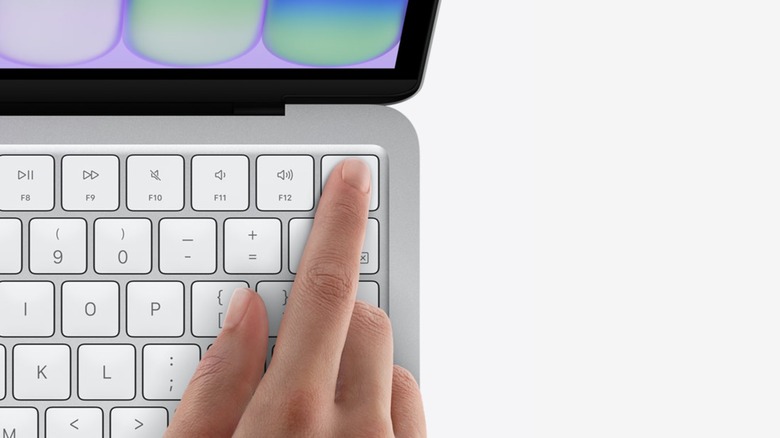
All the newest iPhone models have ditched Touch ID in favor of Face ID, but a variety of modern MacBooks still use the fingerprint technology to secure your laptop. You will not find Touch ID tech in the 256 GB MacBook Neo. Note that MacBooks do not use Face ID (even though the technology launched almost 10 years ago with the iPhone X,) because Apple still hasn't developed a camera and sensor thin enough to fit inside the screen of its laptops. With the more affordable variant, you'll have no choice but to type in your PIN and passwords every time you log in somewhere.
This might be an inconvenience, but if you're on a really tight budget, that's still $100 cheaper that the 512 GB version of the device. You could always use a password manager like the Apple Passwords app instead. That way, you don't have to memorize tons of passwords and have trouble creating a new one from scratch.
You can only use one external monitor

Multi-monitor setups are useful if you want to use multiple apps in full screen without needing to switch windows. Unfortunately, the MacBook Neo will limit you to just one external monitor, although you can still use the built-in display at the same time. The M4 MacBook Air does not have this limitation, allowing you to use two external displays, and even connect a third one when you close the lid.
This probably isn't going to end up being a major issue for Neo's intended user base. If you need more than one external screen, you should probably consider going for the more expensive MacBook Air. Alternatively, "ultrawide" monitors also deliver similar benefits to two external displays without taking up the space and cost of multiple monitors. If you insist on running two or more displays on such a basic laptop, consider getting a DisplayLink-compatible hub to get that capability.
How much will the MacBook Neo cost you?

Despite all these limitations, what makes the MacBook Neo so compelling is its cost. It has a starting price of $599 for the 256 GB option (at launch), with the 512 GB model coming in at $699. That makes it $500 cheaper than the cheapest MacBook Air, which now starts at $1,099, and puts it on par with the Mac mini in both price and specifications (though the laptop obviously comes with a display, keyboard, trackpad, and built-in rechargeable battery power). Apple also offers a $100 discount if you're a student or teacher through the Apple Education store, making this device even more affordable.
This combination of price, specifications, and operating system makes the MacBook Neo one of the best options if you're looking for a budget laptop. And while it's still not quite as cheap as, for example, a bare-minimum laptop in terms of cost, you're getting a whole lot more in terms of features and software. This makes it worthy of being included in future versions of our list of the best cheap laptops worth buying and could even serve as a viable alternative to the average Chromebook with ultra-long battery life (if the only thing keeping you from buying a MacBook otherwise was the cost, of course).