

Audi's 2026 A6 Pairs V6 Power With A Sensible Price, But Early-Adopters Miss The Biggest Change
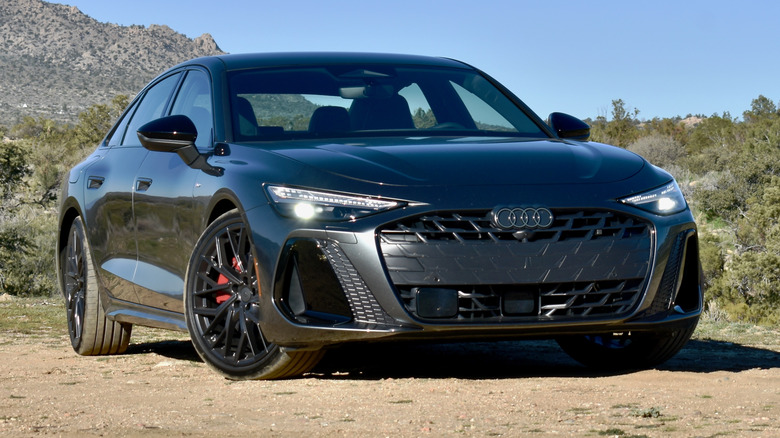
Just as taking a core sample reveals the geologic history of a given area, you can get the clearest idea of the ups and downs of Audi's history from the generational layers of the German automaker's midsize sedan. From the C1-generation Audi 100 that started things off in 1968, to the C3-generation Audi 5000 that was the subject of an unintended acceleration scandal that nearly ended the brand in the United States, to the C6-generation Audi A6 that launched a design revolution, it's all here.
The 2026 Audi A6 continues that lineage, even if it isn't quite as important in the automaker's current lineup. Audi still needs a competitor to the BMW 5 Series and Mercedes-Benz E-Class, but other models have taken the lead in forging a new direction for the brand. In addition to this gasoline TFSI model, Audi also has the electric A6 e-tron that debuted for the 2025 model year and largely set the design and tech tone, one followed by the smaller A5 sedan as well.
But for those actually buying cars instead of just following industry trends, the new A6 is worth paying attention to.
The styling is a little too familiar
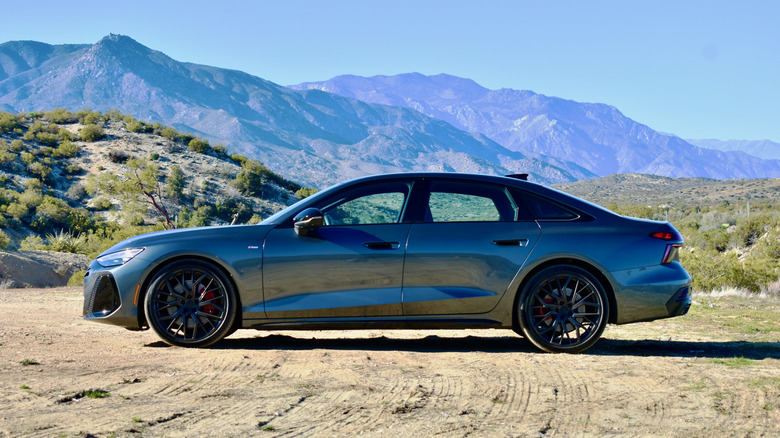
The new A6 is an indication that Audi is running out of new ways to remix its signature design features. The shield-like "singleframe" grille—introduced with such great effect on the C6 A6 two decades ago—now resembles a black hole in both color and the way its size seems to warp everything else around it through gravitational influence. This does at least create an under-tension look that makes the electric A6 e-tron appear flabby by comparison.
Speaking of the e-tron, it's worth noting that these two A6 models are only superficially related. The A6 TFSI is based on the same Premium Platform Combustion (PPC) as the A5 and the Q5 crossover, while the A6 e-tron is based on the same Premium Platform Electric (PPE) used by the Q6 e-tron, Porsche Macan Electric, and Porsche Cayenne Electric. The two architectures are obviously powertrain-specific, but do have a common electrical architecture that allows for shared infotainment hardware and software.
Another carryover design feature is the set of "Quattro blisters," subtle ridges on the fenders meant to evoke the box flares on Audi Quattro rally cars. But while you can clearly see the rear ones through the side mirrors, they're hard to make out in profile view, where they would make the biggest visual impact. An upswept rib in the lower door skins is more effective at catching the eye, and keeps the A6 from looking totally slab-sided.
The biggest tech innovation is mostly for show
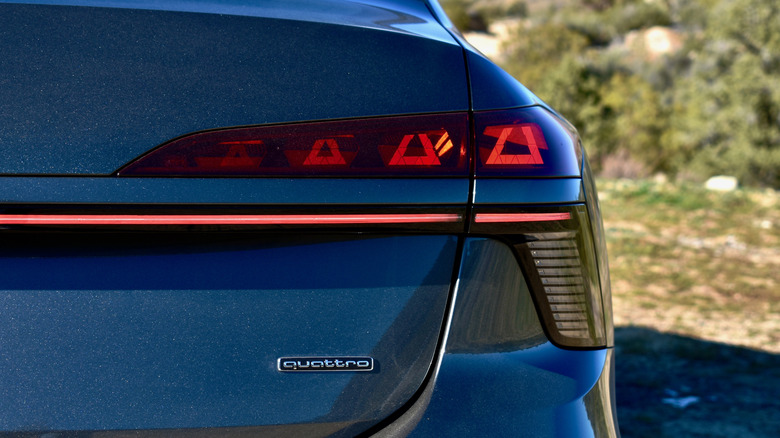
The Quattro and its pioneering all-wheel drive system established Audi as a technological innovator, and the automaker would like you to think its elaborate lighting tech carries on that tradition. Especially because it needed to find a workaround to get that tech to the U.S.
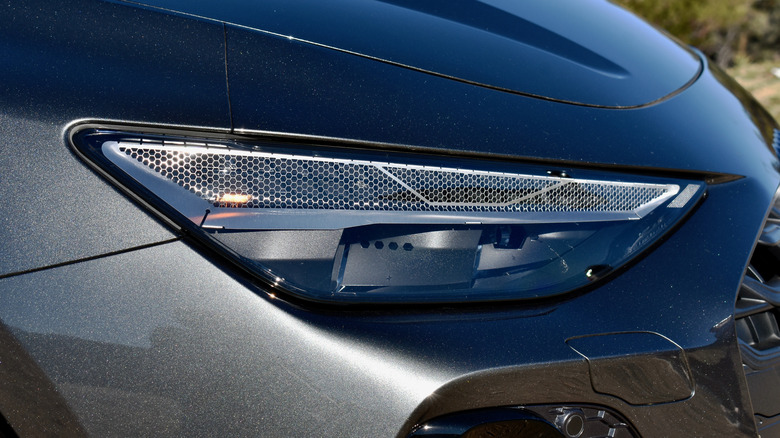
Nondescript vertical lighting elements at the corners of the A6's rear fenders serve as the taillights, freeing up what look like taillights to project programmable animations as warnings to other road users. This feature debuted on the Q6 e-tron, but wasn't available in the U.S. before because of current regulations. Consisting of eight OLED panels with 198 individual lights per side, they can switch to a triangle when the hazards are turned on, or an "A" when parking assist is engaged.
The problem is that, even from a few feet away, these symbols are hard to discern from each other and the default lighting signature. Other drivers, cyclists, and pedestrians also aren't going to know to look for these symbols, or what they mean. While it might be helpful to know that a car is in auto-park mode, and may move unexpectedly, it's hard to say if people will get the message. And when the hazards are turned on, their blinking is still easier to recognize than the accompanying triangle symbol.
The powertrain is the real upgrade
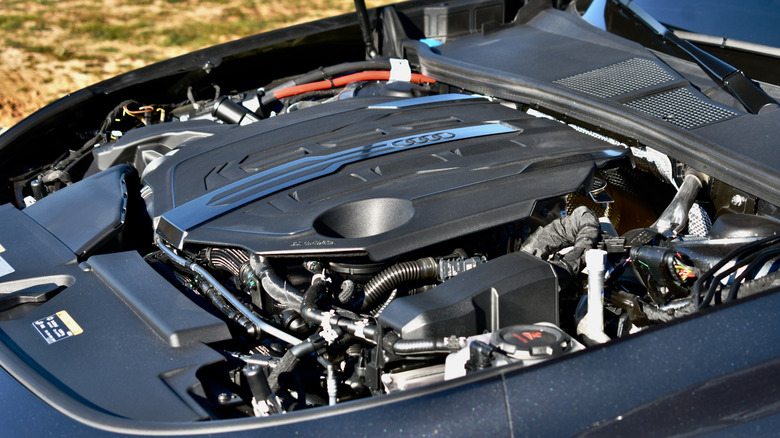
The A6 makes a stronger case for itself when you start digging into the specs. That's because Audi made a turbocharged 3.0-liter V6 standard equipment. This is the same engine used in the current S5, with the same 362 horsepower and 406 pound-feet of torque on tap. It's 114 hp and 133 lb-ft more than the turbocharged 2.0-liter four-cylinder engine that was standard 2025, and 27 hp and 37 lb-ft more than last year's optional V6.
You also get standard all-wheel drive and a seven-speed dual-clutch transmission, which help get the A6 from zero to 60 mph in an Audi-estimated 4.5 seconds. That's much quicker than an entry-level BMW 530i (5.9 seconds) or Mercedes-Benz E350 (6.1 seconds), both of which make do with turbocharged four-cylinder engines and rear-wheel drive. BMW and Mercedes offer more powerful options, but Audi gives you the most bang for your buck.
The experience of that quick acceleration is typical of a modern combustion engine with forced induction. The turbocharged torque makes it feel like the space between where you are and where you're going has collapsed, a sensation accompanied by a dull-but-determined exhaust note. The muscular engine is doing most of the work here, as the transmission is slow to react, particularly when pulling away from a stop. Without quick shifts, it's hard to see the point of going with a dual-clutch gearbox instead of a conventional torque-converter automatic.
Sport Plus? More like Sport Neutral
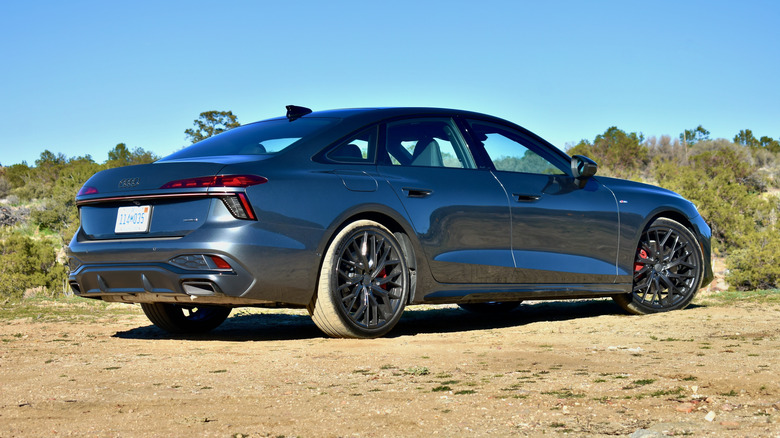
The more powerful standard V6 helps make up for the lack of a dedicated S6 performance model at launch, as do a handful of chassis upgrades. An optional Sport Plus Package includes rear-wheel steering, a package-specific steel-spring suspension tune that lowers the car by 0.7 inch, and Audi's Sport Differential. Making its first appearance in a non-S or RS model, this rear differential sends more torque to the outside wheel when cornering to help reduce understeer.
Combined with Audi's standard "progressive" power-assisted rack-and-pinion steering, where the steering gear engages more with the rack at higher steering angles to quicken things up, a Sport Plus Package-equipped A6 should feel very agile for a sedan of its size. But, as the drive event Audi hosted SlashGear at made clear, the hardware may have set expectations too high. The A6 was competent, composed, and of course brought plenty of all-wheel drive grip to the table. It just didn't feel as nimble or playful as hoped.
The ride-comfort tradeoff that inevitably comes with handling-tuned passive suspension wasn't severe, at least. Bumps and road imperfections were more noticeable in the Sport Plus Package car, but this suspension setup was still comfortable enough for daily use. It's just that the downgrade in ride quality made more of an impression than the upgrade in cornering ability.
At least it still feels like a luxury car—mostly
The Sport Plus Package suspension is one of three available on the 2026 A6. A less-aggressive steel suspension setup is standard on Premium and Premium Plus models, while adaptive air suspension is standard on the top Prestige grade. The Prestige is also a prerequisite for the Sport Plus Package, so buyers will effectively be choosing between the sportiest and most comfort-oriented setups.
The air suspension lowers the car by 0.3 inch in the Dynamic drive mode, but also has a lift function that raises the ride height by 0.7 inch to clear speed bumps and the like. However, it's paired with all-season run-flat tires instead of the Sport Plus Package's summer tires. That means a bit less grip and sidewall flex, penalizing handling and ride quality, respectively.
Nonetheless, the air suspension was appreciably more comfortable in its default mode. And while its limits were appreciably lower than the Sport Plus Package car's, the air-suspension-equipped car didn't exactly feel like a land yacht. The only disappointing thing was higher-than-average tire noise, a trait shared with both the standard and Sport Plus Package cars we drove (riding on 20-inch and 21-inch wheels, respectively). Audi says the new A6 is 30% quieter than before, but clearly there's still room for improvement.
Its infotainment system is already obsolete
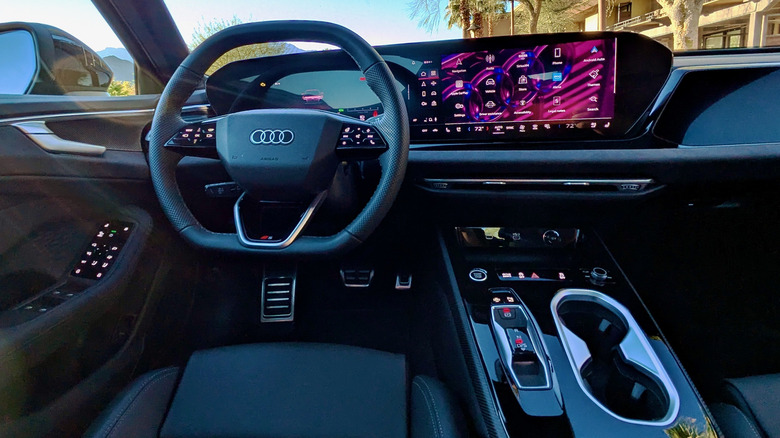
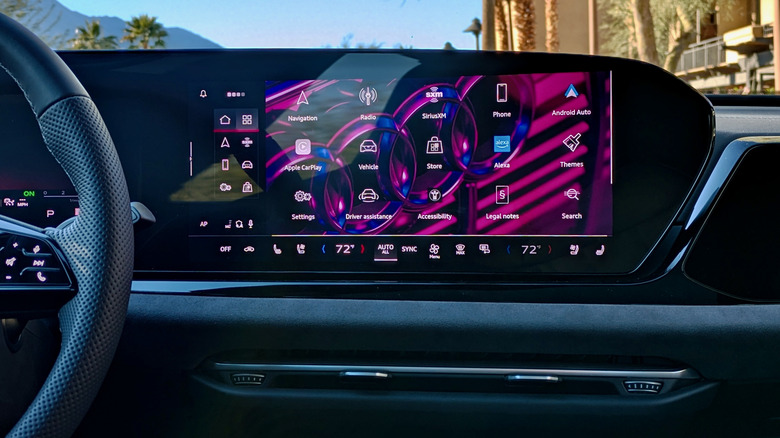
This redesign brings the same infotainment system previously seen in the gasoline A5 and Q5, as well as the electric A6 e-tron and Q6 e-tron. An 11.9-inch digital instrument cluster and 14.5-inch touchscreen are standard, with a 10.9-inch front-passenger touchscreen also available. Wireless Apple CarPlay and Android Auto are standard as well.
Audi's improved native voice recognition system lessens the need to rely on smartphone-based apps, but that's really the only improvement. The digital instrument cluster has a more basic layout than previous generations of Audi infotainment systems—notably losing the map-view feature—but still manages to be disorganized. Things like the drive mode and gear selection are to find at a glance. The main touchscreen is also oversimplified, with too many functions requiring full-screen menus that then have to be closed.
Audi is aware of these problems. During the A6 media drive, representatives confirmed that a new interface is coming midway through the 2026 model year. This will bring back the cluster's map view, redesign the main touchscreen layout, and add Bluetooth-headset and AirConsole gaming connectivity to the passenger screen. A new steering wheel with fewer haptic controls and a dashcam are packaged with the upgrade, which can't be retrofitted to existing cars.
Interior space is on point, materials are not
Like other recent Audi models with the tri-screen setup, the rest of the interior takes cues from the odd angle of the bezel housing the instrument cluster and main touchscreen. It's situated to be easily reached by the driver, but gives the dashboard an uneven appearance that's mirrored by door handles, speaker grilles, and other trim pieces that all come together at discordant angles.
Even in the top Prestige trim, the materials don't feel like a step above what you'd get from a mainstream brand. Lightweight plastics abound, and there aren't any whimsical design features—like Mercedes' round air vents—to distract from that. A new Audi Exclusive Design Package adds Nappa leather upholstery in a distinctive blue and tan two-tone, but that only serves to highlight the uninspiring grays and blacks surrounding the seats.
Audi boasts of an additional two inches of front-seat headroom thanks to a new standard glass roof, which also has six dimmable panels for the fairer skinned. Rear-seat headroom stays about the same, as does legroom in both rows, but all figures are comparable to other midsize luxury sedans. The 13.5 cubic feet of trunk space is also about the same as before, and only looks insufficient if you're pining for the redesigned A6 Avant wagon, which is a Europe-only affair for now. Audi is continuing to sell the outgoing-generation RS 6 Avant and A6 Allroad as 2026 models, though.
2026 Audi A6 verdict
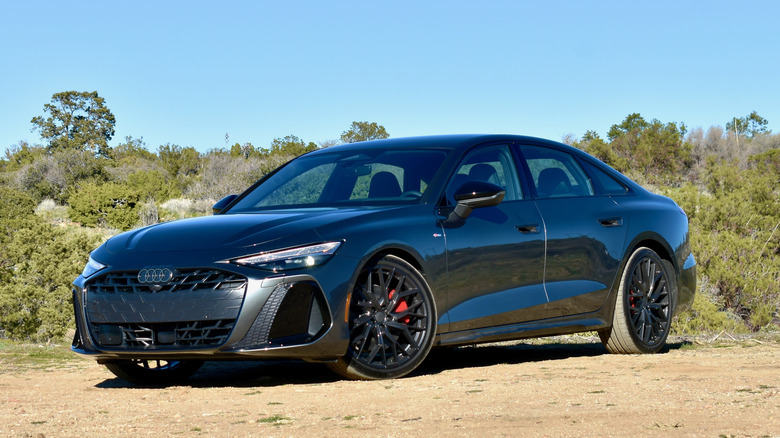
With a starting price of $65,395 for the base Premium trim level, the 2026 Audi A6 costs a little more than a BMW 5 Series, and a little less than a Mercedes E-Class. A long list of standard features like the dimmable glass roof, heated and ventilated sport seats, three-zone climate control, a power trunk, and that 362-hp turbo V6 mean there's less need to visit the options list, however.
Audi's decision to slim down the A6 lineup—and make this sedan a better value in the process—is the real story here. Without this pricing reshuffle, the new A6 would be a placeholder applying design and tech features previously seen elsewhere in the Audi lineup to one more form factor. Those features make for a competent midsize luxury sedan, but not one that could outshine its German rivals without this asymmetric pricing structure. Even then, it makes more sense to wait a few months for the updated interface than to buy one of the first cars.
That sensible pricing is the main takeaway is disappointing for a car with so much history, but hopefully that's not the end of the story. BMW and Mercedes still offer dedicated performance versions of their sedans, so it would be great to see new S or RS versions of this A6 in the future.