

5 Tools You've Probably Been Using Wrong
It doesn't matter how well designed a tool is, how intuitive its function may seem, someone can still use it for years and not realize they've been using it wrong. For example, that loose tab on the end of a tape measure is not just a consequence of cheap manufacturing. It extends and collapses by a very specific length that will factor into the measurement, and if you haven't been including it, your measurements have been off — even if only slightly. But there's no shame if you didn't know, because most people don't. We've covered all sorts of mistakes people make when using things like power tools.
This time, we're casting a wider net for tools in general that people probably use wrong. Note, the keyword is probably. If you've not been doing the things below, then you are one of the lucky few. If you have, then spread the word, since in some cases misusing these tools can have serious consequences.
Plungers
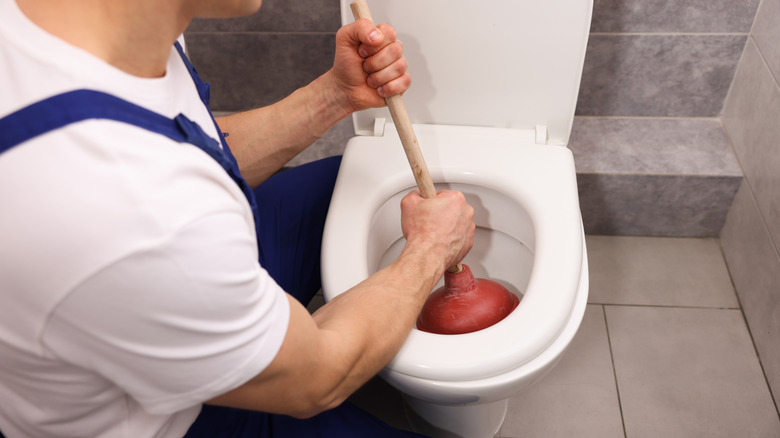
Yes, a lot of people are probably using plungers wrong, believe it or not. But not in the way they use them. We can (hopefully) safely assume that most people understand the general concept: create a seal, then pump to get that suction to break apart any obstruction deeper inside. Easy. The problem is which kind of plunger you're using. Next time you're at Home Depot shopping for gadgets, look at the plunger section. You'll notice that plungers have several different shapes of heads. These are not just different designs intended to achieve the same effect.
Some have that classic cup-shaped plunger, some have a flange, and some have an accordion shape that moves like a bellows. Each is designed for different kinds of use cases entirely. More importantly, there are plungers specifically for toilets, and others for drains. Even more importantly, the kind that you most likely associate with unclogging toilets — the cup shape — is actually for sinks and shower drains. We dearly hope your "toilet" plunger never found itself unclogging the sink because someone realized it was in the wrong place.
To be fair, your cup plunger can unclog toilets, but it's not the most effective method. For that, you should use a flanged plunger instead that fits into the curve of the toilet's drain hole. Pay attention to this fact when you go shopping for one and buy accordingly, ensuring the toilet plunger stays where it belongs, so the cup plungers can be used only for the sink. And if you don't have the right plunger on hand, you can actually unclog a drain with a shop vac.
Extension cords and power strips
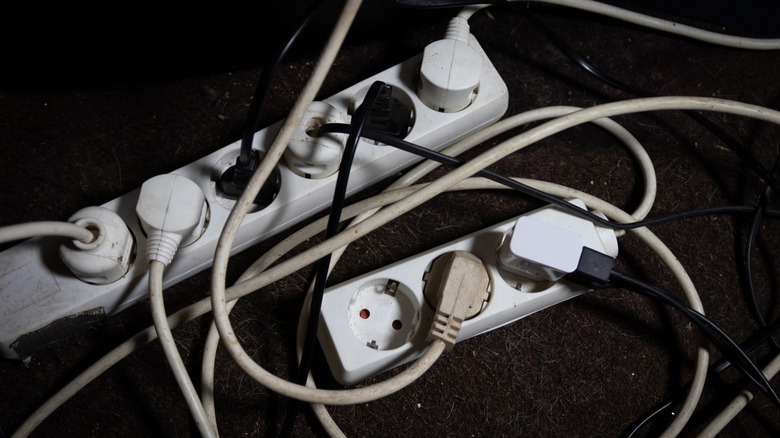
The worst mistake you could possibly make with an extension cord is to create the so-called suicide cord. Please don't even think about that one. However, what comes next is a mistake with extension cords most people have probably done at least once in their life, and may be doing right now: daisy-chaining extension cords, power strips, surge protectors, or any other electrical extenders. This is when you plug an extension cord or power strip into another, a "chain" from the outlet to get more plug space or range. Bad idea. Why? Because it's a fire hazard.
This is one of those things that's so serious that there's an entire government page dedicated to it. It's intended for the workplace, but the principle applies all the same. According to the OCWR, the first reason is that the more wire you have, the higher the electrical resistance is, which means more heat and a higher risk that components will catch fire. Further, it's likely the first extender in the chain is being overloaded, supporting more than it was designed for. Add on the fact that the outlet itself might be tasked with more than it can handle, and you have a recipe for disaster.
If that wasn't bad enough, there might be an additional risk: old surge protectors. Unbeknownst to many, you should throw away your old surge protectors because they become a fire hazard. That surge protector you might be using just because it was lying around to complete your little daisy chain could be the one that kicks off a conflagration. Play it safe and find other outlets rather than creating daisy chains, and chuck out those surge protectors so old you can't remember when you bought them.
Measuring cups
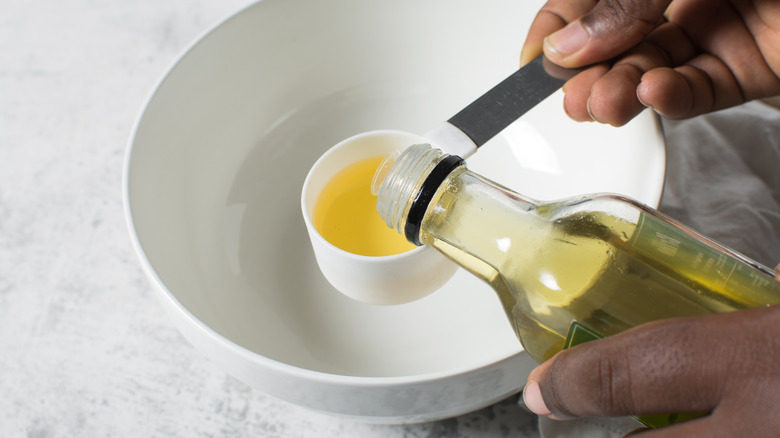
"Oh come on, measuring cups?" you might be saying. "How can anyone use a measuring cup wrong?" Don't worry, this one is much less egregious than the other examples we've mentioned. There are two types of measuring cups you probably have in your house: The stacked ones that fit into each other like Matryoshka dolls, and the standalone tempered-glass Pyrex cup with red marker lines. The former is for dry ingredients — flour, sugar, baking powder — and the latter is for liquid — water, cooking oil, milk. This matters a lot more than you might think.
Both types of cup excel for their ingredient type. Liquid measuring cups especially. Think about it. In order to measure liquid correctly, you need to fill it all the way to the lip a dry measuring cup, risking overflow and dripping, and even with perfect balance the water doesn't sit totally flat. Water has surface tension, which is why it forms a concave or convex surface. This is called a "meniscus." Some recipes need very precise measurements, so a meniscus' worth of water makes a difference. On the flip side, that dry measuring cup makes it easier to wipe excess dry ingredients off the top with your finger for an exact measurement, and lends itself a lot more easily to scooping, like flour out of the bag. You couldn't do either with a liquid cup, at least not easily or accurately.
Unless you're about to go on "Hell's Kitchen" with Gordon Ramsay, you can probably use either cup you like and get enough accuracy for your recipe to come out fine. Who cares if your cake comes out a pinch less fluffy? Still, if you've got both and don't mind washing extra dishes, cooking's easier with the right tool.
Duct tape
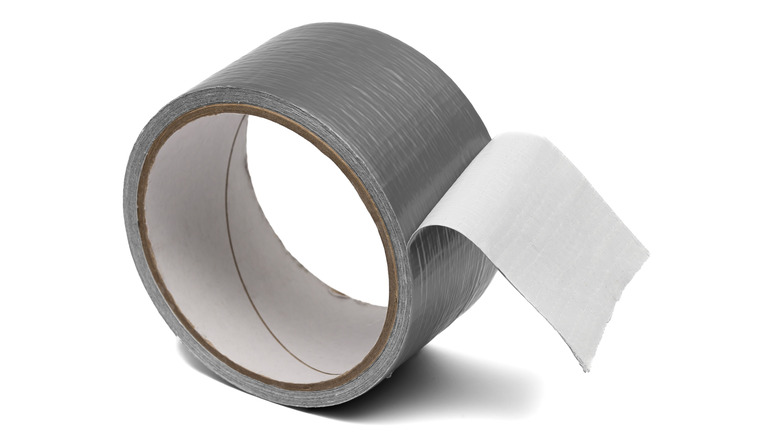
Duct tape is a common household product that was invented for the military. And it's also one of the most poorly named products out there, because its name suggests using it for something that you should never even try to use it for: ducts. Since most people use duct tape for all sorts of at-home projects that require a tough tape that can create something of a seal, it seems logical that it would suffice for ductwork. After all, airplanes use duct tape-like speed tape on their wings, so why wouldn't it be enough for such a lowly endeavor as a vent?
The problem is it's not a good long-term solution, not that it's incapable of holding metal together. Look at anything you've added duct tape to and notice how as time goes by, the adhesive starts to melt, or dry, in either case causing it to fail. If you've ever tried to hold anything together with duct tape — like a torn garden hose — you'll also know that it does an incredibly poor job of sealing in water. Now imagine you've got a hot, leaking duct, and you can start to see the issue. Plus, removing duct tape after you've applied it is a huge pain in the rear, so it wouldn't last long, and then you'd have to go through the annoyance of taking it off.
The famous Duck Tape brand that most people associate with duct tape sells specific types of tape for this express purpose. Its HVAC Metal Repair Aluminum Foil Tape is a great example. Buy the right kind, get the job done, and save the duct tape for every other odd job but your ductwork.
WD-40
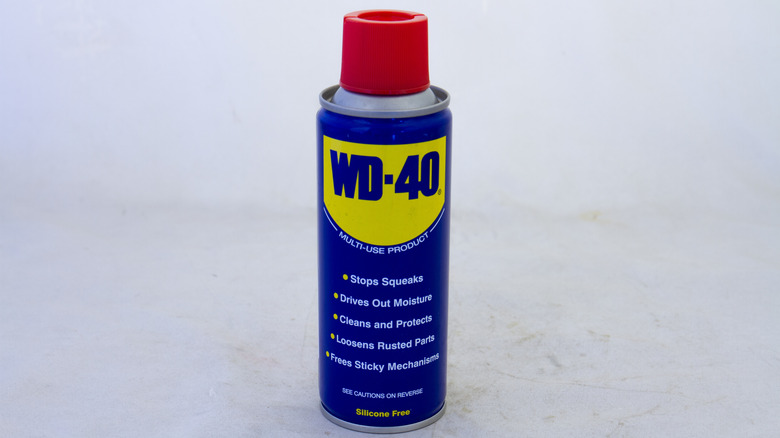
It may be a misconception that WD-40 was invented by NASA, but nonetheless, it's an almost magical spray that just about anyone has in their garage. If it squeaks, sticks, stains, or rusts, WD-40 can likely help. But it's not a lubricant. For some reason, that myth has persisted for years and people use it as such. If you want a source on that, look no further than the official WD-40 website.
To be fair, WD-40 doesn't say it's not a lubricant, just that it's "not really a lubricant." It has lubricating properties, but as anyone who has used WD-40 on the regular knows, it's more of a general purpose cleaner, de-greaser, de-everything-er — but not a lubricator. Note the meaning of WD: Water Displacement. Doesn't really sound like something you'd call a lubricant, does it? It may seem that WD-40 is lubricating because it's probably cleaning out whatever was causing the friction, allowing things like rusted bike chains to move as if they'd been greased up. Treating it like it is one, though, could inadvertently cause more damage in the long term. Hinges gunked up with rust might start working beautifully after a spray of WD-40, but eventually that solvent goes away and metal on metal contact could easily make it squeeze again.
Best practice is to use the WD-40 first and then lubricate your target ASAP. You can try WD-40 Silicone for a bit more lubrication than the standard, but this should not be where you leave things. Let the squeaky wheel get the WD-40, and then the oil.