

15 Common Motorcycle Terms And What They Mean
Go to any local motorcycle meet, track day or bike night, and you'll hear all sorts of strange language. Not the sort of four-letter words your mother used to ban around the dinner table or language that's regularly bleeped on network television, but something more specific. The language of motorcycles and motorcycle riders includes a few special vocabulary words and terms that have a unique meaning among riders. Some of these terms are basic substitutes for words, while others have a bit more meaning behind them.
I've been riding motorcycles for years, spending time around other riders, picking up all sorts of historical and mechanical knowledge along the way. More than just learning about bikes, learning to speak the language has been one of the most entertaining parts of being in the motorcycle community. In your locale or community, some words might take on a different meaning and others might be entirely new. These are just the terms that I've heard and my understanding of them.
Squid
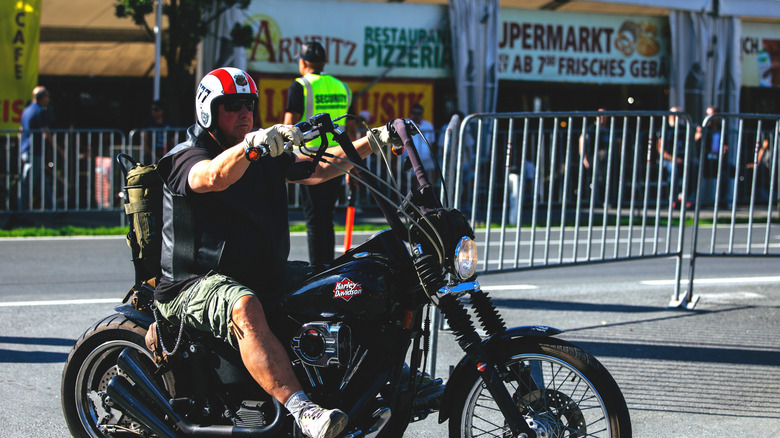
One of the first terms I learned when I started riding motorcycles was "squid." Thankfully, the friends I was riding with weren't talking about me. The word "squid" amongst riders generally refers to someone who's irresponsible with their gear and/or their riding style. Ever see someone riding a 200-horsepower superbike in flip-flops sandals and shorts? Or, worse yet, without a helmet? If you have, then you've been blessed by a squid sighting.
There are varying levels of squid clothing, but riding without concern for others is pretty squiddy behavior, too. Passing over double-yellow lines through blind corners or popping wheelies in busy city traffic qualifies as peak squiddy-ness. Revving your motorcycle at a stoplight is a bit squiddy, too. You can avoid becoming a squid if you make sure to gear up (more on that in a bit), and if you ride with caution and awareness of your surroundings.
ATGATT
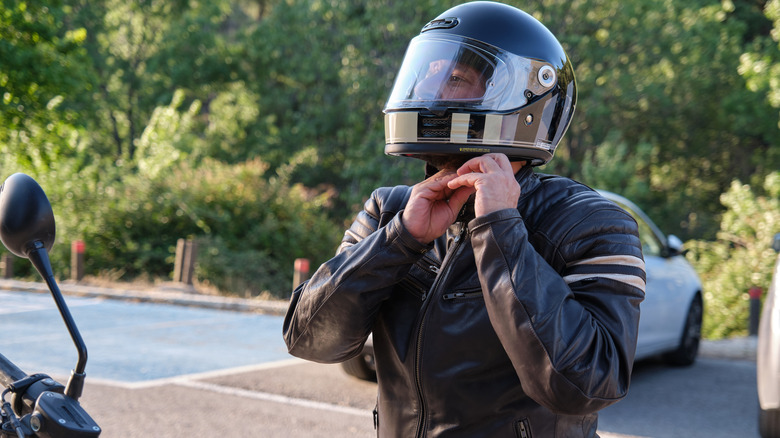
A riding policy that I take pretty seriously, ATGATT (said aloud as "at gatt"), is an acronym for "All The Gear All The Time." It's the polar opposite of squid-levels of riding gear. This means that any time you go for a ride, you wear protective gear from head to toe. Different riders interpret this differently, but for me, it means a minimum of protective boots, pants, a jacket, gloves, and a full-face helmet. More recently, for me, this has also included an air-bag vest and as often as possible, gauntlet gloves.
Many gloves have a short extension beyond the wrist, simply meeting the point where your jacket sleeve ends. In a crash, these two pieces of gear can separate, and road rash can get in between (a tough lesson I have learned from personal experience). Gauntlet gloves cover beyond the sleeve of the jacket and provide an overlap in protection of your wrists. It can be sweaty wearing full gear from head to toe, especially in summer, but I'd rather deal with a bit of sweat than road rash.
High-side and low-side
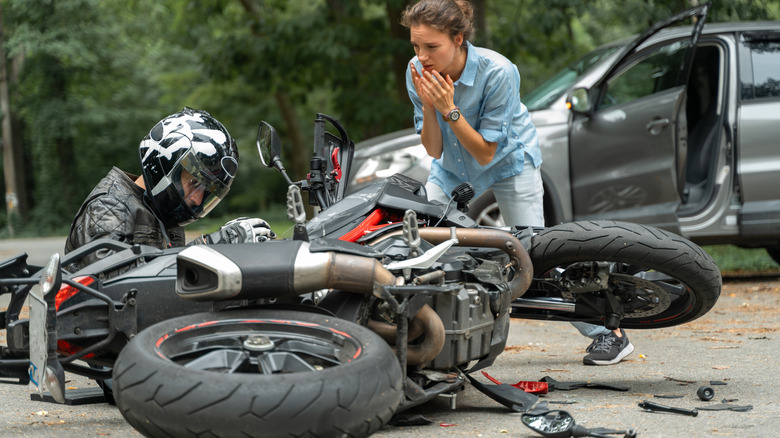
There's no special term for getting rear-ended on a motorcycle. In the same way you can have someone collide with the back of your car, they can collide with the back of your motorcycle. It would be, however, nearly impossible to high-side or low-side a car. Let's start with the easier-to-explain of these two terms: low-side. A low-side crash is when a motorcycle loses grip, tips over, and the rider falls off, typically in the same direction as the motorcycle, on what would be considered the underside of the bike. Going through a left-hand corner, if the rider leans the bike over too far then falls off the left side of the bike, that's a low-side.
A high-side crash is typically much more dramatic. It happens when a bike loses traction to the rear tire, then the tire regains that traction, snapping the bike forward. The result is the ejection of the rider, forwards and over the handlebars. Crashing a motorcycle is never good, but high-siding is typically much more violent and destructive. I've personally witnessed many riders low-side their bikes on public roads and at track days, able to get up, shake it off, and continue riding. I've even low-sided at a dirt-track school with no injuries and no damage to the bike.
Road rash
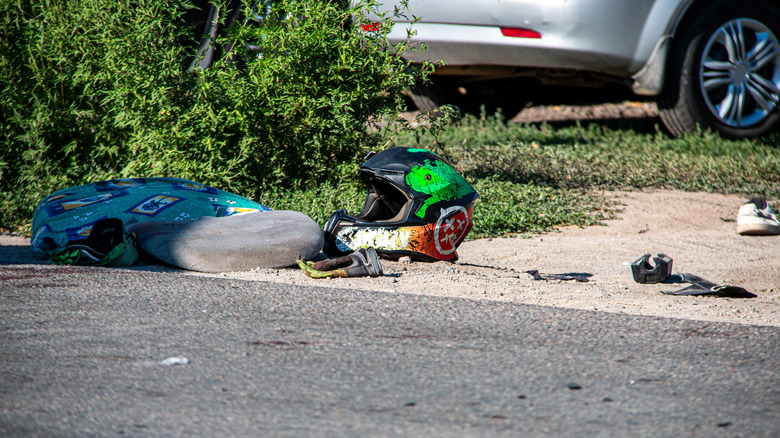
Road rash refers to the kind of injury that typically happens when you aren't wearing protective gear during a crash. It's where your skin meets the road and acts like an impenetrable sandpaper would at similar speeds, causing skin abrasion in varying degrees. Lots of motorcycle injuries involve the rider sliding along the ground after the bike has gone down — especially the low-side kind. If you're wearing a t-shirt and you crash your motorcycle at speed, the resulting abrasion between your bare arms and the ground will cause road rash. It's like a scrape, but much, much worse.
Without protective gear, as you slide, the road is essentially eating away at your skin instead of something like a thick leather jacket. Bits of gravel and asphalt can make their way into the various layers of your skin, causing serious pain, complicating the healing process, and even resulting in a potential infection. Even if you don't break any bones or damage your motorcycle severely, road rash can put you out of commission from riding for a long period of time. It makes a pretty good case for ATGATT.
Cage
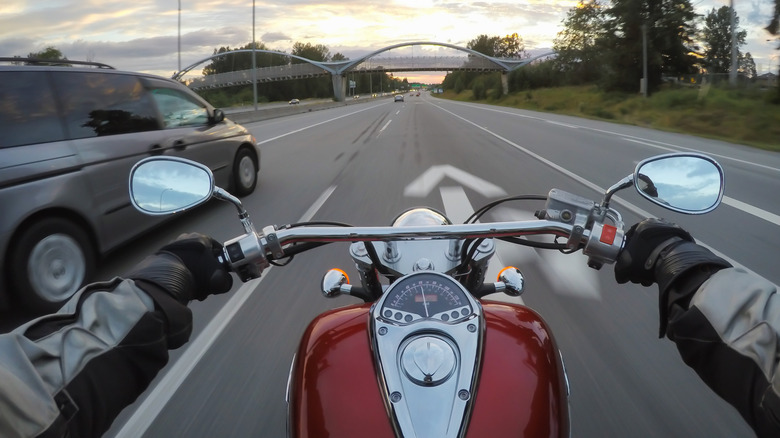
Riding motorcycles, for many riders, is about the freedom and open-air experience it provides. You get to see and feel everything around you as you ride along. Cars are a different experience entirely. They hold you in, restrict your view of the outside world, and mute the experience of traveling through a beautiful landscape. They're cages.
A cage is what a car (with doors and a roof) represents, especially to riders who feel the need to experience the open air as often as possible. I've heard the term cager used mostly in jest, but things get a bit more serious when automobile drivers put motorcyclists at risk. Bad driving behavior like texting while driving will certainly elicit the use of the term "cager" in a derogatory way. In lighter situations, it can be used as a term of defeat between riders, too. "Did you ride here today?" "Nah, I took the cage. I have to pick up the kids from school on the way home."
Chicken strips
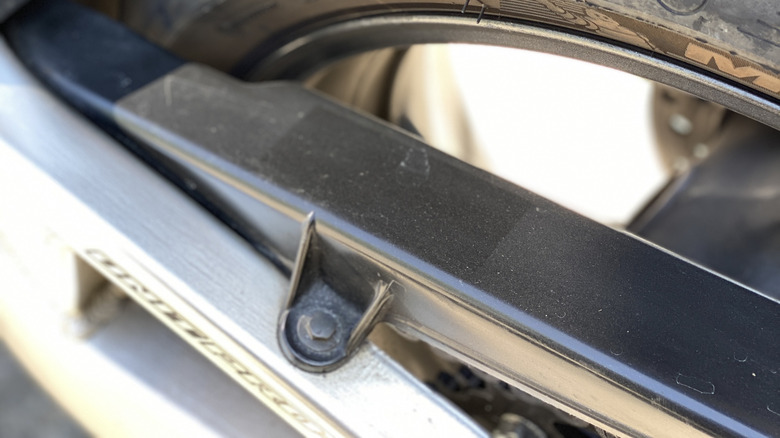
Whether you dip them in ranch dressing, BBQ sauce, or honey mustard, chicken tenders are a delicious treat. I'd even abide ketchup in a pinch. Those aren't the kinds of chicken strips riders are talking about, however, specifically when they are inspecting your tires. Unlike car tires, which have a flat contact patch on the ground, motorcycle tires are curved. And as you travel through a corner on a motorcycle, the bike leans over onto different areas of the tire.
This contact with the ground wears down specific sections of the tire (especially if you're riding quickly and there's a lot of heat build-up in the tires). Riders who lean over so far that they use the entire width of the tire are thought to generally be a bit more skillful, or at least they're taking full advantage of the motorcycle's capabilities. Leave a bit of untouched extra rubber on the very edges of the tire, and you get chicken strips. Instead of poultry, chicken in this case refers to the fear of attacking a corner at full speed on a motorcycle. There's no shame in having chicken strips on your tire, though, especially if you're riding exclusively on public roads. Don't let your friends or riding buddies bully you into riding any faster than you're comfortable with, no matter what they say about your tires.
Bucket
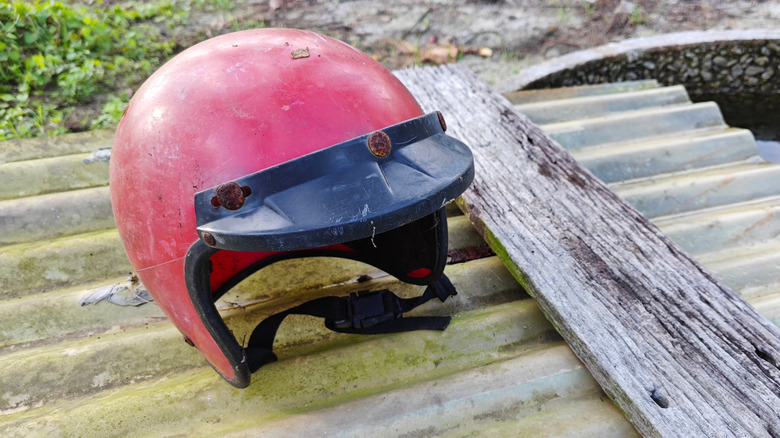
Naturally, you wouldn't wear a five-gallon bucket as a helmet, but "bucket" is a term that refers to a rider's helmet. The idea is pretty simple here: An upside down helmet looks a bit like a small bucket. Half helmets, especially older models from the early days of motorcycle protective gear, take on this look when you set them on the ground upside down. The term "brain bucket" is also used to refer to helmets, giving an alliterative name to the bucket that's supposed to protect your brain.
For what it's worth, riders I know don't put their helmets on the ground like buckets, nor do they use them to carry around items like they would with a bucket. Putting a helmet on the hard ground, outer shell first, can crack, scratch, or damage the helmet shell — an expensive mistake if you've paid top dollar for your bucket.
Two-up
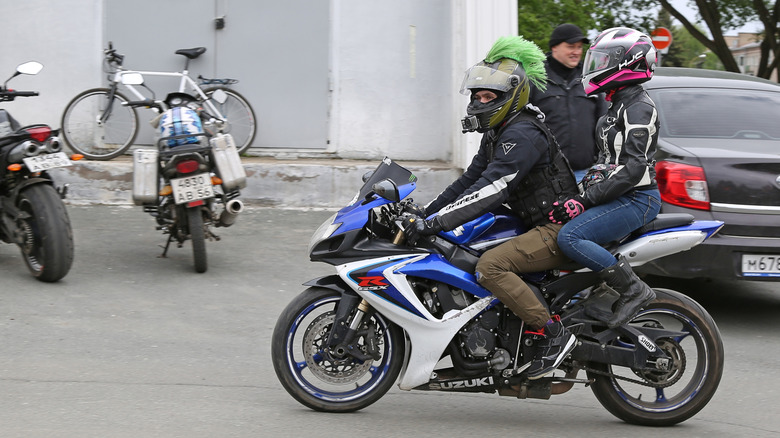
While riding a motorcycle is often a one-person endeavor, there are times when you want to take a passenger along. That's called riding two-up. The "two" part of two-up needs no explanation, and typically, the back seat of a motorcycle is a bit higher than the rider's seat, so the "up" part of two-up is a physical description. Even if the seats are the same height, both the rider and the passenger can technically climb up onto the bike via the foot pegs, so two-up still applies.
Not every motorcycle offers the ability to ride two-up. There are some sport bikes that only have one seat, or a tiny, uncomfortable seat that few passengers will want to endure for long periods of time. There are also small motorcycles that simply can't handle the weight of a second rider. While it's not as common a term as two-up, I've also heard passengers referred to as backpacks. It's a pretty cute term of endearment for someone who's always with you for the ride.
Endo (aka stoppie)
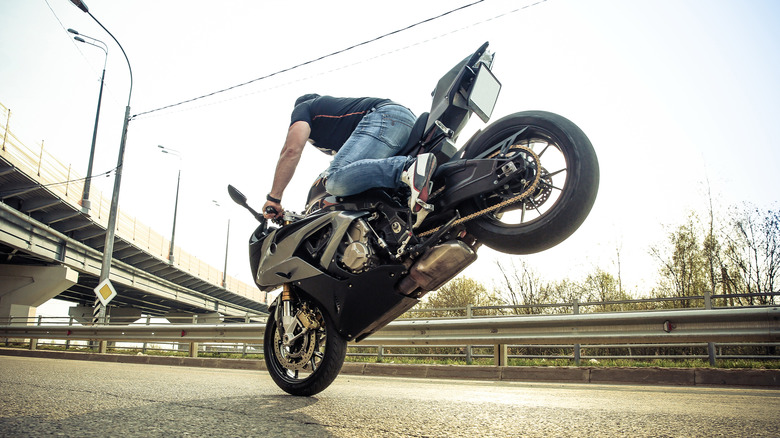
Wheelies are rad. On closed courses, of course, in responsible ways, wearing all the proper safety gear. A bit like the opposite of wheelies, there are endos or stoppies. This is a term used more by stunt-friendly motorcycle riders, as it's a one-wheeled stopping technique that takes serious skill to master. While there are some exceptions, stopping motorcycles generally uses two independent braking systems: Front brakes are controlled by the front lever, and rear brakes are controlled by a foot brake on the right side of the bike.
Apply pressure to just one of the two brakes and that's the only brake that will clamp down. If you slam exclusively on the rear brake, the rear tire will lock up, potentially causing a slide or put down. Slam on the front brake hard enough, and you'll go over the handlebars of your motorcycle. But, if you can apply just the right amount of pressure, the front tire will stay planted, the rear tire will come off the ground ever-so-slightly, and you'll feel pretty damn cool.
Dragging knee
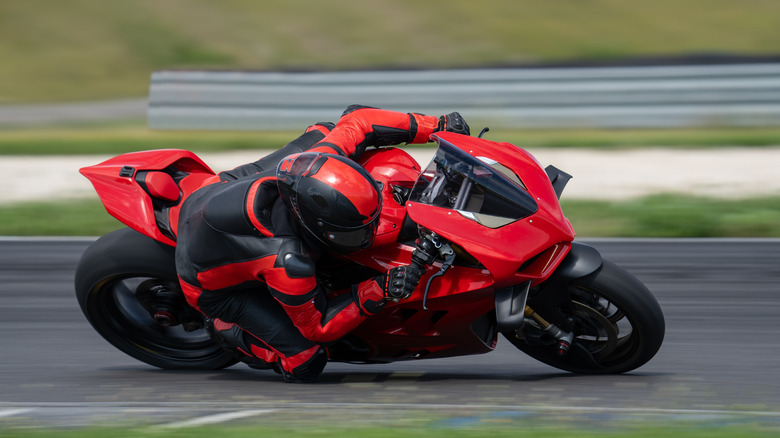
It takes a lot of skill and practice to drag your knee along the ground while you're riding a motorcycle. If you watch any professional motorcycle racing, you'll see it happening around most corners. Riders with enough skill and flexibility are able to lean the bike over far enough that they use their knees to improve grip, balance, and control. Most one-piece leather motorcycle suits come equipped with knee-pucks (also called sliders) these days, fitted with velcro so they can be replaced easily after a few track days or a season of dragging knee.
The knee puck is designed to provide a slick surface that can move along the road without stopping the rider entirely, but it's thick and strong enough that it won't wear down after a few laps. Even the strongest of leather suits won't hold up to the sort of abuse that knee pucks will. Some riders go as far down towards the ground as to drag an elbow or shoulder, too, but that is a rare skill even amongst pros.
Fairings
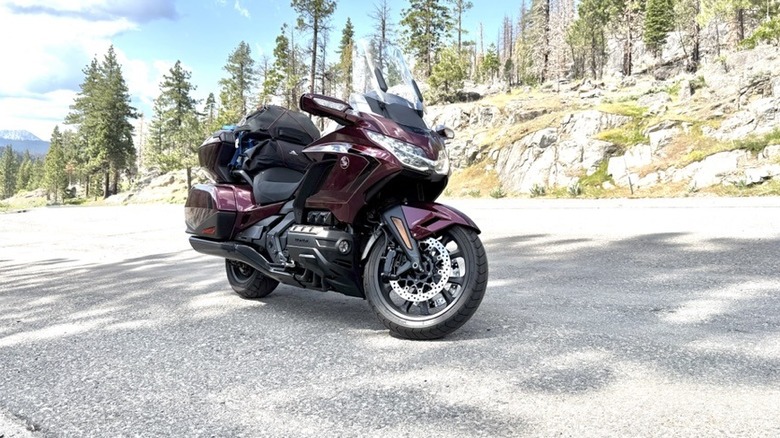
Fairings are the body panels on motorcycles. They provide aerodynamic benefits for the speed and efficiency of the motorcycle, but they also help add comfort for riders in harsh weather conditions. Riding along in the rain, a large front fairing, paired with a large windshield, is enough to keep a rider almost completely dry. A big front fairing around the headlights and handlebars of a motorcycle will protect a rider's hands from the elements and from the potential impacts of road debris or bugs. Having a small rock or a bug hit your hand at 70 mph is seriously painful, so riders who spend a lot of time on freeways tend to gravitate towards bigger fairings.
Sport bikes designed for optimum speed and performance benefit from the control of air flow around a motorcycle via the fairings. And the latest high-performance bikes even go as far as using aerodynamic enhancements like winglets that are attached to the fairings for additional downforce on various parts of the bike.
ADVs, café bikes, naked bikes
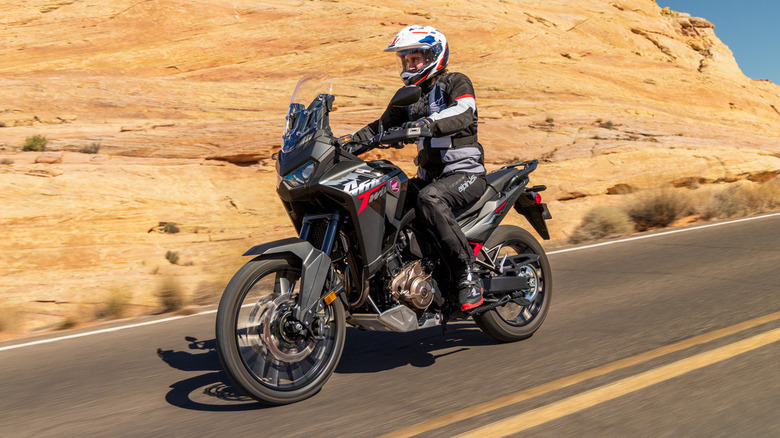
Much in the same way that there are varying subsections and classes of cars, there are all sorts of different motorcycles, but some names make less sense than others. For brevity's sake, we've combined a few of those terms here.
"Dirt bikes" is a pretty obvious designation, with motorcycles designed for off-road use. ADVs, or adventure bikes, are a bit broader in their appeal. They're often made with on- and off-road capability in mind. Unique adventure bikes like the BMW GS, Honda Africa Twin, and KTM Super Adventure are all great examples of go-anywhere, do-anything motorcycles in the ADV class.
Café bikes, also known as cafés racers, got their start in post-war Britain and are typically designed with a bit of style, performance, and street-only capability in mind. Naked bikes and café bikes have a lot of crossover, with naked bikes simply referring to a bike without the fairings mentioned earlier. Yamaha has an entire lineup of what they call "hyper naked" bikes. It's a full lineup of sport bikes, available in just about every size, all of which lack fairings.
Bagger and bobber
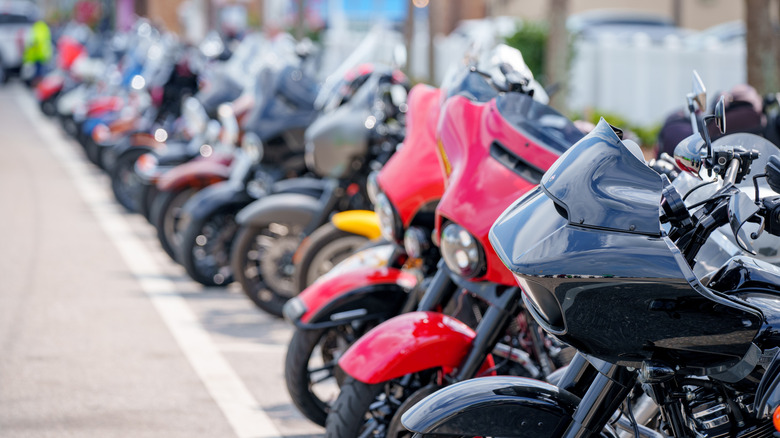
Baggers, popularized and often built by American manufacturers like Harley-Davidson and Indian, have big side cases, continent-crossing levels of comfort, and big power. The "bag" part here is the side case, which in some instances is a soft saddlebag. American motorcycle companies aren't the only ones to make baggers, though. Kawasaki has the Vulcan, and BMW has the R 18 B. Even Honda's ultra-plush Gold Wing could be considered a bagger if it were a bit more classically styled.
Bobber motorcycles are on the opposite end of the spectrum, with limited equipment, limited weight, and a custom style that screams minimalism. The vast majority of bobbers are made with price as a top consideration. That's the case with the stylish but simplistic Indian Scout Bobber, for example, which has the lowest pricing in the manufacturer's lineup.
CC's
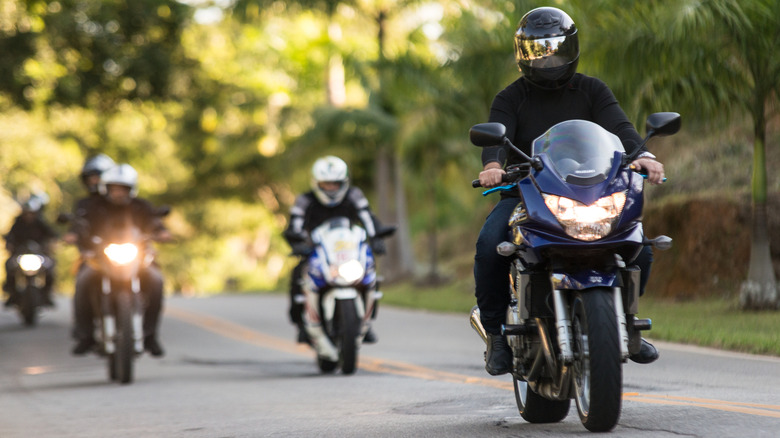
If you're used to hearing engine displacement sizes in cubic inches or liters, this one might be a bit of an adjustment. With motorcycles, especially motorcycles from Europe and Asia, engine sizes are measured based on their displacement. This measurement is expressed in cubic centimeters, or cc's. You'll often hear riders refer to "liter" bikes; Those are bikes with 1,000cc's of displacement (or pretty close to it – many liter bikes have 999cc's of displacement).
On a pretty regular basis, you'll also hear motorcycle riders ask other riders "How many cc's?" in reference to the size of their motorcycle's engine. For the most part, motorcycles with more displacement will have more power, so it's a shortcut to figuring out what class a bike is in. Honda CBRs, Kawasaki Ninjas, and Suzuki GSX-R's (or gixxers) are all sub-sets of bikes where specifying the cc's helps classify the bikes. The Honda CBR600RR and the Honda CBR1000RR, for instance, are in different classes of performance based on the sizes of their engine, even though they have looked very similar over the years.
Quick shifter
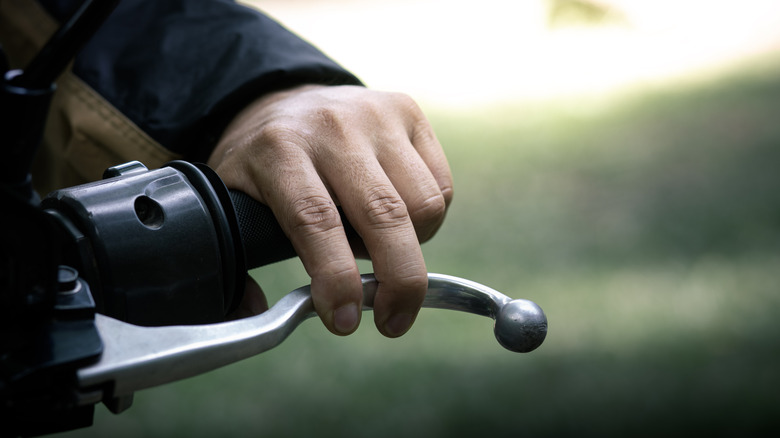
Much more common in recent years, quick shifters are a big part of making modern riding easier. Most motorcycles built in decades past use a manual transmission, controlled with a hand-operated clutch lever and a foot-operated gear shifter. Quick shifters use modern tech to allow for the shifting of gears via the foot controls, without using the hand-controlled clutch lever.
If you spend a lot of time in traffic, speeding up and slowing down, quick shifters are an excellent addition to a bike's equipment list. If you spend a lot of time hard-charging towards corners at your local track day, a quick shifter is just as welcome. Having one on your bike can reduce left-hand fatigue, especially after a long day of riding.